San Diego, here I come

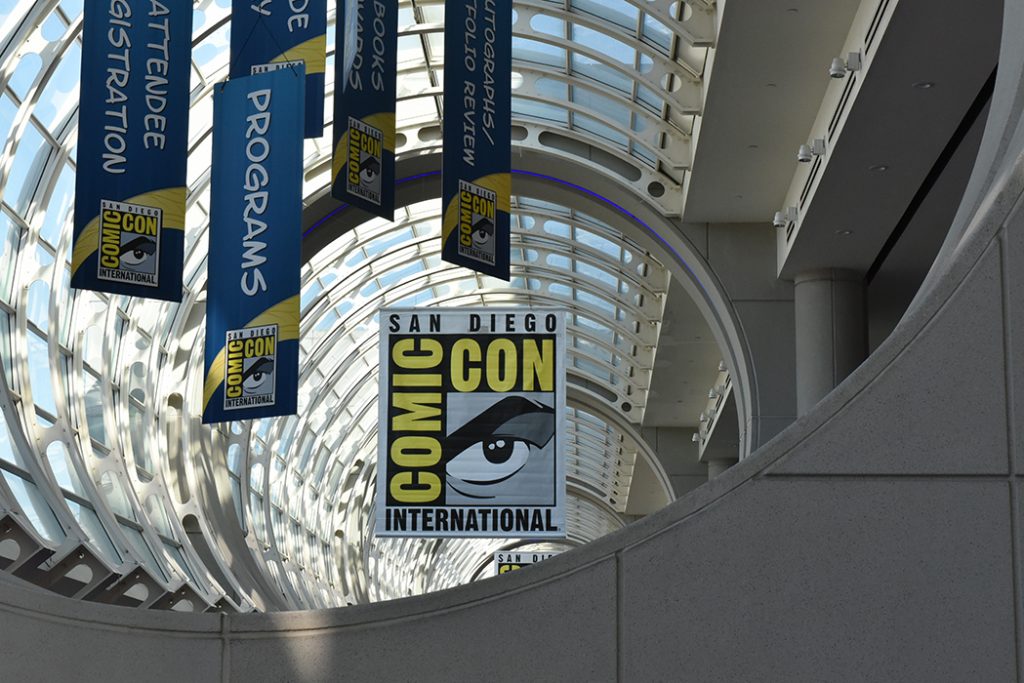
Apart from all the work on scripts and beginning the process of entering my short into film festivals, I’m currently getting ready to attend Comic-Con in San Diego.

First time going, and pretty psyched about it. This is one of those events I’ve always wanted to attend, but never had the opportunity. So when a friend offered me a badge, my ever-supportive sweetie said “You should go”, I decided to take the plunge.

For those unfamiliar, Comic-Con is a HUGE event that takes over that part of San Diego over the course of several days. All things comics, movies, TV, video games, toys, games, and beyond. Not to mention the vast number of cosplayers. Hundreds of thousands will be in attendance, including yours truly.

(Full disclosure – it was always a dream/fantasy that the first time I’d get to go would be to promote a movie that I’d written. Not the case, but still thrilled to be going.)

I’ve been putting together a list of panels I’d like to attend, books and maybe some merch I’ll try to get, and creatives of all sorts I’m hoping to meet – especially writers.

I originally considered panels about writing-oriented careers in various industries, but I’d also like just enjoy myself, so swapped some of those out for Q&As with industry vets and topics I like.

One thing I won’t be doing – waiting in line for hours to get into the canyon-esque Hall H (although I would do it for the Spaceballs 2 panel in the event that Mel Brooks shows up, which I suspect he will), or seeking out “exclusives” (i.e. specialty items only available here). I found a “first-timers” group on Facebook, and 95 percent of the posts were all about that sort of stuff (e.g. “We need somebody to hold a spot in line for the Marvel panel!”), so no thanks. That’s not why I’m going or how I want to spend my time there.

I just like the idea of attending this massive event that features a lot of things I’m interested in. No doubt it’ll be initially overwhelming, but the primary goal is to simply enjoy myself while taking it all in. Anything beyond that is a bonus.

And if you spot me out and about, feel free to say hi.

Not much time left…

Just under one week to go for the crowdfunding for my thrill-omedy short film SHECKY.

The good news is the initial goal was achieved, so post-production is covered, and everything that comes in between now and the end will contribute to covering any unforeseen expenses plus potentially entering the film in some festivals. As of this writing, that’s only $419 away. Fingers crossed a few generous souls join the cause.

Tier rewards are still available, including:

– What’s the buzz? – $10 – social media shoutout

– Flavor of the Month – $25 – shoutout, copy of the script

– In the Spotlight – $50 – shoutout, copy of the script, copy of the film (after its festival run)

– The Punchline – $75 – shoutout, script, film, personalized video of me telling you a terrible joke

-On the Red Carpet – $100 – shoutout, script, film, video, 30-minute Zoom call for your choice of script notes, director’s reel notes, or acting reel notes

-Box Office Blockbuster – $250 – shoutout, script, film, video, 60-minute Zoom call, 1 ticket to screening of SHECKY in your area (if applicable)

-A-lister – $500 – shoutout, script, film, video, 60-minute Zoom call, 2 tickets

For those who’ve been following along, this project has been in the works for a long time. I’m thrilled that it’s THIS CLOSE to being done and can’t wait for people to see it.

I’m hoping all supporters of indie filmmaking, connoisseurs of terrible jokes, and the screenwriting community can find it in themselves to step up and chip in a few bucks. Every dollar really does make a difference.

Thanks, and donate if you can.

A very hands-on Q&A with Geoffrey Calhoun

7D25AB88A8B448A9ABA793263FCBF2F3

Geoffrey D. Calhoun of wefixyourscript.com is listed as a Top 100 Indie Writer in the World. He has optioned several screenplays and has worked as a writer on two features coming out in 2017: The Little Girl and Studio 5. His multi-award-winning thriller Pink Bunny is scheduled for a 2018 release. Geoffrey has won multiple screenwriting awards and has worked as a producer, an assistant director, and director on indie film productions. He has been sought out by studios as a script consultant and a re-writer for various stages of development and production.

1. What’s the last thing you read/watched that you thought was incredibly well-written?

The last thing I watched I couldn’t stop thinking about was Arrival. I loved this film. It had depth and really explored her character. I loved how they played around with the structure of the film in creative ways that really built up to a climax. It was fantastic. I could see how Eric Heisserer did over 100 drafts to make that story perfect.

2. How’d you get your start reading scripts?

I actually began writing on a bet. A friend of mine was an editor for a local kids show. He wanted to push himself to write a script so he challenged me to see who could write better. Personally, I wasn’t interested because I have dyslexia. I agreed to do it, and ended up really enjoying the process. Since then it became more than a passion, almost like a volition. I wanted to be the best screenwriter I could possible be, so I started studying and learning from the greats such as Syd Field, Robert McKee, Viki King and reading screenplays by modern legends as well like David Goyer, Jonathan Nolan, and Christopher McQuarrie.

3. Is recognizing good writing something you think can be taught or learned?

I think it can be learned. It comes with time. The average movie attendee can recognize a bad film. Now, some people prefer bad films, but that’s a whole different form of self- torture (wink). I like this question. It reminds me of the debate about raw talent vs. learned skill. Some teachers out there believe if you don’t have a modicum of innate talent with writing, then you’ll never be a good writer. I completely disagree with this. Their defense is that this is an art, and thus you must have a certain amount of “taste” in order to know the difference between what’s good and bad. I think what we do is more than an art. It’s a craft; a learned skill plain and simple. Something that can be mastered with just two things, time and practice. That’s all you need. We are craftsmen, like the blacksmiths of old. At first creating something small and simple like a horseshoe, then with time we master our skill and create compelling stories and works of art like the ornate armors of old.

4. What are the components of a good script?

It all starts with having something to say in your script. What are we trying to pass off to the audience? What do we want to tell them about life? Something that will open their eyes and help them see things from a new perspective? Or something that will reassure them and speak to the struggles they are going through? When we have a theme like this and we pair it with a sympathetic character, then we create a compelling story that’s unforgettable and emotionally moving. Take Arrival. It’s about a woman’s struggle with loss. That’s something that speaks to everyone, which is why it resonated so well with people.

5. What are some of the most common mistakes you see?

Wow, that’s a tough one. I see mistakes of all kinds from new screenwriters to professionals. One mistake I often see is having underdeveloped characters. They’re superficial and are around just to be a face. Sometimes they’re even described as pretty or handsome, which reinforces this. When I get hired for a rewrite, the first thing I do is take the characters and layer in depth to make them more human and sympathetic; give them reasons to do what they’re doing and why they make the choices they do. I create depth by adding to them traits that we all suffer from but never talk about such as secretly insecure, lonely, or lost, etc.

6. What story tropes are you just tired of seeing?

This is more a genre thing for me but I’m sick of the false ending in horror films. Here we spend at least 90 minutes emotionally involved with a character. If it’s a good one – Dawn of the Dead is a good example – then you’ll have me on my seat the entire film. Then at the end, the lucky few characters that have survived finally make it…until there’s a surprise jump scare right before the credits roll and we discover the characters we’d been rooting for this whole time never make it. I’m so frustrated by this. For me it feels like a waste of my time to discover they all die because of a dirty trope in the end.

7. What are the 3 most important rules every writer should know?

1) STEAL: Steal everything from everyone. Writers are the best thieves in the world. I’m not saying plagiarize, but when you find a technique or scene that really works for you, break it down and make it your own so you can add it to your toolbox.

2) STUDY: This goes with stealing. Learn from the masters. Writers like John August have a blog that you should be following. Don’t stop there. Learn from the masters that taught the master such as Aristotle. If you pay attention, all the great screenwriters will quote Aristotle. There’s a reason for that.

3) IGNORE THE BS: There’s a lot of flack out there towards aspiring screenwriters. I recently read an article where a Hollywood writer was bragging about telling screenwriters they’ll never make it. He tells them they should just give up because they aren’t talented. It’s BS. You can make it, but it takes time. A long time. If a dyslexic from Detroit can make it, then you can too. One of the reasons I founded wefixyourscript.com was exactly for that purpose: to give screenwriters that extra helping hand to not just  improve upon their screenplays, but to help them become better screenwriters. That’s why we include the one-on-one consultation.

8. Have you ever read a script that was an absolute, without-a-doubt “recommend”? If so, could you give the logline?

Definitely. In fact, I just did some coverage on a dramatic short that had a fantastic concept. I helped them tweak it, but only a little. I guarantee it won’t have a dry eye in the audience when it films. Unfortunately, that’s all I can say about it.

9. How do you feel about screenwriting contests? Worth it or not?

I think they’re great, and I strongly recommend contests in festivals. That’s where you can really make headway as a writer. You need to network and make connections to build up your reputation. You can meet other writers, producers, and directors that will eventually land you in a spot where you’ll be getting work. When you go to these fests you want to be the life of the party. Have fun. Get yourself out there. And make sure you’re handing out business cards. It will get you work.

10. How can people can get in touch with you to find out more about the services you provide?

They can contact us at info@wefixyourscript.com. They can also sign up for a free 15-minute consultation on our website. With our consultation, we offer ways to help your work or answer any questions about us or the industry in general. We’ve had some great feedback on this service.

11. Readers of this blog are more than familiar with my love/appreciation of pie. What’s your favorite kind?

I’ve got to go with mom’s pumpkin pie. There is one caveat though: it must be smothered with a big dollop of whipped cream.
An amiable assortment o’ items

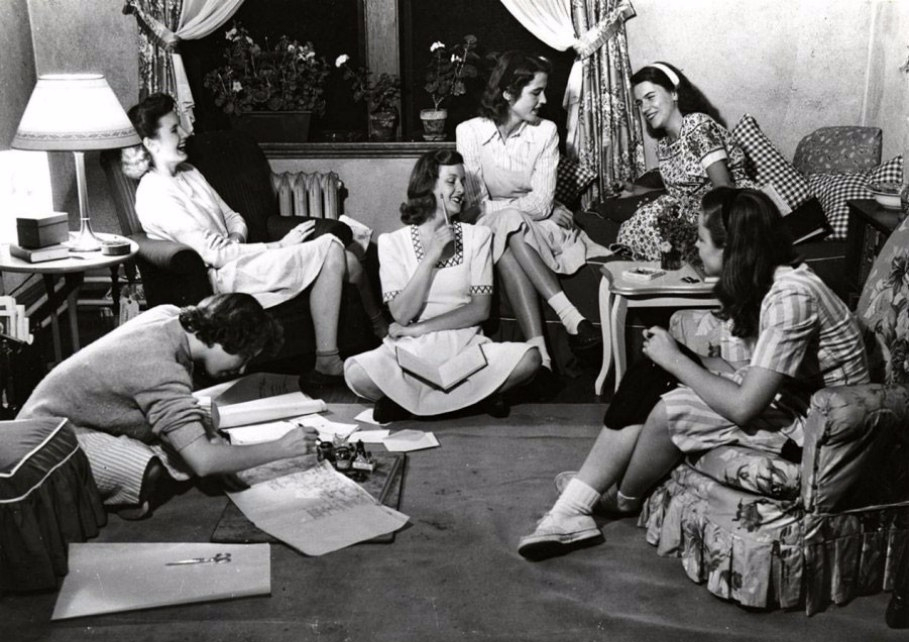
study group
Everybody’s keeping busy, so there’s lots to talk about!

First three months of the year wrapping up today, which makes it the perfect opportunity to offer up your Project Status Update! Feel free to step up to that virtual microphone (aka the comments section) and announce the latest developments for whatever is currently occupying your attention.

My list is pretty short:

-Work on the pulp spec continues. Currently around page 83, with a projected final count of 120ish. Strongly suspect FADE OUT will be typed sometime in mid-April, give or take a couple of days.

-Dipped my toe into the waters of rewriting the low-budget comedy courtesy of some helpful notes. Not a total page-one rewrite, but definitely taking my time with this one.

-My western was named a finalist at the WorldFest-Houston International Film Festival screenwriting contest. (Editor’s note – yay) Further details (i.e. how it placed) won’t be announced until the awards ceremony at the end of April, but still quite proud to have made it this far.

And a couple of items tacked on to the bulletin board, which spotlights creative-type folks and their even more creative projects well worth your time and attention:

-Filmmaker/screenwriter Eric Claremont Player has launched a crowdfunding campaign for his courtroom drama film project. Make sure to check out the colorfully captivating and absolutely true backstory that led up to it.

-Writer-director Dianna Ippolito is running a crowdfunding campaign for her new project Robb’s Problem: A Horror Short. As Dianna puts it, “Our goal is to bring you a really smart, beautiful and thought-provoking horror film, produced, written and directed by women.”

As with all crowdfunding projects listed here, donate if you can!

If you’d like to get the word out about a project of your own, feel free to drop me a line. Operators are always standing by.

-Ran the San Francisco Rock & Roll Half-marathon this past weekend. Made it just under the 2-hour mark with 1:59:11. Next race is in July, so hoping to shave a few minutes off of that.

What’s stopping you?

handyman
The ultimate DIY project (film division)

I had the recent pleasure of connecting with a screenwriter who’s working on a feature script, but is also investigating the logistics of developing a short out of it, which includes them having begun connecting with other writers and filmmakers in their area.

I thought that was a great idea, and tossed out the suggestion that maybe they try to make it themselves, as in “just you”. Especially now that most smartphones can double as camera equipment, and film editing software is easily accessible (if not already installed on your computer).

They’d considered this, adding “But I’m just not tech-savvy”.

But you can learn.

If you’re reading this, you’re more than likely interested in screenwriting and/or filmmaking. When you first started out, it’s probably a dead-on certainty that your early works were awful, right?  Looking at some of my first scripts makes me cringe from how bad they are.

But we kept at it, learning and improving along the way. How does your most recent effort compare to that first one? Worlds apart, I’d imagine. You try something, you make mistakes, you learn from those mistakes, and try again.

There’s no reason you couldn’t apply the same logic to making your own short. Sure, there’s a lot more to it than simply pointing your phone and hitting ‘record’, but you gotta start somewhere.

Give it a go and write yourself a short script. Nothing fancy (but do try to make it a good sample of the genre). Anywhere from one to five minutes, spread out over one, possibly two scenes. Two characters, three at best. Try to keep it limited to one location.

Now look at it from the filmmaker’s perspective. Could you feasibly make this yourself? Like how a first draft of a script reads, the end result will not be pretty. At first, you’ll be thrilled at having done it. Then reality sets in and the flaws become that much more obvious.

But you will have done it. A short film, written and produced by YOU.

What you do with it now is up to you. Hopefully, you’ll embrace the learning experience and know what not to do the next time around.

My friend mentioned that once the short got made, which it sounds like they are very intent on making happen one way or another, plans are already being discussed about next steps, which included posting it on YouTube and/or submitting it to some film festivals.

Even though our conversation was solely via email, there was a certain tone to their words that indicated they were quite psyched about jumping into this new venture. I wished them the best of luck and asked to be kept updated as to their progress.

I think they’re off to a pretty good start.