A most informative Q & A with Andrew Zinnes

andrew zinnes

Andrew Zinnes is a UK-based screenwriter, screenwriting consultant and producer who’s worked for production companies, read for contests, and co-author of The Documentary Film Makers Handbook: The Ultimate Guide to Documentary Filmmaking and The Guerilla Film Makers Pocketbook: The Ultimate Guide to Digital Film Making. He currently holds the position of Teaching Fellow at the University of Portsmouth.

What’s the last thing you read/watched you thought was incredibly well-written?

I have small children so I don’t get to the theater as much as I’d like, but I recently saw I, TONYA and thought it was fantastic – a real pleasant surprise! I remember the Nancy Kerrigan incident vividly and, at the time, there wasn’t a bigger villain than Tonya. Yet Steve Rogers managed to make her sympathetic by focusing on her relationship with her mother and other aspects of her home life. Then you add breaking the fourth wall and other stylistic choices, and the characters became self-aware in a manner that added to their depth and relatability. BABY DRIVER was great, too. Loved the way they used music to tell the story. Very Edgar Wright.

How’d you get your start in the industry?

I became a script reader for a small production company based at Sony. I read for free as I wanted anyway into the machine. I would go in on off days or they would messenger me scripts, back when that was a thing, and I would write up coverage and fax it back to them, when that was a thing. I became friends with the assistants in the office and when I said I wanted to do development, they put me up for other assistant gigs.

Is recognizing good writing something you think can be taught or learned?

From my experience, recognizing good writing is innate. Many years ago, I went home for Thanksgiving and took my weekend read with me. My sister got curious and started reading some of them. She read one that was a spec from an unknown writer and she was surprised at its mediocrity. She stopped reading after 40 pages and picked up another. This time she started laughing straight away and continued through the whole 100 pages. That script turned out to be AMERICAN PIE. She knew the difference between the two scripts quality-wise with no training, but what she wasn’t able to do was tell me what was wrong with them via screenplay/story theory or how she would have fixed any issues. That part needs to be learned and practiced as one would with any craft.

What do you consider the components of a good script?

The biggest component revolves around making the story or premise personal to you, the writer. If it’s not something you’re passionate about then how are you going to put 100% effort into it? If you can’t connect to the premise, then how can the reader or the viewer? John Truby says this issue leads to generic, unoriginal work and I have seen this first hand with my college/university students. Just recently, one wanted to do a crime thriller that had an okay hook, but was otherwise unremarkable. I asked why he wanted to do this project and he said it was because he loved those kind of movies and this sounded cool. I told him my doubts and he got frustrated. He said that he has trouble making decisions about writing because he doesn’t want to make mistakes that can’t be undone easily. When I pressed, he said he felt that way about many things in life, not just writing. I told him he should write about that concept. His eyes lit up!

The other key component are the forces of antagonism. I don’t just mean the villain. I mean everything that holds back the protagonist(s) from their goals. The better they are, the better the tension, drama and comedy become.

What are some of the most common screenwriting mistakes you see?

Because I work with many writers in the development of stories from early in their conception, impatience reigns the king of mistakes. Often times writers want to rush into the actual writing before they’ve explored a premise fully. They don’t want to do enough research to make the story richer or come up with alternative character motivations and story points that might make their project surprising and original. They don’t want to take hard looks at their structure because they have something in their head and want to get it out. I get it. I’ve felt the rush of getting something down in Final Draft, too. However, whenever I’ve let a client or student get on with it despite my objections, it always goes wrong. They create a story and/or characters that are generic or derivative. They come to the point where the structure doesn’t work and either get stuck or plow forward anyway and there’s structure or story flaws. Now for some writers, this is the process they need to go through. This is how their brains process information. That’s fine, but whether that is the case or they are just steadfast, we end up going back to the drawing board to pull everything apart as we should have done originally.

Aside from that, overwriting tends to be an issue, especially with newer writers. Screenplays are meant to be quick reads and having a lot of black on the page slows that down. Learning economy of writing is essential. I realize that many people, myself included, like Wes Anderson or Quentin Tarantino’s style, which creates these dense, epic screenplays and, that further, feel they should follow suit. However, one, that’s being derivative; two, they’re directing the work so they probably doing it partially because they don’t want to forget anything; and three, they’ve earned it as they had to fund their first films in this style mostly themselves and became successful with it.

What story tropes are you just tired of seeing?

Tropes don’t bother me. It’s what is done with the tropes that matters. Whenever a superhero movie comes out social media garners a a lot of eye rolls and hate from various creative or general public communities and then WONDER WOMAN, DEADPOOL or BLACK PANTHER comes out and shakes things up. Teen horror films are another one that gets a lot of grief, and then HAPPY DEATH DAY hits the screens and all of a sudden cyberspace is hit with short memory syndrome. Take tropes and tell them in unique ways.

What are some important rules every writer should know?

-Observe people, places, things and ideas.
-Observe by asking questions and listening to what people say and don’ t cut them off to speak about yourself.
-Travel and observe what’s around you.
-Write down what you observe and think about what universal truths of the human condition emerge that matter to you.
-Read good scripts and watch good movies so you know what works.
-Read bad scripts and watch bad movies so you can recognize problems to avoid.
-Notes are opinions. They aren’t personal.

Have you ever read a script that was an absolute, without-a-doubt “recommend”? If so, what were the reasons why?

I haven’t read many. TRAINING DAY may have been one. THE SIXTH SENSE may have been one, too. The reasons are for the usual hallmarks: great voice, original take on a premise, explored some kind or large idea, writing that moved my emotions (tense, scary, etc) and structured well. Then the other side of the equation, the business side, it had great roles for movie stars to play, was something my company might do, and had general commercial appeal.

How do you feel about screenwriting contests? Worth it or not?

That’s a tricky one. On the one hand, if you can win one or at least become a finalist, it can get you noticed. The bigger the competition the better your chances, obviously. If you live outside of Los Angeles or don’t have a friend that works in the industry, it may be one of the only ways that you can garner attention. On the other hand, if you enter many of them, it can get expensive. Also there is a fundamental truth about screenplay competitions: there has to be a winner. It’s the best of what a competition gets that year, not necessarily the best written thing that would attract an agent or manager and that sometimes makes Hollywood impatient with competitions. But all in all, I say they are worth it. Especially if there’s some sort of networking attached to winning or placing.

How can people can get in touch with you to find out more about the services you provide?

I’m very easy to find: andrewzinnes.co.uk. You can message me from there. I live in the UK, but work with writers all over the world. Thank you FaceTime, Skype and WhatsApp!

Readers of this blog are more than familiar with my love/appreciation of pie. What’s your favorite kind?

Blueberry! I make a mean one, too.

blueberry pie

105ish pages down to 1

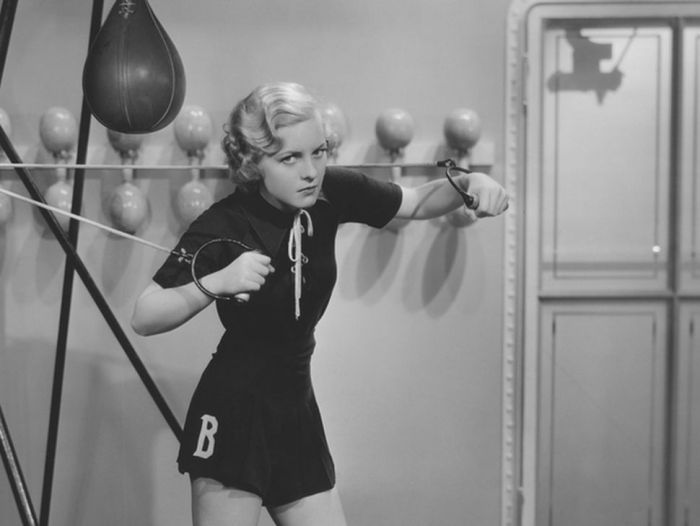
vintage gym
Not that kind of reduction process

With the page-producing phase of the horror-comedy spec now underway, I’m also finding the occasional need to do a little side work on it. In this case, it’s the 1-page synopsis for said script.

Summarizing your entire story on one solitary page (or one and a half, according to some of my associates) is, as many writers already know, not as easy as it sounds. Yours truly being no exception.

Past 1-pagers for past scripts were the usual challenge, but I managed. Somehow. Part of that challenge has always been inadvertently including too much of the story. As much as I’d like to put all of it in there, that just won’t work.

The key is to focus on the main character and what they go through to achieve their goal, with a strong emphasis on conflict. I’ve also found it very helpful to break each act down into its core components – especially key events and plot points.

Trying to include subplots and supporting characters was just clogging the whole thing up, so those quickly fell by the wayside, which really helped streamline the whole thing.

This time is a little different, probably due to having multiple protagonists. Well, at least it starts that way. This is a horror story, so as you’d expect, people are gonna die.

Not being as familiar with the horror genre, I wasn’t sure of the most effective way to put together a 1-pager for this kind of story. Is there more emphasis on the horror part? Or the story with some horror elements thrown in? “The learning never stops” indeed.

Feeling a bit stumped, I did like all smart writers do, and asked my network of savvy creatives for whatever assistance and guidance they could provide.

Glad I did.

(Hearty shoutout to everybody who reposnded and got in touch – I really appreciate it)

More than one said to focus on the one character the reader/audience would consider the heart of the story, and follow what happens to them. That I can do.

Others, who’ve also written stories starting with several protagonists and see their numbers reduced along the way, suggested listing them all at the outset, so as they’re gradually eliminated, there’s no sense of “Who’s that again?” I might give that a try.

There was the smart reminder to “keep things simple”. Don’t fall into the trap of making it too cluttered or complicated. Just tell the story in a clear and straightforward manner.That might take a little editing and revising, but I think I can also do that.

Based on all of these comments, plus my own experience, having a solid 1-pager in my possession seems definitely achievable.

Just made it tougher for myself (which is a very good thing)

hipster writer
Coffee – check. Notes – check. Fresh typewriter ribbon (took a real effort to find one) – check. Ready to go!

A most interesting development has presented itself for the horror-comedy outline, and you can accurately label me as “immensely grateful”.

Although I’m still working my way through the story, somehow that certain pizzazz that was part of the appeal when I first came up with it had slowly faded away. That’s a problem that needed some immediate fixing or this thing would never work.

I went through what I already had. It’s taken a while just to get to this point in the story, so I’d forgotten about some of it. This made for a nice reminder that I had a lot more material to work with than I remembered.

The basics were there, but what was it that was missing? Since this is at its heart a horror story, some of the standard elements had already been used, but it needed more. Something to really hammer the concept home. My protagonists were already in a pretty dicey situation, and I wanted to up the stakes.

Hence my dilemma.

Have you ever suddenly have a solution just present itself, right out of the blue? One that feels like the light bulb actually popped into existence right there above your head? One that caused the muse to do backflips and handsprings while screaming for joy at the top of her lungs?

Inspiration didn’t just strike; it walloped me upside the head.

This new idea feels like such a perfect match for the story. It creates a ticking clock that really ramps up the stakes to the nth degree, and what might be the best aspect – it gives the whole thing the original approach it so desperately needs.

So now that I’ve been fortunate enough to come up with this, the next step is to go back and reorganize a majority of the outline in order to incorporate it. Pretty daunting at first, but I’m not too concerned. I know exactly what I want to happen. It’ll just require a little more of an effort.

Q & A with Brian Smith of Monument Scripts

Headshot_1_Brian

Brian Smith of Monument Scripts grew up on Cape Cod, long a favorite haunt of writers and artists, surrounded by and loving well-told stories. When he left the Cape, it was to study the techniques and principles of good story telling at the University of Southern California. There he earned an MFA from USC’s School of Cinematic Arts.

He began his career in the industry working for Disney, and then Universal, Sony, and DreamWorks Animation, and he has credits on 24 films and television series. Brian’s been a professional screenplay reader since 2006, and has written coverage for over 1,000 scripts and books for such companies as Walden Media and Scott Free Films.

Brian currently lives in Los Angeles, with his wife, three daughters and two dogs.

What’s the last thing you read/watched that your thought was incredibly well-written?

If we’re talking incredibly well-written, I would say the last thing was Coco. Full disclosure here, my background is in animation. I’ve worked in animation my whole career, but I’ve been kind of down on PIXAR for about the last 10 years or so. I felt like it had been at least that long since they put out a complete film. I thought Wall-E and Up were both half-great films in that the first half of each of them was great, but the other half was mediocre to just bad. Other films that they put out during that stretch, like any of the Cars movies, Finding Nemo/Dory, or even Toy Story 3, were really lacking in strong stories. They always had wonderful characters that the audience fell in love with. That allowed for hyper-emotional endings, which was ultimately why those films were so successful. I thought with Coco, they put everything together in a way that they hadn’t since The Incredibles and Ratatouille, and they finally made a complete film. The story was thematically very strong, the stakes were very high, and they gave us a twist at the end I did not see coming. I don’t cry during movies, but I had a lump the size of a golf ball in my throat at the end. The quality of the writing in the script had everything to do with that.

How’d you get your start reading scripts?

I fell into it, really. I was working on the Curious George feature years ago, and we were all about to get laid off as the show was wrapping. One of my co-workers suggested script coverage as a way to make some money while being unemployed, and he put me in contact with a creative executive he knew at Walden Media. I contacted him. He had me do a test, which they liked, and they started sending me work. I fell in love with evaluating stories and writing, and have been doing it ever since.

Is recognizing good writing something you think can be taught or learned?

Absolutely, and it can be both taught and learned. Writing is one of those unique disciplines that’s equal parts creativity and technique. You have to use your imagination in order to be a good writer, but you also have to use dramatic structure. Determining the merit or quality of a premise or an idea can be a subjective thing, but evaluating a writer’s technique and skill level is absolutely something that can be taught. What a lot of writers don’t understand is that good dramatic structure makes you a better writer. Just as anyone can be taught to implement that structure in their writing, others can be taught to evaluate how successful the writer was in implementing it and how that implementation strengthened or weakened the story.

What are the components of a good script?

A good script is a story well-told; that takes the reader on a journey to a world that the reader can envision and become a part of. In order to do that, a good script needs to have been spawned from a strong premise. A strong premise usually gives way to strong thematic elements, which are also necessary for a good script. A script is almost always better when it has something that it’s trying to say. A strong thematic component is also a way to make us care about the characters, which is probably the most important component. I need to care about the characters and what happens to them. I need to feel some emotional attachment. Without that, you’ve got nothing.

What are some of the most common mistakes you see?

Not adhering to proper story structure is a big one. The transition from Act II to Act III is one that tends to trip people up the most. Poorly written dialogue is another one. Writing good dialogue is hard, and most writers from whom I get scripts haven’t yet mastered the art of subtext, which is crucial to writing good dialogue. It also seems as though a lot of writers think that big words mean good dialogue, which isn’t necessarily the case. Finally, flat characters are a common problem in scripts I get. It’s especially problematic and common in protagonists. Many writers are reticent to give their hero a flaw or some other issue that gives him or her depth, and it’s so important to do so.

What story tropes are you just tired of seeing?

The post-apocalyptic sci-fi thing. I love science fiction and there have been some great post-apocalyptic stories. There’s a reason The Hunger Games was huge. It was a terrific story with real pathos and drama. Unfortunately, it made way for a lot of other stories that tried to do the same thing, but just didn’t do it as well. Even The Hunger Games went out on a whimper for me as the last movie wasn’t nearly as good or as compelling as the first. I had the same opinion of the books as well. But that’s a trope I kinda wish would just go away.

What are the 3 most important rules every writer should know?

Story structure, story structure, and story structure.

Have you ever read a script where you could immediately tell “This writer gets it.”? What was it about the writing that did that?

Yeah, and it was actually a bit annoying. I was reading for a contest, and got a script written by a woman who was a doctor and a lawyer, and the script was about a woman who was a doctor and a lawyer. I know this is super-petty of me, but I really wanted to hate it because it’s really annoying when someone is good and successful at everything they try. But I have to admit it was an exceptional script, with an interesting protagonist, a compelling storyline and meaningful thematic elements, all written in a cinematic style. It was easy to envision this as a courtroom drama worthy of the genre. The writer really understood what it took from a technical standpoint to write a story well, and her personal experiences allowed her to tap into material that was interesting and dramatic.

How do you feel about screenwriting contests? Worth it or not?

I believe it is worth it, especially nowadays. With studios less likely to option or buy spec scripts, doing well in a screenwriting contest might be the best way for some writers to break in to the business. And the beautiful thing is, you don’t even have to win. You could be just be a finalist, a semi-finalist, or even a quarter-finalist, and there’s a good chance someone from a studio is reading your script and could possibly be impressed with your work. Even people who aren’t winning these contests are getting meetings that could lead to work. You might not sell your script this way, but your talent could be recognized by someone who has the power to hire you to write something else, and that could break you in to the industry. I personally have a friend that experienced that. She got her script into a couple of contests. She didn’t win any of them, but her script caught the eyes of people that could do something with it, and she’s been taking meetings and getting offers for representation. So if you have a quality script you can’t get past the studios’ Threshold Guardians, enter it into a contest, and there’s a chance that the studios could be calling you.

How can people get in touch with you find out more about the services you provide?

People can check out my website: http://monumentscripts.com/ or follow me on Twitter @monumentscripts.

You can also email me directly at briansmi71@gmail.com

Readers of this blog are more than familiar with my love/appreciation of pie. What’s your favorite kind?

We must be kindred spirits, because I am definitely a pie guy. I’d rather have pie for my birthday than cake, and will never turn down a slice of pie for anything. That said, I prefer fruit pies to crème pies, and my favorite of all the fruit pies is blueberry. My favorite way to have it is warmed up with vanilla ice cream on top. That is, unless I’m eating it for breakfast. Then it’s just plain.

blueberry pie a la mode

What you want VS what the story needs

838-02491755
Sometimes it takes a little more evaluation

Over the course of several drafts, the core elements of my scripts remain more or less the same. There might be a few changes here and there, but to me, the end result is pretty darn close to what I originally intended.

As part of the development of those drafts, I get notes from trusted colleagues and professional analysts. Everybody has their opinions, of which there were many, and I can pick and choose which ones to use.

I was still presenting my stories the way I wanted to tell them, but is that the way they should be told? Was I falling into the trap of “I’m the writer, so what I say goes! End of discussion!”?

I recently got notes on one of my scripts that offered up some keen insight regarding the antagonist’s storyline. This included the reader’s frustration about what they perceived as a lack of knowing the character’s goal and the reasoning behind it.

At first, that was pretty surprising to hear. But as is usually the case, I took a step back and looked at the big picture, trying to be as objective as possible. Was it really not as apparent as I thought?

And as is also usually the case, their comments were spot-on. I had never made any big changes to how that storyline was written because I saw it as being “just fine the way it is”, which also happened to be the way I wanted it to be.

Which was counterproductive to how the story needed it to be. It wasn’t working within the context of the story itself.

Was it my writer’s ego that prevented me from seeing this through all the previous drafts? Maybe a little. I’ve seen this kind of thing before in other scripts, but just couldn’t see it within my own material.

I knew the script wasn’t perfect, but there’d always been this nagging thought in the back of my mind that it still needed work. Something had to be changed, but I couldn’t identify what. This could also explain why I always felt compelled to keep working on it.

But with those notes, I now had a much firmer grasp of what the reader was talking about, and could begin to rectify the situation.

It took a little time to work through it, including some significant edits and rewrites. It  also entailed cutting some scenes that absolutely broke my heart to see them go, but were totally necessary. All part of the process.

I know I’ve said all of this before, but looking through the latest draft, the script really does seem different now – in a better and much stronger sense. The characters, especially the protagonist and antagonist, feel more developed. The story reads as more concrete. I’m very happy with how it turned out.

Once I was able to put what I wanted aside and focus on what was best for the story, it all came together a lot better than I expected. My hope is that this kind of self-analysis will be a bit easier for me to figure out for future drafts of other scripts.

Can’t wait to give it a try.