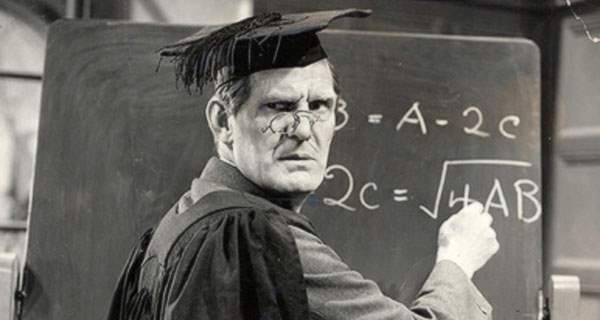
Characters are people!

soylent green
Go ahead. Say it like he would. You know you want to.

I’d always heard how your script should somehow reflect “the human condition”, but never really had a firm grasp of eactly what it meant or how you would accomplish that.

I mentioned the phrase in a discussion with another writer, to which they responded “I don’t care about that. I just want to tell good stories.”

But isn’t the story about the characters to begin with? And a story with under-developed characters won’t be as good as one where the characters feel like actual people.

Accomplishing that has always been one of my biggest challenges.

A comment I’ve received more than a few times in the past is that the reader finds my characters good, but somewhat incomplete. They’re established and believable, but only to a point. This isn’t saying they’re flat, one-dimensional caricatures (something I’ve unfortunately seen in many other spec scripts), but they don’t feel completely real.

Readers/audiences want to be able to relate to the characters in your script. They might feel they’re only getting a glimpse into what kind of person the protagonist is, or know there’s more to them, but that “more” isn’t there, and they want to see that. And this doesn’t just apply to the main characters; it’s everybody.

Digging a little deeper and offering up a few more details would help flesh them out, which in turn would make for a stronger story.

When I recently sent a script out for notes, the reader asked if there was anything specific I wanted them to focus on. Without a doubt, it was the protagonist and the antagonist. I felt while they were good, there was definitely a need to make them better.

The reader agreed and made some good suggestions about how that could be achieved. “We don’t know as much about these two characters as you might think,” they wrote. Since I was the writer, I had a little more insight into their respective backstories and what made them the people we see, but some of those details had stayed in my head, rather than been transferred onto the page.

So I went about adding in some small details here and there; a line of dialogue or a seemingly insignificant action. A few touches to give a little more insight into what makes them tick; why they are the way they are.

All of this, combined with a few alterations with the plot, makes this latest draft feel really different, and hopefully stronger, than its predecessors. I’m giving it a few more days to simmer, and will then give it another look to see if that vibe still holds.

What I’m also hoping is that from here on in, I’ll be able to apply this kind of approach to all future drafts, which would in theory, help achieve the same results but in a shorter amount of time.

Hope and ambition. Just two parts of the human condition, right?

I see what you did there, Mr. Kasdan

Marion Ravenwood
A handful of lines + a solid right hook = insight into 2 key characters

Of all the notes I’ve received about my western, the ones that really stood out the most were about developing the characters a little more – especially the titular protagonist.

I’ve also been spending some time reading, watching and analyzing the scripts and films that influenced it. Namely, RAIDERS OF THE LOST ARK (along with its sequels) and a few others involving female leads who kick ass.

It’s a great opportunity to explore what makes a character tick. A lot’s been written about the “exposition without being blatantly expository” scene in RAIDERS with Indy and the government men, but I’ve been paying more attention to other scenes; the ones that offer up a bit more about what kind of person Dr Jones is as seen through his interactions with other characters.

-Indy discussing with Marcus the implications of finding the Ark.

-The reunion with Marion (see photo above)

-The encounter with Belloq in the cafe in Cairo.

All of these (and a few more) present an aspect of Indy’s character WHILE ALSO advancing the plot. It takes a lot of effort to do that and do it well.

I’ve also been working my way through the infamous story conference transcript, where Spielberg, Lucas, and Kasdan work out the story based on Lucas’ idea of a “swashbuckling archaeologist”. While you can easily find the memo itself, check out this phenomenal post that also analyzes some key points of what’s being discussed.

A lot of this is what I’ve been focusing on during this rewrite. More than a few of my notes highlight certain scenes and say something like “This would be a great place to show us more about her.” So that’s part of what I’ve been trying to do.

I originally thought it would be really tough to implement those kinds of changes, but using RAIDERS et al as guidelines and knowing my objectives for each scene, it actually hasn’t been as challenging. Sometimes all it requires is a few extra lines of dialogue or a modified action line. It’s not always easy, but it definitely feels a little less daunting. Also helping – working on one scene at a time.

In the meantime, progress on the rewrite/polish continues at a healthy pace and I really like how this new draft is shaping up. I suspect the end result will be a little more than just slightly different from previous ones, and hopefully the changes will really take the script to the next level.

A population of your creation

deadpool
Part of the appeal was how blatantly non-traditional the characters were

Totally unintentionally, I’ve watched a handful of independent films lately. It’s just the way my Netflix queue was set up.

Apart from each one being a solid example of good writing and demonstrating how to craft a small and contained story with a limited number of characters, they also had the distinction of featuring well-known and established actors in a wide variety of roles.

My first thought was “How did they end up in this?”, but as the film played out and the story progressed, it became pretty apparent that the actors were attracted to the characters and that they were actually part of the story.

Ranging from those in a handful of scenes to the protagonist, each one felt fleshed out and three-dimensional. They had depth. Nobody came across as if they had no business being there to begin with.

This was also apparent in the trailers that preceded the films; many, if not all, I’d never heard of or had a very, very limited release. There must have been something to that script or the roles that would attract actors of that caliber.

As a screenwriter, you want to make sure that not only are you presenting a solid and entertaining story, but it has to be populated with original and unique characters we’re interested in, who are also developed enough that we become invested in wanting to see what happens to them.

Not as easy as you think.

How often have you seen a film or read a script where a character is simply a tired cliché? Notice how fast you lose interest?

Now if that character were something totally different than what you expected, wouldn’t you be more likely to want to go along on their journey?

Just as an example, I read a script last year with a protagonist who was introduced as a “total slacker dude, mid 20s”.

Snore.

And if that wasn’t tropey enough, he was playing a video game in his cluttered studio apartment.

Double snore. Seen it countless times before.

I’d suggested to the writer they consider really changing things up with a totally different approach. Rather than a slacker, what if the protagonist was some kind of genius? Or had been successful, but now fallen on hard times? Something, anything to not go down Cliché Avenue.

See where I’m going with this?

You’re not only telling a story, you’re providing the raw, base material for an actor to work with. They like delving into new territory just as much a reader or audience. By taking a different approach and providing the foundational details, you can create a new and original take on old and f amiliar characters.

Like with the story overall, give us somebody we’re not expecting. The more unique and interesting they are, the more likely an actor will be interested in portraying them, just as much as we’ll be interested in wanting to see what happens to them.

At least 11 choice “re-” words

teacher
No, class. “Relapse” is not one of them.

Progress on the latest draft of the comedy spec is coming along. Slowly, but still coming along.

Among the highlights:

repairing the script. Previous drafts had some notable and sizable problems on several fronts, so this is all about fixing them, or at least figuring stuff out to make it better overall. This is the main priority.

revising the story. Some of the scenes still work. The ones that don’t are out, with variations and totally new ones being developed and considered. A work in progress is a beautiful thing.

reviving older ideas. I keep all the notes and items jotted down over the course of working out the story, so there’s always a few items worthy of dusting off. This time around is no exception.

reorganizing the tone. Notes on a previous draft stated how uneven the story felt; like it was a few opposing ideas competing for attention. Currently working on streamlining things to make it all mesh better.

refurbishing characters and/or their traits. From the protagonist and antagonist to supporting characters to those appearing in one scene, everybody gets some kind of modification. Some big, some not-so-big.

reinvigorating the jokes. With comedy already being a subjective topic, I’m trying to come up with stuff I think is funny. Influences abound, and I want my sense of humor to be what runs that particular engine.

remaining calm. Finishing this draft won’t happen overnight, and trying to force creativeness or rush progress is the absolute wrong approach. Preferred method – taking it one step at a time.

resuscitating self-confidence. Writing a comedy’s tough enough to begin with. I’ve done it before, and despite a few missteps along the way, feel pretty solid about my chances this time around.

relinquishing the self-imposed pressure. Naturally, I want to have a good, solid script when I’m done (hopefully it won’t take many more drafts). Stressing about getting to that point won’t do me any good, which leads to the final point…

relaxing and recharging the writer. A good portion of my available time is spent writing or at least thinking about it. Working on it too much runs the risk of burnout, which would be completely counterproductive. Therefore, I allow myself time to simply step away and do something totally non-writing-oriented.

And when the time is right, I return to the rewrite.

Whew! Took me a while to refine this, but I don’t recall being so resplendently relieved to be done. Even better, none of it had to be redacted.

All that on a single piece of (digital) paper?

bad 1st impression
It can only go downhill from here

You only get one chance to make a good first impression. And that also applies to a screenplay. If your first page doesn’t make us want to keep going, why should we? Chances are the rest of it is exactly the same.

The first page is your golden opportunity to start strong straight out of the gate. Show us from the absolute get-go you know what you’re doing. A lot of the time, I’ll know by the end of the first page what kind of ride I should be expecting.

Just a few items to take into consideration.

-First and foremost, how’s the writing? No doubt you think it’s fine, but face it. You’re biased. You want a total stranger to find it fault-free, so look at it like one. Is it easy to follow and understand? Does it flow smoothly? When I read it, do I get a clear mental image of what you’re describing? Does it show, not tell?

-Is there a lot of white space? Are your sentences brief and to the point, or do they drone on and on with too many words?

-Do you point the reader in the right direction and let them figure things out, or at least get the point across via subtext, or do think it’s necessary to explain everything, including what a character is thinking or feeling? Yes, that happens on the first page.

-If your protagonist is introduced here, are they described in the way you want me to visualize them for the next 90-110 pages? Does a notable physical characteristic play a part in the story? Are they behaving in such a way that it establishes the proper starting point for their arc? Are they doing something that endears them to us, making us care about them?

-If your protagonist ISN’T on the first page, does it do a good job in setting up the world in which the story takes place? Do the characters introduced here play any kind of role later on in the story?

-Are there any mistakes regarding spelling or punctuation? Are you absolutely sure about that? SPELLCHECK IS NOT YOUR FRIEND. A team does not loose a game, nor do I think they should of won either. Two glaring errors that your software will not recognize. But a reader will.

-Does it properly set up the genre? If it’s a comedy, should I be prepared to have my sides ache from laughing too hard? If it’s a horror, should I make sure the lights are on, even if it’s 12 noon? If it’s a drama, should I have a box of tissues within arm’s reach to dry the expected river of tears?

-Do your characters sound like people saying actual things, or are they spouting nothing but exposition and overused cliches?

Not sure about any of these? Read it over with as critical an eye as you can muster, or get help from somebody within your network of savvy writing colleagues. DO NOT go to somebody who doesn’t know screenwriting.

Think I’m being overly critical? Ask any professional consultant or reader, and I bet 99 out of 100 will say they know exactly what kind of read they’re in for by the end of the first page. And number 100 might also agree.

Then again, there’s also the possibility that the first page could be brilliant and it stays that way until FADE OUT.

Or the wheels could fall off anywhere between page 2 and the end.

Your mission, and you should choose to accept it, is to make that first page as irresistible as you can, grab us tight, and not let go. Make us want to keep going. Then do the same for page 2, then page 3, page 4, etc.  Make us totally forget what page we’re on.

Take a look at the first page of your latest draft. Does it do what you and the story need it to?

-Didja notice the spiffy new look? Had to make some behind-the-scenes changes, and this is the result.