Q & A with Chris Mancini

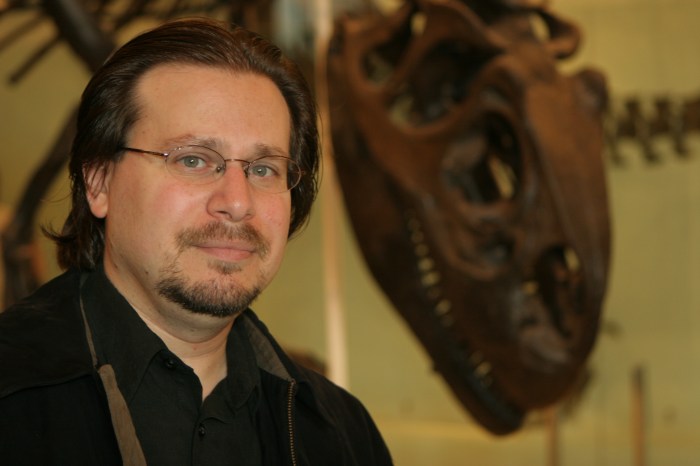
Headshot Chris Mancini T-Rex
Chris Mancini (l) and friend (r)

Chris Mancini is a Writer, Director, Comedian, Author, Producer, Podcaster, and Parent, which also makes him very tired. He has also written, directed and produced on everything from soap operas to parenting books to horror films, which are all more closely related than you think.

His feature films include ASYLUM from Lionsgate Films and EAR BUDS: THE PODCASTING DOCUMENTARY from Comedy Dynamics. His award-winning short films include SKINS, HITCLOWN, and RAINBOW’S END. Chris has screened films and spoken at various prestigious festivals and conventions including Slamdance and Comic-Con in San Diego.

His published works include Pacify Me: A Handbook for the Freaked Out New DadThe Comedy Film Nerds Guide to Movies, and the graphic novel Long Ago and Far Away.

A strong advocate of podcasting, Chris was the co-founder of the COMEDY FILM NERDS podcast, and is currently working on is scripted horror anthology podcast CONVERSATIONS FROM THE ABYSS. Chris was also one of the founders of the Los Angeles Podcast Festival.

What’s the last thing you read or watched you thought was incredibly well-written?

The two extremes would be Avengers: Endgame, because it was the culmination of years of storytelling, and Paddleton because it was a small two actor character piece that just sucked you in. The relationship and the drama of the two leads and their interaction was incredibly engaging. Mark Duplass and Ray Romano did an amazing job.

Were you always a writer, or was it something you eventually discovered you had a knack for?

I’ve wanted to be a writer since I was 16. I submitted short stories to magazines. Yes, that was a thing. Ironically, I got published first with non-fiction. I was a journalist for a local newspaper for a while (also a thing), starting at age 18.

What are some of your favorite comics and/or webcomics?

I really enjoy Hellboy. I also like anything by Neil Gaiman, and grew up on a healthy dose of Spider-Man and Daredevil. I actually remember when Spider-Man first got his black costume. It was an alien symbiote that came out of some weird machine during Secret Wars. I remember not being happy because I always liked the red and blue one. But you get over these things. I am also reading a lot of kids’ comics with my son, like Cardboard and Amulet which I am really enjoying.

How’d you get your start writing comics?

I kind of made it happen on my own. I’ve always wanted to write comics, and I had a story I thought would be perfect for the medium. I met Mark Waid through a mutual friend and podcast fan and he championed it. So I found an artist I loved and kickstarted it. I was able to fund it thanks to the generosity of the fans and then Starburns Press picked it up. I am very happy to be over there, and I think it’s a great fit for the book. I just got my first offer for a short piece in their next comics anthology. My first comics writing assignment! I’m hoping for many, many more. I would love to write more comics.

A lot of people hear the term “comic book writer”, but don’t really know what the job entails. How would you describe it?

Interestingly, since I have a background in indie film what you’re really doing as a comic book writer is writing and directing. You’re writing the script but also describing the action, pacing, and what goes in each panel. Basically you’re storyboarding like you would for a film. In indie film you have to wear a lot of hats, but with comic book writing you’re not just writing some abstract script. You’re describing each panel and basically directing the book. That’s why it’s so important to have a great artist to be paired with like I was with Fernando Pinto. Eventually you develop a shorthand and it gets quicker.

What inspired you to write your graphic novel Long Ago And Far Away? What was your process for writing it?

I’ve always loved fantasy stories, and growing up was a sucker for the stories about kids from our world who go into a fantasy world to save the day, like The Chronicles of Narnia. But I always thought about what would happen when those kids come back to our world and become adults. How would it have affected them? And then what if they had to go back into that world as an adult? The process was very, very long. I had the story a few years ago and it was in and out of development at various companies as an animated show, etc. But it never moved forward. But it was the kind of story that stays with you, and insists on being told. We all have stories like that; ones that won’t let you go. So I thought that a comic book would be a great way to tell the story. And I wouldn’t have to worry about there not being enough money for computer effects.

LAAFA was funded via crowdfunding. With a lot of comics creators taking that route to self-publish, is it something you’d recommend, and what are some tips you’d offer?

I recommend anyone who wants to create to just get out there and make it happen, any way you can. If someone buys your idea or hires you, great. But more often than not we have to greenlight ourselves. So if you’re a filmmaker, make a short film. If you’re a novelist, self-publish. If you want to make a comic, you need to raise enough money to pay the artist and make the book. But it can be done. Just know that crowdfunding is a full time job for that window of raising money. Don’t just think you can put a project up and money will magically appear. You have to promote, get endorsements from other artists, and also promote. Did I mention promoting?

You’ve also had experience writing for film, both narrative and documentary. How do you compare writing for the screen to the comics page?

I really, really, love it. It’s like filmmaking with an unlimited budget. No one comes back and says “we don’t have the budget to blow up Manhattan” in a comic book. If it can be drawn, it can be in the story. As far as story goes, film story progression and storyboarding can be really instrumental in writing for comics and guiding your panels.

A key component of writing (and not just for comics) is to make the stories and characters relatable. What sort of approaches do you take to accomplish that?

Characters we create often have traits of ourselves or people we know in them. That grounds them and keeps them believable. Even when it’s a supervillain, there’s a relatable trait you can give him or her. I always try to figure out what kind of character they are by how they would react in certain situations. Character reactions can convey lots of information about a character. As far as the story goes, keep the story progression organic. It should only have crazy twists in it if you were slowly leading up to them all along. The best narrative twists are the ones the audience didn’t see coming, but in hindsight were justified from the very beginning.

What are some key rules/guidelines every writer should know?

Write what you know.

Make the story personal, regardless of the genre or scope of the story.

Get help from other writers, and help them in return.

Don’t write for free for millionaires. If someone is serious about your work, they’ll make a deal with you.

Don’t neglect your body. Take time to exercise and unplug. It will help your mind focus and clear your head, which will improve your writing.

Filmmaker. Comics writer. Podcaster. Stand-up comedian. What’s next?

I really want to focus on writing right now, so I’m taking a break from stand-up, but may return to it at some point.. While I do the Comedy Film Nerds Podcast with Graham Elwood every week, I also have a scripted horror anthology podcast called Conversations From the Abyss that just finished its second season. I’m also hoping to get my next comic project going called Rise of the Kung Fu Dragon Master with the same team. It’s a martial arts/fantasy/comedy about a small time crook in Los Angeles who gets mixed up in a perennial battle between good and evil from ancient China. I also have various TV and film projects I’m developing and hoping to get into production.

How can people find out more about you and your wide body of work?

My website has links to my books and movies, including Ear Buds: The Podcasting Documentary. There are also links to the podcasts and my demo reel.

www.whitecatentertainment.com

Readers of this blog are more than familiar with my love/appreciation of pie. What’s your favorite kind?

Peach. ‘nuff said.

Bonus feature!

Here’s an episode of the Comedy Film Nerds podcast where Chris goes into an extensive recounting of his experience with his film Asylum. HIGHLY RECOMMENDED for aspiring filmmakers, plus it’s just an extremely entertaining tale. Well worth the listen.

http://comedyfilmnerds.libsyn.com/ep-219-dean-haglund

peach pie

Learning never stops. Never.

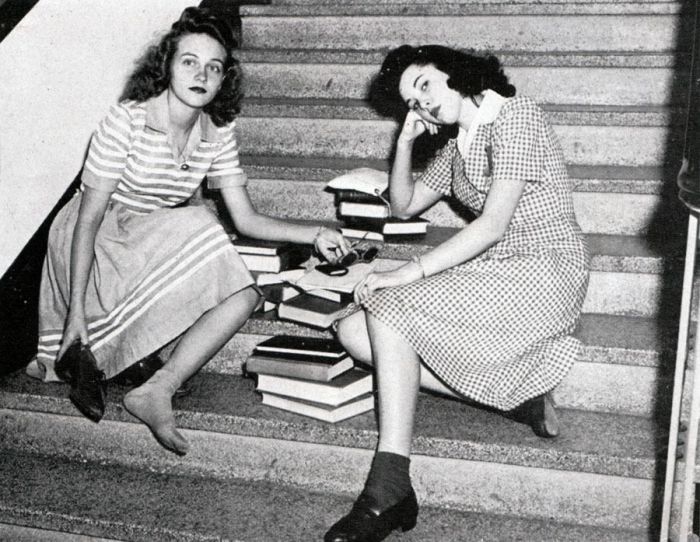
coeds
Sure, I may be tired now, but wait until you see the end results

So far, so good, at least in terms of how the rewrite of the sci-fi adventure spec is going.

Already managed to trim a decent amount of pages, with more potential targets coming up fast.

However, one of the most surprising results this time around is seeing more and more opportunities to really get the most of not just the words on the page, but HOW they’re presented.

I already knew overwriting was one of my biggest obstacles. I tend to go into more detail than is necessary. Not “this is the color of his t-shirt, and this is what’s on his breakfast plate”-type stuff, but more in terms of excessively describing what you’d see transpire onscreen.

This has become painfully obvious for some of the fast-paced action scenes. In the old draft, there’d be several lines about what a character was doing. This time around, I want to get to the point faster – partially for less ink on the page, and partially to help speed things up – so I highlight only the parts that the can’t do without.

It’s probably safe to say each scene has become shorter by at least some degree. Some by a few lines, others by half a page, etc. But the overall impact is becoming more noticeable. Scenes seem to be flowing more smoothly. Even though the descriptions aren’t as detailed as they were before, the new, tighter versions are just as visual.

Of course, since I’m the one writing it, I already have a strong sense of how it’s supposed to “look”. The real test comes when a reader gets their hands on it. Will they experience the same results? I sure hope so, so in the meantime, I do what I can to write it so everything is easy to follow and all questions are answered.

What’s most surprising at all about these new developments is I’d written my last few drafts of several scripts with the same approach I’d always used, but there’s just something very different about it this time around. The way this draft is being put together has a much more analytical feel to it. It’s as if something holding me back has been removed, and the positive results are coming in rapid-fire. One can only hope this sensation endures.

Once again, there’s no firm deadline for a completed draft, but as I mentioned, progress has been strong and steady, so “slightly sooner than possibly expected” will have to do for now. And even when that one’s done, there’s a strong suspicion that just a little more touch-up work will be in order.

Thrilling times, chums.

-Screenwriter/filmmaker Ally May has launched a crowdfunding campaign for her packs-an-emotional-wallop short film project In A Breath. Donate if you can!

-Major congrats to screenwriter/overall mensch Bob Saenz for the upcoming US release of the film of his script Extracurricular Activities, a journey almost two decades in the making. Here’s a great interview Bob did for Script magazine.

Seeking that which lies within

Kristen-Bell-Laughing-to-Crying

I won’t say the tough part of this rewrite is over, because it’s not. Well, part of it is. Sort of. Still working my way through Act 3 of the current draft, along with taking care of some minor story developments that have popped up as a result of changes along the way. Seriously hoping to wrap things up in the next week or so. Depends on how all of this goes.

But there’s one thing that’s been weighing heavily on my mind as I crank out the pages and start planning for the next draft. As good and solid as the action parts are, I also want to make sure the characters’ emotional arcs are just as effective.

Every character needs an internal and external goal. While the latter has never given me much of a problem, the former can sometimes be a bit trickier. Sure, there’s the protagonist and antagonist, which really drives the main storyline, but what happens with the supporting characters is just as important.

I’ve always been impressed with seeing how other writers incorporate little details or necessary information about the characters into the story that really help flesh them out AND add to the story. That’s what I’m seeking to do here. It’s also helpful to approach it with the mindset of “how to convey this information without it seeming too expository or on-the-nose?”.

As a writer, you want your characters to come across as realistically as possible, and by offering up some details about them – especially the why they do the things they do, it can help us better relate to them, and also make us wonder if they’ll be able to achieve their goals. When the story’s over, will we have seen how they changed from when they first showed up?

I’ve given myself the homework of watching films of a similar nature to get a better grasp on how to work these sorts of developments into the story. Going over the pages I already have has shown the foundations for each character are more or less in place, and will require digging a little deeper to really put them on full display.

While I’m glad I was able to produce this draft relatively quickly, I’m equally as eager to get started on the next one, taking care of everything it’ll require. That’s becoming a long list, but I’m feeling pretty confident about being able to effectively handle every item on it.

Q & A with Jeff Buitenveld of ScriptArsenal

Jeff Photo

Jeff Buitenveld of ScriptArsenal is an independent producer and former development executive with over 15 years of experience on some of Hollywood’s biggest films. He is currently a producer on the upcoming thriller The Kimberlite Process. After graduating with an MFA from UCLA’s Producers Program, Jeff worked in various capacities on numerous productions for Tom Cruise and Paula Wagner including The Last Samurai, Mission Impossible 3, Jack Reacher, Valkyrie, Lions for Lambs starring Robert Redford and Meryl Streep, Ask the Dust starring Colin Farrell and Salma Hayek, Death Race starring Jason Statham, The Eye starring Jessica Alba, Suspect Zero starring Aaron Eckhart and Ben Kingsley and many more.

What’s the last thing you read or watched that you thought was incredibly well-written?

Spider-Man: Into the Spider-Verse was a blast. HBO’s Barry is a funny and oddly haunting series. I recently re-watched/re-read Hell or High Water, which is a deceptively simple, sad, and suspenseful story with rich, complicated characters. Netflix’s The Haunting of Hill House delivered the goods on scares and family dysfunction for me. Issa Rae (“Insecure,”) Jill Soloway (“Transparent,”) Amy Sherman-Palladino (“The Marvelous Mrs. Maisel,”) and Andrea Savage (“I’m Sorry,”) all have unique, exciting, and powerful voices.

How’d you get your start in the industry?

I didn’t know anyone in LA when I first moved here but developed a sci-fi project that was quickly optioned by an Academy Award-winning producer (and never made). During that time, I was also accepted into UCLA’s Producers Program where I took Meg Le Fauve’s (“Inside Out” “Captain Marvel”) Development class, which was instrumental to my growth and understanding of cinematic storytelling and how to work effectively with screenwriters. I started cold-calling various companies for internships and was lucky enough to land positions at both Artisan Entertainment and Mike Medavoy’s Phoenix Pictures. Back then, Artisan had a deal with Marvel and I was immediately thrown into pitch meetings with various notable writers/directors on properties like Thor, Hulk, The Punisher, Black Widow, and Iron Fist, etc. I was also taking pitches at Phoenix – it was an incredible learning experience. I eventually became an assistant briefly to a Hong Kong action director and then used those experiences to land a job with Tom Cruise and Paula Wagner once I graduated from UCLA.

Is recognizing good writing something you think can be taught or learned?

Though having an eye for quality material can be a natural instinct, it needs to be honed. I ultimately feel that recognizing good writing can be learned and taught.

What do you consider the components of a good script?

Generally speaking, a good script maintains a captivating concept, and a flawed but likeable hero with a concrete objective attached to grave stakes (whether intimate or epic). The hero’s emotional flaw is often rectified as a result of him/her achieving their practical goal (he/she should also be active, resourceful, and exhibit a range of change). It’s helpful if the hero’s goal is time-sensitive and somehow socially relevant. Lastly, if the script is a feature, it should adhere to a three-act structure.

What are some of the most common screenwriting mistakes you see?

Too much description, on-the-nose dialogue, flimsy structure, and the lack of a flawed hero with a concrete objective, attached to grave stakes.

What story tropes are you just tired of seeing?

I’m not at all opposed to writers using things like “one last job,” “a reluctant hero who can save the world,” “a family in peril,” or “a fish out of water,” etc. The familiar can be very accessible and., if used effectively, can lure a reader into the story. The trick, however, is to infuse that story with other unique and complex qualities so that it unfolds in fresh and unexpected ways. What can make your story different or set it apart? I always urge writers to challenge the reader’s expectations or preconceived notions as to what type of story they’re entering!

What are some key rules/guidelines every writer should know?

-Use Final Draft.

-Study the most notable screenwriting books and authors.

-Read every script you can get your hands on whether good, bad, or mediocre.

-Have conviction but be open to ideas – ultimately this is a collaborative industry.

-Don’t be afraid of genre and don’t be afraid to push the boundaries on the tenets of said genre (but know what those tenets are).

-Actively seek feedback and don’t be precious.

-Strive to be both clear and complex in your writing and understand the difference between the two.

-Don’t be a hater – watch all kinds of movies and TV shows, and be mindful of those that are both commercially and critically successful as well as those that aren’t.

-Read the trades to better understand the marketplace.

-Don’t chase trends – write from the heart.

Have you ever read a spec script that was an absolute, without-a-doubt “recommend”? If so, what were the reasons why?

“Recommends” are a rare breed. Those that do qualify show a master of the craft, are usually somewhat familiar but also somehow unique, tend to maintain complex characters, rich themes, and have an easily identifiable position in the marketplace (you can visualize the poster, trailer, audience, etc.) That being said, most of the scripts I’ve read, even from the most notable A-list writers in the industry, still needed some further development.

How do you feel about screenwriting contests? Worth it or not?

I think it can be incredibly important and worthwhile, particularly for young writers, to enter screenwriting contests. However, I would also encourage writers to do some homework on which ones are notable and relevant so as to not waste too much money and time.

How can people find out more about you and the services you provide?

Go to www.scriptarsenal.com and follow us on FaceBook and Twitter to get updates on upcoming sales and weekly helpful screenwriting tips.

Readers of this blog are more than familiar with my love/appreciation of pie. What’s your favorite kind?

Given my mid-section I generally try to stay away from sweets, but a few years ago, I had some homemade pecan pie (numerous pieces actually) for Thanksgiving and it was an absolutely transformative experience…a chemical portal to another dimension that somehow transcended the time-space continuum…okay, maybe I’m being a bit dramatic but damn, it was good!

pecan 2

More work now, better results later

lalanne

It can be safely said the extensive overhaul of the outline for my pulpy sci-fi adventure story is just about wrapped up. Still have a lingering handful of small details in need of fleshing out, but I’m eagerly anticipating jumping into cranking out pages in the very near future.

Figuring all of this out – including several attempts on the beginning, and then working out the development of events over the course of the first act and the first half of the second act- took a lot longer than I expected, and definitely longer than I wanted. There were many times all I could think was “am I EVER going to figure this out?”.

A lot of writers feel that way while working on a project. We’re an impatient lot, and the ongoing struggle to find solutions doesn’t help. We want it already written. But learning how to do so effectively is necessary. How else will we improve?

It’s probably a safe bet to say that my development skills are stronger than they were – even compared to a couple of years ago, or else this overhaul wouldn’t be where it is now. Every story problem would require a lot of thought and mulling-over, and maybe I’d come up with a slapdash, roughshod placeholder of a solution – just to be able to move on.

A bad and counterproductive idea.

I like to put together stories with a lot of moving parts, and each one requires the same amount of attention in order to make the whole thing a smooth-running machine. If that means taking a little more time to do so, then so be it. I’d much rather make sure as I go along that everything works and connects the way it’s supposed to than have it come to a screeching halt because of something I overlooked or forgot about, or even worse, felt was “good enough for now”.

An added bonus to all the work on developing this story in the outlining phase is that since I’ve already written down what’s supposed to transpire in each scene, including the purpose and the conflict, it’ll make it easier (and in theory, a faster process) to transfer all of that to the actual pages.

Once I do start on pages, I can only hope to see a slight increase in my daily output. After having gone through the outline a few times, editing and tweaking as I go, I’m getting a stronger feel of flow for the story, seeing ways to incorporate more development for the characters, and just an overall sense of “I like the previous draft, but this one feels so much closer to what I set out to do”.

And I most definitely would not have gotten to this point if I hadn’t put in the time and effort to make sure every single part of it did exactly what I needed it to.