Edits, inspiration, and the rinse cycle

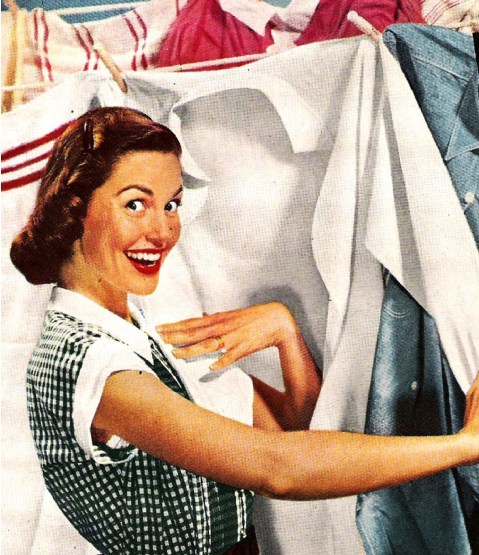
housewife
Gosh, what a day! My whites are sparkling AND I have a stronger sense of my protagonist’s internal goal!

I’ve mentioned before about my tendency to overwrite, which usually applies to both outline and actual pages. This time around with the pulpy adventure spec is no exception. There’s simply too much going on, so before the amount of material got too overwhelming, some significant editing was needed.

I don’t know how or why I do this, but sometimes there’ll be a scene or sequence that’s more or less a repeat of what’s already happened. Such was the case here. In the overall context of the story, the second one was more important, so thus began the great removal of the first one, along with reinforcing the connection between what came before it and the second one. It actually wasn’t too bad. It tightened up the story much more than anticipated and, in my opinion, kept that energetic momentum going.

My slightly unusual work schedule allows me to dedicate most of the early afternoon to writing, which is occasionally interspersed with some household chores. For this particular instance, it was laundry.

In some ways, I’ve been quite content with my progress, but there was something still nagging at me about it. Things felt…incomplete.

I was somewhere in the middle of that day’s writing session when the washing machine let me know the latest load was finished. While my body went through the motions of hanging stuff on the drying racks, my mind was barreling along a continuous stream of thought.

“What if THIS HAPPENED? Or THIS? Maybe I’m looking at this from the wrong angle. A lot of this has been about the protagonist. What about the antagonist? I don’t want them to come across as a mustache-twirling cartoon villain. Their goal seems too vague. Hey, I wrote a post about that. This is their plan, but why are they doing this? How about THIS? Hey, that’s not bad. Let’s take it one step further and make it THIS. Ooh! This would tie in perfectly to the rest of the story! Hmm. Would this make them see themselves as the hero? Whoa. It sure does. Hokey smokes, I think I’m onto something. I better write this down!”

And I did. It was like the satisfaction you’d get after finding the long-lost last piece of a jigsaw puzzle and snapping it into place. The more I thought about this, the more excited I got about implementing it. In fact, the editing/rewriting is already underway.

I cannot begin to explain what a surge of writing adrenaline (if there is such a thing) this created. There’s a line of dialogue in my western that even to this day still gives me chills. This new idea – same thing.

While all of this will no doubt push back the projected end date for having a completed first draft, this new development is totally worth it.

This is just another example of how inspiration really can strike when you least expect it. Embrace it when it does.

And if you’ve been sitting at your computer, frustrated that the words won’t come, maybe stepping away and doing something completely mundane might provide the solution you seek.

Plus, you’ll get the laundry out of the way, which is always good.

Now it gets really interesting

desert
First few steps are always the toughest. Good thing I came prepared.

Let’s pause now for your humble blogger-in-residence to proudly proclaim that Act One of the first draft of the pulpy adventure spec is complete.

Whoopee.

But you know what that also means.

Yep. Time to buckle down even more, strap myself in, and jump feet-first into the intimidating arena commonly known as Act Two.

I’ll also admit it’s a little thrilling, too. There was a particular charge in working out the action sequences and story set-ups in Act One, so I’ve a strong suspicion the continuing build-ups for the former and the gradual development of the latter will be equally, if not more so, fun to write.

(and believe me when I say this is the kind of story that automatically requires a sense of fun)

Maybe it’s from continuously trying to improve as I go, but working on Act Two doesn’t seem as intimidating as it used to. Not to say that it comes easily; just slightly less insurmountable. I spent a lot of time on the outline, so confidence in that is pretty solid.

I read a lot about how a spec script might have a phenomenal Act One, but then things fall apart in Act Two for a myriad of possible reasons: the characters don’t do much/nothing really happens, or the overall story’s too thin, so a lot of Act Two is empty filler, and so on.

The only writing process I know is my own, and I always strive to make sure the story feels…complete? Full? It comes down to “I know what has to happen to tell this story,”, and while the first act is all about setting it all up, the second act is about fleshing everything out.

We get a closer look at the characters and how they’re progressing through the events of the story. We can see how they’re changing from when they were first introduced. Plot threads of all sizes get further developed. The central question is continuously asked (oh-so-subtly, of course).

It also involves steadily-mounting complications for your protagonist. They’ve got a goal, and it’s our job to throw all kinds of obstacles in their way that just keep making it harder for them to reach it. Again, a lot of it happens during our second act.

Act Two really is where the meat of the story takes place, so stuff needs to happen that not only holds our interest, but makes us want/need to know what happens next, and even that better be that much more intriguing.


As you’d expect, our work is cut out for us.

So off I go. Dispatches from this formidable excursion as they develop.

See you on the other side.

Trying to unlock a key moment

skeleton-keys
One of these HAS to be it

I was hoping to wrap up the polish/revision of the comedy spec this week. Everything was going quite smoothly until I hit a bit of snag when I got to the end of Act 2 – only one of the most important parts of the story. Where things are definitely at the lowest point possible for our hero.

The general consensus of my readers was that the hero was too passive, and therefore needed to be much more active and stand his ground, yet still end up failing. Some suggestions were made, and I’ve been working on making it stronger and more effective.

Which brings us back to right now. As it reads, it’s just not working.

And that’s kind of frustrating.

I know there’s a solution to this, and my creativeness has been working constantly to come up with one that not only works with the context of the story, but seems plausible and believable.

As I said to one of my readers, I tend to overthink this kind of thing. To which they responded with “Remember, this is a story that’s supposed to entertain.”

And that’s pretty important, too.

Hopefully when all is said and done, it’ll do all of it.

-I ran the Giant Race half-marathon on Sunday. Got a small rock in my shoe around mile 7 or 8, but opted to keep going rather than sacrifice the time to remove it. The rock eventually was a non-issue and I managed to just beat my ongoing goal of 1:55 by one whole second – 1:54:59.

The good bad of your antagonist

mitchum
Few better examples than this guy

My original goal for February was to complete the second draft of the low-budget comedy. But as always, things didn’t go as planned.

I’d finished the initial edit, but then got hit with a nasty cold that put me out of commission for about a week, followed by all the activity involved with my daughter’s Bat Mitzvah (where she did a fantastic job), so writing-wise, things came to a screeching halt.

But we’re in a new month, so lots of new opportunities abound. Here’s hoping I can work this script into shape by the 31st.

I’d gotten some very helpful notes on it, the most notable of which was “Your antagonist is too nice. They need to be more at odds with the other characters.”

And they were right. Looking at it with fresh eyes, it’s easy to see how that observation rings true. During that read-through edit, I found at least three places where the character’s badness could definitely be ramped up, and expect more will be found over the course of this rewrite.

Sometimes I’ll even surprise myself by having the antagonist do something unexpected (in terms of behavior, not the story), especially if I personally find it very off-putting. But if it works within the context of the story AND further builds on the difference between them and the protagonist, all the better.

The challenge in writing a solid antagonist is really putting the emphasis on the “antagonize” part. What they want is most likely the opposite of what your protagonist wants, and they are determined to get it – possibly at all costs. To them, they’re the hero of the story, and your protagonist is what’s standing in their way.

I’ve always hated when I read a script and the antagonist is a stereotypical cookie-cutter villain who’s bad for no apparent reason, or because the story requires them to be. Why do they want what they want? I know what the hero wants, but what about them? Just because they’re the antagonist doesn’t mean there’s no story behind who they are.

So the next couple of weeks should be pretty interesting. There’s still a lot of work to do on this, but no doubt one of the high points will be the fun of coming up with ways to make my antagonist even more devious.

Because that’s the kind of character she is.

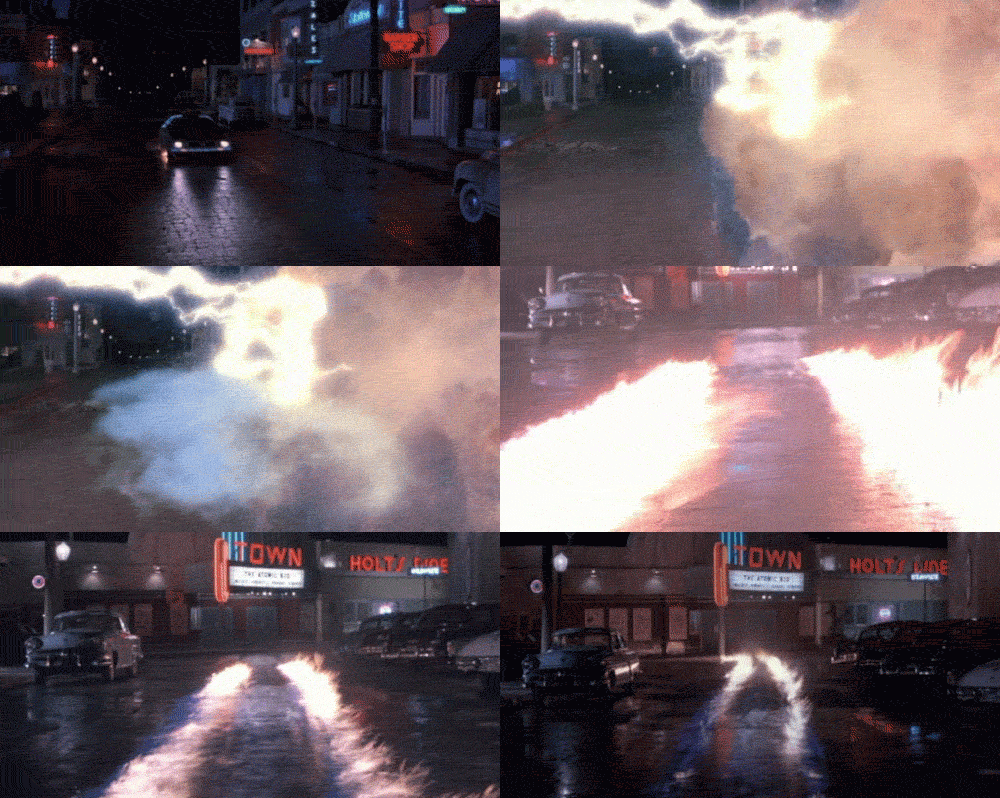
A few points about plot points

delorean

Time for a quick refresher course, chums.

Today’s topic: plot points. What they are and what they represent.

I’ve always seen plot points as pivotal moments in the story; events that change the situation for your protagonist, usually in a negative manner, and ask/reiterate the central question (Will your hero achieve their goal?).

Having solid plot points also helps establish your story’s structure. Without it, all you’ve got is a big convoluted mess, and who wants to read that?

Although this uses a 110-page script as an example, plot points don’t have to happen exactly at those pages. A few more or less is totally acceptable. I’ve also opted to use fairly recognizable examples to emphasize each plot point.

Pencils ready? Let’s begin.

Page 3 – statement of theme. What’s the overall message of your story? The theme should also be incorporated in some fashion into each scene throughout the course of the story. (“No McFly in the history of Hill Valley has ever amounted to anything!” “Yeah, well, history’s gonna change.”)

Page 10 – inciting incident. The event that shakes up you protagonist’s world, and asks the central question of the story. (Will Indy get the Ark before the Nazis?)

Page 17 – a twist to further complicate things for the protagonist. (“Alderaan? I can’t go with you to Alderaan!”)

End of Act One (page 25-30) – Your protagonist leaves behind their old world and enters a new one to achieve their goal. Also repeats the central question. (Marty arrives in 1955)

Page 45 – another twist to complicate things for the protagonist (Indy saves Marion, destroys her bar. “I’m your goddamned partner!”)

Midpoint/Point of No Return (page 55-60) – your protagonist becomes fully committed to achieving their goal (Brody decides to go after the shark after his son barely survives the latest attack)

Page 75 – yet another twist to really complicate things for your protagonist (Vader kills Ben as Luke & Co escape)

End of Act Two (page 90) – All is lost. Your protagonist is totally screwed with no apparent way out. Makes it seem like the answer to your central question is “no”. (The Nazis get the Ark).

Climax (page 95-100) – final showdown between your protagonist and antagonist. (Rebels attack the Death Star. Marty must hit the wire when the lightning hits. Nazis open the Ark. The shark attacks the Orca, eats Quint.)

Resolution (page 100-105) – Aftermath of the climax. Central question gets answered. (Rebels victorious. Marty returns to 1985. Brody & Hooper survive. Indy delivers the Ark.)

Denouement (page 105-110) – How your protagonist’s world is now different from what it used to be (but not necessarily better). (Marty’s family is successful. The Ark gets crated and goes into a warehouse. Luke & Han hailed as heroes. Brody doesn’t hate the water anymore.)

So there you have it. Do the plot points of your story match up with these? Just something to think about. And feel free to watch the movies represented here (or one of your own personal favorites, or one similar to yours) to see all those plot points in action.

It just might be some of the most fun homework you’ll ever have.