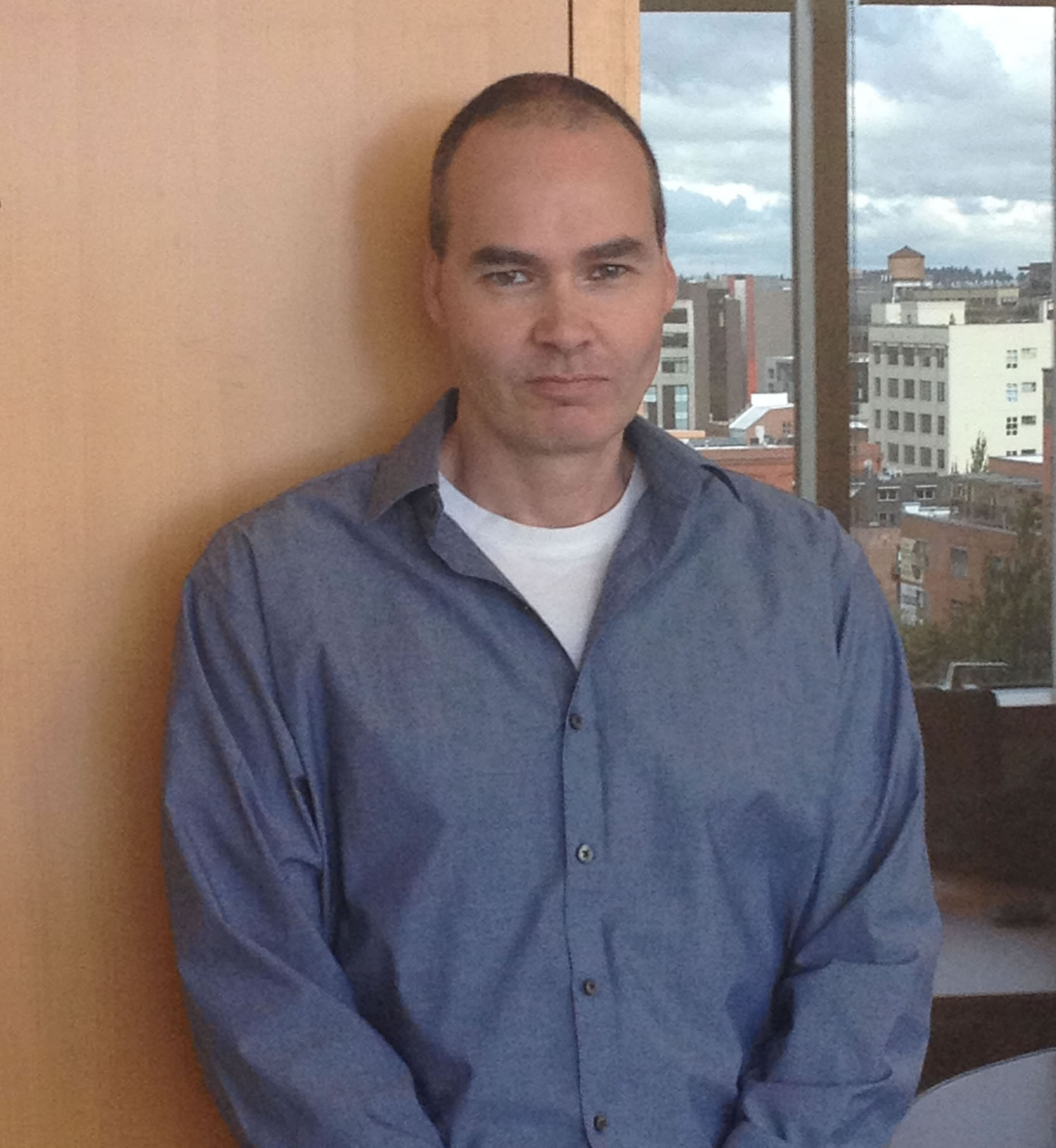
Rip-roaring and ready to go yet again


lightning
That’s me. All charged up.

Over the past week or so, the idea for a new story has been slowly developing inside my head.

Even though most of my attention continues to be focused on completing other projects, that seed has been planted and I work out a few details about it when I can.

This is just the beginning of the whole process, and my work is definitely cut out for me. Like with any script, it’s going to be tough.

But I also have to admit I’m quite thrilled about it.

There’s just something about coming up with a new idea that really reinvigorates your creative process. You’re excited about the story, the potential within it and possibly even (gasp!) looking forward to writing it.

I certainly doubt I’m the only who experiences this.

As expected, there will be days I get frustrated about any number of things related to this, which is par for the course. But I’ve also been doing this for a while, so the positive days steadily continue to outnumber the negative.

As has also been my experience, some of those negative days will most likely include outside comments of a tearing-down nature. Fortunately, I’ve developed a thick skin over the years and learned to ignore the ramblings of self-proclaimed “experts”.

For now, everything is still in the early-early development stage. It took a while just to come up with a good logline, and even that will probably still need work. Now I’m just figuring out the plot points. There’s no rush, especially since I already have several other scripts that require my attentions.

I like the concept of this one, and am really looking forward to seeing how things work out with it.

Something awfully familiar about this – OR – Already seen it

Not exactly the same, but mighty darn familiar
Whoa.

I was THIS CLOSE to being done with the latest version of the outline for the pulpy adventure spec when my writer’s sense starting tingling.

“Something’s still not right!” screamed out my internal editor.

What? That couldn’t be possible, could it? I’d spent the past few weeks being oh-so-meticulous in reorganizing sequences, working out subplots and connecting story points. How in the names of Walter Gibson and Lester Dent could there be a problem?

I looked at the outline with a more critical eye.

Opening sequence – check.
Intro of hero, establish his world – check.
Hero’s world drastically changes while raising central question of the story – check.
Complications ensue – check.
Midpoint where hero becomes fully committed to achieving his goal (accompanied by reminder of the central question) – check.

Wait. Back that up a little. To right between the “Complications” and “Midpoint” parts.

Hokey smokes, there it was. Cue the flashing red light bulb (with optional klaxon).

Two consecutive sequences just way too similar to each other. This is what’s been bothering me.

No doubt about it. One of ’em has to go. Probably the first one. You’d think it would be no big deal to just go in and change it.

And you’d be kinda/sorta wrong.

The events that happen during these two sequences are vital to the story, so the outcome needs to stay the same. The tough part now is figuring out how to change the “what happens” in that first one so not only is it unique enough unto itself, but also falls neatly into the overall structure of the story.

As always, a daunting task. For now. But potentially solvable given some time and exploration of possible alternatives.

I cannot stress enough the importance of why you should outline your story before even considering starting on pages, and being extremely thorough about it while you do. This is where you get all the heavy lifting done by figuring everything out. Where it’s a lot easier to identify the cracks in the foundation. Where it might take you a few passes to realize what works and what doesn’t.

Then again, this is how I do it, so your approach may be totally different. But speaking for myself, I prefer to go back in and fine-tune a couple of scene descriptions consisting of one to two sentences, rather than labor my way through several pages, then have to totally junk them because they’re not working.

So my focus for the time being is fixing this, then going through the whole outline a few more times, making adjustments where necessary, until I think it’s done/ready for conversion into pages.

-Got to see JURASSIC WORLD and INSIDE OUT last week. Both very enjoyable, but for very different reasons. Of the two, I’m more interested in seeing INSIDE OUT again, mostly for the writing and storytelling aspects.

Regrettably, still haven’t seen MAD MAX: FURY ROAD yet. Of all the summer releases, this feels like the one that must be seen on the big screen. Will do what I can to rectify that.

Ask a Helping-You-Help-Yourself Script Consultant!

Greg Rodgers

The latest in a series of interviews with script readers and consultants who would be worth your while to work with if you want to get your script in shape. Today’s spotlight is on creative exec-turned-consultant Greg Rodgers of The Script Therapist.

A Southern California native, Greg Rodgers knew at an early age he wanted to work in the film industry, and he knew the best way to get there was through UCLA’s School of Theater, Film and Television. While completing his senior year at TFT, Rodgers was hired by award-winning director F. Gary Gray to assist him on the Paramount feature The Italian Job. Rodgers transitioned to the world of independent film, taking a job at Alcon Entertainment, working directly for co-presidents Andrew Kosove and Broderick Johnson. It was at Alcon that Rodgers discovered his passion for the development process. From there he became a Creative Executive at Mutual Film Company, where he was the Director of Development.

While at Mutual, Rodgers worked on such films as Snakes on a Plane, Jack Reacher, and the independently financed Deadfall. With the help of Rodgers, the company moved into the world of television, selling a pilot to Sony TV, and setting up miniseries at Entertainment One and HBO Asia. On the feature side, Rodgers played a major role in shaping the 2014 slate, including a contained action-thriller titled Dead Loss, an epic four-quadrant family film based on the Newberry Prize-winning novel King of the Wind, and the next entry in Paramount’s Jack Reacher series. He is the former operator of the now-defunct Script Therapist script consultancy.

1. What’s the last thing you read/watched that you thought was incredibly well-written?

WHIPLASH. I just can’t shake it from my head. There were a lot of things that came together to make it work so well – Chazelle’s direction, the tone, the performances, etc – but none of that would have made nearly as much impact without such a great script. The writing is just so tightly focused and a testament to how important character is in a screenplay. We care deeply about Andrew and what becomes of him, not because he’s a nice guy – he’s actually quite selfish and anti-social – but because the script gives us reasons to become invested in him. Right off the bat we learn what he wants, how badly he wants it, we see his relationship with his father, we meet a girl he likes – all these things that make him feel like a real person. There’s a lot going on in that script, but when you strip it down, it’s a really simple story about this kid and his relationship with a teacher who changes his life – it’s all character, not plot, and that’s refreshing.

2. How’d you get your start reading scripts?

My first job was working as an assistant for a director on a big studio movie. Right off the bat I could tell that production wasn’t for me, but after the movie wrapped and we started looking for the next project, I started reading more and more and being exposed to what was out there. My next job was at a production company, where I really learned the nuts and bolts of development: what to look for, how to work with writers, etc. From there I was hooked and I knew it was not only something I wanted to keep doing, but something I had a real knack for as well.

3. Is recognizing good writing something you think can be taught or learned?

Though there are things you can learn about screenwriting and what makes a good script – because it is such a specific medium – being able to evaluate the quality of creative writing is largely innate. When you come across good writing, sure, you could stop and dissect the technical reasons why it’s good and why it works. But if you have to stop and think about that kind of stuff when you’re reading, or if you find that you’re asking yourself those kinds of questions (is the character and his/her goal established clearly? is there an inciting incident? etc), then you’re not really “getting it.” Good writing is just good writing, and someone who can recognize it will do so right away without even thinking about it.

4. What are the components of a good script?

The #1 thing is character. You can have the most intricate, well-thought-out plot in the world, but if it doesn’t involve characters that people are going to care about, then it’s all for naught. And then does that character have an arc or clearly defined emotional journey – i.e. has the character we’re left with at the end of the script changed from the character we met in the beginning? Also, is there conflict? There needs to be some sort of clearly defined antagonistic force in the script that creates conflict.

5. What are some of the most common mistakes you see?

I feel like too many writers just starting out try and write a scrawling epic that spans decades and has three dozen speaking parts. I just can’t stress enough how much I advise writers to keep it simple. Better to tell a small story really well than to tell a big story poorly. It also seems like a lot of young writers try and write scripts in certain genres based on trends in the industry. You can tell when you read a script if it was written from a cynical place rather than being genuine, no matter how talented the writer is.

6. What story tropes are you just tired of seeing?

It feels like the world-weary detective/cop with the haunted past has been popping up more than ever. I’m also pretty tired of the entire modern rom-com formula – that’s a genre that’s just exhausted and needs to be reinvented.

7. What are the 3 most important rules every writer should know?

-“write what you know” doesn’t mean you should create a main character who is an aspiring writer and terribly misunderstood

-in every scene you should be thinking about how that scene is moving the story forward, not just in terms of plot, but the main character and his/her arc

-make sure that whatever you write is something that you yourself would want to see. i.e. don’t write what you think other people want to see.

8. Have you ever read a script that was an absolute, without-a-doubt “recommend”? If so, could you give the logline?

I’ve read quite a few over the years, some of which went on to become movies, others which didn’t for any number of reasons. If there’s one thing those loglines have in common, it’s that they describe a movie about a character(s) and not plot points. I always encourage writers to strip their logline down to what the script is really about – is it about a boy losing his innocence, a man overcoming his grief, a woman starting over? . . not just what happens in the plot.

9. How do you feel about screenwriting contests? Worth it or not?

They can absolutely be worth it, in that it’s always a good thing to get as many eyeballs on your script as possible. I encourage writers to not just blindly submit their script to every contest under the sun, but to do a little research and determine what one or two contests might be the best fit for their script and experience level. For instance, the Nicholl is known for being friendly to historical dramas and the like, so your horror script might not be terribly well-received there.

10. How can people get in touch with you to find out more about the services you provide?

Greg no longer does script consulting.

11. Readers of this blog are more than familiar with my love/appreciation of pie. What’s your favorite kind?

Oh man, do I have to pick just one? I’m gonna go seasonal on you: in the fall/winter, I’ll take pecan pie. In the spring, strawberry pie, and in the summer (or anytime, really), key lime. Mmmm, pie.

Ask an In-the-Director’s-Chair Script Consultant!

Jeff Richards

The latest in a series of interviews with script readers and consultants who would be worth your while to work with if you want to get your script in shape. Today’s spotlight is on writer-producer-filmmaker Jeff Richards.

Jeff Richards is a story consultant, filmmaker, and writer with over twenty projects either optioned, produced, or sold. His clients range from award-winning novelists to creative writing professors to screenwriters working for major studios. His own writing includes feature films, TV series, graphic novels, and short stories, as well as writing for children’s animation and computer games. His background includes information technology, a decade as an opera singer, and he is an honorary member of the Takaya Wolf Clan of the Tsleil-Waututh First Nation.

1. What’s the last thing you read/watched that you thought was incredibly well-written?

The Karla trilogy by John Le Carré, and if you ever need a lesson that character is king, look to those. The books are often very low on action; they largely consist of dialogue (most of which is people recounting events, as you’d expect in a book about counter-intelligence) and the characters are so magnificent you don’t care that you’ve just spent hundreds of pages essentially listening to people talk. The protagonist for two of the books, Smiley, often isn’t even doing the talking; he’s merely listening. Yet it works.

As for watching, I’ve been re-watching Doctor Who, and “Blink” is possibly the best hour of television I’ve ever seen. Stunningly imaginative and original, incredibly atmospheric, and one of the very best examples of burying exposition I have ever seen in any medium. If I write something that good, I’ll die happy.

2. How’d you get your start reading scripts?

I spent several years as an independent filmmaker and although I did write most of the projects we were developing, I’d occasionally work with an outside writer and help them. That made me realize that I could apply what I’d learned as a writer to helping others with their scripts.

3. Is recognizing good writing something you think can be taught or learned?

Absolutely. The love of words is probably pretty difficult to instill in an adult, but if someone is already interested in it, then it is definitely possible to learn to recognize good writing. The secret is to read widely and actively, both good and bad material; once you’ve read and analyzed enough writing, and worked out why it works or doesn’t, you start to see the patterns very clearly, particularly in screenplays. Objectivity about our own writing? That’s trickier…

4. What are the components of a good script?

What’s most important, and what I don’t see enough of, is a unity of character, plot, and theme. People talk about “character-driven scripts” or “plot-driven scripts” when, in reality, they should driven by the same engine.

As for the rest, it’s about what you’d expect; an active protagonist, strong pacing, dialogue with subtext, an original concept, rising stakes, good conflict, a surprising but inevitable ending… all that sort of thing. However, the only absolute must-have is that it is interesting. For every other must-have you’ll see on a checklist, you can usually think of a great script that didn’t have it. Passive protagonists are death… unless you are talking about The Graduate. Or Being There. But these are scripts by master writers; you need to be very sure why you are going against the grain, and how it makes your story better. (And, as you can tell by the age of the examples, rule breaking isn’t that popular anymore in Hollywood.)

5. What are some of the most common mistakes you see?

Going back to the previous point, a disconnect between character, plot, and theme is common. This usually causes protagonists with unclear goals and flat second acts. However, the most common thing I see is on-the-nose dialogue. Characters who say exactly what they feel and think, or who sum up the central conflict in a speech. If you ever read “You know what your problem is?”, then that’s probably a bad sign.

6. What story tropes are you just tired of seeing?

I think I’m almost unique in that my answer is “none”. Every trope is ready for a great script to make it fresh. Amnesia is the most tired device in writing, yet The Bourne Identity comes along and is fantastic. There’s always room for a great script.

The thing that tires me isn’t story tropes, but clichéd dialogue. Don’t have lines from other movies in your movie. Be original.

7. What are the 3 most important rules every writer should know?

-Read widely; lessons are everywhere, and most of them are outside your genre and format. So if you’re a sci-fi feature film writer, read historical fiction. Read detective comics, manga, sitcom scripts. Expand your brain.

-Writing is rewriting; every first draft is a huge bundle of problems waiting to be solved. So solve it. And not by editing, but by rewriting. Changing words in action or dialogue is just editing. Changing characters, plot points, deleting or adding scenes, that’s rewriting. Do multiple passes, focusing on a different thing each time. One pass (or several, more often) for plot, one for each major character’s dialogue, one for action lines… if you’re building a shelf, you don’t sand and paint at the same time.

-Don’t get hung up on systems. Read how-to books, sure, but pick and choose your advice. Being a slave to a particular checklist is usually indicative of poor writing. If I can tell that you’ve read Save the Cat by reading your draft, then there’s probably too much Snyder and not enough you in your script.

8. Have you ever read a script that was an absolute, without-a-doubt “recommend”? If so, could you give the logline?

Unfortunately, I can’t share loglines due to confidentiality. But for me, “recommend” can’t focus too much on the logline. Concept is important, sure, but the writing is what matters, what makes it a “recommend”. I’ve had writers with straightforward concepts come to me and, after we hone the execution, they get jobs at major studios or get 10 on The Black List. That doesn’t come from the logline, but the execution, how they wrote (and, as per rule 2 up there, rewrote!) Chinatown’s logline doesn’t set the world afire, yet it is generally regarded as one of the great scripts. So a logline wouldn’t really illuminate why I feel a particular script is great. Loglines only show whether something is the type of script an exec should read (e.g. it’s high concept sci-fi and that’s what they’re looking for). The logline gets you the look; the writing gets you the job.

9. How do you feel about screenwriting contests? Worth it or not?

I personally don’t do them very often. I have in the past and placed well, but I never found the contest actually led to a job; what worked for me was my personal networking. However, every path is different and obviously you hear success stories. What is important is that you put in the time, both into the writing (mostly) and into building your career, whether that’s contests, pitchfests, networking… Whatever seems to be working for you, do that. If nothing’s working (and the writing is genuinely where it needs to be!), then change things up.

10. How can people get in touch with you to find out more about the services you provide?

Jeff is no longer actively seeking clients, but is still open to receiving requests via his website at strangeborders.com. He also suggests connecting with him on Twitter.

11. Readers of this blog are more than familiar with my love/appreciation of pie. What’s your favorite kind?

Pumpkin, no question. With fresh whipped cream. A great pumpkin pie will turn me into the seven-year old kid who eats so much he feels sick. It is inevitable.

I probably need help.

Ask a PAGE Silver-Winning Script Consultant!

Derek Ladd

The latest in a series of interviews with script readers and consultants who would be worth your while to work with if you want to get your script in shape. Today’s spotlight is on consultant Derek Ladd. His script Nina NANO was a Silver Prize Winner in the 2013 Page International Screenwriting Competition.

Award-winning screenwriter Derek Ladd started telling stories as a kid and never stopped. He lives in Portland, Oregon where he spends as much time writing as he does shaking off the rain (which is pretty much all the time).

1. What’s the last thing you read/watched that you thought was incredibly well-written?

The last exceptional script I read belongs to Matt Tolbert, a client of mine. I can’t go into specifics but it’s an historical screenplay about the Nordic Vikings. It’s refreshing to work on a script that pulls me in on page one and doesn’t let go. All of the elements (pacing, plot, characters) came together to create an immersive reading experience. As for movies, the last one I saw that featured great writing was DALLAS BUYER’S CLUB. This is a movie that nails the writing on all levels: the visuals, the dialogue, the subtext, all of it. Another surprisingly good movie I loved is an indie foreign film (horror comedy genre) set in Ireland called GRABBERS.

2. How’d you get your start reading scripts?

When I started my script consulting service, one of my early clients wanted to produce a movie. I’d written a couple dozen short stories and a few novels by this time and this client had read some of my work. And since a screenplay is the first element one needs to make a movie, she recruited me to write one. The only obstacle was that I had no idea how to write a script. So I bought two books on the subject and they didn’t help: each book contradicted the other. Then I bought one of those fancy bound scripts at Barnes & Noble – ADAPTATION (Charlie Kaufman, based on Susan Orlean’s book). Of course, it was more of a transcript so it didn’t help much either. I finally gave in to the fact that I would need to attend a class, and in Portland, Oregon the master of screenwriting was Cynthia Whitcomb. I took both of her classes, read her books and picked it up pretty quickly. My first script was an adaptation of my novel WITHOUT WINGS. From there I started reading scripts written by my classmates so I could give them feedback. The writers I worked with were so pleased I started doing it professionally. To date, over a dozen of my clients have won or placed in a variety of screenwriting contests.

3. Is recognizing good writing something you think can be taught or learned?

I would say ‘Yes’ to both questions simply because one has to know how to recognize good writing in order write good material. While writing novels I found inspiration in everyone from Heinrich Boll, Truman Capote, Norman Mailer, Kurt Vonnegut and David Sedaris to William F. Nolan, Anne Rice and Stephen King. If an aspiring screenwriter thinks GIGLI or SHOWGIRLS is a great screenplay, trying to write a great script will be damn near impossible. If, however, the same screenwriter dives into work by Michael Mann, the Coen brothers, Joss Whedon, or Luc Besson (to name a few), or any brilliantly written script (JAWS, FARGO, THE MATRIX, HAROLD AND MAUDE, SERENITY, THE SILENCE OF THE LAMBS), that writer will strive to achieve the same level of success in their own work. Excellent writing that makes you laugh and cry and get goosebumps has more power to teach aspiring writers than any classroom instruction ever could.

4. What are the components of a good script?

The Seduction Element: I watched a good DVD lecture featuring Michael Hauge a while back called ‘Grabbing The Reader In The First 10 Pages’. Mr. Hauge opened the lecture by explaining that part of the title is a misnomer: he said that ‘grabbing’ is too forceful a word and that what a writer should aim to do is seduce the reader. That’s at the top of my list. Seduce me with your words. Make it impossible for me to put it down: make me laugh, make me anxious and/or make me curious in the first five to ten pages. If you can evoke a strong emotion in the reader as soon as possible and keep it flowing that reader will be yours to the end. A famous writer (don’t ask me who) once said, “The first sentence should make you want to read the second. The second sentence should make you want to read the third…”

Strong characterization: A fleshed-out, intriguing character has the power to lead the reader anywhere. If a script starts out with three pages that describe the inside of a barn or a ton of details to set up what’s to come, I’ll put it down, or throw it at you if you’re close enough. The writer may have created the most awesome outpost on an alien planet anyone has ever dreamed up, or constructed the greatest plot ever conceived in the history of the written word, but without a solid character to invest in it won’t matter. For me, strong characterization is the whole shebang: a memorable introduction, sharp, believable dialogue, behavior that’s consistent with how the character would act in a given situation, etc. If the character has an arc (not required in some genres, but strongly recommended) it should be begin and end at the proper times – no rushing and no shuffling. Steady as she goes…

Originality: Is this a script I’ve read a hundred times before, or will it surprise me? I’m not saying it has to be about a group of purple, basketball-shaped alien opera singers from the planet Snergle. When I say ‘original,’ I’m referring to the unique spin a writer puts on the material. As an example, a good detective story populated with adults is okay, while a detective story populated with high school kids (like the film BRICK) is original and stands out. No need to reinvent the wheel; popular genres are popular for a reason. Just find a way to spin them and surprise the reader.

5. What are some of the most common mistakes you see?

Everyone’s guilty of typos and grammatical errors (myself included), so it’s a given that any editor/consultant will find them. Aside from that, one common technical mistake I see involves scenes that spill over into other locations without new scene headings. Drives me crazy. I also see a lot of scene headings written improperly, missing words, character name inconsistencies and factual errors (names of objects, cities, states, countries or famous people misspelled). To a lesser degree, I see action lines that are jumbled: a character enters, pulls a gun, fires. Then it’s noted that the light is flickering overhead. Oh, and the guy in plain sight by the pool table (who was never mentioned before) fires back. It’s like when someone tells a joke and stops in the middle to say, “I forgot to mention, the guy riding the donkey is a priest.” It’s distracting. Unless you’re writing a narrow-to-wide shot, set the scene: describe who’s there and what they’re doing then describe the action. Otherwise it feels clunky and awkward.

6. What story tropes are you just tired of seeing?

The expression “I get it” is everywhere now. I don’t know where it came from. Maybe it’s like the cicadas that surface every 17 years or whatever and it’ll disappear soon. Here’s an example: “Hey, getting hit in the crotch with an umbrella ticked you off. I get it.” The biggest users of “I get it” are the writers for SUPERNATURAL, CRIMINAL MINDS, and SONS OF ANARCHY, all great shows that would be even greater if they’d stop using “I get it” six times per episode. It’s superfluous. Think about it: if one character describes what another is feeling, is it necessary to cap it off with “I get it.”? No. It isn’t. So please stop it. A visual trope, as it were, is the weird technique where the action goes into slow motion then speeds up again. I think the movie 300 started that whole thing. Hopefully a better movie will come along to put an end to it soon.

7. What are the 3 most important rules every writer should know?

The following answers are based on the assumption that the writer has developed a unique concept and story that he/she is passionate about. My answers further assume that the fundamentals of story, characterization, plot, dialogue, writer’s voice, pacing, style and overall balance (60% action, 40% dialogue) have been carefully considered throughout the writing process.

-The first 5-10 pages are life and death for a writer. As an editor/consultant, I get paid to analyze a writer’s work. Studio script readers, on the other hand, get paid to say ‘No’ to conserve a producer’s valuable time and an investor’s money. So unless you give the reader a solid reason to say ‘Yes’, your script is headed for the recycling bin. Set the hook as soon as possible and set it deep. Make that studio reader take your script into the bathroom (to read).

-Unless you’ve written a character-based indie script, structure is critical. Do your own structure analysis to see where you land: inciting incident by around page 12, plot point one by the 1/4 mark, strong midpoint by the 1/2 mark, plot point two by the 3/4 mark and the climax in the last 10-15 pages. You’re allowed a brief end-cap/denouement of 1-3 pages and then FADE OUT.

-Formatting DOES matter, especially for a spec script. Know the average length for comedies, thrillers, horrors, dramas, etc. Turning in anything under 90 pages or anything over 120 is a longshot. Know that formatting varies between different genres and how to use these varied techniques to your advantage. Barb Doyon’s book Extreme Screenwriting has an excellent chapter on formatting and how to use it to enhance a spec script.

8. Have you ever read a script that was an absolute, without-a-doubt “recommend”? If so, could you give the logline?

I’ve read a few scripts over the years I would strongly recommend, which is probably right in line with the industry percentage of one half of one percent. I don’t have loglines to share, but the clients whose scripts I would recommend include Chanrithy Him (WHEN BROKEN GLASS FLOATS), Santa Sierra (spec episode of THE GOOD WIFE), Bill Johnston (REQUITED), Erin McNamara (BORU), Mike McGeever (SMILERS) and Dorothy St. Louis (EL CUBANO). Others can be found at ProofEdge.com on the Testimonials page.

9. How do you feel about screenwriting contests? Worth it or not?

It really depends on the contest. My advice is to do some research, comb the web and read message boards. Moviebytes has a lot of info on contests and how contestants rate them. Find a contest that’s a good fit for your work. Some contests aren’t as open to traditional Hollywood blockbuster-type scripts (Zoetrope), while others offer a range of categories to accommodate all writers (PAGE Awards). If it’s a sizeable, reputable contest (PAGE Awards, StoryPros, Nicholl, among many others) I strongly recommend using it as a measuring stick to see where you stand as a writer. A writer shouldn’t get too bummed if his/her script doesn’t make it past the first round – a script can do poorly in one contest and win another, it happens all the time. Many contests offer notes for an additional fee, which can be quite helpful if done by a professional. Keep in mind that, while winning is the goal, simply making the Finals can attract studio attention, and doing so looks good on a resume when querying agents and producers. Winning or even placing in a contest can make the difference between an exceptional, unknown writer and an exceptional, discovered writer.

10. How can people get in touch with you to find out more about the services you provide?

Check out my website www.deladd.com, or email me at derek@deladd.com.

11. Readers of this blog are more than familiar with my love/appreciation of pie. What’s your favorite kind?

Apple, hands down. My mom always made the best apple pie when I was growing up. The way she makes it, the apples aren’t too sweet and they’re not overcooked and mushy. A couple of years ago I made a butter crust from a simple recipe I acquired as a sous chef. The combination of her perfect filling and my crust (which melts in your mouth) is pretty spectacular.