In it for the long haul

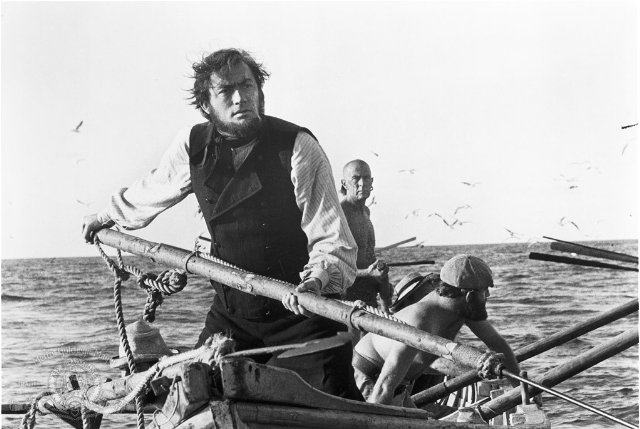
ahab
A somewhat extreme example, but you get the idea

Some days this is quite the struggle. You slave away on a script, send it out (contest, query, what have you) and hope for the best.

Unfortunately, a lot of the time, the best isn’t what happens. There will be rejection. A lot of it.

But every defeat is temporary, and a chance to regroup and try again.

In the beginning, when somebody tells you “no”, you take it personally. But you eventually grasp the concept that they’re addressing the writing, not the writer. You hunker down and keep going, continuously striving to improve.

The “no”s will still come, but eventually you get to the point where you simply shrug it off.

“Why even bother?” some might say. “Why keep doing this to yourself?”

Because the longer and harder you work at it, the closer you get to reaching that goal.

Because we feel this is a goal worth pursuing.

Because we’re compelled to.

Because we believe in our abilities.

Because we love doing it.

Success, especially when it applies to screenwriting, does not come easy. Or quickly. You will need an unlimited amount of patience and perseverance. This is going to be a long, perilous journey.

I’ve started walking. Who wants to come with me?

And I think this is a pretty good way to get things started.

If only you could eat a bad script

pineapple upside down cake
Let the metaphors commence!

Before we get to the gist of today’s post, let’s address the elephant in the room: my western did not advance to the quarterfinals of the PAGE contest.

Honestly, I was a little surprised; I thought it would have done better. After a brief wallow in disappointment, I shrugged my shoulders and moved on. It’s just another one of those things over which I have no control. I still have a ton of confidence in this script and might submit again next year. Also waiting to see how it fares in Austin and the Nicholl.

True, it was a rather lousy way to start the weekend, but over the next couple of days, I managed to redirect my focus, which included a nice long run that involved traversing the Golden Gate Bridge, and attempting something I’ve always wanted to try:

Making a pineapple upside-down cake (from scratch, naturally).

Guests were coming over for dinner, and I’d made pies for them before. But this time,  I wanted to try something entirely new and preferably a little challenging. I’d say this falls into both categories.

I scoured the internet for an ideal recipe, found one to my satisfaction, and followed the directions to the letter. The result? It looked like it was supposed to, and that’s where the similarities end. A little too sweet and the center was still kind of goopy. Nevertheless, my guests still liked it, and K & I split the last piece after they left. Not bad for a first attempt.

Why did it not turn out the way I expected? A lot of reasons. The oven’s a piece of junk. It didn’t bake long enough. The ingredients and the amount of them probably need to be tweaked. No matter what, I know now that I can adjust all of these next time and get closer to the results I seek.

Except for the oven. It will forever remain a piece of junk until it dies. Which can’t happen soon enough. But I digress.

Notice all of the comparisons you could make between baking and writing a script? Trying something new and long-sought-after. Seeking advice and guidance. Following the guidelines. Doing what I was supposed to. An okay-but-was-hoping-for-better initial result. Planning ahead on what to fix/adjust for next time.

If a less-than-determined baker ended up with the cake I made, they’d probably denounce the whole process, give up entirely and probably buy pre-made stuff at the supermarket. But we’re made of sterner stuff. We hit a snag or some kind of unforeseen development, and we compensate as best we can. We learn what not to do next time. Sometimes you end up with something jaw-droppingly amazing, and sometimes you end up with something totally inedible.

With this whole experience behind me, I can now focus on projects of the immediate future, which includes another round of editing and revising a script, and making a pie or two for a dinner party this coming weekend.

It’s my intention to have the results of both of these undertakings be totally and utterly irresistible when they’re done and ready to serve.

Taming the beast we all must face

lion 2
Intimidating at first, but eventually, just a big ol’ pussycat

When I was part of a writing group last year, each week we would read and critique a few members’ sets of pages. Some were just starting out, some had a few scripts under their belt, and some had been doing this a while. You can probably figure out which category I fell into.

Simply put, some of the writing just sucked. Really sucked. Like painful-to-listen-to sucked. To my credit, tempted as I was, I never actually expressed my thoughts that way.

I fully understood that not everybody had a firm grasp on the basics, and I, along with a few others, made a sincere effort to explain what would help improve their work. While a majority were appreciative of our comments, a select handful got defensive, some even to the point of flat-out dismissive, of any kind of comment that didn’t reinforce their belief that their writing was fine just the way it was.

This was one of the things that helped me decide to leave the group.

One of the universal truths about being a writer is that not everybody’s going to like what you’ve written, and just about everybody will have a suggestion as to how it could be better.

While there’s nothing you can do about the first part, the great thing about the second is that it gives you options. A lot of them. You like what this person said? Use it. Don’t like what that other person said? Ignore it.

Some people will make suggestions based on how they would do it, which is all well and good, but what’s more important is how you would do it. Do you agree or disagree with what they’re saying?

You’ll be bombarded with a wide variety of opinions, but don’t feel like you have to incorporate every single one. And while you may be the final word on what works and what doesn’t for your story, you shouldn’t dismiss every suggestion either. Some of them may be more helpful than you realize. There are a lot of  writers out there with more experience than you, so their opinions should be at least taken into consideration. But it’s okay to disagree with them, too.

Speaking from experience, it takes time to learn not to take criticism of your material personally. The comments you receive may sting at first, but you have to remember they’re about the material, not you. Read them with a “How can I use these to get better?” frame of mind. That’s the only way you’re going to improve.

One last thing – make sure to thank the person for giving you notes, even if you totally disagree with everything they’ve said. Doesn’t matter if you asked them to do it or they offered. They took the time to help you out, and the least you can do is acknowledge that and express your appreciation for it. And it’s the polite thing to do. Manners still count.

Time very well spent

finish line
Yeah. It felt just like that.

And…I’m back. Didja miss me?

To say the past week and a half has been a little hectic would be a slight understatement*. And of course, it involves writing and the opportunities that come with it.

Long story short – Somebody wanted to read one of my scripts. But I hadn’t finished writing it yet. So I wrote, edited and polished it. In ten days. Without taking time off from work.

As you can probably guess, I’m equal parts exhausted and exhilarated at having done it.

While I catch my second wind, here’s the extended version:

A little over three weeks ago, I connected with somebody who works for a production company. They mostly do TV, but are looking at expanding into features.

Emails and pleasantries were exchanged. They took a look at the blog, liked what they saw, and asked for a list of my loglines “to see if my boss might be interested.” So I sent it. This was on a Friday afternoon.

A vital piece of the puzzle to keep in mind – just before all of this occurred, I’d gotten the outline of a long-dormant comedy spec to the point where I felt ready to start on pages. Which is what I was doing while all of this interaction was occurring.

The following Monday morning, the response came in. “Do you have scripts for X and Y? Would love to request if so.”

Naturally, X was the long-dormant comedy spec that so far I had written all of 8 pages, and Y was still in outline form (which I’d already been considering producing in another medium).

My initial thought was panic. Neither script was available, but I didn’t want to blow the opportunity; I wanted to be able to send them SOMETHING. Sooner, rather than later. What to do, what to do?

After a little evaluation and weighing all my options, I wrote back that I was still working on the latest draft of X (which was true), and could have it for them the following week. I’d considered saying a few weeks or a month, but that seemed too long. Regarding Y, I said pretty much what I mentioned above – it was an outline, but they could take a look at it if they wanted to.

They were cool with both options, and were looking forward to reading them.

I’d just thrown the gauntlet in my own face. What had I gotten myself into? Was I totally insane for thinking I could pull this off? Would I be able to pull it off?

Only one way to find out.

I had a script to write, and had to do it faster than I’d ever done it before. I had no intention of sending them a first draft, so I had to crank that out and do a major polish on it. In about a week and a half. Taking time off of work was not an option, so I’d have to be as productive as possible in the off-hours that didn’t involve sleeping.

I explained my plan to my understanding family and got to work.

I produced as many pages as I could per day, averaging 8-10. Those would then be edited & polished during all available downtime at work (it being summer vacation season was a godsend – traffic’s much lighter, so that really helped). I’d get home, incorporate the changes, then move on to the next set.

Write, edit/polish, rewrite, repeat. A seemingly never-ending cycle.

A few things I discovered during all of this:

-Having a solid outline made it so much easier. I knew exactly what had to happen in each scene, and how I wanted it to happen, so there was no time wasted trying to figure it out.

-I sincerely think my joke-writing’s gotten better.

-I’ve gotten much more proficient at coming up with solutions to last-minute script-related problems.

-I seriously wondered if this is what it would be like if I were doing this for a living. I’d actually be pretty cool with it.

After ten days of non-stop effort, I had what I considered a somewhat decent 97-page comedy script. Both it and the outline have been sent.

Of course, they may not like either one. But at this point, I don’t care. Simply having accomplished this is my victory. I set an intense short-term goal and did it.

The script could definitely benefit from at least another rewrite, but that’s not a priority at this juncture. I wrote it in the time I said I would, and that’s the important thing.

Others may scoff at my feeling of accomplishment, claiming it’s no big deal or that they’ve done it or even done it in less time. But their words will fall on deaf ears because it’s a big deal to me. This is something I did, and am extremely proud of having done it.

So what now? I’m taking the weekend off, which will include going for a much-missed and much-needed training run.

But come Monday, I’ll be right back at it, hard at work on whatever project I opt to do next.

Hopefully, I’ll be able to take my time with it.

*I really appreciate everybody’s patience, and hope you enjoyed the throwback posts. And K wanted to thank everybody for the kind comments about her guest post. Yes, I am a very lucky guy to have somebody like her.

Q & A with Ashley Scott Meyers of Selling Your Screenplay

ashley-meyers-high-res

Ashley Scott Meyers is a screenwriter and blogger/podcaster at SellingYourScreenplay.com. He has optioned and sold dozens of spec feature film screenplays, with many making it into production. All of Meyers’ screenwriting success has come through his own marketing efforts which he teaches on his blog and podcast.

What’s the last thing you read/watched that you thought was incredibly well-written?

The screenplay for SOURCE CODE is excellent; one of the best scripts I’ve ever read. I highly recommend it to anyone who is a screenwriter.

I have two young daughters, ages six and three, so I’m watching a lot of children’s movies these days. I just watched THE IRON GIANT for the first time, and thought it was very well-written.

In fact, I’d call MEGAMIND one of my favorite films. In terms of screenwriting, it’s excellent. There are very few films I watch that I think are perfect, but as a screenwriter, I’d consider it one of the few that could be called practically flawless.

My daughters and I recently watched the 80’s classic CLOAK & DAGGER, another very well-written movie. It keeps the action going and all comes together at the end. A very smart script. I saw it when I was a kid and didn’t think much of it at the time, but seeing it again, it’s a pretty solid piece of writing.

Tell us about your writing background, including your “big break”.

I’m not sure I’ve really had a “big break.” Every script I sell or option feels like a monumental effort and it hasn’t gotten any easier. In fact, I’d say it’s gotten harder as the DVD market has shrunk over the last decade or so.

But to answer your question… I really never had a background in writing. I just liked movies, and for some reason writing scripts appealed to me. So I decide to pursue screenwriting. I was a terrible student when it came to English, writing, spelling, and grammar. Pretty much every skill you need to be a writer, except one (maybe two)… persistence and determination. So I’ve just plugged away and sold a few scripts.

How did the Selling Your Screenplay blog and podcast come to be?

Believe it or not, I once saw Gary Vaynerchuck speak at a conference where he was talking about not putting your personality into your brands. At the time, I was running a whole bunch of websites, but nothing around screenwriting. So I decided then and there that I needed to do something that combined two of my skills and interests: screenwriting and web development. So I did.

As far as the podcast goes, I just started to listening to podcasts and I thought they were really powerful. So I launched my own.

You’ve had experience with short films. What do you consider the benefits of working on a short, both as a writer and filmmaker?

The biggest thing is that you get to see your work get completed, which is rare as a screenwriter. But if you write a halfway-decent short, it’s fairly easy (nothing is every easy in this business, but it is possible) to find someone who wants to shoot it. You also might get an IMDb credit, win an award at a film festival, and meet other filmmakers. Shorts are a great way to hone your craft. You’re not going to make any money doing them, but they can be a great learning experience.

Is recognizing good writing something you think can be taught or learned?

Yes. The more screenplays you read, and the more you write, the more you’ll be able to recognize good writing.

One of the things that makes movies so vibrant is the fact that you can watch a movie or read a script and notice different things every time, depending on where you are in your own life and skill level.

But yes, everyone can get better at writing and recognizing good writing.

What are the components of a good script?

That’s a pretty broad question. If I had to boil it down, I’d say good writing evokes genuine emotion in the reader or watcher. If someone reads your screenplay, and it evokes emotion in them, you’re on the right track. Everything else, like structure, characterization, dialogue, the hook, theme, etc., is really secondary to being able to evoke emotions in people with your words.

What are some of the most common mistakes you see?

The biggest mistake is underestimating the amount of work it takes to be a professional writer. I hear from so many people who’ve written one script, entered it into a handful of contests, and then wonder why they haven’t made it as a professional writer. Nobody gets to pitch for the Yankees after spending one summer practicing. Being a professional screenwriter is probably as hard as, or at least harder than, being a professional athlete. It takes an enormous amount of luck, talent, and lots and lots and lots of hard work.

What story tropes are you just tired of seeing?

It’s often inevitable that you’ll write scenes that feel familiar. I often find myself doing it, so I step back and just mix things up a bit. Try anything that’ll give the tired tropes a new interesting spin, which often boils down to adding a quirky or interesting character to the scene who can mix things up.

I recently watched a short film where a little girl dropped an ice cream cone that fell to the ground in slow motion. It was so clichéd that I really wondered why the filmmaker didn’t try to do something more original.

What are the 3 most important rules every writer should know?

There are really only two mandatory things to do to be a successful screenwriter: write a lot, and read a lot of screenplays. That’s it.

If you do those two things and really spend time analyzing your writing and the writing of others, you’ll get better and maximize whatever talent you have.

How do you feel about screenwriting contests? Worth it or not?

Contests are great. Screenwriters should be doing everything within their power to get their work out into the world, and contests can be a part of that plan. But understand that even winning the best contest still means you’re quite a ways away from being a professional screenwriter. And I certainly wouldn’t use contests as my only way to market my material.

How can people find out more about you and Selling Your Screenplay?

I blog and podcast over at SellingYourScreenplay.com. I release a new screenwriting podcast episode every week. In nearly every episode, I interview an experienced screenwriter. I also run a script consulting service.

Readers of this blog are more than familiar with my love/appreciation of pie. What’s your favorite kind?

Apple. Not very original, I know. But every once in a while someone will bring an apple pie to Thanksgiving dinner, and as I eat it I think, “Damn, that’s good pie.”