Well, 2016 is pretty much in the books. I hope it was a good year for you, writing-wise.
Mine was okay.
Among the more noteworthy events:
-I completed the first draft for 3 separate scripts. 2 comedies, 1 sci-fi.
-One of those comedies was written, edited and rewritten/revised over 10 days.
-My western made it to the top 15 percent in the Nicholl and was one of the top 100 in the Emerging Screenwriters competition, but did not advance with PAGE or Austin.
-Several read requests from managers and production companies. Unfortunately, everybody passed with the commonly-used “Just not what I’m looking for.”
-Built up my network of talented writers located all over the world, along with numerous getting-to-know-you in-person chats with those in the immediate geographic vicinity.
-Organized and hosted a very successful and enjoyable networking event for screenwriters. In a deli. A block from the Pacific Ocean.
-Took part in script swaps for somewhere in the neighborhood of 15 scripts.
Not a bad compilation.
As for 2017, the usual objectives:
-Along with the aforementioned rewrites, complete the first draft for at least 2 or 3 new scripts.
-Continue the quest for representation. Already a few potentials on the horizon.
-Based on how my western did in the Big 3 contests, I’m torn between seeking professional feedback for one more polish, or just leaving it as is and trying again next year.
-Continue providing notes and doing script swaps.
-Look into hosting another networking event, probably at a bigger venue.
-More networking and establishing connections with more talented writers.
-More getting-to-know-you in-person chats.
-Watch more movies.
-Read more scripts
-Stay confident. Be patient. Not lose hope, even on the shittiest of days.
-Keep trying to make this work. Eyes on the prize.
And a final note to all you loyal readers – thanks for coming along on this rollercoaster ride of a journey. I hope you’ve enjoyed reading about it as much as I’ve enjoyed writing about it.
All the best from me to you for a very happy and successful 2017. Fingers remain, as always, firmly crossed that this is The Year It Happens.
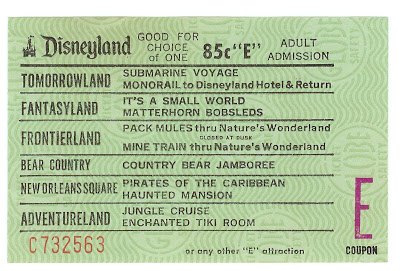
A reference only a select few will get. (85 cents?? Truly a bygone age)
While engaged in a very engaging conversation about screenwriting earlier this week, the person with whom I was conversing with asked the simplest and most straight-forward of questions:
“What do you like to write?”
Without a moment’s hesitation, I proudly stated, “Adventures.”
You can’t even say the word without implying the thrills and excitement it entails. Hands on hips, chest out, shoulders back, and a firmly-set jaw are automatically included.
I’ve enjoyed dabbling in other genres (such as drama and comedy), but nothing really grabs me like thinking up and writing out some sort of heart-pounding, edge-of-your-seat rollercoaster ride of a scene or sequence.
Those really never get old.
They say “Write what you know,” and although I’ve never actually fought monsters, manned a runaway train, or flown a space-faring vessel, years of reading and watching material of that type and nature has taught me an effective way of how to effectively inject adrenaline into what I’m writing.
More than a few readers have commented that my love and appreciation of the material and genre are boldly evident on the page, which is what I’m hoping to accomplish every time.
My mantra has always been “Write something I would want to see”, and my list of future projects is jam-packed with numerous ideas and concepts that neatly fall into that category; each one a variation on the topic of discussion.
If these are the kinds of stories I was meant to write, you’ll get no complaints from me. I get a real kick out of cranking this stuff out. There’s no reason to think this can’t develop into what I build a career on and eventually become known for (he said, his fingers firmly crossed). My scripts. Rewriting someone else’s. Contributing to another. It’s all cool as far as I’m concerned.
Until then, all I can do is keep writing and making my readers feel their pulses quicken as they eagerly turn the page, absolutely spellbound to find out how the hero gets themselves out of this particular pickle, and, more importantly, what happens next.
Strap yourselves in, chums. This is going to be one helluva ride.
Originally, this post was going to be about the multiple changing of protagonists in PSYCHO (which is another great potential future topic), but the more I read about the film and thought about the impact it’s had since being released way back in 1960, it triggered a totally different train of thought.
Every once in a while, when a classic film is brought up in some context or another, the phrase “That could never get made today” will get thrown in. After the recent death of Gene Wilder, his talent was lauded via the mention of several of his most well-known roles. Willy Wonka. The Waco Kid. Victor Frankenstein (“That’s Fronken-steen.”). His performances were vital parts of each film, which no doubt contributed to making them “classics”.
But, as always, it starts with the script. (Incidentally, I don’t think Wilder gets enough credit for co-writing YOUNG FRANKENSTEIN.)
Examining the stories being told, each one has something truly unique about it, and then some. The writer (and subsequently the filmmaker) wasn’t afraid to take a chance and try something completely new and different. Sadly, the studios today aren’t as open to it. Better to play it safe then take too big a chance, which is why we’re seeing so many remakes and re-imaginings. Of course, that doesn’t always work out either (e.g. 2015’s PAN, the recent BEN-HUR remake).
While there are always original and innovative scripts floating around, it’s a lot of time, effort and money to make a film. The only recent original film I can think of is SWISS ARMY MAN, which I admit I haven’t seen yet.
Who hasn’t read a “truly original” script or about one getting a lot of attention, but a lot of the time the writer will go on to work on other projects while the script that started the whole thing gathers dust?
The best exception to this that I know of is Travis Beacham’s spec A KILLING ON CARNIVAL ROW, which drew a lot of heat when it sold in 2005, then continued to garner praise while it languished in development for years before ultimately becoming an upcoming series on Amazon – at last check, anyway.
Budgets are getting higher, and the gap continues to grow between microbudget features and mega-budget tentpoles. It’s getting harder for original material to get noticed, let alone something that screams out “NEW!” It also doesn’t help that the chances decrease if the script isn’t based on pre-existing material. This could be why today you’re more likely to see an original film that’s a low-budget independent, probably written by the filmmaker themselves.
Before that, your best bet of seeing something groundbreaking would have been at the hands of established filmmakers, only because they had that kind of leverage (and the budget) to get their projects made. An unknown writer doesn’t have that kind of luxury. All we can hope for is to connect with somebody who likes the script (and our writing) so much that they’re actually excited to help us take things beyond the “Sure, I’ll read it” stage.
That’s our objective as writers: to write something that’s not only compelling and involving, but so eye-openingly original that the reader is compelled to the point that they need to see this as a movie. Doable, but definitely not easy.
Homework time! Part one – find a script you really consider a game-changer for the same genre as yours and give it a read. Can you identify what made it so unique? What really stands out for you? Plot? Story? Characters? A little of everything? Another option is if that script has been produced, then watch the film and follow along with the script. Are they the same? Totally different? Do you think the changes add or take away from the script?
Part two – without blatantly copying the style of that script, work on applying a similar originality to yours. Did reading that script inspire ways for you to make yours really stand out?
Don’t be afraid to take chances. Strive to offer up something we’ve never seen before. The results might surprise you, too.
-Special offer just for you!
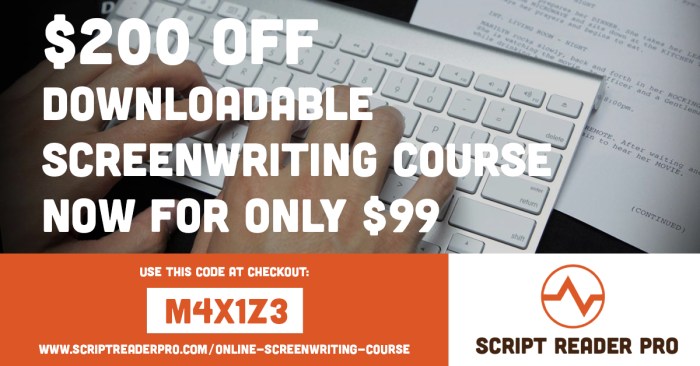
The fine folks at Script Reader Pro are running a discount for Maximum Z readers on their downloadable screenwriting course Script Hackr.
Forget all the confusing and vague “fluff” found in most screenwriting courses, coverage and books. Script Hackr will skyrocket your screenwriting skills by utilizing rarely talked about hacks and hands-on practical exercises to de-mystify theory.
The course retails at $299, but you can get it for just $99 by using the coupon code M4X1Z3 at checkout.
You can check out more details on the course here:
Mine don’t look like theirs yet, but give me time…
Via a writing colleague, I recently found myself in the possession of a pair of scripts written by a pair of pros.
“Open one and read a few words and you’ll be in for the rest of the script,” I was told.
And you know what? They weren’t far off.
I only got a few pages in, but found the writing to be extremely vivid and descriptive. No problem at all in painting those mental pictures with a powerful brush.
My only complaint – all that dazzling wordsmithing got a little too distracting, making it slightly tougher to focus on the story. Nevertheless, I’m looking forward to reading both scripts.
But I totally got my friend’s point: the writing was exceptionally engaging. It really grabbed you and made you want to keep going.
Compared to it, my writing comes across as kind of dry and might even be considered sort of dull and lackluster. Not to totally disparage my own work, but these writers are professionals. I, as it has already been established, am not.
But reading these scripts and others like them are good reminders of what I and every other writer should be trying to do. You don’t want a stick drawing. You want a finely-crafted elaborate work of art.
Speaking from experience, this isn’t easy. It’s almost like learning a new way of writing. It requires a lot of work, nor will it happen overnight.
But don’t despair. The good news is you can start working on these improvements practically immediately.
Take the last scene you wrote. How does it read to you? Does it compel you to want to know what happens next? Feel free to tinker with it until it gets to that point. Then do the same with the scene after it. And the one after that. And so on, and so on.
Think of it this way – you want the reader to “see” the scene in the same way you imagined it. Therefore, your challenge is to write it so the actions, images and dialogue in it come as close as possible to matching your version AND that no other description would do it justice.
Reading these professional scripts was at first intimidating in a “I’ll never be able to write like that!” kind of way. But with a continuous effort and a lot of work, there’s no reason to think I couldn’t come mighty close.
Not expecting it to last millions of years, but wouldn’t complain about it either
As an avid fan of summer movies, this year has been one big disappointment after another. Granted, I haven’t seen a few of the latest releases yet (STAR TREK BEYOND, SUICIDE SQUAD), but barely remember anything since CAPTAIN AMERICA: CIVIL WAR, and that came out in early May.
Remember all the hoopla preceding the GHOSTBUSTERS reboot? Kind of died off quickly, didn’t it? We saw it opening weekend, mostly because V wanted to, and it was…okay. I don’t attribute it’s lack of success to angry fans of the original, but because it just wasn’t that great a movie.
Was anything from this summer truly memorable? So far, not really (although I’m still holding out hope for the exquisite-looking KUBO AND THE TWO STRINGS).
It honestly seemed like everything simply wasn’t up to standard. Despite what the various marketing assaults might indicate, the end products felt too slapdash and that too many projects were focused on being ready for the release date rather than making sure the script was rock-solid.
Based on this and almost-daily reports of forthcoming reboots, remakes, and overall more of the same-ness, breaking in as a writer of original material suddenly seems significantly harder. Not only does your script have to really wow ’em, but it better pack a significant wallop on several levels.
A great, new story with phenomenal characters, all told in the most captivating way possible. Simple, no? I realize that a lot of films start with great scripts, but the process that leads up to the film being unleashed on the public can drastically affect it – too many times not for the better.
I’ve always seen my objective as to not only tell you a story that hasn’t been told before (or at least tell an old one in a totally new way), but to tell it in the most entertaining way possible. I want you to not be able to get those images out of your head (in a good way, as opposed to a dear-God-please-make-the-nightmares-stop kind of way).
I’ll be the first to admit that I’d love for one of my scripts to be one of the surprise hits of a summer season, but if recent releases are typical of what kind of material I’m up against, my work is more than cut out for me, if not potentially impossible.
It wouldn’t surprise me if somewhere down the line, my script got turned down because it was deemed “too original”.




 Maximum Z