Works for me

Got my own way of doing things
Just doin’ my own thang

Over the past few months, I’ve made a sincere effort to expand my network of writers, filmmakers and industry folks. I can honestly say it’s been a lot of fun and I’ve had the benefit of connecting with a lot of fantastic people, both online and in person. Added bonus –  my self-confidence has shot through the roof.

Trust me. I’m phenomenal.

See?

This really comes in handy especially when I’ll read about someone else’s career taking a huge step forward (sale, option, deal, etc.). It stings at first, but then I remind myself that the only thing that person and I have in common is that we’re both writers. Their path and mine have been totally different and will continue to be so.

My turn’s coming, and I’m plenty experienced at being patient. You have to be in this business.

It doesn’t me do any good to compare myself to others. How I write, what I write, what I say to people, and so on. I’ve got my own totally unique approach to all of it. It’s taken a while to get to this point, and I like how it’s going, not to mention where it’s headed.

In the meantime, I keep writing (putting the comedy on hold to revamp the outline for the pulpy adventure, with ambitious plans for the finished product), reaching out to more people (great face-to-face meetings this week with a local actor and a writer) and continue the striving towards the ultimate goal.

My 52 hours in the Southland

Just like being there!
This is exactly what it looks like!

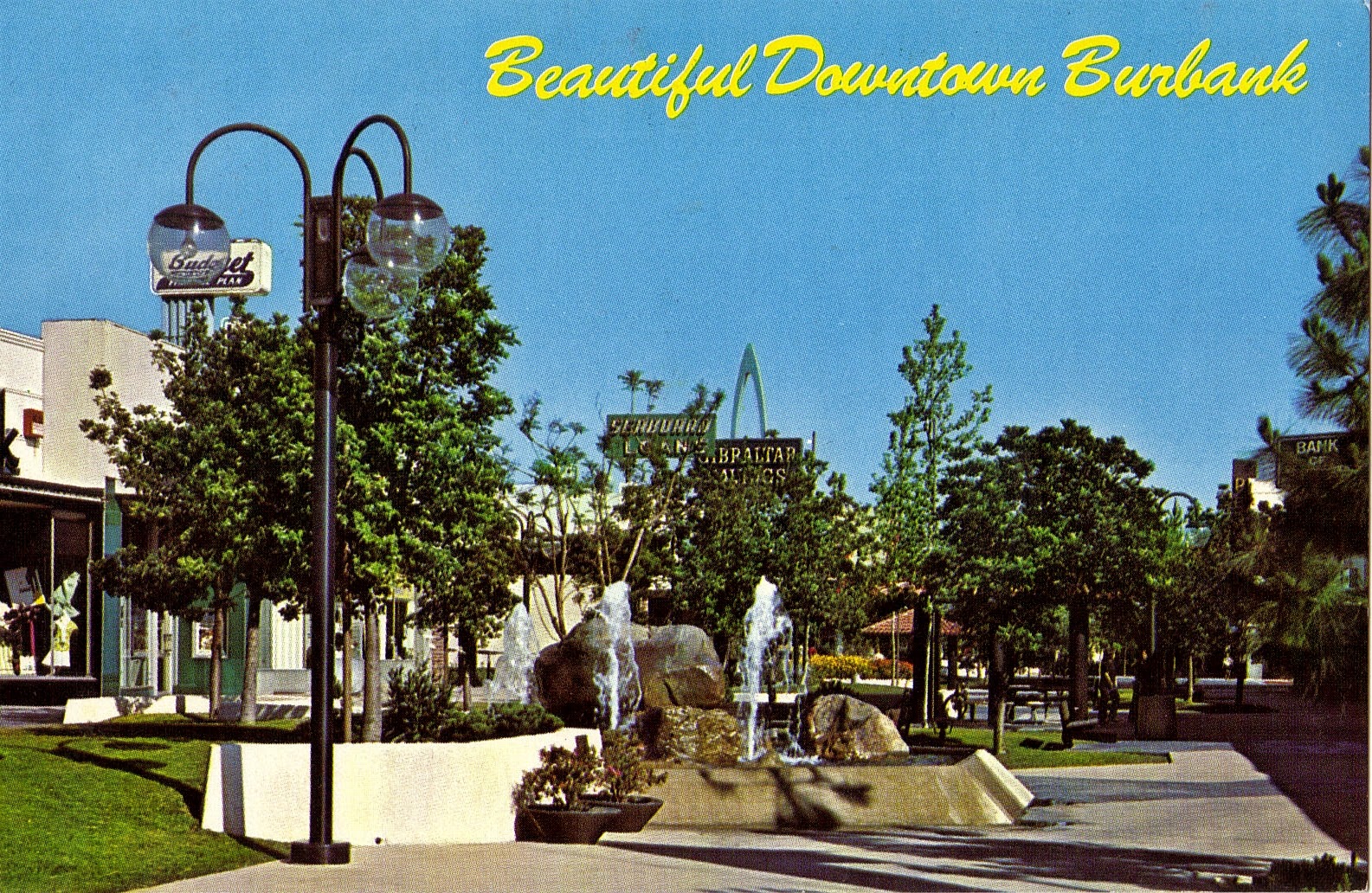
As all you phenomenal readers/followers out there may be aware, I was in Burbank last weekend for the Great American Pitch Fest.

Simply put, attending was one of the best screenwriting-oriented decisions I’ve ever made. I’ll get to the vaguely specific details about that in just a moment, but first, allow me to go over some of the supporting topics, starting with…

Networking

I came armed with a new batch of business cards and the attitude of “Dammit, I’m gonna meet people!”

And I did. At the Friday night mixer. At the numerous classes/panels/workshops on Saturday. Even just stopping to introduce myself to folks sitting around a table in the hotel lobby.

Many are first-timers, nervous at attending one of these kinds of events. Certain that everybody else is a seasoned pro just brimming with confidence, whereas you’re feeling hesitant to even open your mouth and say something.

You know what? Almost everybody feels that way and is a little nervous on some level. Sure, others are a little more extroverted than some, but as I can personally attest, it’s a lot more fun when you get to know people. Besides, why pass up the opportunity to expand your personal network? That writer you just met from halfway across the country could turn out to be a vital asset somewhere down the line.

On a more personal note, I have to mention that the weekend was also a golden opportunity for me to actually meet several of my “Ask a Script Consultant!” interview subjects, including Pilar, Lee, JG, Signe, Tracee, and Steve. The interactions weren’t long, but each proved to be just as charming in person as they are in print.

Pitching

The whole point of the weekend, and why I was here. First, the prep.

As I mentioned, there were panels aplenty where a lot of advice was given out (and sometimes contradicting something else you just heard). I had the benefit of having signed up for the pitch boot camp, where you and another writer would give your pitch, then exchange suggestions on how to potentially improve it.

I polished and honed the pitch for my western over the course of about six or seven run-throughs to the point where I had it down perfectly, then used that as a template for the fantasy-adventure.

As intimidating as doing this is, it all comes down to you being comfortable while having a pleasant conversation with somebody else about your story. The objective is to get them so interested that they really want to read your script. It’s not easy. Listening to other pitches, some writers would give vague story details, while others might go into too much detail.

As was pointed out, you’re also pitching yourself. You’re showing that you’re passionate about the work, hopefully have a pleasant personality, and are someone people would enjoy working with.

Now, a rundown of the results from the actual pitches:

(side note – As I would sit down with each person/pair, I’d ask how they were doing/how their day was going/etc. I’d rather start things off pleasantly rather than just launch straight into the pitch. Everybody was in good spirits throughout the day and seemed to be enjoying themselves. Many added that the quality of the material being pitched was very impressive.)

-13 total (although it felt like more)

-Two said “Thanks, but it’s not for us”

-The rest asked for a one-pager. More than a few asked “What else have you got?” (followed by handing over the other one-pager)

-Just about everybody said, “Wow! That was a great pitch!”

-One script request

-Two asked for follow-up emails

-“This sounds perfect for us!”

-“This is exactly what MAJOR PRODCO is looking for!”

-“We have to continue this conversation offline. Here’s our card. Call us.”

To say confidence levels were running high at the end of the day would be an understatement.

Epilogue

-All of my follow-ups have been taken care of. Since each one of them is also dealing with a lot of the pitches they heard, as well as working on their current projects, I expect it’ll be a while before I hear back from anybody. As always, fingers firmly crossed, hoping for the best while I bide my time and return to working on my assorted projects.

-Turns out I’m actually really good at pitching in person, or at least in a face-to-face scenario. Too nervous to do previous pitches via Skype, I’d always submitted a written one, which yielded zero results. This new confidence and willingness to be seen makes me feel that I’d have a much better chance of success in the future.

Conclusion

I’d started the weekend feeling very nervous and anxious about whether or not I’d do a good job. As time passed, I was able to relax and enjoy myself, which probably played a big part in how it all turned out. I had a great time, and left feeling closer than ever before to getting a professional writing career going.

If you’ve never been to a pitch weekend, I highly recommend it. You’ll meet lots of great people, make fantastic connections, learn how to get the most out of your pitch, and just have an awesome time.

-My only complaint was that since time was very limited, and I didn’t have a car, the enjoyment of pie did not take place. Maybe next time.

Networking: more than just a group thing

“Working on the rewrite while I wait to hear from that manager. How about you guys?”

Despite the fact that writing, for the most part, is a solitary activity, a lot of us take great pleasure in being connected with other writers.

They can be the invaluable support, guidance and motivation we sometimes need to give us that little extra boost. Having a problem and being able to tap into this kind of resource in order to find a solution is priceless.

We get access to all the goings-on, good and bad, that happen among us and our peers.

While I’ve seen my fair share of both, I’m glad to say that a majority have been of a positive nature. This person got a manager. That person finished their latest draft. That other person began working with another writer on a new project. I’m thrilled for all of these developments, and offer up congratulations and words of encouragement. Each and every one of these people has worked hard to reach this particular milestone.

I’d be lying if I said I wasn’t jealous. That sense of longing and wondering “Will I eventually/ever get to announce some good news of my own?” keeps nagging at me, so I continue to buckle down and redouble my efforts in the hopes of making it happen a little sooner. Some days it’s really tough to be patient.

On the other side of the coin are the not-so-great things. This person’s script got a pass from a high-profile agent. That person is suffering from a severe case of writer’s block (or worse – depression). That other person is going through some tough things in their personal life. These also happen to a lot of us, resulting in messages of sympathy, understanding and moral support.

I’ve experienced this too. When times are tough, you find out who’s really in your corner, and are glad to know it.

But I wouldn’t have any of this kind of support if I hadn’t sought it out. There’s a reason it’s called “social” media. I’ve been able to connect with so many awesome people because of what I’ve read or seen about them online.

Is there a writer (professional or peer) whose work you enjoy? Someone whose tweets always make you chuckle? Send ’em a note telling them that.

Even better – are they in your area? When I learn about a local writer, I’ll offer up the opportunity for a face-to-face chat over coffee or lunch. I’ve also done this with folks just visiting the Bay Area. This has resulted in some great ongoing working relationships.

Everybody’s career advances at its own pace, and all the fantastic help and support we get on days good and bad are major pluses. Many writers are introverts at heart, but you have to make the effort to put yourself out there and get to know somebody.

It gets easier the more you do it, and you’ll be glad you did.

From asking to being asked

Nothing like a receptive ear (and the person connected to it)

Compare the most recent thing you wrote to the very first thing you wrote. How much of a difference is there?

One thing’s for certain: it no doubt took a lot of hard work and learning to get you from your skill level then to what it is now.

But you didn’t do it alone, or in a vacuum. You had help along the way from countless resources. It might have come from a book, a class, a writing group, or the occasional someone with more experience willing to help out.

When I started out, that was me. I got my hands on as many books as I could (the one I still recommend – Story Sense by Paul Lucey). Classes weren’t really an option, so I read a lot of scripts and attended a few seminars and expos when I could. I also had the good fortune to be involved with a few writing groups. A lot of this was also in the early days of the internet, so online resources and networking were nowhere near the levels they are now.

But what definitely helped the most was getting notes and feedback. The more fresh eyes you can get to take a look at your work, the better the end result will be. One stipulation: it depends on who you ask. Specifically, someone who really knows what they’re talking about, and whose knowledge and opinion you trust.

This has made a significant difference for me, such to the point that I now have a core group of trusted colleagues I can rely on for quality notes, and I’ve done my best to return the favor to many of them when possible.

And in recent months, as my network has grown and I connect with more writers, I’ll occasionally get an email asking along the lines of “If it’s not too much trouble, would you take a look at this and let me know what you think?” A script. Some pages. A logline. What have you.

I honestly never expected to be on the receiving end of that question, but, schedule permitting, am always happy to help out when I can. It’s the least I can do. Hopefully my notes will give them the help they need.

I don’t claim to have all the answers, but it’s kind of nice to think that I might be able to help somebody in the same way others did for me in the past.

Ask an In-the-Director’s-Chair Script Consultant!

Jeff Richards

The latest in a series of interviews with script readers and consultants who would be worth your while to work with if you want to get your script in shape. Today’s spotlight is on writer-producer-filmmaker Jeff Richards.

Jeff Richards is a story consultant, filmmaker, and writer with over twenty projects either optioned, produced, or sold. His clients range from award-winning novelists to creative writing professors to screenwriters working for major studios. His own writing includes feature films, TV series, graphic novels, and short stories, as well as writing for children’s animation and computer games. His background includes information technology, a decade as an opera singer, and he is an honorary member of the Takaya Wolf Clan of the Tsleil-Waututh First Nation.

1. What’s the last thing you read/watched that you thought was incredibly well-written?

The Karla trilogy by John Le Carré, and if you ever need a lesson that character is king, look to those. The books are often very low on action; they largely consist of dialogue (most of which is people recounting events, as you’d expect in a book about counter-intelligence) and the characters are so magnificent you don’t care that you’ve just spent hundreds of pages essentially listening to people talk. The protagonist for two of the books, Smiley, often isn’t even doing the talking; he’s merely listening. Yet it works.

As for watching, I’ve been re-watching Doctor Who, and “Blink” is possibly the best hour of television I’ve ever seen. Stunningly imaginative and original, incredibly atmospheric, and one of the very best examples of burying exposition I have ever seen in any medium. If I write something that good, I’ll die happy.

2. How’d you get your start reading scripts?

I spent several years as an independent filmmaker and although I did write most of the projects we were developing, I’d occasionally work with an outside writer and help them. That made me realize that I could apply what I’d learned as a writer to helping others with their scripts.

3. Is recognizing good writing something you think can be taught or learned?

Absolutely. The love of words is probably pretty difficult to instill in an adult, but if someone is already interested in it, then it is definitely possible to learn to recognize good writing. The secret is to read widely and actively, both good and bad material; once you’ve read and analyzed enough writing, and worked out why it works or doesn’t, you start to see the patterns very clearly, particularly in screenplays. Objectivity about our own writing? That’s trickier…

4. What are the components of a good script?

What’s most important, and what I don’t see enough of, is a unity of character, plot, and theme. People talk about “character-driven scripts” or “plot-driven scripts” when, in reality, they should driven by the same engine.

As for the rest, it’s about what you’d expect; an active protagonist, strong pacing, dialogue with subtext, an original concept, rising stakes, good conflict, a surprising but inevitable ending… all that sort of thing. However, the only absolute must-have is that it is interesting. For every other must-have you’ll see on a checklist, you can usually think of a great script that didn’t have it. Passive protagonists are death… unless you are talking about The Graduate. Or Being There. But these are scripts by master writers; you need to be very sure why you are going against the grain, and how it makes your story better. (And, as you can tell by the age of the examples, rule breaking isn’t that popular anymore in Hollywood.)

5. What are some of the most common mistakes you see?

Going back to the previous point, a disconnect between character, plot, and theme is common. This usually causes protagonists with unclear goals and flat second acts. However, the most common thing I see is on-the-nose dialogue. Characters who say exactly what they feel and think, or who sum up the central conflict in a speech. If you ever read “You know what your problem is?”, then that’s probably a bad sign.

6. What story tropes are you just tired of seeing?

I think I’m almost unique in that my answer is “none”. Every trope is ready for a great script to make it fresh. Amnesia is the most tired device in writing, yet The Bourne Identity comes along and is fantastic. There’s always room for a great script.

The thing that tires me isn’t story tropes, but clichéd dialogue. Don’t have lines from other movies in your movie. Be original.

7. What are the 3 most important rules every writer should know?

-Read widely; lessons are everywhere, and most of them are outside your genre and format. So if you’re a sci-fi feature film writer, read historical fiction. Read detective comics, manga, sitcom scripts. Expand your brain.

-Writing is rewriting; every first draft is a huge bundle of problems waiting to be solved. So solve it. And not by editing, but by rewriting. Changing words in action or dialogue is just editing. Changing characters, plot points, deleting or adding scenes, that’s rewriting. Do multiple passes, focusing on a different thing each time. One pass (or several, more often) for plot, one for each major character’s dialogue, one for action lines… if you’re building a shelf, you don’t sand and paint at the same time.

-Don’t get hung up on systems. Read how-to books, sure, but pick and choose your advice. Being a slave to a particular checklist is usually indicative of poor writing. If I can tell that you’ve read Save the Cat by reading your draft, then there’s probably too much Snyder and not enough you in your script.

8. Have you ever read a script that was an absolute, without-a-doubt “recommend”? If so, could you give the logline?

Unfortunately, I can’t share loglines due to confidentiality. But for me, “recommend” can’t focus too much on the logline. Concept is important, sure, but the writing is what matters, what makes it a “recommend”. I’ve had writers with straightforward concepts come to me and, after we hone the execution, they get jobs at major studios or get 10 on The Black List. That doesn’t come from the logline, but the execution, how they wrote (and, as per rule 2 up there, rewrote!) Chinatown’s logline doesn’t set the world afire, yet it is generally regarded as one of the great scripts. So a logline wouldn’t really illuminate why I feel a particular script is great. Loglines only show whether something is the type of script an exec should read (e.g. it’s high concept sci-fi and that’s what they’re looking for). The logline gets you the look; the writing gets you the job.

9. How do you feel about screenwriting contests? Worth it or not?

I personally don’t do them very often. I have in the past and placed well, but I never found the contest actually led to a job; what worked for me was my personal networking. However, every path is different and obviously you hear success stories. What is important is that you put in the time, both into the writing (mostly) and into building your career, whether that’s contests, pitchfests, networking… Whatever seems to be working for you, do that. If nothing’s working (and the writing is genuinely where it needs to be!), then change things up.

10. How can people get in touch with you to find out more about the services you provide?

Jeff is no longer actively seeking clients, but is still open to receiving requests via his website at strangeborders.com. He also suggests connecting with him on Twitter.

11. Readers of this blog are more than familiar with my love/appreciation of pie. What’s your favorite kind?

Pumpkin, no question. With fresh whipped cream. A great pumpkin pie will turn me into the seven-year old kid who eats so much he feels sick. It is inevitable.

I probably need help.