Stuffed just a tad beyond capacity

marx stateroom
All my script needs now is the line “…and a dozen hard boiled eggs.”

As the dog days of summer lazily drift on by, each of those days sees me dedicating a portion of it to working on the next small section of the horror-comedy outline. So far – it’s coming along nicely.

For now, it’s just filling in the blanks between primary plot points. Not counting those, I tend to think and plot things out in a linear manner; going from A to B to C and so on, rather than A to B to J, and then maybe filling in that stretch between D and F. This approach helps with not only crafting the developments of the main storyline, but also the subplots and figuring out how all the interconnections work. Others may do it differently, which is fine. This way works for me.

What originally starts out as one to two sentences summarizing what happens in a scene quickly becomes lengthy descriptions, including specific character actions and snippets of dialogue. This has caused the outline to appear dense and bulky, or at least that’s how it looks at first glance.

At first this would appear to be a bad thing, but keep in mind that this is only the outline, so a scene write-up that appears as an impenetrable block of text here might translate to, say, half to three-quarters of a page, including dialogue. Not a bad exchange rate.

Just as an example, as a scene was playing out, it kept getting longer and longer, which would have run way too long for both script and screen. Realizing that simply would not do, I made some minor modifications and managed to break this exceptionally large scene into three slightly smaller ones. Each one still retains the point I wanted to make, as well as continuing to advance the plot, theme, and characters. A win all around.

The way I figure it, it’s a lot better to have an overabundance of material during this stage, and then be able to cut, trim, or maybe even add more where necessary down the road.

Another key part to all this development is making sure everything I come up with plays some kind of role in the overall context of the story. Call it the “keep only if relevant” rule. If there’s something on the page that has nothing to do with the story or the characters, then why have it there in the first place?

Results may vary

crystal ball

Over the past few weeks, I’ve been involved in a few online discussions about posting and pitching one’s material via script-hosting and pitching sites (The Black List, InkTip, Virtual PitchFest, etc). I even featured a Q&A about it last year with a trusted colleague who also happens to be a very savvy writer (and had some moderate success in this area).

The primary question: are any of them worth it?

As you’d expect, there’s no easy answer, and everybody’s experience is going to be different. I can only speak for what’s happened to me.

A few years ago, I posted my fantasy-swashbuckler on The Black List, and paid for a review. Based on their comments, I was convinced the reader got to around page 22 or so, had no interest in reading any further, and then skipped to the last page. Biggest clue – no mention at all about anything that happened in the second act.

I griped about it on Twitter, which somebody at the Black List then responded with “You can’t make those kinds of accusations without any evidence to back it up!” (I love the idea that it was Franklin Leonard himself, but doubt he would have been spending his Sunday morning checking the Black List Twitter feed). Skittish newb I was, I backed down.

However, it wasn’t all bad. Through a series of interesting events, the script did get some positive reviews, which actually got me a manager. That was nice, but it didn’t work out, and the relationship soon ended. Since the script wasn’t getting much traction (read: any) on the Black List anymore, that subscription also came to a close.

I’ve also heard from other writers who got a 2 on one review and a 9 on another, or who’ve paid for reviews and heard nothing back. Then after asking about it, managed to get a refund; sometimes they’ll also throw in a credit for a free review as a form of apology. Are these commonplace or rare occurrences? Beats me.

I also signed up for the batch of pitches from Virtual PitchFest, and have so far only pitched to two production companies. While I felt my script was a solid match for the criteria they were seeking, each yielded the same response – “Nothing personal. It just didn’t grab us.” No doubt this is the generic rejection everybody gets.

I still have something like 10 or 11 pitches remaining, and if I opt to actually use them, will probably still be very selective about it. But I also suspect I’ll get the same boilerplate response.

I’ve written before about my experiences with pitching to Stage 32, so I’ll just leave this link here. I believe a lot of the points I make still apply. And at the time, I wouldn’t mention them by name. Things change.

Finally, there’s InkTip. I signed up and posted three scripts. Each subscription period is four months, and I did it two consecutive times. During those eight months, the loglines got constant views, which really doesn’t mean much, one script got downloaded once, and another had the synopsis downloaded twice – amazingly, on the same day, which was also two days before the hosting would expire.

*Interesting side note – If your synopsis or script gets downloaded, InkTip doesn’t want you to follow up with the company until at least three weeks later, and then ONLY by regular mail. I’ve always found that a bit odd, but I guess it’s to discourage bombarding them with constant emails. A follow-up to the prodco that downloaded the script yielded no response at all. A little disheartening at the time, but I got over it pretty quickly.

I also subscribe to the InkTip newsletter because a lot of the time there’s at least one or two listings on it that I can send to. That’s yielded a few read requests, but each of those has ended with “Thanks, but it’s just not for us.”

Between the two, I think the newsletter is the better choice. More options, more possibilities; especially compareed to the extremely low return for just having your scripts hosted on the site. I’ve since let those expire, with no immediate plans to return.

I’m sure there are those who think posting or pitching this way is their way in, and for some it probably is, but it can get a bit exhausting to keep shelling out bucks on a monthly basis and getting nothing in return. I’ve had better results with contests and query letters, and you know what longshots those can be.

What if you did this for a few years and still got nothing? Would you still think it was worth it? Sometimes on the InkTip newsletter, they’ll list “success stories”, which mention how long the writer has been a member. Some of them go back 10 to 12 years. That’s A LOT of money invested.

There’s spending money to make money, and there’s reaching the conclusion you’re just throwing money away. Despite the controversy surrounding the practice, I’d rather spend that money on quality notes, which in the end helps me become a better writer.

Like I said, all of this is stuff that’s happened to me. Your experience might be the total opposite. For all I know, you’re one of those “WRITER SELLS SCRIPT THANKS TO OUR SERVICES!” people. If so, great. You beat the odds and I’m glad it worked out for you.

But for the rest of us, how’s it been for you? Good? Bad? Somewhere in that nebulous middle? Have you had similar experiences with any of these companies, or any who aren’t listed? Did you get a read request? A writing assignment? Connect with a filmmaker or production company? Get representation? Can you point to an actual completed film and say “I wrote that!”?

Like I said way back at the beginning, it’s different for everybody. Is subscribing to any of these sites something you’d recommend, or would you deliberately steer people away from them?

Inquiring minds want to know.

The familiar thrill of a new undertaking

tucker__dale_vs_evil_large
One of several contributors to my horror-comedy education

Been splitting my time the past few days between doing notes for scripts for notes and working on the outline for the horror-comedy. This post will focus on the latter.

I’ve never really been a big horror fan. Especially the ones that push plot aside and put an emphasis on gore as the writer goes through a laundry list of devising ways of killing people. Just not something I want to read or see.

So why would I even consider writing one? Well, I came up with the idea and thought it would be fun to write. Works for me. And I want to make sure that when somebody reads this script, they can tell without a doubt that I wrote it.

Mine incorporates variations on elements of this particular sub-genre, or maybe “certain/expected aspects” is a stronger way to put it, so as I work out the core story-centric details, I find myself continuously dipping into previously untapped creative reservoirs of a somewhat…darker tone to emphasize the horror parts.

And my gosh, is it fun. Pretty much in a “mad scientist rubbing his hands together” kind of way. I’m not looking to reinvent the wheel, but, as always, striving to offer up something new and original. This time it just happens to involve adding corn syrup, red food coloring, and raw chicken parts to the prospective special effects budget.

But let’s not get too far ahead of ourselves.

All the fun stuff aside, the first and foremost objective is to make sure the story works, or at least as much as it can for this kind of story. Without that, the rest of it will all be for naught. Once that’s more or less in place, I can really go to town as I seek out opportunities of where a joke would work – especially one that works within the context of the scene. I love those.

Then a little more fine-tuning, and probably a rewrite or two, and voila! A finished script.

That’s the plan, anyway.

Each day I try to get a little bit more done, and the rewriting and tweaking has already begun; to the point that it’s noticeably different than when I started on it a few weeks ago. But the core concept remains the same, which is good. It’s all coming together.

I never really pictured myself writing in this genre, but as has usually been the case for me, once I came up with the idea, I felt compelled to follow through on it and make it an actual thing.

With the added benefit of being able to use movies of a very similar nature as research, references, and guidelines, I suspect getting the outline and subsequent first draft done might not take as long as I think.

Exactly! -OR- The perfect fit

robot monster
Not as good as a gorilla suit and a retro space helmet, but mighty darned close

The new story has been in development for a few weeks now, and I can proudly say it’s coming along nicely. Plot points are in place, and the filling-in between them continues, albeit slowly. Still quite a ways to go, but any progress is good progress.

The more I work on it, the more excited I am to take this one on. I love the concept, think it’s got a lot of potential, and it just seems like it’ll be a lot of fun to write.

Full disclosure – it’s a horror-comedy, and that’s all I’m saying for now.

Part of my usual writing m.o. is seeking out feedback from other writers. Since the actual story is still under construction, I opted to start with the basics and asked a handful of savvy colleagues their thoughts on the logline.

Reactions were positive. Plus, some keen insight and suggestions as to what might make the story even more unique and original, and how to avoid “stuff we’ve seen in these kinds of stories before”. Those, in turn, triggered a new round of ideas, which then led to unearthing what may prove to be the most important idea of them all:

The thing that gets it all started.

Not the inciting incident, but a certain something that forms the foundation of the story itself – before the actual events of the story get underway. Without this, the story wouldn’t even be able to exist (or at least be a lot tougher to pull off).

It was perfect.

A feeling most satisfactory, to be sure.

But wait. It gets better.

A little more time (plus some invaluable real-life-based research) caused me to discover that not only does this new idea do a rock-solid job of tying the whole story together, but it creates constant, relevant, and increasing conflict for all the characters,  makes for a great ticking clock, and really lets me have fun with the whole concept.

Goosebumps, I tell ya!

As fun as it was to come up with that, the hard work’s just beginning. Second and third acts need a ton of work. Doing whatever I can to avoid cliches and tropes usually associated with this kind of story. And to address the comedic aspect, really trying to make it funny.

Won’t be easy, but as I’ve discovered with my most recent rewrites, might not be as totally insurmountable as expected.

Actually, I bet it’ll be a blast.

Writing in your own voice

Marilyn script
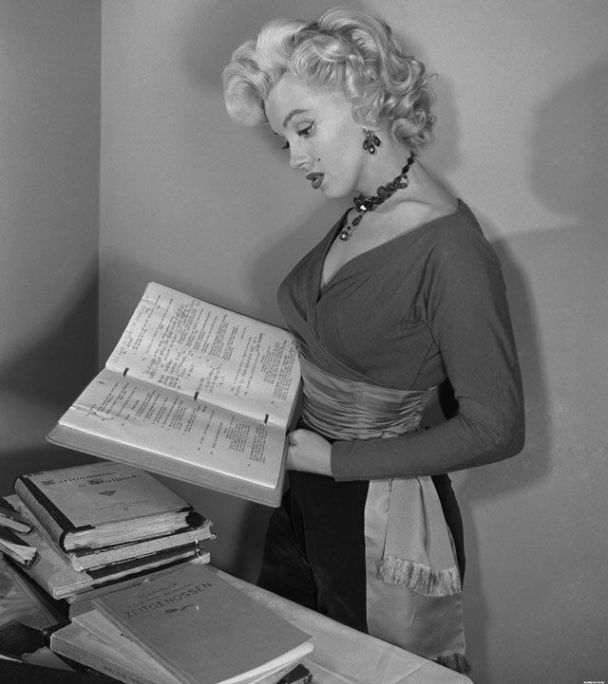
“Hmm. Billy’s new script. Men dressing up as women to hide from gangsters? Sounds funny.”

When I’ve done script notes for writing colleagues, no matter what the genre is, I can usually tell who wrote it – because of the way it reads. Each writer has their own particular style, so each of their scripts has its own corresponding “sound”. Or I’ll get notes back on my material which often includes a comment along the lines of “this sounds like something you’d write”.

This isn’t just about dialogue. It’s about a writer’s overall style, or how they tell the story of their script. You don’t just want the reader to read your story; you want them to experience it. Which can be accomplished by adding that extra layer.

Everybody develops their own individual style, and it takes time to find it. The more you write, the more you’ll be able to hone your writing to reflect your own individuality.

Just a few things to think about:

-How does your script read? Is the writing crisp and efficient, or are you wasting valuable page real estate with too many lines of  your loquacious verbosity? Taking it one step further, do you use the same words over and over, or do you relish any opportunity to give your thesaurus a solid workout?

-How is your story set up and how does it play out? Is it simple and straightforward, or complex and full of deliciously tantalizing twists and turns? Are you working that creativeness to show us things we haven’t seen before, or is just page after page of the same ol’, same ol’?

-Is it a story somebody besides you would want to see? Just because you find the subject matter interesting doesn’t mean it has universal appeal. However, there is the counter-argument to that in which you could attempt to have your story include elements that would satisfy fans of the genre while also appealing to newcomers.

-Can’t ignore the population within the pages. Are your characters well-developed and complex, or do they come up lacking? Do we care about them, or what happens to them? Can we relate to them?

-What are your characters saying, or not saying (subtext!)? How are they saying it? Do they sound interesting or dull as dishwater? Very important – do they sound like actual people, or like “characters in a movie”?

Remember – the script is a reflection of you. A solid piece of writing shows you know what you’re doing. Offering up something sloppy is simply just sabotaging yourself.

Who hasn’t heard a variation on the line about a script being a cheap knockoff of a more established writer? While I can understand admiring a pro writer’s style, why would you attempt to copy it? It probably took them a long time to find their own voice, and by trying to write like they do, you’re denying yourself the opportunity to do the same thing for yourself.

Or to put it another way: they didn’t take any shortcuts to become the writer they are today, so why should you?