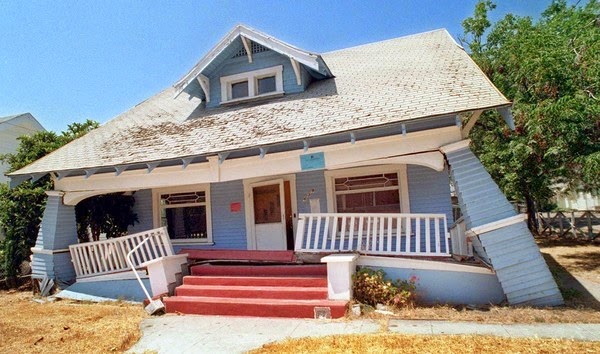
First, you build a solid foundation…

foundation
And this is what could happen if it isn’t

As the daily churning-out of pages continues for my November writing project, I’ve found it extremely helpful that so much time was spent working on the outline.

Only through trial-and-error did I eventually discover that making sure the outline is rock-solid before starting on pages makes a huge difference.

Keep in mind that this is what works for me. You may have an entirely different approach, and that’s totally cool. Actually, I’m curious to hear about some of them. Feel free to discuss in the comments section.

And now, back to the subject at hand…

I see putting together the outline as a gradual building-up process. I start with establishing the main plot points. What are the pivotal moments in this story? Does each one properly fulfill its purpose in the overall context of the story?

Then I fill in the blanks between those plot points. Does it make sense how we get from, say, the inciting incident to the end of the first act? Does each scene do its job in moving the story and characters forward? Are you presenting information we need to know, or setting things up so as to adequately pay them off later? Does each scene appropriately follow the one before and lead into the one after it?

Something important to keep in mind during this part: eliminating unnecessary scenes. You may have a scene you really, really like, but may not be absolutely vital to the story. My recommendation is to either make it vital or get rid of it entirely. The last thing you want is to interrupt the flow of your story for a scene that really doesn’t have to be in there.

Once you’ve got all those blanks filled in, then you move on to expanding each scene – mostly just putting in the necessary elements that reinforce the purpose of the scene. Sometimes I’ll add in a snippet or two of dialogue.

Another very important detail about each scene: get to the point, then get out and into the next one. Once the scene fulfills its purpose, anything after that just slams on the brakes.

Hang in there. You’re almost done. The outline is pretty sturdy, but it could probably use a little more editing, fine-tuning and polishing. When you think it’s honest-and-truly ready, that’s when you make the big jump to pages.

This isn’t to say there won’t be more changes in store once you’re into pages mode, but by putting so much time and effort into your outline, you’ve eliminated a lot of the heavy lifting for when you get there.

Percolating. Always percolating.

Image result for coffee POT GIF

As writers, we fully realize that inspiration can hit at any time, and in any situation. And it’s what you do when it does that really matters.

Late last year, I was taking the dog for her last walk of the day. Something about that particular moment triggered a story idea. I won’t say the floodgates of creativeness opened wide; more like the squirt from a water pistol. It was just a sentence, maybe two, but I immediately saw so much potential in it.

We got home, I created a file for it on my computer, and I wrote down the tidbits of story I’d managed to come up with.

And in the hard drive it sat, practically untouched for months on end.

In a manner of speaking.

As is usually the case, even thought I may not actually be writing, I’m always thinking about the writing.

Although I’ve worked on several other scripts this year, every once in a while, a new detail about this story would pop up and I’d add it in. It’s definitely an ongoing work in progress, moving at a glacial pace, and there’s no rush to get it done.

It’s actually very beneficial to not put any pressure on yourself and just let the ideas show up at their convenience. And sometimes it pays off when you least expect it.

About a week ago, I came up with an idea for a short, but then realized the location would be a perfect setting for the climax of this script. Determined to hang onto that idea, I reopened the file and figured it was as good a time as any to to move things forward a little, so I started organizing the plot points. There are still a few blanks to be filled in, but it’s slowly coming together.

When the’s next time I’ll work on it? No idea. It’s still very, very early in the development process. A few other scripts currently have priority over this one, but I highly suspect the trend of occasionally adding a few details will continue.

As it should. And then when I finally get around to focusing all of my attention on this one, chances are I might be further along than I expect.

So keep on working on whatever it is you’re currently working on. But feel free to let your imagination wander about once in a while into something else, particularly something you plan to eventually work on. See what you come up with, and if you like it, stash it away for later. Hold onto it even if you’re not that crazy about it; you might find a totally unexpected use for it later.

No matter what you do, Future You will really appreciate everything Present You is doing.

Trying to unlock a key moment

skeleton-keys
One of these HAS to be it

I was hoping to wrap up the polish/revision of the comedy spec this week. Everything was going quite smoothly until I hit a bit of snag when I got to the end of Act 2 – only one of the most important parts of the story. Where things are definitely at the lowest point possible for our hero.

The general consensus of my readers was that the hero was too passive, and therefore needed to be much more active and stand his ground, yet still end up failing. Some suggestions were made, and I’ve been working on making it stronger and more effective.

Which brings us back to right now. As it reads, it’s just not working.

And that’s kind of frustrating.

I know there’s a solution to this, and my creativeness has been working constantly to come up with one that not only works with the context of the story, but seems plausible and believable.

As I said to one of my readers, I tend to overthink this kind of thing. To which they responded with “Remember, this is a story that’s supposed to entertain.”

And that’s pretty important, too.

Hopefully when all is said and done, it’ll do all of it.

-I ran the Giant Race half-marathon on Sunday. Got a small rock in my shoe around mile 7 or 8, but opted to keep going rather than sacrifice the time to remove it. The rock eventually was a non-issue and I managed to just beat my ongoing goal of 1:55 by one whole second – 1:54:59.

Is it that time already?

pocket watch
Land sakes. Where has the time gone?

Yes, that’s right. Because you demanded it.

Well, not really, but it has been a while.

So without further ado, time once again for the much-heralded and talked-about Project Status Update Time!

For those unfamiliar with the concept, which I would imagine is pretty clear from the name alone, this is your opportunity to give a quick mention regarding the latest on your latest project, no matter what it is.

Doesn’t have to go into too much detail. Just what you’re currently working on, and how it’s going.

Hit your page quota for today? Got to a pivotal scene or significant plot point? Finished that rewrite? Feeling stuck? Seeking the right wording for that logline?

In search of help/guidance/suggestions of any sort? All you gotta do is ask.

Did a little networking and connected with another writer? Signed a deal? Had a good meeting? Packing up the car and heading for LA?

Got something to crow about? Want to vent any pent-up frustration?

Don’t hold back. You’re among friends here.

Real quick for me. Just about done with the 2nd draft of the low-budget comedy. One sequence needs revising, followed by maybe one more quick polish, and then it’s off to some of my reliable readers.

Also have some reciprocal reading to do for some of those aforementioned readers. Quite excited about diving into these.

How about you?

A few points about plot points

delorean

Time for a quick refresher course, chums.

Today’s topic: plot points. What they are and what they represent.

I’ve always seen plot points as pivotal moments in the story; events that change the situation for your protagonist, usually in a negative manner, and ask/reiterate the central question (Will your hero achieve their goal?).

Having solid plot points also helps establish your story’s structure. Without it, all you’ve got is a big convoluted mess, and who wants to read that?

Although this uses a 110-page script as an example, plot points don’t have to happen exactly at those pages. A few more or less is totally acceptable. I’ve also opted to use fairly recognizable examples to emphasize each plot point.

Pencils ready? Let’s begin.

Page 3 – statement of theme. What’s the overall message of your story? The theme should also be incorporated in some fashion into each scene throughout the course of the story. (“No McFly in the history of Hill Valley has ever amounted to anything!” “Yeah, well, history’s gonna change.”)

Page 10 – inciting incident. The event that shakes up you protagonist’s world, and asks the central question of the story. (Will Indy get the Ark before the Nazis?)

Page 17 – a twist to further complicate things for the protagonist. (“Alderaan? I can’t go with you to Alderaan!”)

End of Act One (page 25-30) – Your protagonist leaves behind their old world and enters a new one to achieve their goal. Also repeats the central question. (Marty arrives in 1955)

Page 45 – another twist to complicate things for the protagonist (Indy saves Marion, destroys her bar. “I’m your goddamned partner!”)

Midpoint/Point of No Return (page 55-60) – your protagonist becomes fully committed to achieving their goal (Brody decides to go after the shark after his son barely survives the latest attack)

Page 75 – yet another twist to really complicate things for your protagonist (Vader kills Ben as Luke & Co escape)

End of Act Two (page 90) – All is lost. Your protagonist is totally screwed with no apparent way out. Makes it seem like the answer to your central question is “no”. (The Nazis get the Ark).

Climax (page 95-100) – final showdown between your protagonist and antagonist. (Rebels attack the Death Star. Marty must hit the wire when the lightning hits. Nazis open the Ark. The shark attacks the Orca, eats Quint.)

Resolution (page 100-105) – Aftermath of the climax. Central question gets answered. (Rebels victorious. Marty returns to 1985. Brody & Hooper survive. Indy delivers the Ark.)

Denouement (page 105-110) – How your protagonist’s world is now different from what it used to be (but not necessarily better). (Marty’s family is successful. The Ark gets crated and goes into a warehouse. Luke & Han hailed as heroes. Brody doesn’t hate the water anymore.)

So there you have it. Do the plot points of your story match up with these? Just something to think about. And feel free to watch the movies represented here (or one of your own personal favorites, or one similar to yours) to see all those plot points in action.

It just might be some of the most fun homework you’ll ever have.