A whole lot of something out of an almost-nothing

An apt metaphor if ever there was one

A bit of a snag had developed in the rewriting of outline for the pulpy adventure spec. A certain aspect of the story had proven to be too simple, as in “not complicated enough” or “lame half-assed, last-second placeholder”.

It was also falling short in terms of overall pulpy-ness.

Seeing as how this is supposed to be a rousing tale sprinkled with elements of mystery and intrigue, it just wasn’t happening.

I won’t totally jettison a story, but rather see what changes, small or drastic, can be implemented in order to get things back on track.

I don’t know how it is for other writers, but sometimes I’ll go over a previous draft, hit a word or phrase that originally didn’t hold much significance, and all of a sudden it triggers a whole new realm of possibilities. Call it the “How did I not see that before?” syndrome.

In this case, it was a character’s name. This set off the auto-immediate response of “Hmm. What if…?”

Cue the heavenly chorus.

Suffice to say, now it’s back for yet another take on the draft, but this time going into it armed with a whole new batch of ideas.

-Time for a couple of book plugs!

Friend of the blog Justin Sloan has a new book coming out this weekend – Military Veterans in Creative Careers: Interviews with our Nation’s Heroes. Some great stuff in there, including quality interviews with men and women who’ve served in the armed forces and are now working in creative fields.

If you’re looking for a little guidance on your journey to becoming a working writer, then take a look at Notes to Screenwriters by Vicki Peterson and Barbara Nicolosi, who also run the Catharsis script consulting service.

Ask a Significantly Astute Script Consultant!

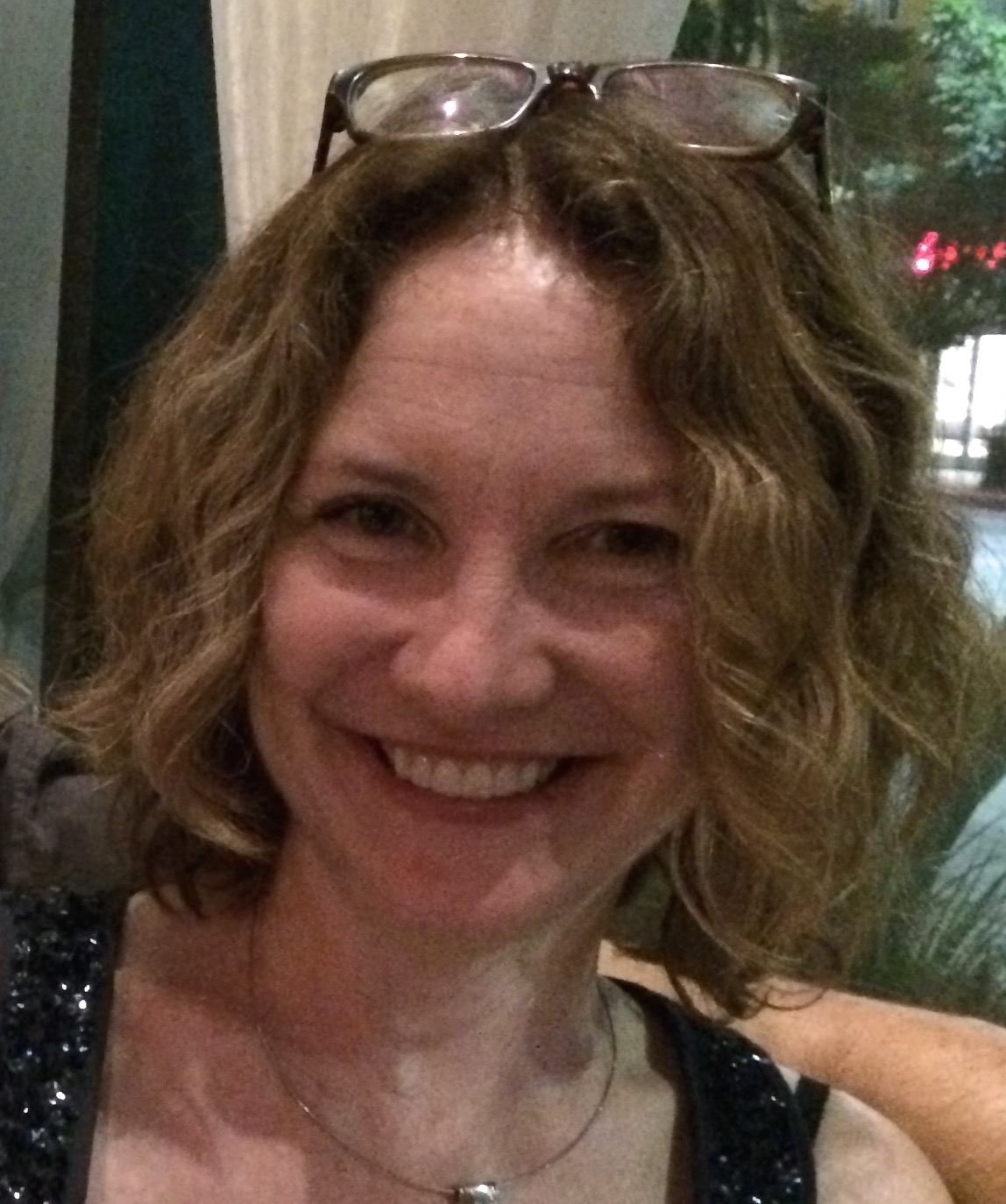
Laurie Ashbourne

The latest in a series of interviews with script readers and consultants who would be worth your while to work with if you want to get your script in shape. Today’s spotlight is on writer-producer-consultant Laurie Ashbourne.

After seeing Who Framed Roger Rabbit in an old theater in Philly, Laurie knew that she had to be a part of that process.  Within 6 months she was in Disney Feature Animation‘s new studio in Florida working on a Roger Rabbit short and The Little Mermaid, and stayed on through the production of Lilo and Stitch. Leaving that cocoon to create and own her work, she quickly segued to live action and documentaries as a writer, producer and script supervisor.

With four features she wrote as work-for-hires in production, a dozen ghost- writing films and pilots in development, an independent animated feature in pre- production, an original story she wrote (10-31) was recently announced on the fast-track to production with acclaimed producers Eli Roth and Roger Birnbaum and a bio-pic she wrote is in early stages with Bohemia Group Originals.

Laurie is also longstanding story analyst for the likes of Amazon Studios Feature Films and Austin Film Festival.
In addition, she oversees several projects in development via her company, LA Story Studio. Her documentary work continues as well, as a producer for iconic director Robert Greenwald’s Brave New Films banner where she just co-
produced, SUPPRESSED – the fight to vote (2020), and RACIALLY CHARGED (2021), featuring two-time Oscar winner, Mahershala Ali.

1. What’s the last thing you read/watched that you thought was incredibly well-written?

I recently read a screenplay for a competition that was amazing. It was so well-paced and had such a perfect economy of words, twists and great characters – I wish I could share it with you, but I have no doubt that sooner than later everyone will have a chance to see it on screen.

For watching, the film LITTLE BOY. About 4 years ago the casting director asked my son to read for the part, so I was sent the script. It was such an emotional story that read really well, even though it broke some traditional pet peeves of mine, I completely overlooked them because I was so engrossed in the story. My son ended up sending in a video read because I was on a job in Virginia AND he had just lost his 2 front teeth so we knew the read wouldn’t go over at its best. Regardless, we went to see it (and I have to say the boy they had for the lead did a great job). I immediately could see where they had to change some things but it mostly stayed true to the script. I enjoyed the film and it was completely emotional, but I could definitely see how it read better than it played.

2. How’d you get your start reading scripts?

My first job in the industry was with Walt Disney Feature Animation, and as a department head I was in on a project from development through to final reels. But I didn’t start reading them professionally until I left the company to work in independent film, over ten years ago.

3. Is recognizing good writing something you think can be taught or learned?

The tenements of the craft can be taught easily but if a sense of story isn’t there then those ‘guidelines’ become hard and fast rules that can overlook a good story and what it needs to be brought up to industry standards. Learning story is possible, but it’s not for everyone, those that it is for can’t let it go. I’ll use my son as an example again. He will watch a movie until he knows it by heart and then pick apart the structure and characters, all by his own will. He said to me the other day, “When a movie does well, they automatically make a number two, and they do it quickly, and when that doesn’t do well they spend more time working out number three. Number twos always stink.” He’s 10, so I think it’s safe to say that a sense of story is ingrained in his psyche with no teaching other than immersing himself in something he enjoys.

4. What are the components of a good script?

Characters with an emotional want that comes across as genuine – in this case it’s the difference between a homeless person holding up a sign that says “will work for food” and one that holds up a sign that says “hungry, broke please give”. The audience is much more likely to attach themselves to a character who is willing to do what it takes to survive – the character that is willing to work for his food.

Craft contains a lot of things that get a bad name as hard and fast rules, and it’s true that if you are trying to break in you have to look like you are willing to adhere to industry standards, truth is your craft demonstrates mastery of cinematic story SOME formatting issues can be overlooked. So at the top of the mastery of cinematic language is, giving the actors something interesting to do that advances the plot and peels back the layers of their character. This does not mean writing verbose prose; that is not cinematic. Cinematic is thinking like a director in your mind, but conveying that action in words that do not include camera direction.

5. What are some of the most common mistakes you see?

-Misuse and abuse of parentheticals and exclamation points

-Typos and poor formatting

-A misunderstanding of scene headings in content and purpose

-A great idea poorly executed, usually in character and pacing

-A poor balance of dialogue and action (which is usually because of way too much dialogue)

6. What story tropes are you just tired of seeing?

It seems to be cyclical; every year there is more of one than another, so I guess that falls into chasing trends. Right now, there seems to be a lot of smaller character pieces, which is good for independent film, but with specs that are trying to break in (rather than going out and producing the indie on your own), it’s really difficult to get behind a moody character wandering the town or country instead of facing an uncomfortable truth. So it goes back to the homeless analogy – why do I care about this person, and please make it interesting without a having a diary in voiceover.

I admit it’s a bit of a catch-22, it’s also very difficult for an unknown to break in with a tentpole, but there is a happy medium where there are just enough elements to give the audience and producers something worth the investment of time and money.

7. What are the 3 most important rules every writer should know?

-Your material will not resonate with everyone, but if it’s not resonating with anyone, it’s time to analyze those notes you thought were shit.

-Write because you have to get a story out of your system, not because you want to strike it rich or win a contest.

-Let the audience (or reader) get to know your character through the action we see them take on screen, not via a laundry list of their traits.

8. Have you ever read a script that was an absolute, without-a-doubt “recommend”? If so, could you give the logline?

Sure. I’ve had the pleasurable honor to move a lot of scripts forward and nothing makes me happier than to see writers I worked with or read be working in the industry. Frankly, most scripts that come to me don’t have a logline, and I craft one for the coverage – most contest scripts don’t come with loglines. Loglines when done well are a craft unto themselves and contests are won on these concepts, but a great logline does not make a great script. This goes back to one of my top three: Most great ideas fall short on execution and again, I really think that comes down to sense of story. I personally write a logline before (during and after) I write a script. Writing it out at the start helps shape your outline. But just as the outline will change as you write, the logline should too, by becoming tighter.

I recently read a logline on LA Screenwriter called The Muffin Men – it was really brilliant. But who knows if the script is?

9. How do you feel about screenwriting contests? Worth it or not?

Yes, but do your homework. There are more scams than legitimate career changers. It’s worth it to get your script in top-level shape and submit to the top-tier contests (which there are less than 10) the odds are tougher due to the number of submissions but if you seriously want to advance your career, there’s no use in wasting money on the Podunk USA’s screenplay competition.

10. How can people get in touch with you to find out more about the services you provide?

My company at LA Story Studio, my blog 1st 10 pages, or via Stage 32 – https://www.stage32.com/LAstory.

11. Readers of this blog are more than familiar with my love/appreciation of pie. What’s your favorite kind?

I’m not much for desserts, but I like apple if it’s fresh and not overly gooey, or key lime. When I was a kid I was all about Tastykake cherry pie.

Toothbrush. Clean skivvies. Business cards. Let’s go!

Opting to leave my emotional baggage at home

Kind of busy getting ready to head out to the Great American Pitch Fest, so another shorty today.

(Still accepting suggestions about where one might find quality pie in beautiful downtown Burbank.)

-Didn’t get much writing done this week due to our shaggy dog getting a mess of foxtails stuck in her toes, including one so far in it required a trip to the emergency pet clinic. She’s better now.

-More great notes received for the western. Thanks to all who’ve contributed. It’s especially nice when those who’ve read the previous drafts have high praise about how much of an improvement the latest one is.

Hopefully the next draft will continue that trend.

-The revamping of the comedy outline continues, including tightening the whole thing up. I must have cut at least 10 scenes/pages, so shooting for a total of somewhere in the mid-to-upper 90s. As it should be.

-Yet another “pass” on the fantasy-adventure pitch, so taking a break from those for the time being. The most frustrating part is the oddly-phrased way some of them say no. I’d rather they just said “Sounds intriguing, but it’s not for us.”

Too bad there’s no translator app for that.

-Reader participation time! In the comments below, please give the title, genre and logline of the second script you ever wrote.

I’ll go first.

WOK & ROLL. Comedy. An overly-ambitious Caucasian chef in a struggling family-run Chinese restaurant takes on a sleazy rival determined to shut it down.

Who’s next?

Ask a Chock-full-of-Moxie-and-Gumption Script Consultant!

Amanda Nelligan

The latest in a series of interviews with script readers and consultants who would be worth your while to work with if you want to get your script in shape. Today’s spotlight is on Amanda Nelligan, aka Scriptgal.

Amanda was born and raised in Western Massachusetts. She attended Brown University and received a Bachelor of Science degree in biochemistry. While at Brown, Amanda became involved with the Brown film society and its weekly comedic film magazine – The Film Bulletin – which cemented her life-long love of movies. After working briefly at a medical research lab, Amanda moved to Los Angeles and embarked on her film career. Her first job was as an assistant to a literary agent. From there, she worked at Disney, then ran development for a number of production companies. Amanda went back to grad school in psychology and worked as a therapist and as a research project manager at UCLA before launching ScriptGal. Amanda enjoys baking, hiking and scuba diving and lives with her husband in Sherman Oaks, CA.

1. What’s the last thing you read/watched that you thought was incredibly well-written?

I can’t pick just one – different movies are great for different reasons. I really enjoyed NIGHTCRAWLER – whip-smart dialogue and a character I’ve never seen before. It also had a resolution that defied convention. EDGE OF TOMORROW is a meticulously plotted, fun, time-bending action film, which is so hard to do right. And WHIPLASH didn’t miss a beat (pardon the pun.) In terms of television, TRANSPARENT was terrific. JUSTIFIED and THE AMERICANS are two incredibly well-written series I never miss.

2. How’d you get your start reading scripts?

I moved to Los Angeles shortly after college. My first industry job was for a boutique literary agent who had an A-list roster, so my introduction to Hollywood was through writers. After that, I worked as a development exec – meaning my job was to find scripts and to work with the writers to develop those projects into viable features and television shows. I worked as a creative executive at Disney, then ran development for two production companies. I didn’t like all the politics/crap in the movie business, so I left and went to grad school and worked in another field for a while. But movies are my passion and I love working with writers, so ScriptGal started as an experiment, in a way, and three plus years later. here I am.

3. Is recognizing good writing something you think can be taught or learned?

I think recognizing good writing is a matter of natural instinct, which not everyone has, plus a lot of practice – a.k.a. reading. And reading everything – not just screenplays. Novels, essays, short stories, etc. As a script reader, you need to understand what makes a good story. I think a rule of thumb is that when you forget you’re reading, you know the writing is good – good writing transports you.

4. What are the components of a good script?

A compelling protagonist or anti-hero and a worthy antagonist. We should be able to relate to the protagonist in some way. The antagonist can be a classic villain, a disease, a monster or even the weather. But no matter what the story is, it’s essential that we care what happens. Also, a good script needs to make you feel something. Joy, sadness, fear… Bottom line, the script needs to tell a good story. It can be written in crayon and have a million typos, but if the story is compelling it will shine through.

5. What are some of the most common mistakes you see?

Too much description. It’s a real skill to write just enough to give you sense of what the audience will be seeing and hearing on screen. If the color of someone’s dress isn’t essential to the story, don’t include it. Another related mistake is describing things that would be impossible for an audience to know. Stuff like a character’s face shows the pain of the loss of his wife two years earlier. That’s cheating – essential information needs to be revealed the way the audience would discover it on screen.   Another mistake is not having enough conflict – which results in the story not being as dramatic as it needs to be.

A lot of people are hung up on so-called screenwriting “rules” — don’t use “we see” or any camera directions, etc. I think a) those rules aren’t true – good produced scripts do use them and b) no one working in the industry today cares about those rules one bit. Or even thinks about them. Bottom line – people want good stories.

6. What story tropes are you just tired of seeing?

I just read a script where a guy gets fired and comes home early to find his wife cheating on him. I’ve seen that a million times – so to me it signals a lack of imagination. I think a trope is fine if it is the best thing for your story – but you should always try to put some sort of fresh spin on it. Also, audiences love when a trope is turned on its ear – the best example is the fight scene in RAIDERS OF THE LOST ARK – when instead of getting into the expected hand-to-hand battle, Harrison Ford shoots the bad guy. So when writers find themselves contemplating a trope, they should always ask themselves whether or not they can surprise the audience instead.

7. What are the 3 most important rules every writer should know?

-Writers write. You have to be in this for the long haul. If a script doesn’t work or sell, move on to the next. No successful writer I know parachuted in with the coolest script ever and then sailed on to fame and fortune. The best of the best have a lot of failed scripts in their filing cabinets. Or, these days, in the cloud. This business is a grind.

-Writers rewrite. You need to be able to make changes to your initial drafts and ideas – you need to be able to “kill your darlings,” meaning abandoning things you may love in furtherance of the story. Also, this is a collaborative business – everyone who reads your script will have notes. That doesn’t mean every note will be a good note, but it’s your job to recognize the good ones when they come along and manage the bad ones.

-“Take Fountain.” – Bette Davis. Okay, the real rule is outline. Outline like crazy – especially right after the idea comes to you. A lot of newer writers seem to get bored with their own ideas after awhile and make changes that are destructive. You need to lock in the story that got you excited in the first place and don’t doubt that it will excite readers/viewers as well.

8. Have you ever read a script that was an absolute, without-a-doubt “recommend”? If so, could you give the logline?

No. To me “Recommend” means go shoot it, as is, tomorrow. I never say never, but I could probably write notes on every successful movie out there. The rewriting stops after the scene is shot. Actually, that’s not even true. A lot of rewriting happens in the editing room. For people who love the show THE AMERICANS, and even those who don’t, I highly recommend the Slate-produced TV Insider podcast about the show. It’s a conversation between the story editor and various writers on the show, often including the showrunners. They are rewriting until the last second.

9. How do you feel about screenwriting contests? Worth it or not?

I think a select few are meaningful to industry execs – The Nicholl FellowshipAustin Film Festival, and UCLA’s Samuel Goldwyn. I think the others may help a writer’s self-esteem, but I’m not sure how many actual doors they open in Hollywood.

10. How can people get in touch with you to find out more about the services you provide?

They can email me at Amanda@ScriptGal.com and check out my website www.scriptgal.com.

11. Readers of this blog are more than familiar with my love/appreciation of pie. What’s your favorite kind?

I love ALL pie – much better than cake, in my book – but if I have to pick one it’s strawberry rhubarb. The contrast between sweet and sour – that’s drama.

Ask a Skilled-in-the-Art-of-Deduction Script Consultant!

Staton Rabin

The latest in a series of interviews with script readers and consultants who would be worth your while to work with if you want to get your script in shape. Today’s spotlight is on Staton Rabin of Jump Cut Script Analysis.

Staton Rabin is a screenplay analyst, script marketing consultant, and “pitch coach” for screenwriters at all levels of experience (www.statonrabin.com and www.screenplaymuse.com). A Senior Writer for Scriptmag.com, she’s been a freelance reader for Warner Bros. Pictures, the William Morris Agency, and New Line Cinema, and was a frequent guest lecturer for screenwriting classes at NYU. She’s a reader for the annual Big Break Screenwriting Contest. Staton is also an award-winning, optioned screenwriter and writes YA historical novels for Simon & Schuster (BETSY AND THE EMPEROR, etc.). She evaluates screenplays and books in all genres and can be reached at staton@statonrabin.com

Staton’s screenwriter clients include at least two whose scripts were produced as films, and a number who have won or done well in screenwriting contests.

1. What’s the last thing you read/watched that you thought was incredibly well-written?

Sherlock” from BBC-TV. I confess that recently I wolfed down the entire series in about two days, catching up on all the past episodes of this great show. Clever, witty, poignant when it should be, and visually inventive. As a huge fan of the original Conan Doyle stories (and of Basil Rathbone as Holmes in the old movies and radio shows), I assumed I’d hate any “update” of them, and that no modern version could possibly compare to Rathbone’s. But “Sherlock” is hugely respectful of the original stories, yet finds incredibly smart ways to update them. My January 2015 posting for my monthly blog at scriptmag.com is about what screenwriters can learn from watching it. I am much more of a film person in general than a TV fan– and as a script analyst, my expertise is really in evaluating spec scripts, books, and movie concepts, rather than series television. But I have to admit: some of the best work today is being done for TV, and “Sherlock” is a prime example of that.

2. How’d you get your start reading scripts?

I read many screenplays before I became a script analyst for a living. After graduating from NYU film school, I hunted for a job as a freelance reader for quite a while. In those days, there were a lot of film studio offices in New York but at the time there wasn’t much in the way of “job placement” available to film school graduates (NYU has a great Career Development office now). But one day, when I was still unemployed, I bumped into an old film school classmate on the street. He was working as a freelance reader for Warner Bros. Pictures at the time. He took me upstairs to meet his boss, and in about ten minutes I had my first job. I’ve been a script analyst for over 30 years now, and have worked for many film studios, agents, and writers, so I figure maybe it wasn’t just having “connections” that’s allowed me to stay in this business so long!

3. Is recognizing good writing something you think can be taught or learned?

On some intuitive level, all film audiences have the ability to recognize good writing when they see it. There’s a lot of wisdom in what “the average person” has to say about any movie, in terms of what they generally liked or disliked about it. Audiences also intuitively understand whether a story works from a structural standpoint, especially when seeing movies. But, at the risk of sounding elitist, I don’t think everyone has the capacity to read a screenplay or book, or see a movie, and be able to identify and articulate exactly where the problems are in the material, why, and precisely how to fix them. Certainly, a professional script analyst can get better at the job simply by evaluating thousands of movies and screenplays during the course of a career and helping writers to improve their work. I know that over the years I’ve gotten much faster at “taking the watch apart” and spotting problems in a concept or story– and can do this quickly and accurately even when I’m just hearing a brief pitch instead of reading the script. I also advise them on possible solutions to those problems. So while I think that the ability to recognize good writing– or a good story– is universal, the ability to analyze what makes the watch tick (or “clunk”), and know how to take it apart and fix it, I believe is mostly inborn.

To be a script analyst, one has to have a certain kind of analytical mind– the ability to enjoy the material as entertainment, and at the same time look at it as a mechanical device that may or may not be in need of repair, and know how to find where the problem is and what the right tools are to fix it. And perhaps this analytical, detective-like, detail-oriented, problem-solving approach I take to looking at stories explains why I wanted to grow up to be Sherlock Holmes– and ended up being a script analyst!

One’s innate abilities to analyze a story can certainly be honed and improved through education and experience, but one can only build on what one was born with. You raise an interesting question, because more often I am asked whether writers are born or “made”. And to that question I’d give pretty much the same answer: Education and experience can enhance one’s talents, but talent can’t be taught.

4. What are the components of a good script?

More important than the components– which vary– is how a great script makes a professional reader feel. It’s a writer’s job to make the audience (or reader) feel what he wants them to feel. I think the first job of a script analyst is to look at a script as entertainment and be an audience. Which means that if it’s a great script, with all the right components for that particular story and genre, I will simply enjoy it just as anyone else would, and nothing important goes awry from a writing standpoint that will remind me that I’m a script analyst doing a job. The story will be clear and compelling, with high stakes for the hero. I’ll like the hero, despite his human flaws (and partly because of them). I’ll be rooting for the hero to succeed in his goal but fearful that he will fail, as the story holds me in suspense. I’ll feel strong emotions and identify with the hero. And if I feel all these things, all the way through, I’ll be excited about telling the writer about my findings. If I’m reading the script for a contest or a movie producer, I’ll be excited about handing a report to my boss giving it a “recommend”.

But if a script isn’t working, I will notice this and stop to make mental and actual notes of any problems along the way. If it’s a great script (which is very rare), I’ll note the little problems but will be inclined to “forgive” them, and start rooting for the screenplay– just as audiences root for the hero when watching a movie.

A screenplay should feel like the experience of watching a great movie. In terms of what the components of a great script are, screenplay gurus talk about all the different factors that go into it. And these days, every aspiring screenwriter is already familiar with them. Of course they involve three-act structure, and everything else you’ve read about. So instead of re-stating the obvious, I would tell screenwriters to learn what a workable movie concept is (not necessarily the same as a “logline”, though people often use them interchangeably), to practice by coming up with the concepts for classic films of the past, and to make sure you don’t even think about starting to write your script until you’re certain the concept is working as blueprint for a great movie that can sustain the story conflict for 2 hours. You should spend 80% of your time planning a script, and only about 20% writing it. If you have to rewrite the same script over and over again, something is not working, and it probably goes back to the concept. One should stop the madness and get outside professional advice.

Keeping the plot very simple can help when writing any screenplay—and generally makes for better scripts. Especially if you haven’t broken in yet, don’t try to write a really tricky, complicated plot like “Memento”. Keep your story and your main character’s goal, motive, and conflict very simple, and your characters rich and complex. Make sure your hero has a tangible, external goal (and internal and external obstacles to achieving it) right from the start. Also, read lots and lots of screenplays from financially and critically successful, produced films.

5. What are some of the most common mistakes you see?

The most common problems include a lack of clarity in what’s going on in the story, and withholding too much information from the film audience for much too long. I think many aspiring screenwriters assume that being “subtle” is desirable, and that they should hold back as much information as possible from the audience, and reveal or surprise them with it later. But actually, nothing could be further from the truth. The goal of a screenplay is to get the crucial information out as quickly, clearly, and efficiently as possible, not to be “mysterious”. Audiences should be in doubt (till near the end of the story) about the outcome for the hero, not be kept in the dark about the basic facts of what’s going on in the plot. Even in a murder mystery, there should be one big mystery at a time, not ten. Clarity is the screenwriter’s first mission. Don’t be subtle, fuzzy, or secretive when it comes to what the audience knows. “Surprise endings” are way overrated and few aspiring writers do them correctly anyway.

A lot of writers don’t understand that film is a visual medium, and how to present exposition in the language of movies. The script is often way too subtle in the way information is transmitted to the audience, and we are too often required to read the characters’ minds and “guess” what they’re thinking about. For example, the film audience is probably not going to notice signs or pictures on the wall, or how “neat” an apartment looks (many writers do this to communicate that the apartment’s owner has OCD, or the like). If a character is simply staring into space, we may not know what he’s thinking. Unless a character is actually doing something or interacting with objects in a meaningful way, the audience will not notice anything in a movie. They are not paying attention to the setting or what’s hanging on the wall (unless it’s someone’s head!), nor should the writer rely on the setting to do exposition.

In terms of visual information, only significant plot-advancing, character-illuminating action should be in a movie. Sipping coffee is not action– unless one character spits coffee in the other’s face. Eating “a hearty breakfast” is not action. And if any character in a movie MUST use a cell phone, computer, or other electronic device, the writer is going to have to find a way to make this visual and interesting (“Sherlock” does this very well).

Another problem I see in a lot in scripts lately is the misuse of dreams, flashbacks, and visions as a means of conveying exposition. Avoid them.

6. What story tropes are you just tired of seeing?

There’s no cliché so tired that it can’t be turned into something fresh and new in the right hands. Actually, screenwriters don’t rely nearly enough on tried-and-true dramatic formulas and techniques. You’re not going to come up with an original plot, so don’t even try. Following the proper dramatic twists and turns for your genre is exactly what you should be doing– with some new and original twists on what works. Writers should never make the mistake of thinking that following a formula is the same as formulaic or sloppy, ham-handed writing. Your goal should be to take a familiar and conventional story structure and give it a few new twists and surprises, and great characters of real depth and complexity.

All that said, you can’t go wrong if you avoid the following clichés:

-Blatant references to other movies or famous songs in your own screenplays.

-Flashbacks, dreams, and visions (as stated above).

-Giving characters a disability of some sort as a substitute for finding something unique and quirky about them derived from the pure skill of your writing.

-Trying to show us a character is afraid by indicating in your script that he is peeing in his pants.

-Any script about a writer. If you write about an author whose goal is to pen the Great American Novel or write an Oscar-winning screenplay and strike it rich, it is very difficult to make an audience care about goals like these and the nature of his profession provides few obvious opportunities for visual action unless he’s a reporter in a war zone. For most stories about writers, we are going to have to absolutely love your main character, and know what success means to him beyond the obvious, in order to care about his struggles. And, yes, I saw “Adaptation”, and it was okay.

7. What are the 3 most important rules every writer should know?

-Work harder than anyone else, and work smart.

-Plan your concept and your story before you write your script. Don’t go ahead till you are certain it’s going to work.

-Follow the rules, but know when to break them, keep the plot simple, and write with passion. Be yourself. Don’t try to write “that junk” or “that great movie”. Write something emotionally honest that comes from your gut (even if it’s a comedy). There is no “magic formula” for writing a great script. Each one is unique.

8. Have you ever read a script that was an absolute, without-a-doubt “recommend”? If so, could you give the logline?

I could tell you, but then I’d have to kill you (great example of a cliché never to use in any script!). Kidding aside, it is hardly ever the concept or the logline that makes a great script. A logline (or concept) should and in fact must be dramatically viable: a properly structured formulation that has all the elements of drama (a main character with an urgent and compelling external goal, the character’s action in pursuit of that goal, and the main conflict or obstacle to achieving that goal) and that can sustain the conflict over a two-hour movie. And although it’s great if you have a slam-dunk “high concept” idea, and ideally your concept should have an element of originality, the execution is far more important. You need a reasonably fresh and interesting idea that works as drama or comedy over the course of a 2-hour movie. It does not have to be “really catchy” (though of course that helps), it just has to be interesting enough and workable. Your script, however, has to be truly great, not just “good”.

9. How do you feel about screenwriting contests? Worth it or not?

It depends on the writer’s goals and which contest. These days, there are only a handful of contests for which having been a winner or finalist is really going to impress a film producer. So if that’s your goal, enter Nicholl, Big Break, Austin, Sundance, or one of the other top, prestigious screenwriting contests. If your goal is to get the attention of the industry, then seek out contests that give you “access” and very major publicity in the trades as the prize, instead of ones that only offer money. Of course, many screenwriting contests have entry fees, and this can add up for many writers who have low incomes. So choose your contests wisely.

10. How can people get in touch with you to find out more about the services you provide?

Ah, my favorite question! They can write to me at Cutebunion@aol.com. They can also find some information about my services at my website. I read and evaluate screenplays and books, but also advise writers as a consultant at any stage of their process, from concept to finished script. I can provide advice on pitching and marketing their material, what to put in a query letter, and can suggest some creative and smart ways to approach the process of trying to get a particular movie star “attached” for the lead role—without being a stalker!

I also have a monthly screenwriting column, “Breaking In“, for Script Magazine, which consists of “how to” articles about the craft of screenwriting (mostly for those who already know the basics), and the business of marketing a script.

11. Readers of this blog are more than familiar with my love/appreciation of pie. What’s your favorite kind?

Oops. Spoke too soon. This is my favorite question. Depends on the season. Pumpkin in the fall, key lime and banana cream at other times.