
Time very well spent

finish line
Yeah. It felt just like that.

And…I’m back. Didja miss me?

To say the past week and a half has been a little hectic would be a slight understatement*. And of course, it involves writing and the opportunities that come with it.

Long story short – Somebody wanted to read one of my scripts. But I hadn’t finished writing it yet. So I wrote, edited and polished it. In ten days. Without taking time off from work.

As you can probably guess, I’m equal parts exhausted and exhilarated at having done it.

While I catch my second wind, here’s the extended version:

A little over three weeks ago, I connected with somebody who works for a production company. They mostly do TV, but are looking at expanding into features.

Emails and pleasantries were exchanged. They took a look at the blog, liked what they saw, and asked for a list of my loglines “to see if my boss might be interested.” So I sent it. This was on a Friday afternoon.

A vital piece of the puzzle to keep in mind – just before all of this occurred, I’d gotten the outline of a long-dormant comedy spec to the point where I felt ready to start on pages. Which is what I was doing while all of this interaction was occurring.

The following Monday morning, the response came in. “Do you have scripts for X and Y? Would love to request if so.”

Naturally, X was the long-dormant comedy spec that so far I had written all of 8 pages, and Y was still in outline form (which I’d already been considering producing in another medium).

My initial thought was panic. Neither script was available, but I didn’t want to blow the opportunity; I wanted to be able to send them SOMETHING. Sooner, rather than later. What to do, what to do?

After a little evaluation and weighing all my options, I wrote back that I was still working on the latest draft of X (which was true), and could have it for them the following week. I’d considered saying a few weeks or a month, but that seemed too long. Regarding Y, I said pretty much what I mentioned above – it was an outline, but they could take a look at it if they wanted to.

They were cool with both options, and were looking forward to reading them.

I’d just thrown the gauntlet in my own face. What had I gotten myself into? Was I totally insane for thinking I could pull this off? Would I be able to pull it off?

Only one way to find out.

I had a script to write, and had to do it faster than I’d ever done it before. I had no intention of sending them a first draft, so I had to crank that out and do a major polish on it. In about a week and a half. Taking time off of work was not an option, so I’d have to be as productive as possible in the off-hours that didn’t involve sleeping.

I explained my plan to my understanding family and got to work.

I produced as many pages as I could per day, averaging 8-10. Those would then be edited & polished during all available downtime at work (it being summer vacation season was a godsend – traffic’s much lighter, so that really helped). I’d get home, incorporate the changes, then move on to the next set.

Write, edit/polish, rewrite, repeat. A seemingly never-ending cycle.

A few things I discovered during all of this:

-Having a solid outline made it so much easier. I knew exactly what had to happen in each scene, and how I wanted it to happen, so there was no time wasted trying to figure it out.

-I sincerely think my joke-writing’s gotten better.

-I’ve gotten much more proficient at coming up with solutions to last-minute script-related problems.

-I seriously wondered if this is what it would be like if I were doing this for a living. I’d actually be pretty cool with it.

After ten days of non-stop effort, I had what I considered a somewhat decent 97-page comedy script. Both it and the outline have been sent.

Of course, they may not like either one. But at this point, I don’t care. Simply having accomplished this is my victory. I set an intense short-term goal and did it.

The script could definitely benefit from at least another rewrite, but that’s not a priority at this juncture. I wrote it in the time I said I would, and that’s the important thing.

Others may scoff at my feeling of accomplishment, claiming it’s no big deal or that they’ve done it or even done it in less time. But their words will fall on deaf ears because it’s a big deal to me. This is something I did, and am extremely proud of having done it.

So what now? I’m taking the weekend off, which will include going for a much-missed and much-needed training run.

But come Monday, I’ll be right back at it, hard at work on whatever project I opt to do next.

Hopefully, I’ll be able to take my time with it.

*I really appreciate everybody’s patience, and hope you enjoyed the throwback posts. And K wanted to thank everybody for the kind comments about her guest post. Yes, I am a very lucky guy to have somebody like her.

The great exchanging of 2 cents

team vs wall
Sometimes you’re doing the lifting or pulling up, and sometimes you’re the one to whom it’s being done

One of the greatest benefits I’ve found from developing and interacting with my network of fellow writers is the mutual willingness to help out when that help is requested.

Just within the past month, I’ve had three requests for script notes and two for logline feedback. (Although I’ll be the first to admit my timing could use a little improvement. It always takes me longer than I think. But I make a point of doing it. That counts, right?)

And during this same time, I’ve contacted several associates, asking “If you have the time, what do you think of this?”

The advantage of this kind of arrangement cannot be understressed. While I’ve gotten a lot out of using professional feedback, I’ve also been extremely fortunate to have received some very insightful and helpful comments from other writers. I couldn’t even begin to tell you how much their suggestions have contributed to the improvement of my scripts and loglines.

Since politeness actually does count (and people will remember it, or the lack thereof), I make sure to send them a thank-you note, which includes “More than happy to return the favor.” Which I am. I enjoy reading and commenting on other people’s stuff. And I’ve yet to have one person say my notes weren’t helpful. To my face, anyway.

One of those written-in-stone tenets of screenwriting is “It’s not what you know, it’s who you know.” While this primarily applies to people working in the industry, it can also work for those of us trying to break in.

Take a look at your own personal network. How many of them would you be willing to contact and ask for a little help? And how willing would you be to help them if they came to you? Being helpful and supportive goes a long way for both parties.

Is your story worth fighting for?

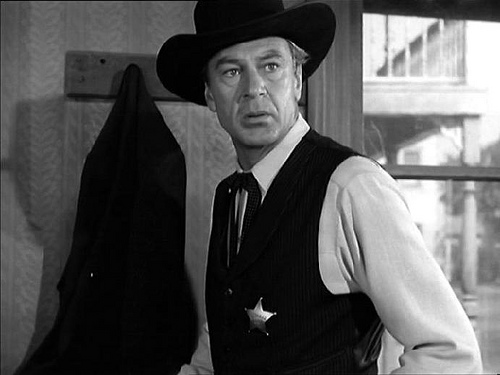
Will Kane knows what it's like to feel like one against everybody else
Follow Will Kane’s example (except without all the shooting and stuff)

The rewrite of my mystery-comedy has been put on hold because I’m teaching myself how to write a mystery, or at least how to be better at writing one. I bought a book and everything.

But I also don’t want to not be writing, so I’ve also decided to return to the low-budget comedy. It’s been a while since I’d read the outline, but it holds up more than I thought. Sure, it needs work and there are some spots where it says something like “SOMETHING FUNNY HAPPENS!,” but overall, I like it (hold onto that statement for just a bit).

Several months ago, I’d had the opportunity to have a brief chat with a writer who specializes in comedy. He asked what I was working on, so I pitched him the idea. He liked the concept, but was quick to poke holes in the story vis-a-vis the logline (which has since been rewritten), and didn’t care for how I had the story play out (as delivered in my thumbnail presentation).

“X should happen instead of Y! Having THIS CHARACTER connect with THAT CHARACTER is all wrong!” Plus some additional words to that effect.

Gosh.

I wasn’t expecting a standing ovation, nor did I expect it to be proclaimed a work of genius, but if this guy didn’t care for what I had, did that mean it was doomed before I even started?

Nope. Quite the contrary.

Several key things I had to remember:

-this was his opinion. One person, which is not a majority.

-his sense of humor and comedy stylings could be totally different from mine.

-it’s a work-in-progress in its very early stages. The end result will most likely be very different from the starting one.

-I think it’s a good story. Always have, always will. I have no intention of abandoning it or making any significant changes so as to gain his approval. I’m not writing this for him.

Every writer spends a lot of time coming up with story ideas, and then developing them as far as they’ll go. Stick to your guns if you believe in your story, but don’t totally block out advice and suggestions. Use what you think works best. Remember – this is YOUR story. If you think it works, then by all means, do what you can to make things happen.

It’s great when you get encouragement, but you’ll also encounter a lot of naysayers (“I don’t get it/like it, so it must be a bad idea.”). It’s all subjective. Everybody likes different things. If you believe wholeheartedly in your story, you have to do your absolute best to get the rest of us to be just as interested in reading it.

Just make sure to tell that story in the most entertaining, original and professional way possible. That’s all.

Just a moment of your time, please

It’ll only take this long, right?

Even though I don’t actively participate on a lot of online forums, I still enjoy reading them, occasionally throwing in my two cents when I think I have something worth saying.

On one such forum, an experienced writer offered to provide detailed notes on the script with the logline he liked the most. He was very detailed and meticulous in laying out the guidelines and rules, including that the script “MUST be ready to read NOW. No exceptions.”

Up until that caveat, I’d thought about submitting the logline for my mystery-comedy, but knew the script still needed work, so instead opted to hold off and wait until I thought the script was ready. And I said words to that effect in the comments.

Much to my surprise, he responded almost immediately.

“Now that’s what I love to see. Writers respecting the investment of time and energy of others. I’m taking about five hours out of my life to do this and I want to feel the script I’m about to read will be worth it. Good on you, Paul, for being so conscientious. It’s one of the responsibilities of a writer no one tells you about, but it’s absolutely vital for building and sustaining a career.”

I never thought of it that way because I was looking at it from my perspective: I didn’t want offer up a script I didn’t consider ready yet. But he makes a very good point – the other person has their own schedule, and you need to be respectful of that.

It’s easy to forget that even though you’ve put a lot of time and effort into your script, now you’re imposing on somebody else to devote a sizable chunk of their time to giving it a solid read-through. That’s a lot to ask, especially when they’ve offered to do it for free.

When somebody asks me if I can take a look at their script, I always let them know it’ll probably take me longer than I think to get those notes to them – and it usually does. Nobody’s complained about it (to my face, anyway). And when the situation is reversed and someone’s giving me notes, I’ll send the script with a note of thanks and that there’s no rush. I’ll distract myself from the waiting game by working on another project or two.

We all only have so much time to spare to devote to work on our own material, let alone someone else’s. Just be grateful and appreciative that someone’s willing to sacrifice some of their time to help you out, and definitely be just as willing to return the favor.

In a timely manner, of course.

A refresher course we can all use

Okay, class. Who needs more time to work on their script?

I’ve had a lot of goings-on with loglines over the past couple of days, which prompted me to re-post this gem from a little over 2 years ago.

Enjoy.

“Scenario:  You’re at a social function, engaged in idle chit-chat. The topic of you being a screenwriter comes up.

“What’s your story about?” they will undoubtedly ask.

The chance you’ve been waiting for!  What do you say?

You want to pique their curiosity, and not bore them.

In the simplest of terms:  provide a quick summary of the main characters(s) and what happens in the main storyline.

Avoid too much information, non-essential characters, intricate subplots, how it’s a metaphor for this totally different other thing, or generic phrases like “and learns about themselves” or “stumbles into a world she wasn’t prepared for” or the ever-dreaded “wackiness ensues.”

What are the components of an effective logline? Just the following:

1. A protagonist with a flaw.

2. An antagonist with a goal.

3. The situation that pits them against each other

4. What’s at stake/what happens if the protagonist fails?

That’s pretty much it. Keep it simple. Nothing too specific or generic.

Make sure you emphasize the genre. If it’s a comedy, play up the comedic angle. A thriller, go for the suspense. That sort of thing.

And most importantly, make it sound interesting. This is your best chance to grab their attention, so make the most of it (and make sure the script is just as good).”

-3rd half-marathon of the year this weekend. Training’s been more sporadic than I would have liked, so hoping to break 1:55, but will settle for under 2 hours.