Hey! Long time no (preferred form of communication)

operator
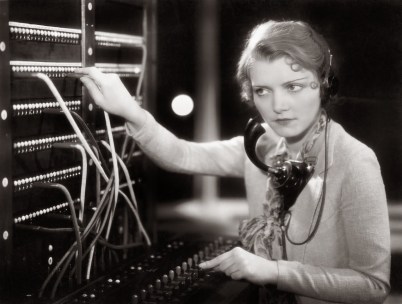
A hard-at-work pre-Internet server keeping things up and running

There’ve been several previous posts here regarding the benefits and necessity of networking. It can’t be stressed enough how incredibly helpful and effective it can be, especially if you’re not in Los Angeles or somewhere you don’t have a lot of in-person access to other writers.

But it’s not enough to just make a connection. An effort needs to be made by at least one of you (most likely you) to maintain that connection and keep it healthy. And it’s not as hard as you might think.

While it can be extremely easy and tempting to get sucked into the never-ending rabbit hole of the internet, designate a portion of your non-writing time to be just as productive and try to get some networking stuff done.

Are you connected to another writer in your area, but you’ve never actually met in person? Ask them if they’re up for a get-to-know-you coffee or lunch chat.

If you’re limited to online communication, send them an email or tweet asking how they’re doing, and how their latest projects are coming along. Be helpful, or at least offer to help. They might just take you up on it.

*Important – if it’s been a while since you’ve been in touch, don’t start things off by straight-out asking for something. Would you want someone to do that to you? Didn’t think so.

If something good (career or otherwise) has happened for them, send a note of congratulations. Likewise, if something not-so-good has happened, express your sympathies accordingly.

Cliched as it may sound, keeping the lines of communication open really can help you out. I’ve been extremely fortunate to have established strong relationships with several local writers and filmmakers, and exchanged notes with writers scattered across the globe.

I reconnected with a consultant I hadn’t been in touch with for several months, and that conversation led to them offering up coverage (which I still paid for) that proved to be quite helpful.

A writer I know who works in TV and film emailed me, wanting to discuss her latest concept because she thought I was a good match for it.

None of these would have happened if I hadn’t taken the time to keep each relationship going. Rather than taking a “how can you help me?” approach, I go in with the mindset of “maybe I can help you?”

One of the things you hear so often when it comes to establishing a screenwriting career is “It’s not what you know, it’s who you know”. I’ve found both parts to be true. You definitely have to know what you’re doing in terms of craft and writing ability, but it’s equally important to establish and maintain solid, professional relationships with as many people as you can.

Because you never know who’s going to suddenly be a person of influence willing to help you out because you did the same for them.

So here’s your voluntary assignment:

1. Contact five of your connections.
2. Ask them how things are going.
3. Take it from there.

Good luck!

The silver lining of a bad movie

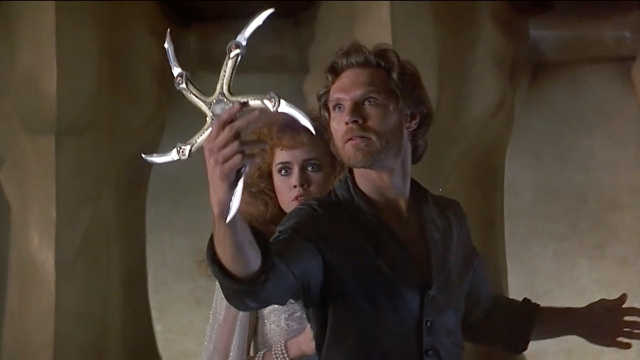
Krull
A definitive shining example (AND a prime candidate for a remake)

Since the screenwriter’s education is ongoing, there’s always something for you to work with or study to get a better grasp and understanding of what constitutes good writing, which can then be applied to your own.

Read scripts. Attend or take part in a table read. Watch movies.

While there are countless examples of exemplary writing and filmmaking to see it done properly and effectively, there are even more examples of crappy writing and lousy filmmaking to see it done poorly and ineffectively.

Nobody starts out with the intention of making a bad movie. What starts out as a great script can easily be messed up along the way to the point that there’s no salvaging it. It happens.

Is watching one waste of time? Not necessarily.

As enjoyable, informative and educational as the good stuff is, the bad stuff is actually just as good, possibly even more so. Because from these cinematic travesties you can learn what not to do with your own scripts. Lessons abound with all the glorious misfires regarding story, characters, and dialogue.

Regrettably, bad acting is a category all by itself and there’s nothing that can be done about it. Do what you can to ignore it (which can border on the impossible, depending on the quality of badness) and focus on the non-tangibles.

It’s especially helpful to work with something from the same genre as your script. See how they did it, then compare it to your own. Can you see why theirs didn’t work? Is it riddled with plotholes you could drive a truck through? Is the dialogue pure on-the-nose? Do the characters come across as unrealistic caricatures?

Look at it as a whole. Does it respect the reader/audience’s intelligence? Is the structure solid? Do you care about what happens to these characters over the course of the story?

Now bring your script into the equation – and be objective! How much of a similarity or difference is there between that story and yours? Did that other material open your eyes to some previously unforeseen flaws and potential problems within your script, so much that it made you realize “this needs work”?

Once you identify these problems, your writer’s mind goes to work, figuring out how to make sure your script doesn’t repeat the mistakes you just read or watched.

It may not be easy to endure having to watch a bad movie just for the educational experience, so just keep reminding yourself “It’s to help me become a better writer”.

Good luck!

Question time! What’s your favorite bad movie? Feel free to list it in the comments.

Ask an Astonishingly Productive Script Consultant!

Bill Boyle

The latest in a series of interviews with script readers and consultants who would be worth your while to work with if you want to get your script in shape. Today’s spotlight is on writer-educator-consultant Bill Boyle of www.billboyle.net.

*editor’s note – Bill passed away in July 2018

Veteran screenwriter Bill Boyle has been involved in the film industry in both Canada and the U.S. for over 25 years as a writer, director, agent, producer, story editor, and mentor. Mr. Boyle has the rare honor that every screenplay and television series he has written has been produced or optioned. He currently has four screenplays produced and a fifth scheduled for production. Two others are presently under option. Additional information on the films can be found at www.billboyle.net or at www.imdb.com

In addition to screenwriting, Mr. Boyle devotes a significant amount of his time sharing his experience mentoring younger screenwriters. He teaches screenwriting at UCLA and has lectured throughout Canada and the United States.

Mr. Boyle is one of the most popular script consultants in the industry. He has consulted on over 1,000 screenplays worldwide. Creative Screenwriting Magazine rated him among the top 10% of screenwriting consultants. He is the lead proponent of a visual style of screenwriting called “The Visual Mindscape of Screenplay” that focuses on the visual and visceral aspects of screenwriting. His book of the same name was released in 2012.

1. What’s the last thing you read/watched that you thought was incredibly well written?

I am a huge fan of Jo Nesbo’s novels. His visual exploration of the environments he creates are so visceral that once read it is impossible to ever forget them. As for screenplays, I recently read Nightcrawler and found it exceptionally well-written.

2. How’d you get your start reading scripts?

If you mean reading scripts as a job, I was never actually a script reader. I was a manager in Canada and read many scripts that my actors were up for, as well as reading the work of my own screenwriters and playwright clients.

3. Is recognizing good writing something you think can be taught or learned?

It needs to be taught, but not taught as in learned; taught as in establishing the ability to connect fully with the writing and to remain focused. That ability and willingness to be fully immersed in the screenplay allows the reader the conduit into the rhythm, pacing and flow of the narrative. Sounds obvious, but it is my experience that the vast majority of writers ‘skim write’, which is to say they focus all of their attention on what they want the scene to say and little on the atmosphere and pacing of their scenes.

4. What are the components of a good script?

A good script is one that captures the visual and visceral imaginations of the reader. Actually, it’s a misnomer to say we’re writing for the reader, when actually we’re writing for the viewer within the writer. Besides being a visual expression of the story, a good script also expresses the proper pacing and atmosphere within each scene. These are the two elements most often missing in a screenplay.

5. What are some of the most common mistakes you see?

-Detailed Action

-Skim writing

-Blueprint Narrative lacking pace, atmosphere and visual expression

-Overwritten dialogue that lacks a pulse.

6. What story tropes are you just tired of seeing?

The two things that disturb me the most are how fundamentalist screenplay instructors and gurus have poisoned the creative minds of so many young writers.  This attitude of “my way or the highway”, or the ever-growing list of things a screenwriter must not do (Voiceovers, Camera Angles and Directions, Character Descriptives, Flashbacks, etc) is absurd.

For me the big one is the white on the page dictum. Of course, part of the art of screenwriting is the ability to tell the story in a succinct, near-haiku style. This form of brevity allows the story to flow and remain in the Absolute Present Tense. But this should never go beyond the point where it strips the narrative of its creative purpose.

I actually believe that white on the page is a way of devaluing the writer’s role in the filmmaking process. I seriously question when and why white on the page become more important that what is on the page.

7. What are the 3 most important rules every writer should know?

-Screenwriting is first and foremost a visual expression. Whether you choose to ignore it or not there is always and image on the screen.

-Establish pacing and atmosphere in your scenes so as to create a visceral experience within the reader/viewer

-Every action, element and scene of a screenplay exists in the Absolute Present Tense

8. Have you ever read a script that was an absolute, without-a-doubt “recommend”? If so, could you give the logline?

A script by Canadian screenwriter Laura Beard called ‘A Quiet and Distinguished Gentleman’. It was about a French Catholic detective who must overcome the bigotry of an English Protestant city and police force to solve a brutal axe murder in 1930. There are things she does with that script that to this day I still use in my lectures. A brilliant and very clever piece of work.

9. How do you feel about screenwriting contests? Worth it or not?

I am not a fan of screenwriting contests. Before I explain why, let me make the distinction between contests and fellowships. I think the fellowships (Nicholl, Praxis, Disney, etc.) are excellent programs.

I swear to god I have never heard a ‘true’ story of someone having a script produced based on a contest, which, considering how many there are out there, is rather shocking.

This idea of letting the writers know that they have moved to the next tier and then the quarterfinals, semifinals, etc., is their rendition of Three Card Monte. They let you think you win for a while so that you come back for more. What other reason is there?

10. How can people get in touch with you to find out more about the services you provide?

Check out my web site www.billboyle.net. You can also sign up for my newsletter, blog notices, online course dates and when spaces open up for my Unlimited Script Mentoring Program.

11. Readers of this blog are more than familiar with my love/appreciation of pie. What’s your favorite kind?

I will go for pretty much anything except the pie in The Help.

Ask an In-the-Director’s-Chair Script Consultant!

Jeff Richards

The latest in a series of interviews with script readers and consultants who would be worth your while to work with if you want to get your script in shape. Today’s spotlight is on writer-producer-filmmaker Jeff Richards.

Jeff Richards is a story consultant, filmmaker, and writer with over twenty projects either optioned, produced, or sold. His clients range from award-winning novelists to creative writing professors to screenwriters working for major studios. His own writing includes feature films, TV series, graphic novels, and short stories, as well as writing for children’s animation and computer games. His background includes information technology, a decade as an opera singer, and he is an honorary member of the Takaya Wolf Clan of the Tsleil-Waututh First Nation.

1. What’s the last thing you read/watched that you thought was incredibly well-written?

The Karla trilogy by John Le Carré, and if you ever need a lesson that character is king, look to those. The books are often very low on action; they largely consist of dialogue (most of which is people recounting events, as you’d expect in a book about counter-intelligence) and the characters are so magnificent you don’t care that you’ve just spent hundreds of pages essentially listening to people talk. The protagonist for two of the books, Smiley, often isn’t even doing the talking; he’s merely listening. Yet it works.

As for watching, I’ve been re-watching Doctor Who, and “Blink” is possibly the best hour of television I’ve ever seen. Stunningly imaginative and original, incredibly atmospheric, and one of the very best examples of burying exposition I have ever seen in any medium. If I write something that good, I’ll die happy.

2. How’d you get your start reading scripts?

I spent several years as an independent filmmaker and although I did write most of the projects we were developing, I’d occasionally work with an outside writer and help them. That made me realize that I could apply what I’d learned as a writer to helping others with their scripts.

3. Is recognizing good writing something you think can be taught or learned?

Absolutely. The love of words is probably pretty difficult to instill in an adult, but if someone is already interested in it, then it is definitely possible to learn to recognize good writing. The secret is to read widely and actively, both good and bad material; once you’ve read and analyzed enough writing, and worked out why it works or doesn’t, you start to see the patterns very clearly, particularly in screenplays. Objectivity about our own writing? That’s trickier…

4. What are the components of a good script?

What’s most important, and what I don’t see enough of, is a unity of character, plot, and theme. People talk about “character-driven scripts” or “plot-driven scripts” when, in reality, they should driven by the same engine.

As for the rest, it’s about what you’d expect; an active protagonist, strong pacing, dialogue with subtext, an original concept, rising stakes, good conflict, a surprising but inevitable ending… all that sort of thing. However, the only absolute must-have is that it is interesting. For every other must-have you’ll see on a checklist, you can usually think of a great script that didn’t have it. Passive protagonists are death… unless you are talking about The Graduate. Or Being There. But these are scripts by master writers; you need to be very sure why you are going against the grain, and how it makes your story better. (And, as you can tell by the age of the examples, rule breaking isn’t that popular anymore in Hollywood.)

5. What are some of the most common mistakes you see?

Going back to the previous point, a disconnect between character, plot, and theme is common. This usually causes protagonists with unclear goals and flat second acts. However, the most common thing I see is on-the-nose dialogue. Characters who say exactly what they feel and think, or who sum up the central conflict in a speech. If you ever read “You know what your problem is?”, then that’s probably a bad sign.

6. What story tropes are you just tired of seeing?

I think I’m almost unique in that my answer is “none”. Every trope is ready for a great script to make it fresh. Amnesia is the most tired device in writing, yet The Bourne Identity comes along and is fantastic. There’s always room for a great script.

The thing that tires me isn’t story tropes, but clichéd dialogue. Don’t have lines from other movies in your movie. Be original.

7. What are the 3 most important rules every writer should know?

-Read widely; lessons are everywhere, and most of them are outside your genre and format. So if you’re a sci-fi feature film writer, read historical fiction. Read detective comics, manga, sitcom scripts. Expand your brain.

-Writing is rewriting; every first draft is a huge bundle of problems waiting to be solved. So solve it. And not by editing, but by rewriting. Changing words in action or dialogue is just editing. Changing characters, plot points, deleting or adding scenes, that’s rewriting. Do multiple passes, focusing on a different thing each time. One pass (or several, more often) for plot, one for each major character’s dialogue, one for action lines… if you’re building a shelf, you don’t sand and paint at the same time.

-Don’t get hung up on systems. Read how-to books, sure, but pick and choose your advice. Being a slave to a particular checklist is usually indicative of poor writing. If I can tell that you’ve read Save the Cat by reading your draft, then there’s probably too much Snyder and not enough you in your script.

8. Have you ever read a script that was an absolute, without-a-doubt “recommend”? If so, could you give the logline?

Unfortunately, I can’t share loglines due to confidentiality. But for me, “recommend” can’t focus too much on the logline. Concept is important, sure, but the writing is what matters, what makes it a “recommend”. I’ve had writers with straightforward concepts come to me and, after we hone the execution, they get jobs at major studios or get 10 on The Black List. That doesn’t come from the logline, but the execution, how they wrote (and, as per rule 2 up there, rewrote!) Chinatown’s logline doesn’t set the world afire, yet it is generally regarded as one of the great scripts. So a logline wouldn’t really illuminate why I feel a particular script is great. Loglines only show whether something is the type of script an exec should read (e.g. it’s high concept sci-fi and that’s what they’re looking for). The logline gets you the look; the writing gets you the job.

9. How do you feel about screenwriting contests? Worth it or not?

I personally don’t do them very often. I have in the past and placed well, but I never found the contest actually led to a job; what worked for me was my personal networking. However, every path is different and obviously you hear success stories. What is important is that you put in the time, both into the writing (mostly) and into building your career, whether that’s contests, pitchfests, networking… Whatever seems to be working for you, do that. If nothing’s working (and the writing is genuinely where it needs to be!), then change things up.

10. How can people get in touch with you to find out more about the services you provide?

Jeff is no longer actively seeking clients, but is still open to receiving requests via his website at strangeborders.com. He also suggests connecting with him on Twitter.

11. Readers of this blog are more than familiar with my love/appreciation of pie. What’s your favorite kind?

Pumpkin, no question. With fresh whipped cream. A great pumpkin pie will turn me into the seven-year old kid who eats so much he feels sick. It is inevitable.

I probably need help.
Ask an Ubiquitous* Script Consultant!

Danny Manus
*Seriously. The guy’s, like, everywhere. Podcasts, social media, online articles, you name it.

The latest in a series of interviews with script readers and consultants who would be worth your while to work with if you want to get your script in shape. Today’s spotlight is on Danny Manus of No Bullscript Consulting.

Danny Manus is the former Director of Development for Sandstorm Films (The Covenant, 8MM2) and Clifford Werber Productions (Cinderella Story, Just Add Water), where he sold “To Oz” to United Artists. He’s the author of “No B.S. for Screenwriters: Advice from the Executive Perspective” and was ranked one of the Top 15 “Cream of the Crop” script consultants in CS Magazine. He was also named one of Screencraft’s “25 People Screenwriters Should Follow on Twitter.”

1. What’s the last thing you read/watched that you thought was incredibly well-written?

The best written things I’ve watched lately have been on TV. There are movies I’ve really enjoyed – Chef, Planet of the Apes, Guardians of the Galaxy, Fault in our Stars, Bad Words, etc. – but none this year yet that I thought were OMG fantastic writing. To be fair, I haven’t seen Boyhood yet. But for me, TV is where the best material is these days. My favorite new comedy is You’re the Worst on FXX. I also really enjoyed The Last Ship on TNT and Masters of Sex on Showtime this summer. I’m sure there are wonderfully written books out there, but I don’t get to read them.

2. How’d you get your start reading scripts?

My first start was as an intern about 13 years ago at Columbia Tri-Star in TV Development and 20TH Century Fox Feature Casting. I was charged with reading everything that came in and doing coverage on them. But I used to go through their archive library and just read as many as I could, especially at Tri-Star. My coverage was liked by the VPs I worked under so much that they loaned me out to the SVP (Sarah Timberman at the time, who would not remember me if you paid her) and then the President at the time. Those gigs gave me enough coverage samples to land my first assistant job after I graduated.

3. Is recognizing good writing something you think can be taught or learned?

Recognizing bad writing is something anyone can do. Recognizing great writing is something that can be taught and learned with time and experience. As a first year assistant and intern, I could tell you what was written poorly. But it took a few years of reading hundreds and hundreds of scripts to TRULY understand good writing. And many thousands of scripts later, I’m still learning.

You can’t read a book on screenwriting and think you’re suddenly able to be a professional consultant or reader or writer. There is no checklist given to new readers, it’s learned on the job – that’s why it’s SO important for writers to READ. Though I actually did develop a checklist I used to give to my interns. It was 110 items long. But if you’re a great reader, they are all just in your head and you notice them naturally.

4. What are the components of a good script?

There are basic elements everyone agrees on – a concept and hook that sparks a reaction and has potential to lead somewhere intriguing; compelling, three-dimensional characters who make you want to follow them; dialogue that feels sharp and precise yet natural and flows; enough growing conflict and high enough stakes to keep ones interest; and a plot that progresses throughout the script in interesting ways. Every script should have strong setups, executions and payoffs. But to make it go from good to great, it’s about the X-factor. Some of that is voice, but some of it is just the right writer writing the right story in the right way at the right time. That’s when true brilliance strikes. And it doesn’t happen often.

5. What are some of the most common mistakes you see?

I see them all. I mean, the biggest mistakes are that writers are writing stories that aren’t MOVIES. They’re just not strong enough ideas or hooks to be movies in the current studio or indie marketplace. Or that the writer doesn’t know the hook of their idea. Or that the writer uses too many COINCIDENCES or serendipitous moments to create plot.

Actually, you know what the #1 mistake I see is? The use of YOU’RE and YOUR! I mean, WTF people – it’s not that hard to know the difference. Thinking that typos and grammar and format don’t matter – they do!

The biggest non-craft mistakes writers make is not doing their research and not knowing ANYTHING about the actual business. And secondly, submitting projects LONG before they’re ready to be submitted. Querying and pitching on a first draft or before a script is even written, entering contests with a first draft, posting their second drafts on websites. The biggest mistake I see is desperation and impatience outweighing common sense and good judgment.

6. What story tropes are you just tired of seeing?

I could go the rest of my life without seeing another Geek to Chic Teen story. Or the Christmas tale of someone losing their Xmas spirit until X happens. Or the story of the struggling writer trying to break into Hollywood and X happens. The Screenwriter protagonist CAN work – but 98% of the time it doesn’t and I like to play the odds. In terms of character, if I never have to read about another female rape victim or domestic abuse victim, I’d be okay with that too. Those are so common in scripts it’s lost its meaning. But in the end, what I always say is – Don’t run from the cliché, just make it seem NOT cliché. That’s a writer’s job.

7. What are the 3 most important rules every writer should know?

-It’s not called the artist colony, it’s called the Film Business. So treat it like one. And if you want this to be a career, treat it like one.

-Writing is rewriting and if you can’t take notes and really truly rewrite, you’ll never have a lasting career.

-Your first draft and first script is SUPPOSED to suck. If you think your first script is going to sell and make you rich, you’re living in a dream world. Just. Keep. Writing.

8. Have you ever read a script that was an absolute, without-a-doubt “recommend”? If so, could you give the logline?

Absolutely. But most were already projects in development written by top notch writers. I have had a number of clients whose projects were Recommends – but none were like that on the first draft. I can’t really divulge the loglines though.

9. How do you feel about screenwriting contests? Worth it or not?

There are about 15 contests out there that are completely worth it that I highly recommend, and about 250 contests out there that aren’t. If you win a major, prestigious contest it can definitely start your career and get you noticed. But if you’re continuously a quarterfinalist or not even making the quarters, then you’re not ready yet. Or your script isn’t. Contests are absolutely worthwhile IF your script and writing is at a level where you can be in the top 100 writers out of 8,000. If you can’t say that, then you’re probably wasting $40. Keep in mind – the Top 10 contests get about 45,000 submissions total. And they give out about 150 prizes to finalists and winners. So, those are your chances. Your script has to be REALLY fucking good. But as someone who has had multiple major contest winners and finalists as clients, that’s what I’m here for.

10. How can people get in touch with you to find out more about the services you provide?

You can always check out my website and services at www.nobullscript.net and follow me on Twitter @Dannymanus (I was named one of Screencraft’s 25 People Screenwriters Should Follow on Twitter).

And if interested, I’m running a 4-week online course “Creating More Compelling, Castable Characters” which starts Sept 26th and it’s going to be a great class. So, I encourage everyone to check out details at www.compellingcharacters.eventbrite.com

11. Readers of this blog are more than familiar with my love/appreciation of pie. What’s your favorite kind?

I’m an apple pie guy, though a good chocolate cream pie with the chocolate mousse and whipped cream…nom nom nom.