Q & A with Lisa Gomez

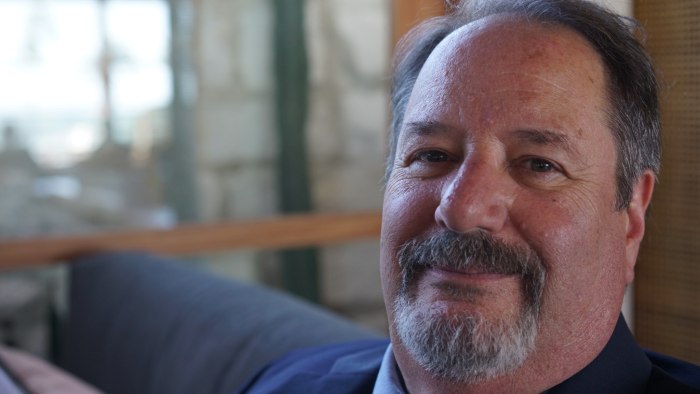
IMG_4867

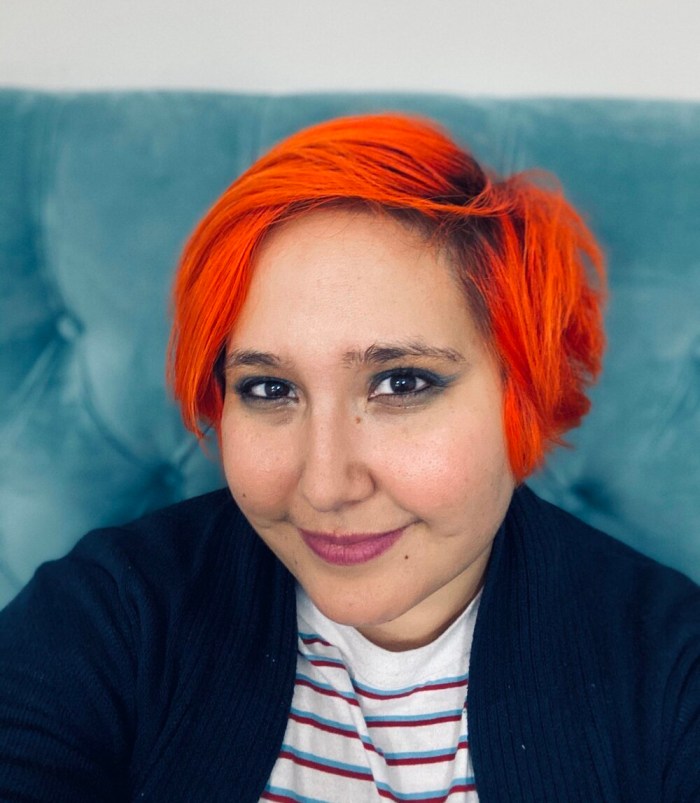
Lisa Gomez is a Los Angeles-based screenwriter, novelist, songwriter and a professional story analyst for The Black List. They write screenplays, songs and novels with their twin sister. Together, the twin siblings have placed in the Top 50 of the Academy Nicholl Fellowships in Screenwriting and are represented by Empirical Evidence.

The twins are working on 3 original pilots; a 30-minute dark comedy involving an asexual lead character, a biopic drama pilot in the vein of THE QUEEN’S GAMBIT and a female-driven SHERLOCKian-inspired pilot. Lisa is currently obsessed with Marvel, Disneyland, matcha, and reading as many books and comic books as they possibly can.

What was the last thing you read/watched you considered to be extremely well-written (any medium)?

The pilot of BARRY. It has everything that makes a story compelling and unique. Professional screenwriters have always given aspiring screenwriters these three bits of advice when setting up a character and a world: 1) Start the story with your main character doing something interesting.  2) Show the main character’s day to day, show the audience what a typical day in the life of this main character looks like. 3) Show the audience the main character’s problem. Well, in a whopping 30 minutes, this show delivers all of this and sets up the promise for more.

[Spoilers for the pilot of Barry ahead]. The very first moment of the show shows Barry walk into a hotel room, holding a gun while the camera mostly focuses on the dead body that’s lying on a bed with a bullet through his head. Immediately, this sets up the main character doing something interesting… okay, so, he’s a killer. Possibly a hitman. Whoa, that’s interesting. Then, it shows Barry’s day-to-day. We see him fly home on an airplane, get annoyed at a fellow passenger that opens a window to let the light in (a subtle but effective metaphor), then he plays video games, alone, and takes a shower, alone. Immediately, we get it. This is one lonely and depressed dude that gets no fulfillment from killing.

So, within the first five minutes (and theoretically the first five pages of a screenplay), Barry sets up the main character doing something interesting (killing someone), shows the main character’s typical day to day (he flies home after a hit, he’s alone, bored and does nothing substantial besides killing) and sets up what his problem is (that he’s depressed and gets no fulfillment from his job). It’s a pitch-perfect setup to a show. One could argue that the set-up is traditional and therefore cliché. But because this is a unique character and the premise is so bizarre, Bill Hader and Alec Berg made this setup interesting and makes the audience clamoring for more. And this is all just the first five minutes… if you haven’t seen this show, please do. It’s a masterclass in writing.

One of your job titles is story analyst. What does that job entail, and what are your responsibilities?

A story analyst is essentially someone who gives script coverage for studios, production companies and agencies. In other words, someone who receives a script and has to write notes on that script, on what’s working and what’s not working with the script, if I would pass, consider or recommend the script for the agency/studio/company. I have to read the script in its entirety, write a synopsis of the script, write a logline, describe the main characters and then write comments on why I would pass or recommend the script. Occasionally, in my notes, I offer solutions to story problems.

How’d you get your start doing that?

This is a fun story. My sister actually found an internship listing for a script coverage reader for a literary agency on entertainmentcareers.net. I applied and got the job. I did that for about a year. Then, as luck would have it, a Nicholl fellow walked into my retail job and I recognized him because he spoke at one of the classes that I took at UCLA Extension. We got to talking and he said he could refer me to a low-paying but highly regarded script coverage job. I applied, had to do test notes on a script and then got that job.

Once I started getting more and more experience, I had screenwriting friends I’d met in various networking events in LA refer me to different script coverage jobs. Every friend I met through networking was an aspiring screenwriter that eventually got a job in the entertainment industry and either reached out to me about the script coverage job or I would ask if they knew about any script coverage jobs. This is truthfully the first time I finally understood the importance of networking in this city.

When you’re reading a script, what about it indicates to you that “this writer really gets it (or doesn’t get it)”?

First and foremost, the grammar. I know, that seems like such an obvious answer but it’s true. You would not believe how many scripts I read that have beyond atrocious spelling and grammar. Sometimes the ends of sentences don’t have periods. I wish I was joking.

Secondly, clarity. What do I mean by that? Clarity is probably the easiest and the hardest aspect of writing a great screenplay. Easy because once you put on the page exactly what you want the reader to know, you’re done. Hard because putting exactly what you mean on the page is very very difficult. This is why script coverage or having someone read your script is helpful. It can point out the areas that the writer thinks makes sense but in reality, it doesn’t and it only makes sense to the writer.

Clarity, for me, means a few things. One, that the writing makes sense. For example, if you’re writing an action scene, please write description that is easy to follow and easy to read. The worst thing you can do for a script reader is make them read lines of description a few times in order to understand what’s going on. We get bored and frustrated.

Secondly, that the character’s arcs, story and plot is clear. It sounds simple, but again, most scripts don’t have this. I think it’s because the writer knows the story so well that the writer forgets to put in important and obvious things. For example, I was doing coverage on this script where the main character was queer. It was a very interesting main character, but I didn’t understand why this character’s queerness affected their journey because every character that interacted with this character loved and relished their identity. The writer then told me “Oh, because this story takes place in 2010.” BAM! I now understand the context of the story. But that date was nowhere in the script. It could be little details like that that can make a script clear or unclear.

What do you consider the components of a good script?

Clarity/conciseness. No one wants to read a script that doesn’t make sense, or rambles on too long. Make it sweet and to the point. And make it fun and interesting to read.

An interesting main character that has an interesting and relatable problem. So many scripts I read don’t have this in its entirety. Especially the relatable part. The main character might have an interesting problem, but it’s something that literally no one on this earth can relate to.

When the main character has a goal that’s actually attainable, but also difficult. This is something I don’t see all the time. What’s really important is that your main character has the skills to defeat their problem/the antagonist but it’s still difficult. A great example of this not happening is Star Wars: The Rise of Skywalker. Sure, you know that Rey is strong, but you don’t know specifically how Rey will be able to defeat Palpatine. This makes the story boring because the audience can’t participate in her journey in how she can do that. She just defeats Palpatine. It’s not set up how she can. It just happens. This is story suicide.

The script is great if it has something to say. What is your theme? What is your unique point of view on the world? Not only that, but what is your unique point of view on a specific theme? For example, everyone writes about redemption, but what are you trying to specifically say about redemption? Are you saying it’s not possible (Barry), that it is possible, but a very hard road (Bojack Horseman), or are you saying that it is possible (Star Wars: Return of the Jedi)?

Interesting situations/scenes. If you have a scene where two people argue, that can be boring. If you have a scene with two people arguing in the middle of a mall, that instantly makes it more interesting.

Great dialogue. If you have dialogue I’ve heard before, that makes me cringe. If you have dialogue specific to the character and only that character can say it, it makes me happy.

What are some of the most common screenwriting mistakes you see?

The way screenwriters describe women as beautiful, sexy, or simply defined by their looks. It’s disgusting, objectifying and just plain terrible. It’s 2020. Women have always been complex. It’s time to write us as such.

Too much description. Description writing is very hard, but please don’t have paragraphs and paragraphs of description. Try to write what only needs to be in the script but as simply and concisely as possible.

Cliché dialogue. A lot of the scripts I read have the following lines: “It’s too late!” “You really don’t get it, do you?” “Hi, my name is [blank].” “So, are you new around here?” It’s exhausting. We get it. You’ve seen a lot of movies. Please prove it by not giving us these lines that we’ve all heard a million times. Sometimes it’s inevitable. You have to. But please try to the least you possibly can.

What story tropes are you just tired of seeing?

One-dimensional women. I promise you, women are human beings that have ambitions and feelings that don’t revolve around men.

What are some key rules/guidelines every writer should know?

Write from the heart.

Write with something to say.

Get your first draft out as quickly as possible.

Even if you don’t like outlining, do it.

Read screenplays. They’ll help you write screenplays.

Live life.

Enjoy the process of writing.

Show your writing to people who will give you honest feedback.

Have a clear structure in your story.

Pitch your show/movie idea to your friends. If they don’t like it, either fix what’s wrong with the premise or think of another idea.

Screenwriting contests. Worth it or not?

Yes. Contests are great for deadlines and keeping yourself accountable. Because, if you’re paying that submission fee, you want to submit the best work that you have. However, don’t make your entire screenwriting identity about contests. I did and that got me nowhere. Use them for deadlines and don’t think about them after you submit. Just write the next script.

Follow-up: You’ve placed in the top 50 of the Nicholl. What was the script about, and what happened for you and/or the script as a result?

The Academy Nicholl Fellowships in Screenwriting are amazing. I’ve had friends become Nicholl Fellows and I’ve had friends in the top 50. We all have similar experiences.

That script was co-written with my writing partner, my twin sister. It’s a biopic about the nine weeks that Vincent van Gogh spent with fellow artist and rival Paul Gauguin. What started off as a friendly rivalry between them ended with Vincent cutting his ear off. It was my sister’s and I’s first screenplay… and it was the first draft. When we were announced in the top 50, we got about a dozen e-mails from huge agencies… I’m talking, CAA, WME, Anonymous Content, you name it… we sent them our script and then… crickets. I believe this script wasn’t ready and I also don’t think we sent them out to the agents and managers that would respond to our type of script anyway.

Here’s my biggest piece of advice if you place highly in a reputable script contest: contact the managers and agents you want to or agents that represent writers that write similar scripts to you. If my sister and I did that, I think we would have been represented by now.

How can people find out more about you and the services you provide?

Due to an ever-expanding list of projects, I’ve had to suspend my script consulting services.

Readers of this blog are more than familiar with my love/appreciation of pie. What’s your favorite kind?

Aye, there’s the rub. Unfortunately, I have a gluten and lactose intolerance, so I can’t have pie unless it’s gluten-free and dairy-free. I know, it’s a sad existence. However, if I could have any pie, I personally love apple pie. Maybe because when my stomach could handle those pesky ingredients, I would always love getting apple pies from McDonald’s during my youth and that taste just brings back good, happy childhood memories.

apple pie

My, what a pleasant scent

jimmy stewart flower

It’s a been good week around Maximum Z HQ. A very good week, you might even say.

Got a couple of read requests, including one several months after the initial pitch, and my western advanced in the first round of a reputable contest.

On the actual writing front, made some good progress in the latest overhaul of the sci-fi adventure outline, plus got a last-minute invite to come up with a story idea for a friend meeting with a filmmaker looking for potential projects.

All in all, not too shabby.

Do I wish every week could be this fulfilling and rewarding? Most definitely.

Will they? Heavens no. But that’s expected. It’s the just way it is, and I accept that.

Everything that happened was the result of me putting in the time and effort. Writing, rewriting, researching who’d be most receptive to queries, figuring out which contest was most worth entering, and so forth.

I just happened to be fortunate that a lot of them are paying off very close to one another.

I also realize that each read request could results in “thanks, but no thanks”, my script doesn’t advance any further in the contest, and the filmmaker doesn’t like my idea.

Disappointing, sure, but it won’t slow me down, let alone stop me. I’ve got too much else going on to worry about it.

While the road to screenwriting success may be dotted with potholes, sharp objects and people who shouldn’t be allowed behind the wheel to begin with, every once in a while you get a long empty stretch of green lights and smooth pavement. It may not last long, but it’ll might make you appreciate it even more.

So when you have a brief window of time where it seems like everything is actually going your way, savor it knowing that YOU EARNED IT. And definitely spread the word to your support network – they’ll be thrilled (just like you’d be if it were them).

Use the emotions and sensations you’re experiencing during this happiest of times to keep you going when every response you get is “NO” and the dark clouds return.

But also keep in mind that it won’t always be like that. This path is full of highs and lows, mountains and valleys. The important thing is to enjoy the journey and keep pushing forward.

As we head into the weekend, I’ll take a moment to review the past few days and think “This was nice.”

And then get right back to the grind, once again hoping for the best.

Q & A with Bob Saenz

BobNHS

TNIWIT cover1a

Bob Saenz is a screenwriter, actor and author. His produced works include Hallmark’s Help for the Holidays, Rescuing Madison, Sweet Surrender, On the Twelfth Day of Christmas, Sound of Christmas, The Right Girl, Christmas in Love,  the theatrical Church People, and the black comedy thriller Extracurricular Activities. He does rewrites and polishes on film and TV projects for Producers and Production Companies. His screenwriting book THAT’S NOT THE WAY IT WORKS was released in 2019.

His acting roles include a 6-year run recurring character run on the TV show Nash Bridges, Hallmark’s Valley of Light, Francis Ford Coppola’s Jack, David Fincher’s Zodiac, Finn Taylor’s Unleashed, Church People, and The Village Barbershop, among dozens of others. He was a radio DJ on KYCY-FM in San Francisco, played the last 10 years in the 60’s rock band The BSides, and has done voicework on video games, documentaries, and commercials.

Editor’s Note – I’ve had the pleasure of knowing Bob personally for a few years. His insight and advice has proven invaluable to helping me become a better writer, both in terms of craft and career.

What’s the last thing you read or watched that you thought was incredibly well-written?

A spec script by a writer named Rene Gutteridge called Where the Wind Comes. Maybe the best spec I’ve ever read. Just spectacular. Was emotionally affected by it. Stunning.

What was the inspiration/motivation for your book That’s Not The Way It Works?

Two things. One, I’ve been teaching and speaking at writers’ conferences all over the country the last few years and everyone who was there speaking had a book, except me. I complained to my wife about it and she said, “What’s stopping you from writing one?” So I did.

Two, there’s not a single one I could find out there that spoke plainly about the business of being a screenwriter.

With so many screenwriting books out there, what is it about yours that makes it unique?

The tone. It’s conversational. My experience. It’s filled with what I have learned actually succeeding at it. With more than a dozen films produced, I used all that experience to write about what I know. And, I talk first hand about the business of screenwriting. What the writer needs to know about that part of it, which is just as important as writing a script, and how to approach that.

While the first half of the book is about the actual writing of a script, the second half covers the not-as-discussed “what happens AFTER the script is written (i.e. the business aspects)”. What advice would you give to writers who want to learn more about this?

As I say in the book – find out that it’s not easy, it’s not instant gratification, and you have to work at it. Hard. You can succeed; it just takes time and a business plan. I think the book helps with that. Realizing that writing a script is only the beginning of your journey is a BIG eye-opener for most writers who dream of doing this.

Yes, the script needs to be something people would want to choose to see and has to be good, but that’s not the end of it.

The book has a great chapter about dealing with rejection. What are some key takeaways and advice you’d offer to writers?

The main takeaway is that rejection isn’t personal. Producers and reps don’t care enough about you to make it personal. It’s ALL about the content. Whether they love your script and not or can use it at that time or not. There are hundreds of reasons to reject a script… you have zero control and it’s not personal. Even the most famous screenwriters get rejected on a regular basis. It’s an everyday occurrence. You have to learn to live with it or it’ll destroy you.

Another important issue writers tend to overlook is the need to effectively market themselves in addition to their script. While the chapter about what NOT to do is entertaining (and a bit eye-opening), what are your suggestions about what writers SHOULD DO?

Use the avenues that producers and reps have opened to the writer. Querying. Something that is an art unto itself and something I delve into pretty deeply in the book with a whole section on query letters.

Networking. There’s a huge section in the book about this.  The dos and don’ts. One thing to always remember about networking: It’s about building relationships, not using people. People who can help you absolutely know the difference and will run away from you if you try and use them.

Contests. The Nicholl and Austin are the ones who will pretty much always get you reads in LA if you final or win them. I’ve had friends get their films made doing well in both of these. Neither are easy to do well in because of the sheer number of entries, but they can pay off.

The last way is through referrals, especially to get a rep. If you know a producer or director or star who will refer you… but again, this goes back to networking and having the great scripts to back it up.

What do you consider the components of a good script?

The most important thing is a great story. It also has to be lean and mean. Brevity and white space are your friend. You aren’t writing a novel. You want just enough in there to have the reader see the film in their head and to be able to fill in what they want to as they read, engaging them in the story that way. Again, a big section in the book about this.

I will say this: Producers are ONLY looking for STORY. Screenwriters can never forget this. Don’t over-complicate the read. You can write a complex story without making it hard to read. Oh… spelling and grammar are important, too.

What are some of the most common screenwriting mistakes you see?

The main one? Choosing the wrong story to tell. Telling a story no one wants to see. Whether it’s not sustainable, not interesting, ridiculous, something that’s been done a thousand times before, something you can see every day in TV reruns… there are a million reasons NOT to write this kind of story. You need to go through a pretty thorough checklist (in the book) and make sure it’s a viable story before you do the time consuming hard work it takes to write a good script. Why do all that hard work on a story that’ll be Dead On Arrival?

Another big mistake I see all the time is writers not doing their research about the topics they choose to write about. Writing things that would never ever happen. You have to ground your script in the reality of the subject matter before you take liberties with it.

What are some key writing guidelines every writer should know?

-AIS – Putting your Ass In the Seat. You have to be disciplined. Producers expect you to be disciplined. Good to start doing that at the beginning.

-Never give up. This is so hard to do, you’ll get discouraged on a regular basis. It’s a lot easier to give up than to stick with it because it takes years to succeed in. Notice I didn’t say it CAN take years, I said it TAKES YEARS, because in every case, it does. You aren’t going to be the exception.

-Don’t cheat on research. Take the time to actually learn about the things you’re writing about. Go out and learn them. A big section in the book about this.

-Again…. for emphasis…. choose a story that is viable for producers and audiences. Don’t just pull something out of the air and write it.

-You’re not writing a novel. Leave everything that isn’t directly hooked to your story or plot points out of your script. One rule of thumb? You know all those people listed in the credits of a film? It’s your job to do everything they don’t. You aren’t a costume designer or a casting agent or set designer…. or… any of them. They don’t ask to write the story, you don’t try and do their job.

You’ve managed to establish and maintain a writing career while living outside of Los Angeles. What are some of the pros and cons about it you’ve experienced?

Pros: I don’t live all that far away (400 miles) and can be at any meeting on a day’s notice, so it’s been fine for me. I am in LA multiple times a year, sometimes for more than a week at a time. It’s expensive… but also my choice. There’s a section is the book about moving to LA and when to pull the trigger and do it if you need to.

Con: I’m not in LA networking all the time. Out of sight, out of mind is a real thing. Not worth moving there for me, though.

Readers of this blog are more than familiar with my love/appreciation of pie. What’s your favorite kind?

Peach. Nothing else comes close.

peach pie

Q & A with Dominic Carver

Dom Carver

Dominic Carver is a screenwriter, script consultant, and script editor.

In 2008 his first short film, AGN, was produced by Split Edit in Norway and broadcast on Norwegian TV. His second short film written in 2010, the mystery thriller THE TRAVELLER, was a collaboration with Dubai-based director Musaab Ag. In June 2011, Dominic won the Prequel To Cannes Feature Screenwriting Prize for FAITH, a bleak unflinching look at the life of a London street prostitute.

Dominic has since been commissioned for seven feature screenplays and has also worked as a script editor on other projects, including the feature THE DYING EYE (2013).

Dominic continues to place highly in many competitions most notably the FINAL TEN of FINAL DRAFT’S BIG BREAK 2016 FEATURE COMPETITION – FAMILY/ANIMATED, the FINAL TEN of STAGE 32 TV WRITING CONTEST 2017 and the FINAL TEN of Idris Elba’s GREEN DOOR, GREEN LIGHT INITIATIVE 2017.

What’s the last thing you read or watched you thought was incredibly well-written?

DUBLIN MURDERS by Sarah Phelps. Utterly spellbinding, a haunting examination of loss set in and around the search for the murderer of a young girl. Sarah’s work is wonderfully paced and her dialogue frighteningly good. She writes beautifully dark, complex characters, and with THE ABC MURDERS she breathed new life into the well visited character of Poirot.

How’d you get your start in the industry?

I have always loved stories, often reading a novel a day during my teens. On one particularly slow and boring day at work, I decided I’d had enough and needed to do something other than rot away in a dead-end job, so I signed up to do the Scriptwriting for Film & TV degree at Bournemouth University. Skip forward a few years and I won the Prequel To Cannes Screenwriting Competition, and one of the judges recommended me to a producer, who offered me my first feature commission.

Is recognizing good writing something you think can be taught or learned?

A very interesting question. I believe that to be a truly great writer you have to have a certain amount of natural storytelling talent. You can be taught how to create characters, develop ideas, write characters and dialogue to a reasonable level and to recognise what works and what doesn’t, but if that natural storytelling ability isn’t there. you’re going to struggle and will only ever be average.

Good storytelling is instinct; getting to the emotional core of your characters and their journeys and being able to put that on a page to move and manipulate your audience in ways they weren’t expecting. It’s easy to spot a good screenwriter – they stand out from the crowd. From the hundreds of scripts I’ve read over the years, only four really made me sit up and pay attention and go, ‘This writer has real talent!’

What do you consider the components of a good script?

The characters and the journey they’re on. If your audience doesn’t feel for your characters or their journey, then you’ve lost them before you’ve even begun.

The film JOKER is the perfect example. He’s the most despicable character, a psychopath you would go out of your way to avoid in real life, but on the screen we understand and can empathise with the circumstances that made him. Even when he goes on a killing spree at the end of the movie, regardless of how horrifying and distasteful it is, we understand why and empathise with him. If, as a writer, you can make even the most despicable character sympathetic, that’s masterful writing.

What are some of the most common screenwriting mistakes you see?

Where do I start? Poorly developed characters. If you don’t know who your characters are, how can you expect your audience to? Generic storylines. A popular one at the moment seems to be the ‘mid-life crisis’ and the search for meaning in characters’ lives.

If you don’t approach it from a unique angle, give the audience something they haven’t seen before, then why bother as your screenplay will be lost amongst a sea of similar scripts. Static scenes where characters share their secret feelings around a table and a cup of tea. It’s a visual medium, people sitting around chatting about their feelings is boring to watch. Busy those static scenes up. And when have you ever opened up to a stranger and told them your inner most feelings? Never! People just don’t do that, unless verbal diarrhea is a character trait.

If new writers took more care in developing their characters and their stories, rather than copying what has come before and populating those tired stories with generic characters, there would be a lot more interesting stories out there.

What story tropes are you just tired of seeing?

The mid-life crisis. The hero whose family is murdered and they go on the hunt for revenge. And that’s just two. There are so many more, I’d be here all day listing them. Dig deeper, people!

What are some key rules/guidelines every writer should know?

-Spend time on developing your characters and ideas.

-Don’t write great chunks of dialogue or scene description. Less is more. You’re writing a screenplay, not a novel.

-Study people. Find out how people tick.

-Don’t try and write a Tarantino (or another writing hero) movie. Write your own, what appeals to you. Find and develop your own voice.

-Always, always, always have your work read by a professional screenwriter before you send it out into the wider world. Yes, it will cost you money, but you need to know if your story and characters work as it will save you a lot of time and effort. Far too many writers send work out before it’s ready and they wonder why they experience so much rejection.

-Write the first draft quickly without over thinking it too much. The following draft will be a lot better. Just get those ideas on the page and then worry about reworking them. A page of crap is easier to rewrite than a blank one.

-Don’t make a tit of yourself on social media. Be kind, be polite, be inquisitive but never ever pester others to read your work. If you are friendly, polite, respectful and get to know them as friends, people will start to ask to read your work or even recommend you to others.

-Rewrite! Rewrite! Rewrite!

-Network like your life depends on it… because it does.

-Never take rejection personally. It’s never about you, it’s just that your script isn’t a fit with that person at that time. If you get rejected, rework your screenplay and then send it out to two more people. Developing a thick skin is an absolute must for being a writer.

Have you ever read a spec script that was an absolute, without-a-doubt “recommend”? If so, what were the reasons why?

Yes, and it still puzzles me why it hasn’t been made. I don’t usually mention clients I read for, or their work, as it’s confidential, but in this case I’m going to name the script and the writer. It’s MINOTAUR by ADEWOLE ADEYOYIN.

I hate horror movies, I don’t see the point of watching something that you know is going to scare the poop out of you, but Ade’s script stood out because of its characters, story, themes and its depth. It took a well-explored genre and turned it into something original and compelling, a thrill ride from start to finish.

If any producer out there reads this and is looking for a cracking monster movie, get in touch and I’ll pass it on. It needs to be made!

How do you feel about screenwriting contests? Worth it or not?

Yes! Not only do they test your work, but if you do well they can help propel your career forward. A friend and I wrote a feature from conception to finished second draft in twelve days back in 2016. She wrote the first draft in seven days and I spent the next five rewriting. We entered it into Final Draft’s Big Break and made it through to the final ten in the family category. If it had been entered in the historical category, I think it would have gone even further. Every competition we entered this script into it made at least the quarterfinals, so we knew we had something special.

But which competitions to enter? Pick the well-known ones, the ones with an impressive lineup of judges or that offer access to industry players. Paying for feedback is a great idea, but how well your screenplay does in the competition will also be a great indicator of how good your writing is.

How can people find out more about you and the services you provide?

From my website at www.thescriptwriter.co.uk. It needs updating, but as usual I’ve been busy. I’m sure I’ll get around to it at some point. Maybe next year.

I’m also on Twitter – @DomCarver

Readers of this blog are more than familiar with my love/appreciation of pie. What’s your favorite kind?

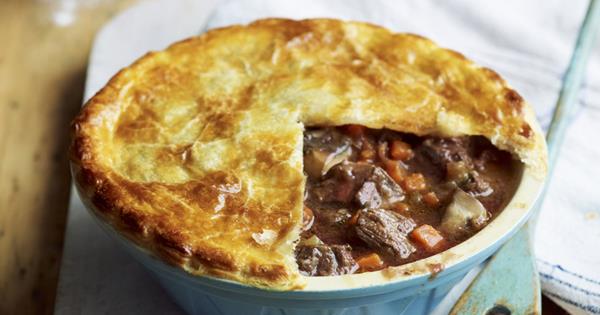
Steak and kidney… nothing beats it!

steak-and-kidney-pie

Q & A with Jon Kohan

JK.JPG

Jon Kohan is a script consultant and award-winning screenwriter from Johnstown, PA, who’s worked in both film and television. His horror/comedy short Family Game Night earned him a Best Screenwriter nomination from the Shock Stock film festival (along with winning for Best Actor), and his holiday comedy Deer Grandma won Best Comedy at the Show Low Film Festival.

His project Purple Gang is a pilot based on the Purple Gang who operated out of Detroit predominantly in the 1920’s and 1930’s, with over 300 members during their tenure. The series will be inspired by real life characters and events but will not be a non-fiction story.

His comedy/crime short Spilled Paint picked up several Best Short and Best Cast awards on the festival circuit, and is available on YouTube.

What’s the last thing you read or watched that you thought was incredibly well-
written?

Mindhunter, season two, on Netflix. The first season was great, and the second was just as good. I love the show for all the tension-filled scenes that can last ten-plus minutes, and usually just between two or three characters. The writers of that show are super-talented, and I look forward to being able to read and study the scripts to see how to improve my own writing.

How’d you get your start in the industry?

The lead-up is a pretty long story- working different writing jobs as I gained more experience and building a resume of work – but I’ll talk about how I landed my first real gig.

I was doing freelance writing work on a site called Fiverr.com. I still use the site from time-to-time. On my page, at the time, I offered joke writing and screenwriting, but only for shorts.

I had a customer hire me for a short story idea they had. I work on it for about a week and sent it back to them. A couple weeks go by and that customer comes back and says they have an idea for a family film that could even be a television show but needs someone they feel has the talent and skill to write a pilot; maybe even possibly a whole first season.

I jumped at the chance to work on that script, and in fact did write the pilot and the entire first season (10 episodes). About a year after I wrote the pilot, the customer reached out to me again to let me know that the project was going into production. That customer’s name was Alvin Williams. Since working on that pilot, titled Ernie and Cerbie (currently streaming on Amazon Prime), we’ve teamed up on multiple projects and he’s become one of my main collaborators in the industry.

Is recognizing good writing something you think can be taught or learned?

Anyone can probably be taught or learn how to recognize good writing, but something you can’t teach is how to tell a good story. Not everyone can do that. Just because you can write doesn’t mean you can tell a story in the film or television format.

The rules/guidelines of writing a script is what I think makes screenwriting harder
than with other forms of writing. And not everyone can tell an entertaining story. Knowing and understanding what good writing is and looks like makes the viewer smarter, which allows for smarter movies. With a smarter audience, there’ll be a need for more originality – fresh perspectives, which will hopefully open the door to a more diverse and new pool of writers.

What do you consider the components of a good script?

This could be a very long list, but it all trickles down to one major core component: characters.

Not enough big Hollywood movies take the time to craft a film around strong characters, and instead try to build a film around a plot, or worse, action sequences, tone, look, etc.

What do The Dark Knight and Joker have in common other than the obvious that both are Batman films? They’re two of DC’s best films, and both focus more on character than all the craziness around them.

If you have characters we care about, can relate to, or at least understand where they’re coming from, and put them into conflicts that help our characters grow and become something more, you have a winner on your hands.

Even if your film is more about the concept (Independence Day, Godzilla), if you take the time to do the proper character work, you can throw a great one-two punch, something most Hollywood films seem to be lacking nowadays.

What are some of the most common screenwriting mistakes you see?

Formatting issues. No question. Not everyone uses screenwriting software, which is weird to me. If you’re not just writing a script as a hobby, you should invest in the proper industry tools.

I see formatting issues all the time, and those can easily be fixed, and quickly learned.

One of the most common things to see is a script not written like one. So many writers write action lines like they’re writing a novel. Telling us what the character is thinking, why they’re doing something a certain way, what’s going to happen later without us ever seeing it later.

I urge to my clients how “Show, Don’t Tell” is a huge rule they should always be repeating to themselves. How do you present information in a film or TV show? Either through images or dialogue. If we don’t see it or hear it, we don’t know it. When I have a writer I’m working with go back and look at their script again – with that guideline in mind – they’ll see just how much information is in their script that they are telling the reader, but not showing them.

What story tropes are you just tired of seeing?

I don’t know which I hate more:  “You lied to me?” or “There is a prophecy….”

The first is something you hear more in comedies. The second you always hear in
fantasy, adventure, action, etc. If I’m watching a romcom, I KNOW the end of the second act will have “You lied to me?” as dialogue – usually from the female lead.

For most summer blockbusters, fantasy films, the trailer is probably going to have some version of the “There is a prophecy…” line, and the entire setup will be this typical paint-by-numbers hero’s journey story.

What are some key rules/guidelines every writer should know? 

Show, Don’t Tell. (see my response a few questions back)

Formatting – I know just looking at the first page if the read is going to be enjoyable or if it’s going to feel like I’m doing homework. That all stems from the format of the script. If I can glance and see issues, then I know there’s going to be issues with the characters, story, arcs, and so on. Even if you can can’t tell a story, or write good characters, and have something actually happen in your script, at least make the script look like a script. This sets the tone for your reader and lets them know you know what you’re doing.

As a writer, your goal is to get someone to read your script. A horribly-formatted script is an easy excuse for someone not to take the time to read your script. Don’t give them that choice.

DON’T WRITE CAMERA DIRECTIONS! – This is something a lot of first-time writers do in their scripts. I was no different. Learning how to write your action lines properly and how to influence the director in shooting a scene a certain way by the way it’s written not only makes your script stand out amongst the others but it’ll make you a better writer as a whole. I know it has for me, or at least think it has.

Have you ever read a spec script that was an absolute, without-a-doubt
“recommend”? If so, what were the reasons why?

I’ve read scripts from screenwriting friends of mine that have really impressed me. Some of them are super talented, award-winning writers who are going to be names we recognize one day.

As far as reading a spec script that was sent to me to review and give detailed notes on, I haven’t read a script yet I’d stamp “recommend”. Some have come close, but unless you’re lucky and extremely talented, it’s not going to be your first script that you do something with.

The more scripts you write, the better you’ll be. My first script is god-awful compared to my tenth script, and my tenth script is amateurish compared to the latest draft of a script I recently finished.

What would a script need to get a “recommend” from me? As I keep saying, strong characters. Throw in a joke once in a while. Make me want to keep turning the pages. One of the worst things to see is a massive block of action or dialogue, and know the whole script is going to be that way. The more white on the page, the better.

A script could be for the greatest movie ever made, but if’s it’s a difficult chore to read and takes hours – or even days – to complete, I probably won’t see it as a recommended script.

How do you feel about screenwriting contests? Worth it or not?

Worth it – for sure. Screenwriting contests are great to try and win some awards, network with other screenwriters and filmmakers, and get yourself exposure.

With all that being said, if you place in or even win one of the top contests, that’s going to open a lot more doors for you than winning a much smaller contest.

I don’t agree that you must enter contests to be able to get a film produced. I’ve only recently started entering contests and already have several produced projects under my belt, with and more in development.

How can people find out more about you and the services you provide?

My professional website, www.screenwriterjon.com, my Patreon www.patreon.com/screenwriterjon, and my Fiverr www.fiverr.com/jonkohan. You can also check out all of my projects on my IMDB page.

On my Patreon, I offer screenwriting and script feedback services through two different subscription tiers. I’ve already had two filmmakers subscribe to have me write their feature films, so that’s been really exciting.

Readers of this blog are more than familiar with my love/appreciation of pie. What’s your favorite kind?

I bet you haven’t heard this one before – Oreo. Store bought or homemade. Either works for me. I have a huge sweet tooth. This may sound like a little kid answer, but it’s the truth.

No-Bake-Oreo-Cream-Pie-3