Progress on the latest draft of the comedy spec is coming along. Slowly, but still coming along.
Among the highlights:
–repairing the script. Previous drafts had some notable and sizable problems on several fronts, so this is all about fixing them, or at least figuring stuff out to make it better overall. This is the main priority.
–revising the story. Some of the scenes still work. The ones that don’t are out, with variations and totally new ones being developed and considered. A work in progress is a beautiful thing.
–reviving older ideas. I keep all the notes and items jotted down over the course of working out the story, so there’s always a few items worthy of dusting off. This time around is no exception.
–reorganizing the tone. Notes on a previous draft stated how uneven the story felt; like it was a few opposing ideas competing for attention. Currently working on streamlining things to make it all mesh better.
–refurbishing characters and/or their traits. From the protagonist and antagonist to supporting characters to those appearing in one scene, everybody gets some kind of modification. Some big, some not-so-big.
–reinvigorating the jokes. With comedy already being a subjective topic, I’m trying to come up with stuff I think is funny. Influences abound, and I want my sense of humor to be what runs that particular engine.
–remaining calm. Finishing this draft won’t happen overnight, and trying to force creativeness or rush progress is the absolute wrong approach. Preferred method – taking it one step at a time.
–resuscitating self-confidence. Writing a comedy’s tough enough to begin with. I’ve done it before, and despite a few missteps along the way, feel pretty solid about my chances this time around.
–relinquishing the self-imposed pressure. Naturally, I want to have a good, solid script when I’m done (hopefully it won’t take many more drafts). Stressing about getting to that point won’t do me any good, which leads to the final point…
–relaxing and recharging the writer. A good portion of my available time is spent writing or at least thinking about it. Working on it too much runs the risk of burnout, which would be completely counterproductive. Therefore, I allow myself time to simply step away and do something totally non-writing-oriented.
And when the time is right, I return to the rewrite.
Whew! Took me a while to refine this, but I don’t recall being so resplendently relieved to be done. Even better, none of it had to be redacted.
Why is this writer smiling? You would too if you came up with the term “Everlasting Gobstopper”.
This past weekend, I had the opportunity to meet with some fellow Bay Area writers. Among their number was a writer who had written some small stuff, and was in the middle of working on her first big project – a TV pilot.
Even though I don’t know much about writing for TV, I and another writer offered up what advice we could. The recipient was very appreciative, and one of the things she said later on in the conversation made a very strong impression on me.
“I know the first draft isn’t going to be perfect, but I’m just really loving writing this.”
Truer words could not have been spoken.
Like I told her, I write stuff I would want to see. It’s taken me a long time and many drafts of many scripts to feel like I’ve really come into my own. Each time, the end result is a script for a movie I think would be an absolute blast to see play out on the big screen.
It always astounds me when a writer complains about having to write (or rewrite). If you don’t like doing it, WHY ARE YOU DOING IT?
It was genuinely pleasing to hear this writer who, despite the challenges she knew awaited her, was still excited about working on this project. Sure, she was still nervous about doing a good job and hoped the end result didn’t suck too much. No matter how many scripts you’ve written, that feeling never goes away.
But to simply see her face light up while she described the story (which is a real doozy, believe you me) and hear her talk about what she’s experienced so far, including doing the research involved, and learning what to do and not to do regarding formatting, it was just really, really pleasant.
I’m sure a lot of us do this because the title “storyteller” really suits us to a tee. Are some better at it than others? Sure, but instead of being discouraged about what you perceive as a lack of progress, try seeing every time you write as a chance to learn and improve. Because it is. It’s certainly been that way for me, and I strongly suspect I’m not alone in that.
I got the impression our little chat gave this writer an extra little jolt of encouragement that she wasn’t expecting. She doesn’t know when the pilot script will be ready, but I told her not to worry about that and just keep enjoying writing it.
I suspect she will.
-Friend of the blog Andrew Hilton (aka The Screenplay Mechanic) is offering a special deal as part of his stellar screenplay analysis. (Editor’s note – his notes helped shape my western into what it is today)
If you use any of his services, refer a friend, or write a Facebook review of your experience using his services, you are automatically entered to win a free DVD of the motorcycle documentary WHY WE RIDE (of which Andrew was a co-executive producer).
The winner will be chosen on October 1st. The holidays will be here before you know it, and if you or somebody you know loves motorcycles, this would be an excellent gift (as would purchasing some of Andrew’s script services for that special screenwriter in your life).
-My time in the San Francisco Half-marathon the weekend before last – 2:02:56. Disappointing, but still glad I did it. I blame all those uphill stretches in the second half. And probably not training enough.
Next race is coming up in a few weeks in Oakland. Pleasantly flat Oakland. Training a little harder for it, with the intention once again of hoping to break the 2-hour mark.
Writers James Moorer and Ann Kimbrough have teamed up to promote the Be Epic Journal, a guide to helping you set up goals and figure out what steps you need to take to achieve them.
Tell us a little about your writing backgrounds. How’d you get started? Apart from the Be Epic Journal, what else are you currently working on?
James Moorer (JM): I am a multi-optioned screenwriter and published author with several properties in various stages of development. I’ve been hired for numerous writing assignments since 2009 for a number of production companies. I got started writing for the screen while producing music for fitness competitors and bodybuilders under my company Jamesong Music, back in Ohio. I’ve always wanted to be a writer since I first read a Truman Capote story in Esquire magazine. Currently, I have two other novels in development as well as my two shorts I’m producing and a feature film which will be my directorial debut.
Ann Kimbrough (AK): I’m a working screenwriter, with my first paid gig in 2012. I currently have three films in different stages of development and do rewrite assignments on the side. As anyone on the screenwriting path knows, we have little control over the production side. I wanted to take on more control in some aspect of my writing, so between writing assignments I branched into books. First, I turned one of my spec scripts into a romantic suspense novel that was published with Short On Time Books, “Scarlet Revenge” under pen name Ann McGinnis. That gave me the publishing bug and I started to publish my own books. The first journal I did — “The 100 Script Challenge” — was to create a book I wanted but could not find. (It’s about reading 100 scripts, keeping your notes in the journal and having all you learned from reading the scripts handy to review.) Then I made “The Idea Journal for Screenwriters.” It’s another journal I wanted as a screenwriter. I don’t know about you, but I write little notes everywhere with story ideas. The journal keeps me from losing them by having them all in the book. I can then look over my notes, connect them with other little ideas and build them into high concepts. (It’s also full of idea building tips.) From there, I teamed with other creative friends like James Moorer to create fun and useful journals — like “The Be Epic Journal.” Presently, I have eight journals published.
What does it mean to “Be Epic”?
JM: To Be epic, to me, is to step into your TRUE SELF, completely and confidently aware of your God-given ability to become your greatest self, realizing that this is not a happenstance, but how you and you alone were given a specific gift to help move the world toward being a more incredible place, and to inspire others to do the same.
AK: Being Epic is being the best you. It’s cutting out anything that’s holding you back from your dreams and shining! The best part of the whole Be Epic movement that James started is how focusing on our dreams and making our life better eventually leads to making someone else’s life better. But it has to start within you.
What was the inspiration for the Be Epic Journal?
JM: For me, it has always been a way of combating the negativity, fear and doubt in my own life. When I began to realize that I had fallen into a self-fulfilling spiral, I recognized it was my own words and beliefs about myself that lead me there. But it would also take changing my beliefs and speaking to what I wanted to be was how I truly came to discover who I was inside. That lead me to understand this was bigger than one person. This truth was universal.
AK: James is the spark! I have enjoyed his Facebook posts about Being Epic for a long time. They really lifted me up, but then he didn’t post as many. I asked him about it and pretty much told him to get back to posting. (I’m certain I wasn’t the only one.) I also said it would make a great journal! Luckily, James agreed.
How does the Be Epic Journal work? What should a writer who uses it expect?
JM: The Journal works like a PLAYBOOK, helping the writer recognize and engage in daily practices that they can build upon in creating a confident approach not only to their work, but to their life overall. They set a single targeted goal and the steps by which they will accomplish them. The beautiful part is that there are no right or wrongs as everyone is unique, but the daily diligence leads them to greater performance, greater awareness of their own ability and destroying the doubts and fears before they take root. The reason it works is because these are steps that THEY THEMSELVES have created, so these steps have greater meaning to each writer, deeper significance, and opens their thinking to being even more creative.
AK: The Be Epic Journal is a 3-week process, and a writer should expect to pick a goal that can be accomplished in three weeks. So, it’s not about curing cancer. It’s about engaging in a goal you’ve probably had hanging around for awhile. For a writer that could be completing a book or screenplay. The 3-week process helps anyone breakdown their goal into three steps and work on one step each week, plus taking time to evaluate what’s working and what isn’t. It can be done around your normal schedule. It’s full of motivation from James and is very much a workbook to reach a specific goal. It’s set up to do one goal and then move onto another. The journal also includes a free 16-page download code for more instructions and goal setting tips. Soon — we will have a Kindle book that will be a great companion piece to the journal.
Is the Be Epic Journal specifically for writers, or can anybody use it?
JM: We created this journal for everyone. Writers are a community Ann and I are very familiar with, but the same lessons learned here can be applied to any aspect of life, any career, anyone who desires to embrace their most powerful self. The Journal is also meant to be a stepping stone; the first step in anyone’s Epic Journey.
AK: Anyone can use it. We are currently running a test group on Facebook for the journal, and while all of our participants are writers, half of them did not pick writer kind of goals. One person is cutting out sugar — yikes! But she’s doing it! Others are working on completing half-finished writing projects.
How can somebody get their hands on a Be Epic Journal?
JM: Amazon is our friend!!! They can order the journal here. We also have a 16 page pdf to give people an idea of what the program looks like for free.
AK: Thanks for asking! It’s on Amazon and if they’d like to know more about the whole process they can get the free 16-page download now. It also puts them on our email list, but we promise to only send out useful stuff — like when the Kindle is released and motivational infographics. The link to the 16-page download is
Readers of the blog are more than familiar with my love/appreciation of pie. What’s your favorite kind?
JM: Given my choice, I fancy a Peach Cobbler. But as you know, my love for pancakes has me searching for that perfect union of Cobbler and Pancakes. Just never ask me to choose between the two.
AK: My favorite pie is apple. But it has to be the one I make, which is from Trisha Yearwood’s recipe. Google it. You make it in a cast iron frying pan in your oven and it’s worth every calorie! Yum. Dang. Now, I’ve got to go make one.
You’d think working on a comedy would be a fun-filled, joke-laden romp.
Nope.
As you may have heard, comedy’s a tough row to hoe. Everybody has a different take on what they consider funny, so it takes a lot of work.
A lot.
One of my current endeavors is overhauling a low-budget comedy spec. It’s been a long, slow process – with a lot of moments of frustration and aggravation.
When I write, sometimes I just overthink things, which makes feeling stuck seem that much bigger and insurmountable. Not uncommon.
It probably also doesn’t help that writing comedy is a totally different world than writing a rollercoaster ride-type adventure. The latter has definitely gotten easier for me, while the former…
Let’s just say I’m still on a bit of a learning curve.
Despite all the obstacles, there’s still one powerful positive about this – I think it’s a fun concept with a new and unique approach and, if executed properly, would be a really good script.
So I do what I can to work my way through.
K could see the toll the stress was taking on me, and suggested I hit the metaphoric pause button and simply take a couple of deep breaths to help clear my head.
And wouldn’t you know? It did help.
After that last exhalation, the problems don’t seem as huge. Sure, they’re still there, but what originally seemed like “How in the world am I going to do that?” has now turned into “There is a solution here, and I shall find it.”
A little calm and rational thinking can do wonders to help you regain and maintain your footing after a little stumbling. I heartily recommend it.
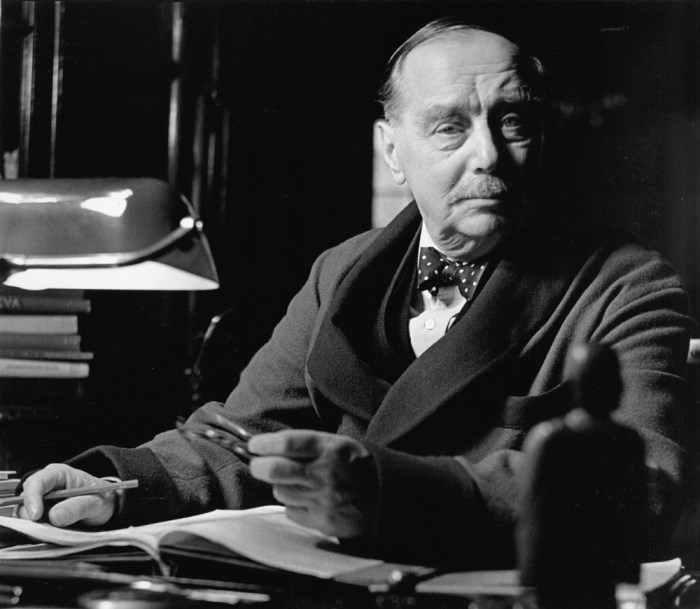
The man responsible for tales of time travel, alien invasions, and assorted mad scientists, just to name a few…
After a gap of several years, I recently had the opportunity to reconnect in person with a respected colleague who has had more than their fair share of experience dealing with writers of all shapes, sizes, and levels of talent.
This person used to deal a lot with screenwriters, but now deals primarily with writers of manuscripts. Over the course of our conversation, I was asked about my scripts and my writing (What do I like to write? What genres are the scripts I have now? What kind of stories am I working on?)
As has been documented here before, my genre of choice is definitely adventure, along with hyphens connecting them to other genres (i.e. western-adventure, pulp sci-fi adventure, etc).
I gave a quick thumbnail sketch/five-second elevator pitch for the two completed and the one currently in revision mode.
You’d be harder pressed to find a stronger advocate for using your already-existing material as a springboard to jump into other mediums – primarily books and/or graphic novels.
It was their opinion that all three sounded like very original and fun ideas, which would make each a prime candidate for attracting attention. And this person has also been following the blog for quite a while, so their opinion is also that my writing is pretty solid. They cited examples of writers they knew who’d foregone the traditional route of trying to get in with one of the high-profile publishing houses and done it all themselves, each achieving respectable levels of success. Nothing to break the bank, but still some impressive numbers.
“A script is more or less an outline for a novel. And even though you’re not limited by page numbers, it still takes talent to create a novel,” I was told. “Your stories are original and unique, which makes them prime candidates for this. At least think about it.”
Believe me, I am.
My success in trying to get these scripts through to reps and production companies has been practically non-existent at best, yet I persist. I’m sure I’ll continue along that avenue, but this new alternative is definitely food for thought.
I’ve been told by more than a few people that my writing is very visual (which you would think would make it ideal for film), and that it really moves. In the past, I’ve entertained and even at times partially investigated the notion of applying my scripts to a graphic novel format (a great match), but am also not averse to trying my hand at converting it to pure prose.
I’ve no intention of stopping writing scripts. I like it too much. But I also like the pure act of writing by itself, so for the time being, all this talk about working in other formats is nothing more than speculation and conjecture.


 Maximum Z