One of my heroes. Master of comedic timing, and eternally 39.
Taking a little break from the script reader/consultant Q&A series today for something of somewhat significant importance. At our house, anyway.
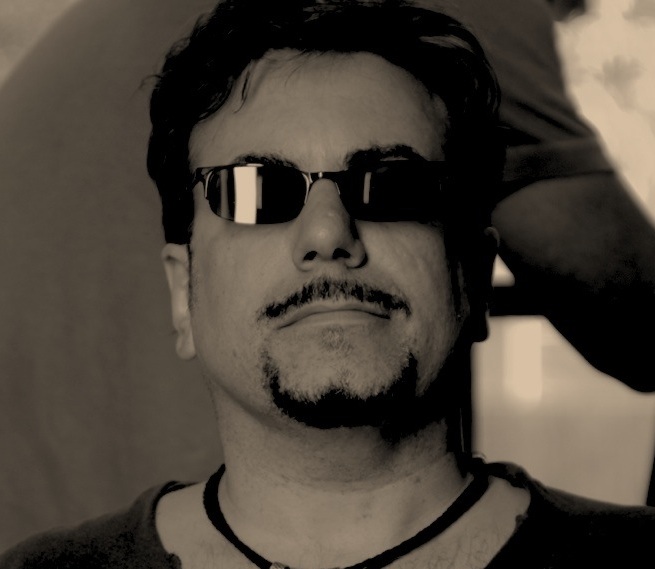
Today is my birthday, which makes a person a little reflective of their life so far and what they’ve accomplished.
Have I achieved everything I’ve set out to do?
Not yet, I like to say, but I’m getting there.
Obviously, I’m not making a living as a screenwriter – yet. But with each script I crank out and each subsequent draft that follows, it gets me a little closer. Reassurances of “you’ll make it” from friends and trusted colleagues is always nice to hear.
Has it been frustrating? Without a doubt. But as I’ve said on many an occasion, to give up in any manner would simply be too devastating. Like many of us, I am compelled to write and hone my craft, mostly because it’s the only way I’ll get better, and maybe a little bit of daydream-laden hope that somebody will eventually be eager to pay me for the finished product.
I am, as they say, in this for the long haul. All the rewrites, the reads and notes from friends, the discussions with consultants, all of it helping steer me towards this much-desired goal.
When I read about another writer making a sale or getting representation, I’ll admit to being a little jealous. Especially if it’s somebody I know or at least am casually acquainted with. I’m actually quite happy for them – they’ve earned it – but there is that little part of me that thinks “Hope it’s my turn soon.”
In the meantime, I prevent myself from getting too melancholy about what I haven’t been able to do by reminding myself what I have done, which is have written some potentially kickass scripts (after lots of fine-tuning, of course), and what I can do, which is keep writing more kickass scripts, keep trying and not giving up.
One of the sad truths about trying to make it as a screenwriter is that it’s an extremely frustrating process.
On certain days, the frustration feels like it extends to the uppermost part of the outer edge of the stratosphere. To the nth degree.
What is it about screenwriting that people who don’t do it think it’s easy? If you’re reading this, it’s more than likely you’ve given it a go, or at least know somebody who has, so you know full well that it most definitely is not.
We even try to warn those who think hammering out a first draft in a few weeks is a guaranteed million dollar paycheck. This is a long and arduous road, we say, but they don’t let that stop them. A legion of the truly unaware who will discover the scary truth soon enough.
Those of us who are fully committed (an apt phrase if ever there was one) finish the latest draft, then edit, rewrite and polish it so many times it enters well into double digit territory, hoping our writing and storytelling skills are improving with each new attempt.
But how do we know if that’s even happening?
We ask friends and trusted colleagues for feedback. We pay for professional analysis. The script gets reworked yet again.
We hope this newest draft is light years ahead of all of its previous incarnations in terms of quality, but sometimes it’s tough to be able to recognize if that’s the case. At least for me, anyway.
Whenever I send somebody a script for critiquing, I always say “Thanks for taking a look. Hope you like it.”
I know the script isn’t perfect – maybe even far from it, which is why I ask for help. Part of me knows it’s good, but can be better. It’s being able to identify the latter that gives me trouble. I’m so deeply embedded in a story that it’s tough to step back and be objective. Maybe I can not look at it for a few weeks, but even then it’s tough to look at it with fresh eyes.
Follow-up notes will tell me what they liked and what they feel needs work. There will be a fair mix of stuff I should have already figured out and some “How could I have missed that?” surprises.
So back I go into rewrite mode, hoping for improvement for both the material and myself, still not knowing if that improvement is there until I undergo the entire process all over again.
The latest in a series of interviews with script readers and consultants who would be worth your while to work with if you want to get your script in shape. Today’s spotlight is on Jim Cirile of Coverage Ink.
1. What’s the last thing you read/watched that you thought was incredibly well-written?
After binge-watching “Sons of Anarchy” season 6, you really have to marvel at the craftsmanship. The upheaval and complications are so constant as to be ludicrous, yet it’s so devilishly well-written that you just strap in and hold on tight. And blowing our own horn a bit, the last script I read which was truly special was Brandon Barker’s “Nottingham and Hood,” which we found as part of our last Get Repped Now! promotion this summer. We got him into Benderspink, where he’s now working with their head of lit Jake Wagner. So, win-win. A real talented guy with a bitingly funny comic voice.
2. How’d you get your start reading scripts?
Kind of fell into it, really. I originally founded Coverage Ink to offer my small handful of analysts, whom I’d assembled to help develop my own material, to other writers at low cost. Getting feedback from smart readers is a major part of my process and always has been. In fact, the very first person I met when I moved to Los Angeles 20 years ago was a union studio reader, and that fellow was enormously gracious in giving me feedback and teaching me how the biz really works. Over time, as a writer myself, I gave feedback to plenty of other writers and realized I had a lot to say in that regard. Our approach is based around writer empowerment – giving constructive feedback as opposed to humiliation. This is in part a reaction to some of the astonishingly humiliating and unhelpful coverage I’ve received on my own scripts and have seen others receive over the years. I figured there had to be a way to give helpful guidance without belittling the writer. So all of that combined to get the CI ball rolling in 2002.
3. Is recognizing good writing something you think can be taught or learned?
Yes, but to a point. Obviously anyone can read a bunch of books, take classes on writing and so forth, and get down your Save the Cat!, Syd Field, McKee, etc. However, some folks have a hard time putting aside their egos — the frustrated writers out there who fancy themselves story analysts. These folks project their personal tastes and frustrations onto material as opposed to appreciating it for what it is and trying to help it become the best possible version of itself. I’ve had to let go of several very smart people who fancied themselves as story consultants because they actually could not recognize good writing or material with potential.
4. What are the components of a good script?
Great, multidimensional characters. Solid structure. Avoiding clichés and surprising the reader. Snappy, tight pacing. And of course, good storytelling. That said, a lot of it is about hitting your marks and doing it in creative ways – nailing those structural beats that Hollywood uses to judge whether you’ve got game or not, such as the inciting incident by page 15, Act II beginning by page 25, etc. Even things like whether you know how to write down the page or use sluglines and white space properly all contribute to the first impression as well as perceived ease of the read. A good screenplay is simply a fascinating story well-told. If you’re facile with words, that’s a start – but that’s all it is. You still have to study the form.
5-6. What are some of the most common mistakes you see?
By far the biggest one, and I’m just as guilty of this, is sending a script out before it’s fully cooked. We finish a script and we’re so excited that we immediately contact our industry friends and before long, you’re dead in the water. It took a long time to learn to never send out first or even tenth drafts (if I can help it.) Taking the time to develop a screenplay until it’s bulletproof is crucial. My current spec is on its 11th draft and we only just got our first consider. It will probably be three more drafts until we nail it and get consistent considers, which will indicate we’re finally ready to go, and even then we’ll still have to do at least another draft or two for our manager.
The second one is: is your concept really multiplex-worthy? You have to really think about whether your idea is one that makes sense in the current filmmaking climate – be it studio film, indie or festival darling. There are certain stories that just work better as a book, stage play, web series, or whatever, than a feature. Or maybe it just isn’t an exciting idea at all, or is just too played out or derivative – how many spy or vampire movies can they make? Unless you can find a way to bring something really fresh and innovative to those genres, you’d best keep looking for the killer concept.
7. What are the 3 most important rules every writer should know?
1. Be a student of the business. There’s no point in trying to be a screenwriter if you don’t learn what that actually means and how the game is played.
2. Learn your craft. Just because you wrote a great thesis in college or even a novel doesn’t mean you have any idea how to write a screenplay. Take classes at your local community college or online, get into a writer’s group, read scripts and how-to books and study. Can you get hired as a doctor or lawyer without years of study? So why would you expect another lucrative job like screenwriting to be any easier to learn or break in to?
3. Don’t expect to find representation until you are really, really ready – and by that I mean they come to you because you’re winning contests, or producers and industry types are championing your material. We all want to get representation, but usually an agent won’t even read you unless you’ve already got some heat.
8. Have you ever read a script that was an absolute, without-a-doubt “recommend”? If so, could you give the logline?
The aforementioned “Nottingham and Hood.” The Sheriff of Nottingham captures and attempts to transport his prisoner, Robin Hood, to trial. Complications, as they say, ensue. “Midnight Run” in Sherwood Forest. Boom.
9. How do you feel about screenwriting contests? Worth it or not?
Our contest Writers on the Storm has gotten several of our winners into agencies like UTA, and last year’s “Cake” was produced and stars Jennifer Aniston. (WOTS is on hiatus this year.) So the answer is – damn right they’re worth it, but it depends on the contest. There are really a few worth the money – Tracking B, Nicholl, Scriptapalooza, Final Draft Big Break, Script Pipeline, maybe one or two others. But the rest – no juice. Save your money. Sadly, no one cares that you made the top ten of the Terre Haute Screenwriting Showdown 2003.
10. How can people get in touch with you to find out more about the services you provide?
11. Readers of this blog are more than familiar with my love/appreciation of pie. What’s your favorite kind?
Here in Culver City, there is an amazing 2-piece band, a guy and a gal, who play often at the Culver Hotel, my favorite watering hole. They’re called Pie. I’d have to go with them, since they go quite well indeed with an Absolut martini with lime. Other than that, Boston Cream, baby!
Allowing myself the luxury of a 5-minute nap between projects
What an exhausting week this has been.
-My “Ask a Script Reader/Consultant” series is going strong, with no signs of letting up. What I originally planned as a handful of interviews is now poised to run until at least the end of the year, possibly into January. There are a lot of quality readers and consultants to choose from out there, all of whom really know their stuff. If you think your script is good enough as it is right now, you should seriously consider getting some professional feedback from any of these folks to help make it even better.
-Had a great face-to-face meeting with another writer in which we talked shop, exchanged feedback on each other’s scripts and just had a nice time. It’s one thing to connect with somebody on social media or an online forum, but when you factor in the human element, it just makes it that much more a pleasurable experience.
-The feedback this writer gave me was about my western. He used to do coverage, so his notes were significantly better than mine. He had some very nice things to say about the script, and some great suggestions about how to improve it. Luckily for me, a lot of them were relatively easy fixes.
Working with these notes, I just completed a major edit, which resulted in shortening it by 4 pages to 122. That’s 4 pages less than the previous draft, and 10 pages less than the draft that went out to all those contests earlier this year. There will be at least 1-2 more edits, in which I’m hoping to cut even more.
-Because of all this other stuff, progress on the low-budget comedy has slowed a bit. The latest obstacle is the fleshing out of some of the subplots. While the main storyline is kinda/sorta solid, it’s those supporting ones that still need some work.
The next step may be focusing on developing each one subplot individually, then work out how it connects/relates to the others. This puzzle keeps getting more complicated all the time. I was hoping to have a first draft done by the end of the year, which is still possible, but it’s more important to me to have a nice, solid outline first.
-Got some great notes from a few people about the mystery-comedy. Still needs work, but just about everybody raved about its potential and how much they like the concept, which is always nice to hear.
-Looking for help with loglines? Check out this book from Doug King.
-A friend gave K some Meyer lemons, which naturally resulted in making a lemon meringue pie. I considered sharing some with my co-workers, but decided it was just too tasty to leave the house. When your child asks if the last piece can be saved so it can be part of her breakfast the next day, you must be doing something right.
-I haven’t been able to do any half-marathons since last year, but we got a dog a few months ago, so 2-3 times a week, I run the 3 miles to pick her up, then both of us do the run back. Doing these along with my occasional longer weekend runs has resulted in about 10 pounds dropped since Labor Day. Hoping to get back into doing some races next year, but the dog stays home.
-Oh, and there was this. 5 years in the making and no sign of letting up. Thanks for all the support, and I hope you’ve enjoyed the ride as much as I have.
If you’re new around here, welcome! Feel free to take a look around, ask questions, comment on something, what have you.
*Seriously. The guy’s, like, everywhere. Podcasts, social media, online articles, you name it.
The latest in a series of interviews with script readers and consultants who would be worth your while to work with if you want to get your script in shape. Today’s spotlight is on Danny Manus of No Bullscript Consulting.
Danny Manus is the former Director of Development for Sandstorm Films (The Covenant, 8MM2) and Clifford Werber Productions (Cinderella Story, Just Add Water), where he sold “To Oz” to United Artists. He’s the author of “No B.S. for Screenwriters: Advice from the Executive Perspective” and was ranked one of the Top 15 “Cream of the Crop” script consultants in CS Magazine. He was also named one of Screencraft’s “25 People Screenwriters Should Follow on Twitter.”
1. What’s the last thing you read/watched that you thought was incredibly well-written?
The best written things I’ve watched lately have been on TV. There are movies I’ve really enjoyed – Chef, Planet of the Apes, Guardians of the Galaxy, Fault in our Stars, Bad Words, etc. – but none this year yet that I thought were OMG fantastic writing. To be fair, I haven’t seen Boyhood yet. But for me, TV is where the best material is these days. My favorite new comedy is You’re the Worst on FXX. I also really enjoyed The Last Ship on TNT and Masters of Sex on Showtime this summer. I’m sure there are wonderfully written books out there, but I don’t get to read them.
2. How’d you get your start reading scripts?
My first start was as an intern about 13 years ago at Columbia Tri-Star in TV Development and 20TH Century Fox Feature Casting. I was charged with reading everything that came in and doing coverage on them. But I used to go through their archive library and just read as many as I could, especially at Tri-Star. My coverage was liked by the VPs I worked under so much that they loaned me out to the SVP (Sarah Timberman at the time, who would not remember me if you paid her) and then the President at the time. Those gigs gave me enough coverage samples to land my first assistant job after I graduated.
3. Is recognizing good writing something you think can be taught or learned?
Recognizing bad writing is something anyone can do. Recognizing great writing is something that can be taught and learned with time and experience. As a first year assistant and intern, I could tell you what was written poorly. But it took a few years of reading hundreds and hundreds of scripts to TRULY understand good writing. And many thousands of scripts later, I’m still learning.
You can’t read a book on screenwriting and think you’re suddenly able to be a professional consultant or reader or writer. There is no checklist given to new readers, it’s learned on the job – that’s why it’s SO important for writers to READ. Though I actually did develop a checklist I used to give to my interns. It was 110 items long. But if you’re a great reader, they are all just in your head and you notice them naturally.
4. What are the components of a good script?
There are basic elements everyone agrees on – a concept and hook that sparks a reaction and has potential to lead somewhere intriguing; compelling, three-dimensional characters who make you want to follow them; dialogue that feels sharp and precise yet natural and flows; enough growing conflict and high enough stakes to keep ones interest; and a plot that progresses throughout the script in interesting ways. Every script should have strong setups, executions and payoffs. But to make it go from good to great, it’s about the X-factor. Some of that is voice, but some of it is just the right writer writing the right story in the right way at the right time. That’s when true brilliance strikes. And it doesn’t happen often.
5. What are some of the most common mistakes you see?
I see them all. I mean, the biggest mistakes are that writers are writing stories that aren’t MOVIES. They’re just not strong enough ideas or hooks to be movies in the current studio or indie marketplace. Or that the writer doesn’t know the hook of their idea. Or that the writer uses too many COINCIDENCES or serendipitous moments to create plot.
Actually, you know what the #1 mistake I see is? The use of YOU’RE and YOUR! I mean, WTF people – it’s not that hard to know the difference. Thinking that typos and grammar and format don’t matter – they do!
The biggest non-craft mistakes writers make is not doing their research and not knowing ANYTHING about the actual business. And secondly, submitting projects LONG before they’re ready to be submitted. Querying and pitching on a first draft or before a script is even written, entering contests with a first draft, posting their second drafts on websites. The biggest mistake I see is desperation and impatience outweighing common sense and good judgment.
6. What story tropes are you just tired of seeing?
I could go the rest of my life without seeing another Geek to Chic Teen story. Or the Christmas tale of someone losing their Xmas spirit until X happens. Or the story of the struggling writer trying to break into Hollywood and X happens. The Screenwriter protagonist CAN work – but 98% of the time it doesn’t and I like to play the odds. In terms of character, if I never have to read about another female rape victim or domestic abuse victim, I’d be okay with that too. Those are so common in scripts it’s lost its meaning. But in the end, what I always say is – Don’t run from the cliché, just make it seem NOT cliché. That’s a writer’s job.
7. What are the 3 most important rules every writer should know?
-It’s not called the artist colony, it’s called the Film Business. So treat it like one. And if you want this to be a career, treat it like one.
-Writing is rewriting and if you can’t take notes and really truly rewrite, you’ll never have a lasting career.
-Your first draft and first script is SUPPOSED to suck. If you think your first script is going to sell and make you rich, you’re living in a dream world. Just. Keep. Writing.
8. Have you ever read a script that was an absolute, without-a-doubt “recommend”? If so, could you give the logline?
Absolutely. But most were already projects in development written by top notch writers. I have had a number of clients whose projects were Recommends – but none were like that on the first draft. I can’t really divulge the loglines though.
9. How do you feel about screenwriting contests? Worth it or not?
There are about 15 contests out there that are completely worth it that I highly recommend, and about 250 contests out there that aren’t. If you win a major, prestigious contest it can definitely start your career and get you noticed. But if you’re continuously a quarterfinalist or not even making the quarters, then you’re not ready yet. Or your script isn’t. Contests are absolutely worthwhile IF your script and writing is at a level where you can be in the top 100 writers out of 8,000. If you can’t say that, then you’re probably wasting $40. Keep in mind – the Top 10 contests get about 45,000 submissions total. And they give out about 150 prizes to finalists and winners. So, those are your chances. Your script has to be REALLY fucking good. But as someone who has had multiple major contest winners and finalists as clients, that’s what I’m here for.
10. How can people get in touch with you to find out more about the services you provide?
You can always check out my website and services at www.nobullscript.net and follow me on Twitter @Dannymanus (I was named one of Screencraft’s 25 People Screenwriters Should Follow on Twitter).
And if interested, I’m running a 4-week online course “Creating More Compelling, Castable Characters” which starts Sept 26th and it’s going to be a great class. So, I encourage everyone to check out details at www.compellingcharacters.eventbrite.com
11. Readers of this blog are more than familiar with my love/appreciation of pie. What’s your favorite kind?
I’m an apple pie guy, though a good chocolate cream pie with the chocolate mousse and whipped cream…nom nom nom.




 Maximum Z