Q & A with Victoria Lucas of Lucas Script Consulting

VML headshot #1

Victoria Lucas has more than 20 years of experience as a development and production executive at both major studios and independent film companies. She began her career with Ron Howard at Imagine Entertainment, working on films including Clean and Sober, Backdraft, and Far and Away.

She later joined with Academy Award-nominated producer Rudy Cohen to develop and produce the acclaimed coming-of-age film The Island On Bird Street (winner of three Emmys and two awards at the Berlin International Film Festival). As Director of
Development, Production Executive and Associate Producer at Signature Entertainment and April Productions, Lucas helped develop projects as diverse as The Black Dahlia, The I Inside, and The Body.

Lucas currently works as an independent producer and runs a professional screenplay development service for producers, production companies and screenwriters. She is also the on-air host for Arizona Public Media’s Saturday night feature film program, Hollywood at Home, providing historical background and an insider’s look at the making of classic films.

What was the last thing you read/watched that you considered to be extremely well-written?

Parasite. I was highly impressed by that script, especially the way the writers managed to switch plot directions – and even genres – so seamlessly. In fact, I feel that films, television and streaming shows are in something of a “Golden Age of Writing” at the moment. For instance, look at two other recent films: Joker and Knives Out. I’m in awe of how Todd Phillips and Scott Silver managed to make us sympathetic to the characters in Joker (helped, of course, by Joaquin Phoenix’ amazing performance). And Rian Johnson did a masterful job of updating and reinvigorating old Agatha Christie tropes in Knives Out.

How’d you get your start in the industry?

To be honest, it all started at birth. My mother, father and two grandparents were in the industry, with both my dad and grandma being successful screenwriters. I grew up in a house where writing was an everyday job, and it was taken very, very seriously. Unfortunately, their talent didn’t rub off on me, but I discovered through reading my dad’s work – and hearing about the process it went through before reaching the screen – that my real interest lay in working with writers to develop their scripts. From there, my career began as a reader, followed a pretty straightforward trajectory: producer’s assistant, story editor, creative executive, director of development, then into production.

Is recognizing good writing something you think can be taught or learned?

I learned to recognize good writing through years of reading and discussion at home growing up. But if you’re asking whether good writing can itself be taught or learned, the answer is “Yes, I think it can.”

Screenwriting is both an art and a craft. You might be born with a talent for telling stories, but that’s only half the equation. Putting those stories onto paper in a way that will appeal to producers and audiences is the other half, and that’s the hard part. You need to hone your technique; or, put another way, to “develop your writing muscles.” Screenwriting classes, writers’ groups, how-to-books, blogs and podcasts – all can help. One of my favorite podcasts is Scriptnotes with John August and Craig Mazin.

But the bottom line is this: You have to sit in your chair and write. And write. And write some more. No matter how naturally talented you are, you must practice your craft. It’s no different than becoming a master painter, concert musician or sports star. The more you do it, the better you become.

In the end, though, every writer is different; each with their own technique. Some like to outline their story so they know exactly how it will unfold before they begin to write. Others prefer to let the characters “tell” them what’s going to happen. Some are naturals at structure; others write great dialogue. The challenge for a writer is to identify the elements of screenwriting that don’t come naturally, then work hard to improve them.

What do you consider the components of a good script?

A script is the blueprint for a movie, and the drawing begins with the concept. A great premise is like having an engine that drives the plot and the characters. If it is strong enough, it acts as the spine of the movie so that the structural elements – a compelling story, memorable characters, exciting action and all the rest – will fit together and support each other to produce a successful on-screen result. It’s not enough to create a literary masterpiece that’s envisioned entirely in the reader’s head; if the script lacks cinematic elements, it’s unlikely to get produced.

What are some of the most common screenwriting mistakes you see?

I know writers are tired of hearing about it – and many will simply ignore the  advice — but the way you present your screenplay is more important than you think. That means formatting to industry standards and doing more than a cursory spellcheck. Now, I can guarantee you that no producer ever passed on a great script because of a few spelling mistakes, but the script had to get to her in the first place. You need to realize that the first person to read your screenplay is likely to be a junior development person, an assistant or even an intern. Most of those people have a dozen or more scripts to plow through every week before the company staff meeting. If your script looks unprofessional with too many formatting errors, it’s far too easy for it to be put down.

A common mistake among emerging screenwriters is to overload a script with plot. Cramming in too many plots and subplots doesn’t allow you to develop the characters within the story. So, while a lot might happen, it’s hard to care about the people involved. Conversely, you don’t want a story where nothing seems to happen or change. Films are about conflict and drama. Always think, “What’s at stake?”

Passive lead characters are problematic. Hamlet may be indecisive but he’s not passive. In a similar vein, try not to fall onto the trap of creating supporting roles that are vivid and cinematic, while your hero is bland and uninteresting.

And please, please avoid using dialogue as exposition. I cringe every time a line starts with, “As you know…” or “Do you remember when we…?” That’s designed to give information or back story to the audience; it’s not something real characters would say to one another. Incidentally, when I was a young development exec, my friends and I used to compete for the best (read: worst) lines of expository dialogue. I won with “Tell me again why we’re going to Grandma’s.”

What story tropes are you just tired of seeing?

It’s disheartening to me to find spec scripts that are pale imitations of the hot new movie or television show that just came out. Even experienced writers often forget that by the time a film is released or debuts as a series, the studio pipeline is already filled with similar projects. Rather than chase after what seems to be commercial at the time, write a great story that you feel passionate about – one that may change the direction of what’s commercial, just as George Lucas (no relation) did with sci-fi in 1977.

What are some key rules/guidelines every writer should know?

Read scripts. As many as you can. Then read some more. You can easily find Academy Award winning screenplays online, but don’t limit yourself to the greats. Mediocre or bad scripts can teach you a great deal… even if it’s “what not to do.” One often-overlooked element in screenwriting is structure. The classic three-act structure is the norm in a majority of American films, but there’s nothing magical about it: more and more scripts are written in five acts. However, every script needs a structure just as a building needs a foundation.

There’s a truism in films: writing is rewriting. You may feel that you’ve finished your work after you write Fade Out. But really, you’re just beginning. Most of the films I was involved with averaged 9 drafts before production started – and that’s on top of however many drafts the writer did before submitting the script! Learn how to take notes. Films are collaborative and, unless you write, produce, direct, finance and star in your movie, you will be getting notes. You might not agree with or accept all of them, but do be open to outside ideas that can help your script. Writers groan (often quite rightly) about “development hell,” but the reality is that most scripts can be improved.

Have you ever read a spec script that was an absolute, without-a-doubt “recommend”? If so, what were the reasons why?

I’ve probably read over ten thousand scripts in my career, and I remember giving four straight-up recommends. That doesn’t mean I haven’t read dozens or even hundreds of superb scripts, but a development executive’s job is to find projects for her production company. If the company I work with produces mainly action films and I read an outstanding character drama… well, no matter how brilliant it is, it’s not a script I can recommend to the producers. Mind you, if the script is that good, I’ll for sure find out more about that writer and, at the very least, see if they might have something else I can take in to the producer.

How do you feel about screenwriting contests? Worth it or not?

Absolutely worth it! But be selective. There are too many contests out there that only want to take your entry fee. Do your homework and find the reputable ones. Nothing about the film business is easy, but placing well in the most prestigious contests can be a great calling card for a new writer, helping you get representation or even producers asking to read your screenplay. Some of the top contests use industry professionals as judges, especially for the finalists. This can be a big plus: If they read your script and find it’s a good fit for their company or agency, you’ll be hearing from them after the contest even if you don’t win.

How can people find out more about you and the services you provide?

My company is Lucas Script Consulting.  All the information you need is on the website, including a link to contact me.

Readers of this blog are more than familiar with my love/appreciation of pie. What’s your favorite kind?

Cherry. Ideally made with tart (sometimes called sour) cherries. Bliss!
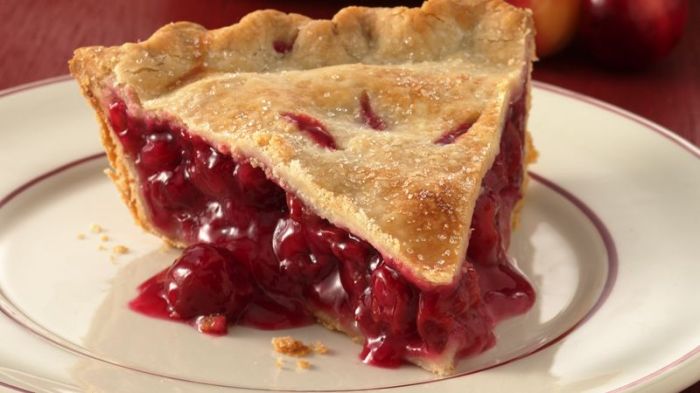
cherry pie

Q & A with Allison Chaney Whitmore

image1

Allison Chaney Whitmore is a screenwriter and graphic novelist from Los Angeles. She loves to tell coming-of-age stories with a hint of romance, fantasy, or adventure, but also enjoys a good gothic horror story. She’s also the writer of the comic Love University.

Allison holds a Master’s degree in English education and has studied screenwriting at the graduate level. Outside of her work, she enjoys classic films, genre television, a good book, traveling, and spending time with family and friends.

What’s the last thing you read or watched that you thought was incredibly well-written?

The current season of This Is Us is really good. I love the way they weave together plot, character, and theme. I also got to watch all of Fleabag and Killing Eve this summer, both of which I found amazing. I’m looking forward to watching season 3 of The Crown, as it always has top writing, and The Haunting of Hill House, which I hear has incredible writing as well. I can never pick one thing.

Were you always a writer, or was it something you eventually discovered you had a knack for?

I’ve always been a dreamer and a story enthusiast. I wanted to be an actor from a young age and started writing skits in elementary school. Long-form prose came in high school, and I wrote my first screenplay in a pink composition notebook with graph line paper the summer after graduation. So, if I haven’t always been a writer, I’ve been one for a pretty long time.

What inspired you to write your comic Love University?

The concept came to me many years ago. One Friday after work, I was stuck in traffic on Sunset behind UCLA and just randomly thought — What if there was a school for cupids,  called Love U? I thought it was funny at the time, but also strongly felt it was something I could see on television. When the opportunity came up to write a comic book series, I pitched it, and they really liked it.

What was your process for writing it?

This particular story just had a concept, no character to start. That’s not usual with me. Both typically come to me at the same time. This one I had to take the idea and pull the story out of it. I found the main character, Lucy, then I began thinking about the journey she might take over several issues as the world around her began to populate in my mind. I wondered about her day-to-day struggles, her lifelong personal wounds, and her hopes and dreams. From there, I just let the story unfold. After that brainstorming phase, I went through my usual process of theme, logline, beat sheet, outline, and script. Then it was notes, revision, and so forth.

How did you connect with the publishing company for your comics, and what role do they play with your projects?

I was working with another writer on a web series who was also a comic book writer. I’d recently been hired to write a couple of comics for a pair of independent creators. They were looking for screenwriters to complete the work. I was sort of lost in terms of what to do, so I asked my colleague to take a look at what I’d been working on. He really liked my work and sent it on to his publisher, who asked if I’d like to write a series of my own.

A key component of writing (for both film and comics) is to make the stories and characters relatable. What sort of approaches do you take to accomplish that?

To me, my characters are reflections of the human experience. I simply remember the human sides of their experiences — wounds, worries, hopes, dreams. I think about the way they speak, and why that is. I think about the way they dress, their favorite music, how they navigate through the world. Everyone has a specific journey that makes them uniquely who they are. I realize that should be the same for my characters, and that helps bring them to life, as well as making them more relatable to the reader.

As a writing coach, what are some of the more common mistakes you see?

Most of the mistakes come from finding the core of their stories, hitting plot points, and formatting. Sometimes it’s tough for people to figure out whether they have just an idea, or enough to make an actual story. That’s what we work on. It’s actually a lot of fun.

There are a lot of writing coaches out there. What’s unique about you and your methods?

I come from a teaching background, so my approach is about building skills from the ground up, but also starting with the big picture in mind. I like to help people work through their creative blocks and find the stories they want to tell. I’m much more of a coach than a consultant. I’ll give notes and focus on that type of thing, but I’m often looking to help writers become the best version of themselves. Working with me is like having your own personal teacher. Not everyone needs that, but it definitely works for some people.

What do you consider the components of a good script?

Strong character arcs, relatability, clear concept, emotional hook, and an identifiable theme.

What are some key rules/guidelines every writer should know?

-Always plan to write more stories. Don’t put everything into just one script. Move on. Write more. Keep getting better.

-The writing process is different for everyone. Just like we have different ways of learning and absorbing information, the way we get to a story can vary. Give yourself time to find your way.

-Your first draft is not going to be perfect. Ever.

-Plan if you can. It saves you time.

-Make time for both writing and living.

-Be observant.

-Read as much as you can.

-Stay committed.

-Be open-minded.

-Think outside the box.

How can people find out more about you and the services you provide?

I’ve been busy with my own projects and some work-for-hire projects, so don’t really do much coaching anymore. That being said, I am still open to taking on the occasional client. Email me at allison@theophilusfilms.com and we can talk about it.

Readers of this blog are more than familiar with my love/appreciation of pie. What’s your favorite kind?

Cheesecake could be considered pie, so…cheesecake. In terms of actual pie, probably pumpkin! Perfect time of year for that. Happy holidays!

NY-Cheesecake.jpg

Same destination, different route

hot fuzz

Even though I got some great notes back on the previous draft of my sci-fi adventure spec, one aspect of the script had always bothered me.

As much as I loved the opening sequence, it still felt out of place.

Its primary goal for existing was to establish and set up several plot elements and story details. It does that, but something just didn’t feel right.

Would the story still work if I took it out? Sure, but finding new ways to present all the relevant info would require some major rewriting and revising. Time-consuming (to a point), but necessary.

But that got the gears turning…

The more I thought about it, the more the idea appealed to me. Trust me, it killed me to even just consider killing all those darlings, but doing so would definitely force me to find new and original ways to tell this story.

Added bonus – a new opening would also enable me to do a better job of establishing the protagonist AND set the tone of the story.

So out all those pages went, with an ever-expanding list of all sorts of new ideas regarding How To Do It currently in development.

A writer may know what they want to happen in their script, but sometimes it doesn’t work out that way. The characters might unexpectedly guide you in a different direction, or maybe you realize what the story really needs is to take a sharp turn off to the side, or you decide that this is the perfect opportunity to go in a totally opposite direction.

Nothing is set in stone. You’re the ultimate creator. Everything that happens is under your control, and you can do with it what you will.

Something not working for you? Change it. Give yourself options.

Follow-up to that – go with options that still work within the context of the story and characters. Your characters still want the same thing they did before, but now you’ve drastically altered how they get there.

It’s a savvy writer who eagerly anticipates taking on the task of devising these kinds of changes. And once they’re all implemented, you’ll barely remember how it used to be because EVERYTHING WORKS SO MUCH BETTER NOW.

Suggestion – no matter how or when you come up with a new idea, WRITE IT DOWN. IMMEDIATELY. Even if you’re in the middle of working on the same script. Everybody says “Oh, I’ll remember that later.”

You won’t.

Do whatever you have to in order to preserve it.

*Apologies for a lack of post last week. I had some kind of bug that put me out of commission for a few days; didn’t even have the strength to compose a “sorry, no post this week” post.


A few slight adjustments

baby driver

The latest draft of the sci-fi adventure is moving along at a pleasantly brisk pace. Still averaging about 4-5 pages a day. The whole process this time around feels a lot more organized. Much more so than in the past.

The previous draft was 118 pages, and one of my many objectives for this one is to get it down to somewhere in the 105-110 range. I’m just about at the end of Act One, and it’s already 9 pages shorter than where it was at this point last time. Seems like the odds are in my favor to hit that page count goal.

But it’s taken a good deal of work to get here, including some shifts in my approaches.

Among the highlights:

-being more diligent in applying the “get in late, get out fast” approach to each scene. Although somewhat unavoidable for action sequences, doing what I can to use this as often as possible.

-cutting unnecessary dialogue. Never realized how much more I used to put in before. It’s been a real effort (and steep learning curve) to get the characters to only say what needs to be said, but it definitely helps get to the point of the scene quickly as well as moves things along.

-not being so detailed with action descriptions – by which I mean “what the characters are doing”, and not the fast-paced, high-octane thrilling moments. Focus on the important stuff. Don’t clutter up the page. Is it absolutely necessary to be so step-by-step about it? Nope.

-In a very “why didn’t I think of this before?” kind of way, having a hard copy of the outline and the previous draft have proven to be exceptionally helpful. The outline tells me what needs to happen in each scene, and the previous draft shows me not only what I did before, but gives me a starting point for potential changes.

-Taking that last item one step further, seeing how a scene played out before, combined with the applying the question of “how does this scene advance the plot, theme and character?” has enabled me to totally rewrite some scenes which before had felt kind of flat, but now read as stronger and help reinforce those three important components.

I managed to crank out the previous draft in about a month, and hoping to accomplish that this time around as well. Of course, a few ideas for more changes have popped up.  Nothing too severe, and I’m going back and forth about implementing them right away, or waiting for the cleanup-polish phase.

Every writer puts their material together in the way that works best for them. It took me a while to find mine, and it continues to be a work in progress. But if the latest results are any indicator, it’s working out quite nicely.

Q & A with Craig Kellem & Judy Hammett of Hollywoodscript.com

Hollywoodscript.com LLC was founded over a decade ago by former Universal and Fox development executive Craig Kellem, who was soon joined by business partner, Judy Hammett (M.A. English/Creative Writing). This family-based, boutique script consultation service is internationally known, serving writers from every corner of the world.

I had the pleasure of talking with Judy about their new book Get It On The Page: Top Script Consultants Show You How.

What’s the last thing you read or watched that you thought was incredibly well written?

Without a doubt, HBO’s most recent season (#3) of TRUE DETECTIVE. It is truly impressive every week. The writer has an incredible command of dialogue and the structure employed is beautiful. The writer has interwoven various timelines in a very clever and elegant way, wherein the plotline is consistently advanced, yet at the same time, the existential themes being explored are made exceptionally dramatic and emotionally charged as a result.

How’d you get your start in the industry?

We are father and daughter and come from a family that made their living in TV and music, so we both got our first breaks through family/friends. Craig started out as an assistant at a talent agency and worked hard up the ranks to become a talent agent himself. He eventually became a development executive at Fox and Universal, and in time a TV Producer as well. I started as a researcher on a TV series, then did freelance work providing studio coverage on scripts & books while in graduate school for English/Creative Writing. Eventually, Craig founded our company, Hollywoodscript.com LLC and I joined him soon thereafter. We’ve worked together for more than fifteen years.

Were you always a writer, or was it something you eventually discovered you had a knack for?

We’ve always tended to “think” like writers, and have loved writing just for the sheer pleasure it provides! But neither of us chose to “become” professional writers, or pursue careers as such. We both love working with writers, supporting their craft and analyzing content. This has been our true vocation. We wrote our book together from the standpoint of wanting to reach out to writers everywhere and share what we have learned after almost two decades of consulting with writers the world over. I provide writing services/ghostwriting on occasion, but consulting is my main work.

What inspired you to write your book Get It On The Page: Top Script Consultants Show You How?

Over the years we had clients comment that we should write a book, stating that our general feedback and approach was constructive, inspired and very helpful. So a few years ago, we decided it was time to give the book idea a green light and started putting the chapters together – with the sole purpose of sharing observations and approaches to writing, which have proven the most helpful to writers we’ve worked with to date.

With so many screenwriting books out there, what is it about yours that makes it especially unique?

We hope to offer something which is more intuitive, less “left brain” – a book that invites the writer to stay close to their own experiences, their own strong feelings and their own instincts so that the storyteller inside of them can more easily come to the fore.

Follow-up: having read a lot of screenwriting books, I found this one to be very different in that it’s not so much about “how to”, but more of a “here’s something to consider as you work on your story/script”. Was that your initial intent, or did it gradually develop that way?

Many thanks for your feedback! Yes, that is a wonderful way to describe it. We didn’t set out to compete with the screenwriting greats who’ve written comprehensive “how-tos” beautifully and exhaustively. Instead, we wanted to contribute to the conversation from the hands-on perspective of our day-to-day work with a very diverse range of writers – some of whom have studied the gamut of how-to books, yet continue to struggle with actually realizing their own visions on the page. We wanted to offer a book that helps writers get closer to  “hearing” their “own voice” so to speak – to accessing the vivid, original stories and characters that live inside of them.

One of the chapters that really resonated with me was the one about the practice you call “sandboxing”. Could you explain what you mean by that, and how it could benefit a writer?

Inspiration, ideas and the desire to write often come out of writers having creative shards and glimmers that have emerged from their minds. They get an idea for a scene late at night and jot it down on scrap paper. They encounter some person they think would make a great character type and make a note of it on a napkin. They hear an anecdote that suggests a story and scribble it on an envelope. All these pieces of creative inspiration are wonderful fuel for writing a screenplay, but a few glimmers and shards aren’t enough to justify starting at page one of a one-hundred-plus-page three-act film. Yet zealous writers will often do just that. They plow forward on the faint fumes of too few ideas and assure themselves the rest will come as they write. This approach rarely makes the cut, for the writer hasn’t given enough time and thought to what it is they are actually writing.

Rather than starting a screenplay prematurely, we therefore recommend “sandboxing,” which is a simple method wherein the writer slows down in order to create a much bigger arsenal of ideas from which to choose. Each day they jot down additional possibilities for scenes, character angles, key plot lines etc. – adding to their original seeds of inspiration. It thoroughly preps the writer to eventually sit down to page one of their new script armed with a truckload of ideas from which to write.

What do you consider the components of a good solid script?

A clear, strong story is key. Characters who are relatable and believable. A hero with whom the audience can empathize and who breaks into a serious sweat as much as possible. Dialogue that rings true. Lots of suspense, urgency, and conflict that keep the audience riveted and the pacing clipped.

What are some key rules/guidelines every writer should know?

-Writing IS rewriting, even when you’re a pro, so best to embrace this notion and learn to enjoy the process of writing, revising and polishing your script before declaring it “done”.

-Getting a script sold, or made, doesn’t happen on any predictable timeline. Just keep writing and derive your pleasure from the creative process, rather than focusing on it as a means to an end.

-If you are cloudy about any part of your script, stop and take the time to fully explore that cloudiness, addressing it head-on. Don’t try to finesse it, or gloss over it, or avoid it in order to deal with the parts of the script that are clearer to you. Otherwise, your audience may get stuck in those foggy sequences and then start detaching from your content as a whole.

-Never lose sight of the fact that a film is a visual art form. As you write, always ask yourself if there’s a way to dramatize the story development through images, cinematic sequences and visual cues first and foremost.

What are some of the most common screenwriting mistakes you see?

-Writers who tend to overwrite and hence interfere with needed momentum. Setting a strong, galloping pace is essential.

-Scripts that are confusing because the writer hasn’t maintained consistent continuity in the plot line or in terms of the character trajectories.  

-Scenes that don’t build the story or move narratives in the film forward.

How can people find out more about you and the services you provide?

We can be found at hollywoodscript.com and are on Twitter, Facebook, and Linked In – Craig and Judy. And of course, check out our book Get It On The Page: Top Script Consultants Show You How.

Readers of this blog are more than familiar with my love/appreciation of pie. What’s your favorite kind?

HA! I’ll take pie over cake any day – especially coconut, chocolate, vanilla or banana cream. Craig likes ice cream too much to think about any other type of dessert.

banana cream piesoda jerk