Ask a True Renaissance Script Consultant!*

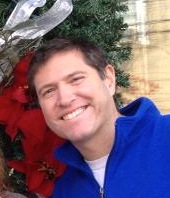
Julie Gray

*Renaissance as in “those possessing many talents or areas of knowledge”, not the cultural and intellectual movement between the 14th and 17th centuries.

The latest in a series of interviews with script readers and consultants who would be worth your while to work with if you want to get your script in shape. Today’s spotlight is on Julie Gray. I had the good fortune to interview Julie a few years ago just before she relocated to the other side of the planet.

Bonus question: So much has changed for you since I saw you last – you moved abroad and now live in Tel Aviv, Israel. What’s that been like, and what are you up to?

After ten years in Hollywood, it was time for a change. Tel Aviv is an incredibly vibrant city and there is SO much going on in the art scene here, it’s really exciting.

I work with screenwriters and novelists from New York, LA, the UK and Australia and increasingly, filmmakers here. I just interviewed the writer/directors of the Israeli film Big Bad Wolves, which Quentin Tarantino called the best film of 2013. The interview will be in Script Magazine this fall. I go to London every year and teach at the London Screenwriter’s Festival, which is really fun, and I have been volunteering with Amnesty International in Tel Aviv, working with Sudanese refugees on story telling. I founded the Tel Aviv Writer’s Salon in 2013, a group that meets weekly and writes flash fiction. During the war this past summer, I was asked to do a writing workshop for US embassy employees, to write about the trauma of what we all went through and will be doing writing workshops for victims of terror and war here in Israel for an Israeli non-profit later this fall. So I keep pretty busy!

1. What’s the last thing you read/watched that you thought was incredibly well-written?

I read an hour-long drama pilot by a client of mine and I just went insane, it was SO clever and unique. I can’t talk about the premise because it’s so unique and because I got so excited about it that I sent it to several producer friends of mine in Hollywood and the writer has a bunch of meetings coming up! I was so glad to help him and so impressed by his talent!

This summer, I watched a lot of movies but two really stood out – The Dallas Buyer’s Club and The Grand Budapest Hotel. I also watched McConaughey in True Detective; he’s really hitting his stride at this point in his life; it’s a joy to watch him. I’ve been a Wes Anderson fan since day one and so GBH just had me floored. Every single shot, every single moment is so stylized. It reminded me a bit of one of my favorite books, The Hotel New Hampshire.

I went on a real reading bender in the past few months and read A Confederacy of Dunces, All Quiet on the Western Front, Things Fall Apart and Revolutionary Road by Richard Yates. I’d seen the film but the book was better (as is so often said – Wow.) I am also an inveterate reader of The New Yorker and The Atlantic – a real addict of both.

2. How’d you get your start reading scripts?

I was writing scripts, of course, and attending the Writer’s Boot Camp in Santa Monica – I’d won the 2 year professional program through a screenwriting competition and there, at that program I heard about these “readers” and that you could become one. So I did. I was, as it turned out, really good at it and it wasn’t long before I was reading for some really big deal production companies in LA – Bedford Falls, Red Wagon at Sony, Walden Media – it was a great experience! I met a lot of great producers and agents and read scripts all day every day for a long time. It helped sharpen my own sense of what is original – or not – and what really good writing looks like. That kind of repetition ingrains a lot in you about which scripts have a chance in Hollywood and which do not. Lessons I will never forget.

3. Is recognizing good writing something you think can be taught or learned?

I don’t believe I’ve heard that question before! Well, the answer is complex. In order to recognize good writing, you have to READ good writing a lot. I was a freakishly good reader because I am a freakishly well-read person in the first place – and also a movie nut – so my frame of reference is pretty refined. But the question, for a Hollywood reader, is not whether YOU think it’s good writing, the question is whether the producer or agent will think so. And primarily, whether the script is unique and marketable. You learn what is expected in a rather mathematical way, and you rate those things, one by one. Being a good reader is about knowing what the particular company you are working for is looking for, specifically, what the general rules are in coverage, and then how to write up a great summary about what is good or bad in a script. And doing that very, very quickly, over and over again.

Being a good reader happens through experience. Much more of the skill lies in the ability of the reader to communicate as thoroughly and as objectively as possible what is and is not working. You might read a script of a genre you hate – it doesn’t matter what you like, it matters whether this script is written well for that genre. So – you have to know that genre. That’s why, to be a reader, you really have to know your movies, otherwise you’ll say something is unique and original when it was already done in 1947, and then another take on that premise was done again in 1976. If you don’t know that you will get fired very, very quickly. It’s a bit merciless. Readers really have their feet to the fire. It’s the belly of the beast.

But to answer your question, which is really, “what is good writing” – a good screenwriter is one who takes you on such a ride that you forget you are turning the pages. Every character seems real, every action line is cinematic, every plot twist is totally organic – it’s having a way with words that seems effortless. Can this be taught? I think that writers can be taught how to write but that GREAT writers are born that way, to be honest with you.

4. What are the components of a good script?

GREAT CHARACTERS, GREAT CHARACTERS, GREAT CHARACTERS. Oh – and a unique premise. If you have great characters and a unique premise, your structure will fall into place. You have to understand structure, but it won’t work unless the character arc really flows with the structure – informs it. Structure should not be obvious, it should just feel right.

5. What are some of the most common mistakes you see?

Unoriginal ideas. Writers who don’t test their ideas and look and compare and see who else has done this idea – if anyone. In my book, Just Effing Entertain Me: A Screenwriter’s Atlas, I go into great detail about idea testing. It’s crucial. It’s everything. Other common mistakes are things like typos, poor format, clunky action and sluglines. But if I had to point out THE worst mistake you could make and the most common one – being unoriginal wins by a landslide.

6. What story tropes are you just tired of seeing?

1) Any deus ex machina – something that just magically happens and changes the direction of the story. This is very easy for new writers to do but as you get more experienced, you’ll see why this is a big no-no, not only from a Hollywood perspective, but from a creative perspective as well. Creatively, it’s cheating, It’s taking the easy way out instead of letting the possibilities of the story play themselves out.

2) The person who’s had a big accident or someone they love died and now they are this tragic figure that nobody can reach. Oh man. I’m so tired of that one. It’s not that grief doesn’t have a huge impact – I know – I’ve experienced it – but writers often broach grief like it’s a kind of slam dunk, simple emotion – and it’s really not. Watch Ordinary People if you want to explore grief.

3) In a horror script, the character that goes to the door or UP INTO the attic when they hear a strange sound. They go TO the danger – it’s laughable. Scream really sent that up well – what a seminal film. But writers have to remember that we readers have seen and read every script, so surprise us. Not easy, you say? No. It’s not. If it were easy…

7. What are the 3 most important rules every writer should know?

1. Don’t write for the money – you’ll never write from the heart.

2. Watch movies – all kinds – all the time. Know your Hollywood history, understand genres and which movies were seminal and why.

3. Don’t be afraid to write badly! Writing is writing, but real writing is REWRITING.

8. Have you ever read a script that was an absolute, without-a-doubt “recommend”? If so, could you give the logline?

A very few times. Most recently, the client I referred to at the beginning of this interview. Unfortunately I cannot divulge the logline, but it was a mixture of a VERY popular cable show and a Bradley Cooper drama. I’m sorry I can’t share it. I read an unproduced film by the amazing writer Ben Queen, called Slanted and Enchanted and I lost it – I flipped out, it was so good. Ben and I became friends. American Beauty made me cry really hard – but it was already in production. Lucky for me, my best friend was the property master of the film so I got to visit the set and later on, Alan Ball and I had offices near each other while he was doing True Blood and I got to hang out with him and it was amazing.

9. How do you feel about screenwriting contests? Worth it or not?

I ran a screenwriting competition for six years so naturally I think there is worth in them. But the biggest worth is not so much the cash prizes, etc. but the validation you receive. Sometimes just quarter-finaling in a competition is enough of a good feeling to keep you going, and that can be so important in this pursuit! That said, look, be realistic and know that there are millions of competitions mushrooming all over the place and that you have a budget as a writer. So enter only a few every year – the biggies only – and then spend your money seeing movies, buying a how-to book or two, maybe go to a seminar to meet other writers. The ONLY thing that really matters is your writing, so make sure not to get sucked into lottery-like thinking, that if you buy SIX books on screenwriting or go to EVERY screenwriting event, or enter EVERY competition, that somehow this will magically do something for you. Ass in chair. That’s it. But entering a select handful each year can be fun, it can force you to meet deadlines, and it might get you the validation that you need in order to keep writing. The competitions that I consider really worth entering are: Final Draft Big Break, Blue Cat, Page International, the Nicholl (although it is VERY competitive, so know that…), Slamdance and Scriptapalooza. I may have overlooked some, but those are competitions I am very familiar with and know the people who organize them, so I can recommend them heartily.

10. How can people can get in touch with you to find out more about the services you provide?

They can go to my website at juliegrayediting.com or email me at hello@juliegray.info.

11. Readers of this blog are more than familiar with my love/appreciation of pie. What’s your favorite kind?

Coconut Cream – preferably at the House of Pies on Vermont in Silverlake. So many memories there.
Ask an Extraordinarily Insightful Script Consultant!

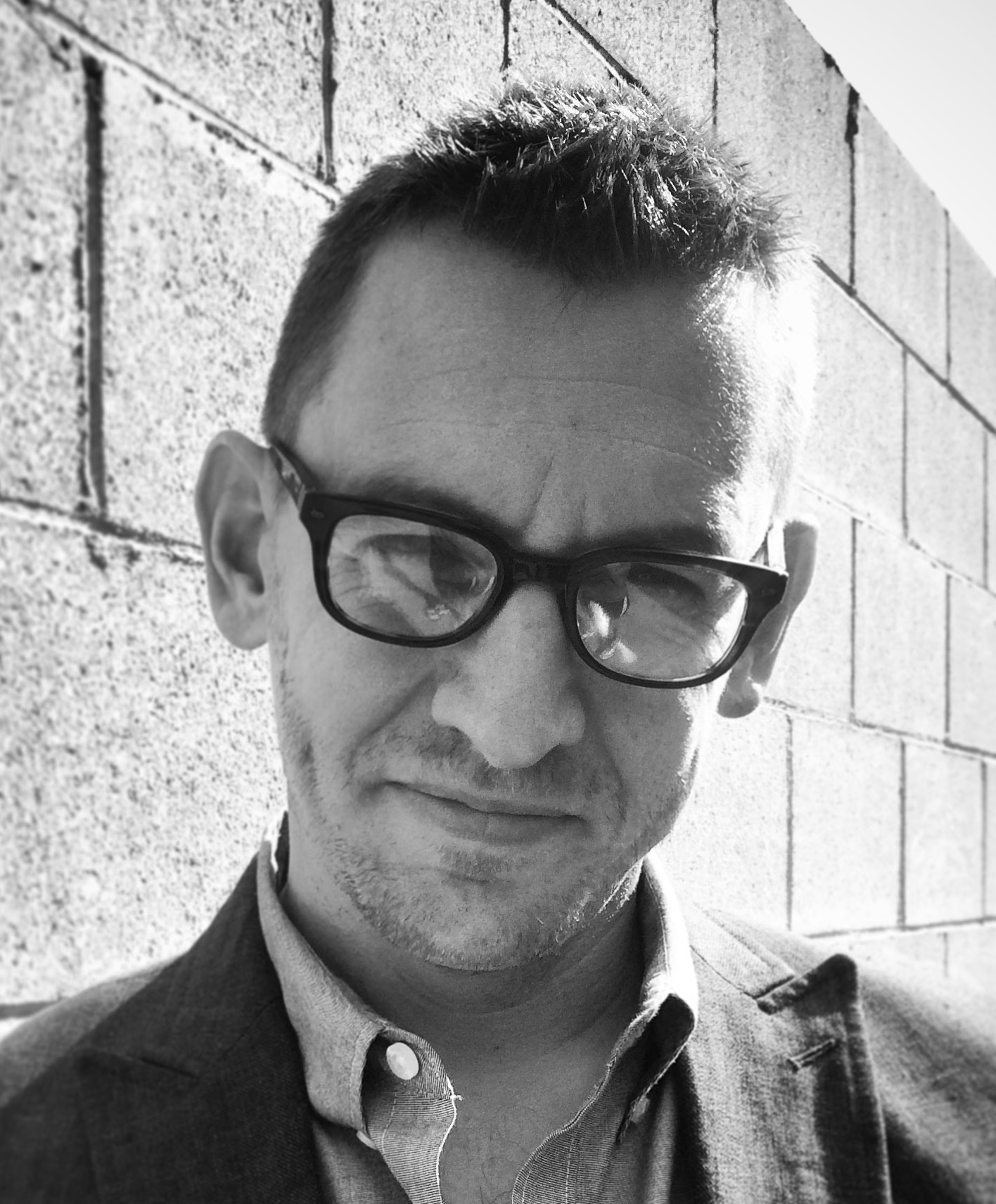
Andrew Hilton

The latest in a series of interviews with script readers and consultants who would be worth your while to work with if you want to get your script in shape. Today’s spotlight is on Andrew Hilton, aka the Screenplay Mechanic.

Andrew Hilton grew up in the U.K. and studied film in England and New York, before working in motion picture development at almost every major studio. Having read more than 13,000 scripts, he is one of the most highly-regarded independent screenplay analysts in the film industry.

Andrew’s first produced credit as a screenwriter was the psychological thriller FATAL TRUST.  He also rewrote and Co-Produced the indie thriller BRAKE, and served as a Co-Executive Producer on the feature documentary WHY WE RIDE.  Andrew also has several feature projects in active development, including his own big-budget action picture BULLET RUN and the Dickens-inspired action thriller THE GUNS OF CHRISTMAS PAST.

What’s the last thing you read/watched that you thought was incredibly well-written?

While I’m more of a feature guy, I love that NEWSROOM is back on TV. At least in terms of dialogue, there are very few screenwriters on Aaron Sorkin’s level. He has the ability to craft dialogue exchanges that are as mesmerizing as any action sequence. Some criticize the heightened reality of his rapid-fire, snappy dialogue, arguing that it’s contrived and inauthentic. Personally, I’m going to savor every episode of this final season.

How’d you get your start reading scripts?

I attended film school in the UK and New York, then finished my final year of university in Los Angeles so I could start interning at the studios. My first gig was working for a producer at Universal and I spent six months reading scripts for him. I then moved to Warner Bros. and worked in the story department of one of my favorite producers, Joel Silver (DIE HARD, LETHAL WEAPON, etc.). After six months there, I landed my first paying job at Paramount, as a Story Editor for Mario Kassar (FIRST BLOOD, TERMINATOR, etc.). It was there I began teaching others to write coverage and really honed my story skills.

Is recognizing good writing something you think can be taught or learned?

The ability to recognize good writing can be learned, but recognizing a good movie is a skill far fewer people possess because it’s partly instinctual. Consequently, there are many agents, producers and actors in the industry who struggle to recognize a good script. That’s one of multiple reasons why so many sub-par projects get off the ground. Often, producers and studio execs are throwing stories against the wall (or into theaters) to see what sticks. On the flipside, there are people in the industry – from readers to top producers – who consistently find that diamond in the rough. 

What are the components of a good script?

It really all comes down to two things: Can this story entertain an audience for a couple of hours? Is that audience going to be big enough to turn a profit? It’s that Goldilocks balance of art and business, and reconciling that reality is one of the first goals every new writer should work towards. You could argue that there are good scripts which won’t be profitable at the box office, but who is that script “good” for? It might make a solid writing sample, but a genuinely good script is one that’s well-written and will make some serious coin in the marketplace once it’s produced.

So what specific components in a script will ensure the audience is entertained? An interesting protagonist is essential. We don’t necessarily have to like the hero, but it’s crucial we find them interesting. Ideally, the screenplay will also feature compelling conflict, engrossing dialogue, and a brisk pace which holds our attention. The end game is to ensure the audience leaves the cinema feeling completely satisfied. Nobody likes leaving a restaurant hungry, and nobody enjoys leaving the multiplex feeling as if they just wasted $15 on a crappy film.

What are some of the most common mistakes you see?

Overwriting the narrative to the point where clarity suffers is very common. Screenwriting is somewhat unique in that one of the best traits a scribe can have is efficiency of language. Don’t use twenty words to describe something when ten will do. Don’t try and impress anyone with your vocabulary or your grasp of metaphors and similes. Just write the most compelling and vivid movie using the fewest words.

What story tropes are you just tired of seeing?

Anything post-apocalyptic is becoming tiresome. MAD MAX was released in 1979 and the spec marketplace is still saturated with clones.

Ditto for “man on the run” stories. Whether the hero is in possession of a flash-drive, witnessed a crime, or underwent some kind of experiment, these screenplays always follow the same structure and climax. There’s often a foot chase in a subway and the protagonist almost always ends up sleeping with the love interest in a hotel. I read one or two of these most weeks.

I’m happy to read big expensive sci-fi epics, but 99.99% of the time the author needs to realize they’re writing it for themselves because it’s not going anywhere. If nobody in this town knows you and the story isn’t based on an existing IP, where’s the $200m budget going to come from?

Another common formula is the comedy about the dishonest hero. Often, these are romantic comedies which feature the protagonist misleading or lying to the love interest. The charade has to be maintained throughout Act II, at which point the love interest learns the truth and shuns the hero, leading to a climatic reconciliation (often a race to an airport).

All that said, if you have a unique conceptual twist, or craft one of these stories in a genuinely fresh and commercial way, there are still plenty of potential buyers out there. Clichés often become clichés because they work repeatedly. It’s also worth pointing out that this is where an experienced story analyst can be most useful. Some people rail against spending money on coverage, but I’ve read well over 7000 screenplays so I might be able to tell you how often I’ve seen a specific idea before and can give you suggestions on how to make your work differ from past fare.

What are the 3 most important rules every writer should know?

Not “rules” per se, but…

Know your audience.

Don’t bore anyone.

Always remember a complete stranger will eventually have to write a huge check to make your story come to life. They’ll want that money back.

Have you ever read a script that was an absolute, without-a-doubt “recommend”? If so, could you give the logline?

I used to read approximately 70% of major theatrical releases when they were still at the script stage, either for production companies or foreign distributors. Hence, I’ve done coverage on everything from THE SIXTH SENSE to THE LORD OF THE RINGS. Many of my clients have written great projects too, most recently Jesse Chatham with LAND and Bao Tran with THE PAPER TIGERS.

How do you feel about screenwriting contests? Worth it or not?

Some are worthwhile, e.g. the Nicholl, but most are akin to entering the lottery. If you’ve written a genuinely brilliant piece of work, it may still go unnoticed because most contest judges are inexperienced and all of them are underpaid. However, there are enough lightning strikes to keep the contest industry alive, and if a writer can afford it I see no harm in rolling the dice. More often than not, it’s akin to a farm program where a small-time manager or agent may discover you. If you’re considering the contest world, target the established ones which have a good reputation.

How can people get in touch with you to find out more about the services you provide?

My website www.screenplaymechanic.com, my Mechanic Facebook page, or simply email me at screenplaymechanic@gmail.com.

Readers of this blog are more than familiar with my love/appreciation of pie. What’s your favorite kind?

I’m going savory on this one. Steak and ale (with a pint, of course).

Ask a Straight-talkin’ Script Consultant!

Jim Cirile - Coverage Ink

The latest in a series of interviews with script readers and consultants who would be worth your while to work with if you want to get your script in shape. Today’s spotlight is on Jim Cirile of Coverage Ink.

1. What’s the last thing you read/watched that you thought was incredibly well-written?

After binge-watching “Sons of Anarchy” season 6, you really have to marvel at the craftsmanship. The upheaval and complications are so constant as to be ludicrous, yet it’s so devilishly well-written that you just strap in and hold on tight. And blowing our own horn a bit, the last script I read which was truly special was Brandon Barker’s “Nottingham and Hood,” which we found as part of our last Get Repped Now! promotion this summer. We got him into Benderspink, where he’s now working with their head of lit Jake Wagner. So, win-win. A real talented guy with a bitingly funny comic voice.

2. How’d you get your start reading scripts?

Kind of fell into it, really. I originally founded Coverage Ink to offer my small handful of analysts, whom I’d assembled to help develop my own material, to other writers at low cost. Getting feedback from smart readers is a major part of my process and always has been. In fact, the very first person I met when I moved to Los Angeles 20 years ago was a union studio reader, and that fellow was enormously gracious in giving me feedback and teaching me how the biz really works. Over time, as a writer myself, I gave feedback to plenty of other writers and realized I had a lot to say in that regard. Our approach is based around writer empowerment – giving constructive feedback as opposed to humiliation. This is in part a reaction to some of the astonishingly humiliating and unhelpful coverage I’ve received on my own scripts and have seen others receive over the years. I figured there had to be a way to give helpful guidance without belittling the writer. So all of that combined to get the CI ball rolling in 2002.

3. Is recognizing good writing something you think can be taught or learned?

Yes, but to a point. Obviously anyone can read a bunch of books, take classes on writing and so forth, and get down your Save the Cat!, Syd Field, McKee, etc. However, some folks have a hard time putting aside their egos — the frustrated writers out there who fancy themselves story analysts. These folks project their personal tastes and frustrations onto material as opposed to appreciating it for what it is and trying to help it become the best possible version of itself. I’ve had to let go of several very smart people who fancied themselves as story consultants because they actually could not recognize good writing or material with potential.

4. What are the components of a good script?

Great, multidimensional characters. Solid structure. Avoiding clichés and surprising the reader. Snappy, tight pacing. And of course, good storytelling. That said, a lot of it is about hitting your marks and doing it in creative ways – nailing those structural beats that Hollywood uses to judge whether you’ve got game or not, such as the inciting incident by page 15, Act II beginning by page 25, etc. Even things like whether you know how to write down the page or use sluglines and white space properly all contribute to the first impression as well as perceived ease of the read. A good screenplay is simply a fascinating story well-told. If you’re facile with words, that’s a start – but that’s all it is. You still have to study the form.

5-6. What are some of the most common mistakes you see?

By far the biggest one, and I’m just as guilty of this, is sending a script out before it’s fully cooked. We finish a script and we’re so excited that we immediately contact our industry friends and before long, you’re dead in the water. It took a long time to learn to never send out first or even tenth drafts (if I can help it.) Taking the time to develop a screenplay until it’s bulletproof is crucial. My current spec is on its 11th draft and we only just got our first consider. It will probably be three more drafts until we nail it and get consistent considers, which will indicate we’re finally ready to go, and even then we’ll still have to do at least another draft or two for our manager.

The second one is: is your concept really multiplex-worthy? You have to really think about whether your idea is one that makes sense in the current filmmaking climate – be it studio film, indie or festival darling. There are certain stories that just work better as a book, stage play, web series, or whatever, than a feature. Or maybe it just isn’t an exciting idea at all, or is just too played out or derivative – how many spy or vampire movies can they make? Unless you can find a way to bring something really fresh and innovative to those genres, you’d best keep looking for the killer concept.

7. What are the 3 most important rules every writer should know?

1. Be a student of the business. There’s no point in trying to be a screenwriter if you don’t learn what that actually means and how the game is played.

2. Learn your craft. Just because you wrote a great thesis in college or even a novel doesn’t mean you have any idea how to write a screenplay. Take classes at your local community college or online, get into a writer’s group, read scripts and how-to books and study. Can you get hired as a doctor or lawyer without years of study? So why would you expect another lucrative job like screenwriting to be any easier to learn or break in to?

3. Don’t expect to find representation until you are really, really ready – and by that I mean they come to you because you’re winning contests, or producers and industry types are championing your material. We all want to get representation, but usually an agent won’t even read you unless you’ve already got some heat.

8. Have you ever read a script that was an absolute, without-a-doubt “recommend”? If so, could you give the logline?

The aforementioned “Nottingham and Hood.” The Sheriff of Nottingham captures and attempts to transport his prisoner, Robin Hood, to trial. Complications, as they say, ensue. “Midnight Run” in Sherwood Forest. Boom.

9. How do you feel about screenwriting contests? Worth it or not?

Our contest Writers on the Storm has gotten several of our winners into agencies like UTA, and last year’s “Cake” was produced and stars Jennifer Aniston. (WOTS is on hiatus this year.) So the answer is – damn right they’re worth it, but it depends on the contest. There are really a few worth the money – Tracking B, Nicholl, Scriptapalooza, Final Draft Big Break, Script Pipeline, maybe one or two others. But the rest – no juice. Save your money. Sadly, no one cares that you made the top ten of the Terre Haute Screenwriting Showdown 2003.

10. How can people get in touch with you to find out more about the services you provide?

Email me at info@coverageink.com, or check out our website – www.coverageink.com

11. Readers of this blog are more than familiar with my love/appreciation of pie. What’s your favorite kind?

Here in Culver City, there is an amazing 2-piece band, a guy and a gal, who play often at the Culver Hotel, my favorite watering hole. They’re called Pie. I’d have to go with them, since they go quite well indeed with an Absolut martini with lime. Other than that, Boston Cream, baby!

Ask an Ubiquitous* Script Consultant!

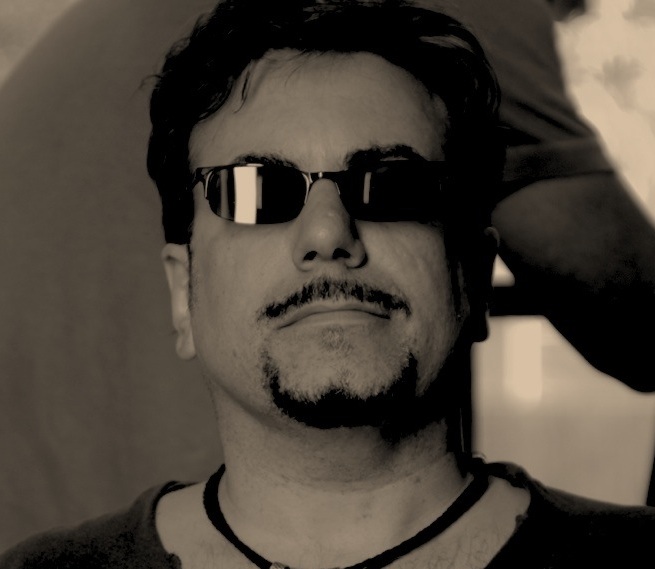
Danny Manus
*Seriously. The guy’s, like, everywhere. Podcasts, social media, online articles, you name it.

The latest in a series of interviews with script readers and consultants who would be worth your while to work with if you want to get your script in shape. Today’s spotlight is on Danny Manus of No Bullscript Consulting.

Danny Manus is the former Director of Development for Sandstorm Films (The Covenant, 8MM2) and Clifford Werber Productions (Cinderella Story, Just Add Water), where he sold “To Oz” to United Artists. He’s the author of “No B.S. for Screenwriters: Advice from the Executive Perspective” and was ranked one of the Top 15 “Cream of the Crop” script consultants in CS Magazine. He was also named one of Screencraft’s “25 People Screenwriters Should Follow on Twitter.”

1. What’s the last thing you read/watched that you thought was incredibly well-written?

The best written things I’ve watched lately have been on TV. There are movies I’ve really enjoyed – Chef, Planet of the Apes, Guardians of the Galaxy, Fault in our Stars, Bad Words, etc. – but none this year yet that I thought were OMG fantastic writing. To be fair, I haven’t seen Boyhood yet. But for me, TV is where the best material is these days. My favorite new comedy is You’re the Worst on FXX. I also really enjoyed The Last Ship on TNT and Masters of Sex on Showtime this summer. I’m sure there are wonderfully written books out there, but I don’t get to read them.

2. How’d you get your start reading scripts?

My first start was as an intern about 13 years ago at Columbia Tri-Star in TV Development and 20TH Century Fox Feature Casting. I was charged with reading everything that came in and doing coverage on them. But I used to go through their archive library and just read as many as I could, especially at Tri-Star. My coverage was liked by the VPs I worked under so much that they loaned me out to the SVP (Sarah Timberman at the time, who would not remember me if you paid her) and then the President at the time. Those gigs gave me enough coverage samples to land my first assistant job after I graduated.

3. Is recognizing good writing something you think can be taught or learned?

Recognizing bad writing is something anyone can do. Recognizing great writing is something that can be taught and learned with time and experience. As a first year assistant and intern, I could tell you what was written poorly. But it took a few years of reading hundreds and hundreds of scripts to TRULY understand good writing. And many thousands of scripts later, I’m still learning.

You can’t read a book on screenwriting and think you’re suddenly able to be a professional consultant or reader or writer. There is no checklist given to new readers, it’s learned on the job – that’s why it’s SO important for writers to READ. Though I actually did develop a checklist I used to give to my interns. It was 110 items long. But if you’re a great reader, they are all just in your head and you notice them naturally.

4. What are the components of a good script?

There are basic elements everyone agrees on – a concept and hook that sparks a reaction and has potential to lead somewhere intriguing; compelling, three-dimensional characters who make you want to follow them; dialogue that feels sharp and precise yet natural and flows; enough growing conflict and high enough stakes to keep ones interest; and a plot that progresses throughout the script in interesting ways. Every script should have strong setups, executions and payoffs. But to make it go from good to great, it’s about the X-factor. Some of that is voice, but some of it is just the right writer writing the right story in the right way at the right time. That’s when true brilliance strikes. And it doesn’t happen often.

5. What are some of the most common mistakes you see?

I see them all. I mean, the biggest mistakes are that writers are writing stories that aren’t MOVIES. They’re just not strong enough ideas or hooks to be movies in the current studio or indie marketplace. Or that the writer doesn’t know the hook of their idea. Or that the writer uses too many COINCIDENCES or serendipitous moments to create plot.

Actually, you know what the #1 mistake I see is? The use of YOU’RE and YOUR! I mean, WTF people – it’s not that hard to know the difference. Thinking that typos and grammar and format don’t matter – they do!

The biggest non-craft mistakes writers make is not doing their research and not knowing ANYTHING about the actual business. And secondly, submitting projects LONG before they’re ready to be submitted. Querying and pitching on a first draft or before a script is even written, entering contests with a first draft, posting their second drafts on websites. The biggest mistake I see is desperation and impatience outweighing common sense and good judgment.

6. What story tropes are you just tired of seeing?

I could go the rest of my life without seeing another Geek to Chic Teen story. Or the Christmas tale of someone losing their Xmas spirit until X happens. Or the story of the struggling writer trying to break into Hollywood and X happens. The Screenwriter protagonist CAN work – but 98% of the time it doesn’t and I like to play the odds. In terms of character, if I never have to read about another female rape victim or domestic abuse victim, I’d be okay with that too. Those are so common in scripts it’s lost its meaning. But in the end, what I always say is – Don’t run from the cliché, just make it seem NOT cliché. That’s a writer’s job.

7. What are the 3 most important rules every writer should know?

-It’s not called the artist colony, it’s called the Film Business. So treat it like one. And if you want this to be a career, treat it like one.

-Writing is rewriting and if you can’t take notes and really truly rewrite, you’ll never have a lasting career.

-Your first draft and first script is SUPPOSED to suck. If you think your first script is going to sell and make you rich, you’re living in a dream world. Just. Keep. Writing.

8. Have you ever read a script that was an absolute, without-a-doubt “recommend”? If so, could you give the logline?

Absolutely. But most were already projects in development written by top notch writers. I have had a number of clients whose projects were Recommends – but none were like that on the first draft. I can’t really divulge the loglines though.

9. How do you feel about screenwriting contests? Worth it or not?

There are about 15 contests out there that are completely worth it that I highly recommend, and about 250 contests out there that aren’t. If you win a major, prestigious contest it can definitely start your career and get you noticed. But if you’re continuously a quarterfinalist or not even making the quarters, then you’re not ready yet. Or your script isn’t. Contests are absolutely worthwhile IF your script and writing is at a level where you can be in the top 100 writers out of 8,000. If you can’t say that, then you’re probably wasting $40. Keep in mind – the Top 10 contests get about 45,000 submissions total. And they give out about 150 prizes to finalists and winners. So, those are your chances. Your script has to be REALLY fucking good. But as someone who has had multiple major contest winners and finalists as clients, that’s what I’m here for.

10. How can people get in touch with you to find out more about the services you provide?

You can always check out my website and services at www.nobullscript.net and follow me on Twitter @Dannymanus (I was named one of Screencraft’s 25 People Screenwriters Should Follow on Twitter).

And if interested, I’m running a 4-week online course “Creating More Compelling, Castable Characters” which starts Sept 26th and it’s going to be a great class. So, I encourage everyone to check out details at www.compellingcharacters.eventbrite.com

11. Readers of this blog are more than familiar with my love/appreciation of pie. What’s your favorite kind?

I’m an apple pie guy, though a good chocolate cream pie with the chocolate mousse and whipped cream…nom nom nom.

Ask a Nicholl-winning Script Reader!

1465249_10202485687454053_1139689699_n

The first in a series of interviews with some script readers who would be worth your while to work with if you want to get your script in shape.

Today’s spotlight on: Doug Davidson!

Not only is Doug Davidson a Nicholl Fellow, but his script LETTER QUEST has the distinction of being the only animation script to ever achieve that honor.

1. What’s the last thing you read/watched that you thought was incredibly well-written?

DAWN OF THE PLANET OF THE APES. The most compelling character to hit the movies in a while is an ape. Caesar is a textbook protagonist. An extraordinary individual doing extraordinary things under extraordinary pressure. When you can end a movie by zooming in on the lead character’s face, and not have it feel cheesy, you know you’ve done something right.

2. How’d you get your start reading scripts?

I started in a screenwriting group, a large group that lasted several years. Early on, we agreed on always giving each other formal written feedback, because if you don’t have to write your feedback down, then you don’t think nearly as hard about it. When you put your feedback in paragraph form, you realize you have to make sense, you have to be consistent and you have to justify what you say. It gave me the discipline to write constructive, reasoned feedback instead of just tossing out opinions.

3. Is recognizing good writing something you think can be taught or learned?

Recognizing perfect writing is easy and intuitive. Anyone can do it. Recognizing the potential in a promising script that isn’t quite working yet, that takes more experience. And it takes a writer’s mentality. You need to study the craft for years. There are rules that are easy to memorize, but how to apply them, that’s much more difficult. Blindly applying the rules doesn’t lead to good writing, or good feedback.

4. What are the components of a good script?

The craft has to be there, and then there has to something else, a plus one. It could be funny comedy. It could be insight. It could be a new idea. That’s the “talent” part. You might think it’s this “plus one” that’s missing from most scripts, but I find the opposite to be true a lot of the time. Often a script has this amazing unique element, but the nuts and bolts of the story just aren’t in place yet. That’s when making the extra effort to put all the craft elements together really pays off.

5. What are some of the most common mistakes you see?

One of the most common mistakes I see is writers thinking a plot point (or character trait or thematic element) is clear on the page when in actuality it’s really not. At least not clear enough. It happens all the time, even to seasoned writers. That’s why feedback is so important. It’s not about saying your vision is wrong. It’s about saying your vision isn’t quite visible. Yet. The trick is to make sure everyone can see it.

6. What story tropes are you just tired of seeing?

Just about any story idea could work with the right execution. That said, I’ve come across a surprising number of scripts about screenwriters writing screenplays. Autobiography finds its way into most scripts, but it really helps to disguise it just a little.

7. What are the 3 most important rules every writer should know?

(1) Don’t (2) Give (3) Up.

8. Have you ever read a script that was an absolute, without-a-doubt “recommend”? If so, could you give the logline?

Nothing is absolute, but I’ve read more than a dozen really excellent unproduced scripts that I would recommend. I won’t go into the loglines here, but they’ve spanned just about every genre. I love to stay in the loop with the scripts I’ve read, especially the great ones. Several are optioned, several have placed very well in major contests and two have well known actors attached. Many of the writers of these scripts have secured representation as well. It requires some grit, but first-rate work will eventually get you places in this industry.

9. How do you feel about screenwriting contests? Worth it or not?

Screenwriting contests are absolutely worth it. It’s not the only path to success or a guarantee of success, but I know a fair amount of writers who have benefited greatly from contest placements. If you get an opportunity to read for a contest, I recommend that too. I’ve done it and learned a lot from the experience.

10. How can people get in touch with you to find out more about the services you provide?

My website is www.fourstarfeedback.com. I have a screenwriting blog there based on my experiences in the industry (and the numerous mistakes I’ve made). I’m also happy to answer specific questions via the email listed on my site.

11. Readers of this blog are more than familiar with my love/appreciation of pie. What’s your favorite kind?

I love pie too! I like to bake my own key lime pies. They’re pretty easy to do. I also love coconut custard, blueberry and anything with peanut butter. But my favorite would have to be . . . pecan. A great pecan pie has a sludgy quality – an intensely sweet sludge – balanced by a nutty crunch. Thanks for thinking of me, Paul! We’ll have to get together sometime for some coffee, and pie.