Ask a Nicholl-winning Script Reader!

1465249_10202485687454053_1139689699_n

The first in a series of interviews with some script readers who would be worth your while to work with if you want to get your script in shape.

Today’s spotlight on: Doug Davidson!

Not only is Doug Davidson a Nicholl Fellow, but his script LETTER QUEST has the distinction of being the only animation script to ever achieve that honor.

1. What’s the last thing you read/watched that you thought was incredibly well-written?

DAWN OF THE PLANET OF THE APES. The most compelling character to hit the movies in a while is an ape. Caesar is a textbook protagonist. An extraordinary individual doing extraordinary things under extraordinary pressure. When you can end a movie by zooming in on the lead character’s face, and not have it feel cheesy, you know you’ve done something right.

2. How’d you get your start reading scripts?

I started in a screenwriting group, a large group that lasted several years. Early on, we agreed on always giving each other formal written feedback, because if you don’t have to write your feedback down, then you don’t think nearly as hard about it. When you put your feedback in paragraph form, you realize you have to make sense, you have to be consistent and you have to justify what you say. It gave me the discipline to write constructive, reasoned feedback instead of just tossing out opinions.

3. Is recognizing good writing something you think can be taught or learned?

Recognizing perfect writing is easy and intuitive. Anyone can do it. Recognizing the potential in a promising script that isn’t quite working yet, that takes more experience. And it takes a writer’s mentality. You need to study the craft for years. There are rules that are easy to memorize, but how to apply them, that’s much more difficult. Blindly applying the rules doesn’t lead to good writing, or good feedback.

4. What are the components of a good script?

The craft has to be there, and then there has to something else, a plus one. It could be funny comedy. It could be insight. It could be a new idea. That’s the “talent” part. You might think it’s this “plus one” that’s missing from most scripts, but I find the opposite to be true a lot of the time. Often a script has this amazing unique element, but the nuts and bolts of the story just aren’t in place yet. That’s when making the extra effort to put all the craft elements together really pays off.

5. What are some of the most common mistakes you see?

One of the most common mistakes I see is writers thinking a plot point (or character trait or thematic element) is clear on the page when in actuality it’s really not. At least not clear enough. It happens all the time, even to seasoned writers. That’s why feedback is so important. It’s not about saying your vision is wrong. It’s about saying your vision isn’t quite visible. Yet. The trick is to make sure everyone can see it.

6. What story tropes are you just tired of seeing?

Just about any story idea could work with the right execution. That said, I’ve come across a surprising number of scripts about screenwriters writing screenplays. Autobiography finds its way into most scripts, but it really helps to disguise it just a little.

7. What are the 3 most important rules every writer should know?

(1) Don’t (2) Give (3) Up.

8. Have you ever read a script that was an absolute, without-a-doubt “recommend”? If so, could you give the logline?

Nothing is absolute, but I’ve read more than a dozen really excellent unproduced scripts that I would recommend. I won’t go into the loglines here, but they’ve spanned just about every genre. I love to stay in the loop with the scripts I’ve read, especially the great ones. Several are optioned, several have placed very well in major contests and two have well known actors attached. Many of the writers of these scripts have secured representation as well. It requires some grit, but first-rate work will eventually get you places in this industry.

9. How do you feel about screenwriting contests? Worth it or not?

Screenwriting contests are absolutely worth it. It’s not the only path to success or a guarantee of success, but I know a fair amount of writers who have benefited greatly from contest placements. If you get an opportunity to read for a contest, I recommend that too. I’ve done it and learned a lot from the experience.

10. How can people get in touch with you to find out more about the services you provide?

My website is www.fourstarfeedback.com. I have a screenwriting blog there based on my experiences in the industry (and the numerous mistakes I’ve made). I’m also happy to answer specific questions via the email listed on my site.

11. Readers of this blog are more than familiar with my love/appreciation of pie. What’s your favorite kind?

I love pie too! I like to bake my own key lime pies. They’re pretty easy to do. I also love coconut custard, blueberry and anything with peanut butter. But my favorite would have to be . . . pecan. A great pecan pie has a sludgy quality – an intensely sweet sludge – balanced by a nutty crunch. Thanks for thinking of me, Paul! We’ll have to get together sometime for some coffee, and pie.

Casting a wider net

Always trying to catch a little more

As you work your way through the various stages of assembling your story, how much do you take the audience’s needs and wants into account?

You’re obviously writing something you would want to see, but do you ever consider the viewing tastes of someone who’s not like you whatsoever?

While I may write high-concept tales of adventure that would definitely appeal to 12-year-old me, it’s also my objective to try to craft those stories in such a way so they could entertain anybody of any age.

(Strong examples of this kind of storytelling? Most of the Pixar catalog.)

Here are just a few things to take into consideration:

-Are you treating the reader/audience the way they should be treated? Which means with intelligence. I’ve always hated when a story feels dumbed down, and suspect most other moviegoers do as well.

-That being said, is your story simple enough to the point that anybody could understand what’s going on, or at least have a general understanding of it?

-Regardless of what genre your story falls into, how much are you taking advantage of the elements of that genre? Since you’re most likely already a fan and probably have a good idea of what’s expected, this is your golden opportunity to show the rest of us what’s so appealing about it. Play on those strengths.

-With modern audiences more knowledgeable and movie-savvy than most writers realize, it’s more important than ever to come up with material that’s really new and original. What is it about your story that really sets it apart? What can you offer that we haven’t seen before?

As we start with an idea, develop it into a story that will eventually end up as a script, a lot of us daydream about the resulting movie, and how totally awesome it would be for it to be a big hit.

We can just picture the tremendous box office, rave reviews, non-stop awards, a king’s ransom of a paycheck, being begged to pick from a smorgasbord of new projects, all stemming from this story we cranked out with our own little hands, now practically guaranteed a place in the pantheon of pop culture.

“Everybody’s going to love it!” you imagine.

The reality is – they’re not, and a lot of that stuff won’t happen. But don’t let that stop you from trying.

The best we can do is write a solid, entertaining story populated with interesting characters who find themselves in unique situations, and hope people like it.

Roll up for the My Writing Process Tour!

Sorry, no walruses involved
Step right this way! Sorry, no walruses involved

I’ve been invited to take part in The My Writing Process Tour, which is kind of a blog/chain letter thing. One blogger asks another to take part and answer some insightful questions, then link to writers/bloggers we’d recommend.

I was nominated by Henry Sheppard, aka Adelaide Screenwriter, from the Australian metropolis of Adelaide. He’s always offering up some fantastic material, including articles, interviews and shorts. Definitely worth checking out.

As for me…

1. What am I working on?

Three items currently hold my attention: revamping the outline of a pulpy adventure spec, the rewrite/polish of a Christmas-themed mystery-comedy and resuming the hunt for representation.

2. How does my work differ from all others of its genre?

Even though I’ve written in several genres, the one thing I always try to convey is a sense of fun and excitement. It takes a lot more effort than people realize to really engage a reader that way.

I want you to enjoy the story beyond just “this is good writing” and more like that amusement park thrill ride you rush to get back in line for as soon you get off.

3. Why do I write what I do?

My formative years were the late 70s/early 80s, so I had the benefit of being heavily influenced by the likes of STAR WARS, RAIDERS OF THE LOST ARK and BACK TO THE FUTURE. To me, those are textbook examples of what smart storytelling should be, and it’s what I strive for in my own work.

I’ve stated before about being a fan of the genres I write, so not only am I trying to write something I’d want to see, but I try to create something I haven’t seen before.

4. How does your writing process work?

It all starts with an idea. Is there a story behind it? If so, what happens over the course of that story? How could I tell it in an original way?

Once I have a general idea about that story, including knowing how it starts and ends, I set up the plot points (statement of theme on page 3, inciting incident on page 10, etc), then fill in the gaps between them.

If it’s a genre-specific film, I try to incorporate elements that are part of that genre while trying to avoid tropes, or at least approach them from a different perspective.

I do a majority of my work in developing the outline, and it makes a huge difference. It gives me a better overview of the whole thing so it’s easier to keep track of character development, storylines, subplots, setups and payoffs. I won’t even consider starting on pages until I think the outline is solid.

Because of my schedule, I write when I can. When it comes to pages, I try to produce at least 3 a day. Sometimes it’s more. It’s gets easier the more you do it. They add up fast, and before you know it, you’ve got a completed draft to go back, edit and rewrite.

I’m also extremely fortunate to have several friends and trusted colleagues I can turn to for feedback. They pull no punches in telling me if something doesn’t work.

Lastly, I’ll rewrite and polish the script until I think it’s good to go.

Over there on your right is a list of blogs I think make for some excellent reading and advice. I’ve added three definitely worth checking out:

The Single Screenwriter by Christie LeBlanc

Writer of Fine Things by Evan Porter

The Screenwriting Process from James (don’t know his last name) in the UK

Bonus! If you’re looking for some reasonably-priced professional analysis for your script, you might want to consider:

-Doug Davidson’s Four Star Feedback. Doug is the only writer to win a Nicholl Fellowship with an animation script (2004), but he happily covers all genres.

-Andrew Hilton aka the Screenplay Mechanic. His services have garnered extremely high praise on the Done Deal Pro forums.

Thanks for reading!

Please. Pique my interest.

All of that in one sentence? Gosh, this is tough.
The whole story in one sentence? Gosh, this is tough.

When it comes to online communities and public forums, I’m more of an observer than active participant. Maybe I’ll post a comment when I think it’s appropriate, but for the most part, I sign in, look around a little, then leave.

One of the most interesting sections is always the one for loglines. Writers submit a logline and ask “What do you think?” I’ve done it myself, with mixed results.

(Side note – ask other writers whose opinion you value and trust, rather than a crowd of the anonymous and online. You’ll feel better about yourself.)

While comments and feedback can range from “brilliant” to “are we reading the same thing?”, my criteria is pretty simple and straightforward:  Does it make me want to read this?

Unfortunately, a lot of the time the answer is “No,” but don’t take it personally.

If your logline doesn’t grab me, why would I want to read your script?

And this isn’t just me, a lowly nobody, asking. Those with the power to make things happen are going to ask the same thing. Don’t forget – they’re always looking for a reason to say “no”.

Just as your script has to be totally bulletproof, so does your logline.

Does it effectively encapsulate what the story’s about? I’ve read a lot that don’t.

Sometimes it focuses too much on one part of the story, rather than giving a more widespread view. Counter to that, it might offer up too much information, which just makes things confusing.

Is this a story we haven’t seen before, or at least a new twist on an old one? What’s unique about it?

A lot of the time, someone in the forums will ask about the intent, meaning or significance of a word or phrase in the logline, and the writer will then explain (sometimes with a little too much detail).

My argument is that the logline should be written in such a way that you don’t have to ask; everything should be laid out right there in front of you.

Do your homework and study the loglines of other films and scripts. How are they put together? What is it about them that’s different than yours?

And this isn’t going to be easy. You may have to struggle through several dozen versions until you come up with the one that really works.

But, like everything else we work on, it takes time and is worth the effort when we get it right.

Introduce your character with character

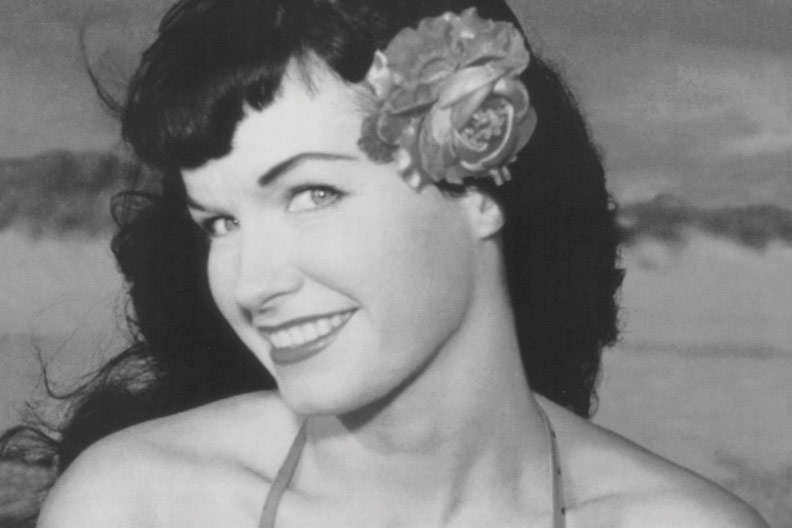
BETTIE, mid 20s. Don't let her all-American looks fool you. Trouble goes out of its way to avoid HER.
BETTIE, mid 20s. Don’t let her all-American looks fool you. Trouble goes out of its way to avoid HER.

When we, the reader, first meet an important character in your script, how do you describe them? What are the important details?

A lot of the time, the emphasis is on their physical traits – “tall”, “imposing”, “blonde”, “handsome”, “drop-dead gorgeous”, etc.

Or maybe it’s a simple adjective or two – “bubbly”, “funny”, “a nice guy” and so on.

These are okay, but you have to admit they’re kind of dull, which makes it more challenging for us to be interested in wanting to follow their story.

So how do you fix this? Time to ramp up that creativeness and really focus on what kind of person this character is, rather than what they look like. Unless a physical description is a key character trait, don’t worry about it.

One of the most memorable intros I ever read described the best friend of the teenaged protagonist – “James Dean cool at 15.” That’s it. Pretty effective, and in only five words.

Doesn’t this give you a better idea of what this character is like than say, “cool and aloof?”?  This is the kind of writing that catches our eye AND makes an impression.

A former co-worker of mine used to describe a very talkative friend as “If you asked him what time it was, he’d tell you how to build a watch.” See how it goes beyond the good-but-simplistic “chatty know-it-all”?

Cliched as it sounds, we really are painting pictures with words – not just for the story, but the characters in it. You’re already crafting a unique and original story, so why not develop a unique and original way to tell us about the characters in it?

This isn’t saying you should always strive to be clever and witty about it, but at least try for something different. This is just a small part of showing off your writing skills.

Take a look at how you introduce the characters in your latest draft. Does it really tell us what you want us to know about them? If not, how could you rewrite it so it does?