What’s stopping you?

handyman
The ultimate DIY project (film division)

I had the recent pleasure of connecting with a screenwriter who’s working on a feature script, but is also investigating the logistics of developing a short out of it, which includes them having begun connecting with other writers and filmmakers in their area.

I thought that was a great idea, and tossed out the suggestion that maybe they try to make it themselves, as in “just you”. Especially now that most smartphones can double as camera equipment, and film editing software is easily accessible (if not already installed on your computer).

They’d considered this, adding “But I’m just not tech-savvy”.

But you can learn.

If you’re reading this, you’re more than likely interested in screenwriting and/or filmmaking. When you first started out, it’s probably a dead-on certainty that your early works were awful, right?  Looking at some of my first scripts makes me cringe from how bad they are.

But we kept at it, learning and improving along the way. How does your most recent effort compare to that first one? Worlds apart, I’d imagine. You try something, you make mistakes, you learn from those mistakes, and try again.

There’s no reason you couldn’t apply the same logic to making your own short. Sure, there’s a lot more to it than simply pointing your phone and hitting ‘record’, but you gotta start somewhere.

Give it a go and write yourself a short script. Nothing fancy (but do try to make it a good sample of the genre). Anywhere from one to five minutes, spread out over one, possibly two scenes. Two characters, three at best. Try to keep it limited to one location.

Now look at it from the filmmaker’s perspective. Could you feasibly make this yourself? Like how a first draft of a script reads, the end result will not be pretty. At first, you’ll be thrilled at having done it. Then reality sets in and the flaws become that much more obvious.

But you will have done it. A short film, written and produced by YOU.

What you do with it now is up to you. Hopefully, you’ll embrace the learning experience and know what not to do the next time around.

My friend mentioned that once the short got made, which it sounds like they are very intent on making happen one way or another, plans are already being discussed about next steps, which included posting it on YouTube and/or submitting it to some film festivals.

Even though our conversation was solely via email, there was a certain tone to their words that indicated they were quite psyched about jumping into this new venture. I wished them the best of luck and asked to be kept updated as to their progress.

I think they’re off to a pretty good start.
Plan accordingly forwardly

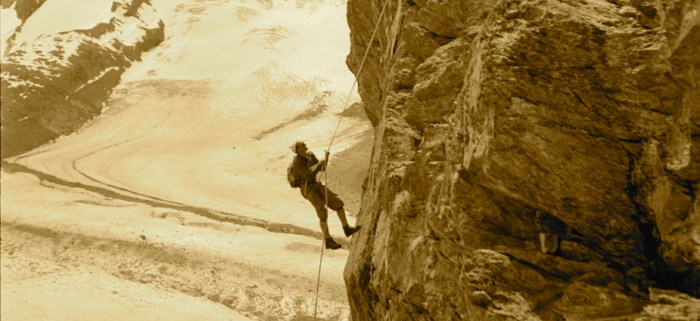
mountain climber
Know what’s ahead and what you’re going to do about it

Now that we’re well into the second half of the year, I’ve been working on scheduling out how I’d like the time between now and December 31st to be filled up, both writing and career development-wise.

As you’d imagine, there’s a lot of writing involved. Finishing the rewrite of one script, polishing another, cranking out a first draft of yet another. I’ve done what I can to establish realistic and achievable deadlines – no more writing marathons for me.

Add to that the efforts to network and meet with other writers, both in-person and online, along with pursuing viable avenues to get the work out there, such as query letters and contests.

One important part of all of this is that, for the most part, I’m the one overseeing all of this. Nothing will get done or happen if I don’t make the effort. As for the things I have no control over, especially the career-oriented ones, I’ll do what I can to get the ball rolling and see what develops.

A friend saw my list of objectives and said “Good idea. Plan to succeed.”

Part of this stems from exactly that. I’m working at this so I can succeed. Being organized about what you want to accomplish helps you stay focused on getting closer to actually achieving it.

While you’re working on your script, you should always be asking yourself “How can I make this better?” Well, this also applies to working on getting a career going. How can you make it better?

Keep writing. Your skills will improve and your number of completed projects will increase.

Seek out connections. The internet is your greatest tool for networking with other writers and folks within the industry. Very important – be nice.

Do your homework. Find out the necessary details as they apply to you and what you’re trying to accomplish. Whether it’s the best format for a query, if somebody’s contact info is still accurate, or which contest is a good match for your script.

Commit. You know all the things you need to do and want to do. Now dedicate yourself to doing them.

All of this may seem somewhat overwhelming at first, but get in the habit of making it a daily effort – even just a little at a time – and the results will start to take shape.

In it for the long haul

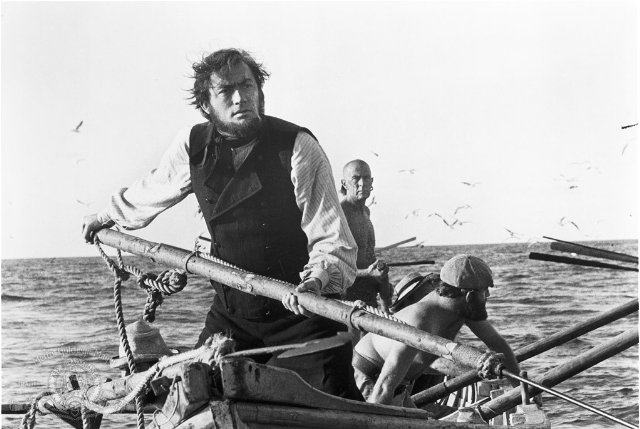
ahab
A somewhat extreme example, but you get the idea

Some days this is quite the struggle. You slave away on a script, send it out (contest, query, what have you) and hope for the best.

Unfortunately, a lot of the time, the best isn’t what happens. There will be rejection. A lot of it.

But every defeat is temporary, and a chance to regroup and try again.

In the beginning, when somebody tells you “no”, you take it personally. But you eventually grasp the concept that they’re addressing the writing, not the writer. You hunker down and keep going, continuously striving to improve.

The “no”s will still come, but eventually you get to the point where you simply shrug it off.

“Why even bother?” some might say. “Why keep doing this to yourself?”

Because the longer and harder you work at it, the closer you get to reaching that goal.

Because we feel this is a goal worth pursuing.

Because we’re compelled to.

Because we believe in our abilities.

Because we love doing it.

Success, especially when it applies to screenwriting, does not come easy. Or quickly. You will need an unlimited amount of patience and perseverance. This is going to be a long, perilous journey.

I’ve started walking. Who wants to come with me?

And I think this is a pretty good way to get things started.

Make Emily Post proud

manners
White gloves are, of course, optional

A few months ago, after connecting with another writer on a networking site, I asked my usual get-to-know-you question – “How are your latest projects coming along?”

Their response: “Good. You can read these (2) copyrighted scripts HERE (link). Also looking into setting up some table reads.”

Sometimes this happens. I ask somebody how it’s going, they give a brief, no-nonsense answer, and that’s it. No “How about you?” Hey, it’s cool. I understand. You’re not interested in being social. No big deal. (Although it does defeat the purpose of this whole “networking” thing.)

My standard procedure after that is to let things drop, which I did.

Until a month later.

This same person sent me a boilerplate notice regarding something else, so I decided to try again.

“How’d the table reads go?”

“Still waiting for funding. Still haven’t read my screenplays yet, have you?”

Um, was I supposed to?

I looked over our previous exchange. Nope. No request to “please read my screenplays”. Just “this is where you can read them”, plus the emphasis on them being copyrighted, to no doubt put the kibosh on any potential IP theft on my part.

This was also just after I’d started my 10-day writing marathon, so I had absolutely no time to read anything. I said I hadn’t read them, and was currently involved with some really big projects.

That did not sit well with them, at least from their perspective.

“Figured this is the pat response I always get when I try to start a conversation here. If you ever join OTHER NETWORKING SITE, let me now (sic). That’s where I network the most and actually find fellow creatives to work with. Here, not so much.”

And that was that.

Huh? Did I miss something? They were starting a conversation with me? Apparently I was the latest in a long line of someone giving what they considered to be a lame excuse as to why I hadn’t read their material, which I supposedly said I would.

I considered responding with some kind of harshly-worded retort, but opted not to. It simply wasn’t worth the time or effort. In fact, up until I started writing this post, I hadn’t even thought about them since, and will have most likely forgotten about them by this time tomorrow.

I’ve covered this subject before, and am compelled to do so again.

A big part of this industry is establishing and maintaining relationships.

It is extremely important for you to be a nice person. To everybody.

Granted, not everybody is going to reciprocate, but you’re much more likely to make a good impression if you’re friendly, polite, and professional. Both in person and online. People will remember that.

And they will also remember it if you’re not. Establish a reputation for being a pompous, know-it-all jerk, then that’s how people will perceive you, which will severely reduce your chances of somebody wanting to work with you a second time (providing they survive the first).

When you initially connect with somebody and a conversation develops, take the initiative  and make it about them. Ask how their projects are going. In theory, they’ll answer and ask about yours. Be friendly, inquisitive, and encouraging. I’ve made a lot of good contacts and gotten to know a lot of extremely talented writers that way.

Added bonus  – Your network of writing associates has the potential to be a virtual support team. Part of why my writing’s improved over the past few years is a direct result of receiving quality notes from many of these writers, and I’ve always been totally willing to return the favor.

And they’re also there for you in the rough times. If I announce some disappointing news, I can always rely on receiving a lot of sympathetic and encouraging comments to remind me I’m not alone in this, and that a lot of folks (none of whom I’m related to) believe in my abilities.

All of this from being a nice person!

But, as exemplified in my little anecdote from earlier, sometimes a connection just doesn’t happen. If somebody doesn’t seem interested, don’t push it. Wish them the best and move on. There are a lot of other writers out there for you to meet.

And they’ll probably think you’re just as fantastic as I do.

Time very well spent

finish line
Yeah. It felt just like that.

And…I’m back. Didja miss me?

To say the past week and a half has been a little hectic would be a slight understatement*. And of course, it involves writing and the opportunities that come with it.

Long story short – Somebody wanted to read one of my scripts. But I hadn’t finished writing it yet. So I wrote, edited and polished it. In ten days. Without taking time off from work.

As you can probably guess, I’m equal parts exhausted and exhilarated at having done it.

While I catch my second wind, here’s the extended version:

A little over three weeks ago, I connected with somebody who works for a production company. They mostly do TV, but are looking at expanding into features.

Emails and pleasantries were exchanged. They took a look at the blog, liked what they saw, and asked for a list of my loglines “to see if my boss might be interested.” So I sent it. This was on a Friday afternoon.

A vital piece of the puzzle to keep in mind – just before all of this occurred, I’d gotten the outline of a long-dormant comedy spec to the point where I felt ready to start on pages. Which is what I was doing while all of this interaction was occurring.

The following Monday morning, the response came in. “Do you have scripts for X and Y? Would love to request if so.”

Naturally, X was the long-dormant comedy spec that so far I had written all of 8 pages, and Y was still in outline form (which I’d already been considering producing in another medium).

My initial thought was panic. Neither script was available, but I didn’t want to blow the opportunity; I wanted to be able to send them SOMETHING. Sooner, rather than later. What to do, what to do?

After a little evaluation and weighing all my options, I wrote back that I was still working on the latest draft of X (which was true), and could have it for them the following week. I’d considered saying a few weeks or a month, but that seemed too long. Regarding Y, I said pretty much what I mentioned above – it was an outline, but they could take a look at it if they wanted to.

They were cool with both options, and were looking forward to reading them.

I’d just thrown the gauntlet in my own face. What had I gotten myself into? Was I totally insane for thinking I could pull this off? Would I be able to pull it off?

Only one way to find out.

I had a script to write, and had to do it faster than I’d ever done it before. I had no intention of sending them a first draft, so I had to crank that out and do a major polish on it. In about a week and a half. Taking time off of work was not an option, so I’d have to be as productive as possible in the off-hours that didn’t involve sleeping.

I explained my plan to my understanding family and got to work.

I produced as many pages as I could per day, averaging 8-10. Those would then be edited & polished during all available downtime at work (it being summer vacation season was a godsend – traffic’s much lighter, so that really helped). I’d get home, incorporate the changes, then move on to the next set.

Write, edit/polish, rewrite, repeat. A seemingly never-ending cycle.

A few things I discovered during all of this:

-Having a solid outline made it so much easier. I knew exactly what had to happen in each scene, and how I wanted it to happen, so there was no time wasted trying to figure it out.

-I sincerely think my joke-writing’s gotten better.

-I’ve gotten much more proficient at coming up with solutions to last-minute script-related problems.

-I seriously wondered if this is what it would be like if I were doing this for a living. I’d actually be pretty cool with it.

After ten days of non-stop effort, I had what I considered a somewhat decent 97-page comedy script. Both it and the outline have been sent.

Of course, they may not like either one. But at this point, I don’t care. Simply having accomplished this is my victory. I set an intense short-term goal and did it.

The script could definitely benefit from at least another rewrite, but that’s not a priority at this juncture. I wrote it in the time I said I would, and that’s the important thing.

Others may scoff at my feeling of accomplishment, claiming it’s no big deal or that they’ve done it or even done it in less time. But their words will fall on deaf ears because it’s a big deal to me. This is something I did, and am extremely proud of having done it.

So what now? I’m taking the weekend off, which will include going for a much-missed and much-needed training run.

But come Monday, I’ll be right back at it, hard at work on whatever project I opt to do next.

Hopefully, I’ll be able to take my time with it.

*I really appreciate everybody’s patience, and hope you enjoyed the throwback posts. And K wanted to thank everybody for the kind comments about her guest post. Yes, I am a very lucky guy to have somebody like her.