Now it gets really interesting

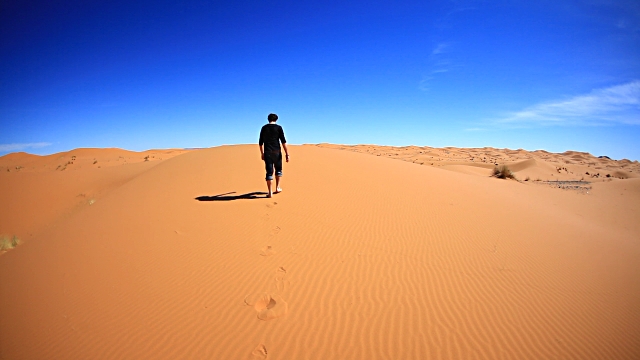
desert
First few steps are always the toughest. Good thing I came prepared.

Let’s pause now for your humble blogger-in-residence to proudly proclaim that Act One of the first draft of the pulpy adventure spec is complete.

Whoopee.

But you know what that also means.

Yep. Time to buckle down even more, strap myself in, and jump feet-first into the intimidating arena commonly known as Act Two.

I’ll also admit it’s a little thrilling, too. There was a particular charge in working out the action sequences and story set-ups in Act One, so I’ve a strong suspicion the continuing build-ups for the former and the gradual development of the latter will be equally, if not more so, fun to write.

(and believe me when I say this is the kind of story that automatically requires a sense of fun)

Maybe it’s from continuously trying to improve as I go, but working on Act Two doesn’t seem as intimidating as it used to. Not to say that it comes easily; just slightly less insurmountable. I spent a lot of time on the outline, so confidence in that is pretty solid.

I read a lot about how a spec script might have a phenomenal Act One, but then things fall apart in Act Two for a myriad of possible reasons: the characters don’t do much/nothing really happens, or the overall story’s too thin, so a lot of Act Two is empty filler, and so on.

The only writing process I know is my own, and I always strive to make sure the story feels…complete? Full? It comes down to “I know what has to happen to tell this story,”, and while the first act is all about setting it all up, the second act is about fleshing everything out.

We get a closer look at the characters and how they’re progressing through the events of the story. We can see how they’re changing from when they were first introduced. Plot threads of all sizes get further developed. The central question is continuously asked (oh-so-subtly, of course).

It also involves steadily-mounting complications for your protagonist. They’ve got a goal, and it’s our job to throw all kinds of obstacles in their way that just keep making it harder for them to reach it. Again, a lot of it happens during our second act.

Act Two really is where the meat of the story takes place, so stuff needs to happen that not only holds our interest, but makes us want/need to know what happens next, and even that better be that much more intriguing.


As you’d expect, our work is cut out for us.

So off I go. Dispatches from this formidable excursion as they develop.

See you on the other side.

For crying out loud, DO SOMETHING!

bored
Is THIS how you want your audience to react?
While the November writing project moves forward at a pleasant pace (but now appears to be more of a November-December thing), part of my time has also been spent giving notes on some friends’ scripts.

One in particular had a few problems, some of which were easily fixed, but what really stood out was how it committed a cardinal sin of screenwriting by having a lot of scenes where the characters talk repeatedly about something “important” they want to do, but by the end, they end up not doing anything. And I mean that literally. These were some of the most passive characters I’ve experienced.

It didn’t help that the characters also had no arc. They were exactly the same from beginning to end (with maybe the exception of one who might have been arrested, but even the circumstances involved with that are still somewhat unclear).

Let’s face it. A main character who’s all talk, no action, and doesn’t change is the death knell for your script. Why would somebody be interested in seeing what happens to them, especially if they don’t do anything?

One of the most frequent problems I’ve seen is when the main character isn’t the one driving the story forward. They just kind of hang around and watch stuff happen.

Bo. Ring.

Remember, you’re trying to get your main character to their goal over the course of the story. They have to be the one making things happen in order to achieve that, or at least react to what happens in such a way that it helps them. The way these characters were written, I honestly had no idea what their individual goals were.

Take a look at your latest draft. Which character is moving the story forward? Is your main character active or passive? Are they making things happen? If not, can you see what you’d need to change in order to do that?

You definitely want your characters to come across as believably three-dimensional. Having them do little or next-to-nothing throughout the story is doing you no favors. Character motivation and actions are some of those key elements that simply cannot be left out. Audiences can forgive certain things, but a dull, passive main character isn’t one of them.

A splendid use of a month’s time

pilgrim-marilyn
Most apropos Pilgrim-related photo I could find

Bit of an Election Day shorty today (and for readers in the US – make sure you vote, if you haven’t already).

Count me among the legion of writers using the month of November as a 30-day writing exercise.

My project of choice: first draft of a script that’s been in development for about a year and a half. Looking forward to talking about it more once the draft is complete and some next steps take place; but for now – mum’s the word.

The daily goal of 2-3 pages has again been established. So far, so good, especially working with an outline that’s pretty solid. That really helps.

Working on this reminds me of how much I enjoy the writing process, particularly when it involves my genre of choice (action).

My objective is to be finished, or at least as close to being finished as I can get by the end of the month. Fingers remain, as always, firmly crossed.

I sincerely hope your November is equally as productive.

Wanted: little-known gems

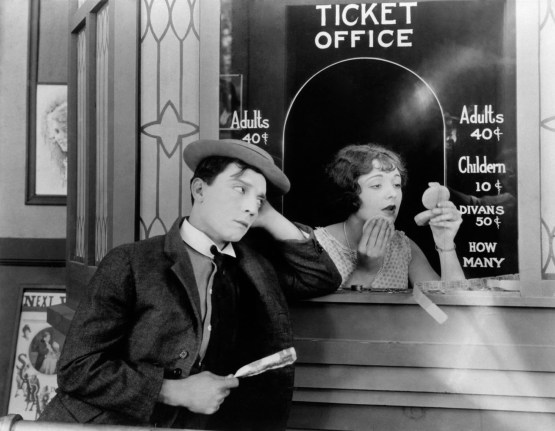
keaton
Luckily, you won’t have to wait to see the show

I’m always keen for a good movie-watching recommendation, especially if it’s something I’ve never heard of, or at least heard of but haven’t seen. We all know a few of those.

So here’s your chance to shed a little light by a film (or films) that you’ve always enjoyed, but a lot of people may not be too familiar with.

Here are three of mine:

The Kid Brother (1927) An amazing piece of work from Harold Lloyd. Worth watching for the boat sequence alone. Plus it has a monkey in it.

ffolkes (1979) Roger Moore at his most un-James Bond-iest. A somewhat dated but still very entertaining action-thriller.

Whip It (2009) A charming and fun story that combines equal parts comedy, drama and women’s roller derby. Features a lot more name actors than you realize, and Drew Barrymore’s directing debut.

It doesn’t have to be a classic, nor does it have to be “a cinematic masterpiece”. You get a kick out of it, and think the rest of us would too. Just write down the title and what you like about it in the comments below.

Happy viewing!

Finding my forte. Mining my milieu. Spelunking my specialty.

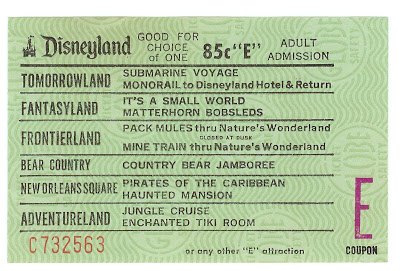
e-ticket
A reference only a select few will get. (85 cents?? Truly a bygone age)

While engaged in a very engaging conversation about screenwriting earlier this week, the person with whom I was conversing with asked the simplest and most straight-forward of questions:

“What do you like to write?”

Without a moment’s hesitation, I proudly stated, “Adventures.”

You can’t even say the word without implying the thrills and excitement it entails. Hands on hips, chest out, shoulders back, and a firmly-set jaw are automatically included.

I’ve enjoyed dabbling in other genres (such as drama and comedy), but nothing really grabs me like thinking up and writing out some sort of heart-pounding, edge-of-your-seat rollercoaster ride of a scene or sequence.

Those really never get old.

They say “Write what you know,” and although I’ve never actually fought monsters, manned a runaway train, or flown a space-faring vessel, years of reading and watching material of that type and nature has taught me an effective way of how to effectively inject adrenaline into what I’m writing.

More than a few readers have commented that my love and appreciation of the material and genre are boldly evident on the page, which is what I’m hoping  to accomplish every time.

My mantra has always been “Write something I would want to see”, and my list of future projects is jam-packed with numerous ideas and concepts that neatly fall into that category; each one a variation on the topic of discussion.

If these are the kinds of stories I was meant to write, you’ll get no complaints from me. I get a real kick out of cranking this stuff out. There’s no reason to think this can’t develop into what I build a career on and eventually become known for (he said, his fingers firmly crossed). My scripts. Rewriting someone else’s. Contributing to another. It’s all cool as far as I’m concerned.

Until then, all I can do is keep writing and making my readers feel their pulses quicken as they eagerly turn the page, absolutely spellbound to find out how the hero gets themselves out of this particular pickle, and, more importantly, what happens next.

Strap yourselves in, chums. This is going to be one helluva ride.