
Michael Tabb is a working screenwriter, decade-long current and active member of the WGA (the Writers Guild of America, West is the Hollywood screenwriters’ union), a multiple-award-winning screenwriting educator, and author of a film-festival-winning Best Screenplay.
He’s agile enough to write horror for UNIVERSAL STUDIOS, family for DISNEY FEATURE ANIMATION, a period war epic for a production company at WARNER BROTHERS, and has worked with creative icons of all types, from comic-book legend STAN LEE to Academy Award winning actor, DUSTIN HOFFMAN.
His book, Prewriting Your Screenplay: A Step-By-Step Guide To Generating Stories, explains how he develops great, cohesive script ideas that continue to get him work, released by Focal Press, the entertainment-business division of Routledge, America’s #1 textbook publisher.
What’s the last thing you read/watched that you thought was incredibly well-written?
I recently watched the Netflix series Lost In Space and felt it did a lot of things right. The characters are really specific and strong, each with really unique qualities that separate them from each other. There was constant danger, whether through the hostile environment or the characters that found their way into the family’s graces (be they human or robotic). Meanwhile, each episode ends with a new and engaging development that hooks the viewers to binge another episode. Between Lost in Space and Stranger Things, I think Netflix is redefining the kind of television an entire family might gather around the flat screen to watch together.
Were you always a writer, or was it something you eventually discovered you had a knack for?
Star Wars sparked my imagination, and I was drawing and creating science-fiction stories by the age of six. In middle school, I handwrote ten 20-24-page short-form adventure stories of a starship crew called The Alliance inspired by Star Trek. Each chapter was a new mission. I explored superhero and horror spoofs earlier in my high school days until I wrote my first short (44-page) screenplay in a modern, contemporary setting for my final English Lit paper. In short, the more mature I became, the more my stories grew more grounded and closer to reality.
Even though I loved writing, saying I had a knack for it would be far too generous. I was certainly a storyteller, but I was always academically far better at mathematics than English. I did, however, have a knack for drama. I took acting classes at South Coast Repertory and was actively involved in my high school drama program for all four years, participating in every play and musical I could. Acting taught me how important it was to define your character from all the others and to keep the tension at a level high enough to make each scene compelling. Every character had purpose, and it was true no matter what scene or show I was doing. These lessons carry over into writing, but because I wasn’t a gifted English student in my formative years, I never would have suspected I could have a career as a writer. I always thought I was going to be a character actor.
It took me many years and tremendous insight from my teachers at USC, NYU, and UCLA to make me a decent writer. They all earned their money. The time I spent analyzing characters and scripts as an actor was very helpful, including studying at the Atlantic Theater Company in NYC, a brainchild of the great American playwright David Mamet. It took a lot of work to understand how to do each aspect of concept creation and execution correctly. The only thing that came naturally is my escapist imagination. The rest was hard-fought, learned, and earned over years of writing and rewriting.
What was the script you’d consider gave you your “big break”?
I want to pause a second to say that I think the cliché of miraculously getting that one big break that changes everything is a terribly unhealthy and damaging fallacy. One opportunity may lead to another, and sometimes it doesn’t. Most working writers are constantly “breaking in” over and over again. Anyone who makes a living wage as a creative in this business is fortunate. Just remember, we do this job for our insatiable love of telling great stories. If that’s not your goal, it won’t be worth the amount of work you have to put into this job. Trust me. People have won Academy Awards and not gotten a job for years afterwards. So, if you get a break, save up so the money lasts the unpredictable draughts and keep writing.
With that said, I’ll reply by talking about the script that landed me my first paycheck as a screenwriter.
I was exceptionally lucky that the first screenplay I ever wrote is the one that landed me an agent and my first writing deal. Even so, it didn’t happen overnight. It took several years for it to get into the hands of those in Hollywood that could make a difference for me, and I had written around ten scripts between having written my first and setting it up with producers. The option on that screenplay has since expired, and I own that script again. I still wish someone would make it. It’s a high-concept swashbuckler in the spirit of Shakespeare in Love, The Three Musketeers, and The Princess Bride. It’s a fun-spirited, romantic romp set in the south of France full of swords, gallantry, and a sense of humor.
Taking a look at your bio, you’ve worked in a lot of different genres. Are there any that hold a special appeal to you, and is there a genre you haven’t worked in yet, but would really like to try?
I’ve written in every genre I can think of, most of which were for money, including: rom-com, drama, western, war epic, historical, biopic, science fiction, fantasy, crime, thriller, horror, supernatural, action, and adventure. I love each genre differently and deeply for the gifts each offers us. While I’m very proud of the diversity and breadth of my stories, it has also been my greatest career shortcoming. It would have been a far smoother journey if I picked a lane and stuck with it a bit more, but that’s not how I work.
The more you prove yourself a master of one genre in our business, the more people pay you to write it for them. As an example of this in another profession, when an extremely famous comedic actor gets the chance to play a dramatic role, they often take a big hit in the pocketbook. They don’t get paid the same as they do in the genre of his or her specialty. Even so, working without constraints and limitations is worth it to me. I have a solid batting average for landing writing jobs on which I get to pitch.
When I decide to write a story about something, I refuse to fit a square peg into a round hole. I’m not going to force my story into a genre because that is my specialty. I would rather pick the genre that I feel will be the best and most poignant reality in which to tell it. The story tells me where it must go. Right now, I’m rewriting two screenplays simultaneously, an ensemble reunion-of-old-friends drama and a supernatural thriller. The project before that, which is still being developed, was a period adventure television show. I love writing period pieces, sci-fi, action, adventure, and anything remotely escapist. I adore them all.
What inspired you to write your book Prewriting Your Screenplay: A Step-by-Step Guide to Generating Stories?
I had kept a long document of all the tricks of the trade that I liked using best. It ran almost three hundred single-spaced pages. I developed my own approach to writing by putting those tricks together in a certain order. Since then, I have never had writer’s block.
I work on multiple projects at once, and I’ve been asked by tons of writers how I do what I do. Though editing takes a while, others have always been blown away by how quickly I can create a strong and cohesive initial draft. They’d take me to lunch and pick my brain. Later, they’d tell me I changed their lives and approach to developing stories.
I adore giving back, helping writers. Helping one person at a time was great, but I felt I could do better. I got more involved at the WGA, putting panels together for the Writers Education Committee, and I co-created the first ever WGA Mentor Program in my spare time. I guest lectured and spoke when asked in classrooms and served on panels for writer conferences. Finally, I bit the bullet and agreed to teach an actual class online in Full Sail University’s online MFA program while still taking writing gigs for companies like Universal Studios. I’m also going to speak at the Central California Writers Conference in late September.
When I was asked to be on a panel for the Screenwriters World Conference in L.A., I told Jeanne Bowerman of Script Magazine about my 284 pages of notes I planned to turn into a book one day when I had the time. She asked me to write some articles I could use as a kind of running start to writing the book about my method. So, I did that to get the ball rolling. As I fleshed those articles into a full-fledge book, Full Sail University liked the published articles I wrote on character creation so much, they asked me to take over the Character Creation and Development portion of their online MFA Creative Writing program. Based on that, I knew I was communicating my method well, and I should finish the book.
I figured the book was the very best way of helping the most writers at once. In short, it all stems from the hope of giving back to my craft. I am only as good as I am because the writers who came before me taught what they had learned. My goal was to take that knowledge another step forward in the hopes that someday my book will not only help others, but it will inspire another great writer to take my ideas a step further as well. In short, human knowledge is all about continuing to construct our Tower of Babel, evolving our art form by working together to save the world.
Yes, I said save the world.
I believe storytelling is how we inspire others to invent amazing technology, see the world from new perspectives, and provide a deeper understanding of humanity. So, teaching others to write better is my way of getting others to create stories that change the way we think. When we change the way people think, we can change the way people will behave and treat one another.
My job as a writer isn’t to just tell a cool story and make some money. I wouldn’t need to share my tricks if that were my only goal in this trade. Storytelling is an incredibly powerful medium. Think about how it can bring people to euphoric laughter and devastating tears over events that never even happened and characters that don’t exist. As Spider-Man has taught us all, with great power comes great responsibility. Writers have the ability to make the world better for having written their stories. If I help other writers be more effective, I could be helping thousands of writers convey their impactful messages, bettering our world through teaching empathy, understanding, and the potential paths forward (or to avoid) in order to achieve a greater tomorrow for us all.
Yes, that makes all of you writers out there potential superheroes.
With so many screenwriting books out there, what is it about yours that makes it especially unique?
I always said if I’m going to write something, it’s not going to be something they can find anywhere else done the same way. We can’t help but work off of some universally accumulated knowledge, like genre, character types, and three-act structure, but we can strike out on our own by presenting how to assemble them in a new way. The knowledge is all out there, but it’s about how you put the pieces together and in what order.
So many screenwriting books call themselves a “step-by-step” guide, but when you try to apply the steps in the order they offer them, it’s not a fluid roadmap you can follow to construct a story. It’s not really a step-by-step guide. It’s a series of things that leave giant holes for the writer to fill in to get from one step to the next. There’s a lot of explaining what things are and how they work, but they don’t tell the reader how to create those things for themselves. In fact, it’s a lot of analysis. Don’t get me wrong. They’re very educational, but being able to explain and understand the material makes you a potential critic who understands screenwriting and how it works, but it doesn’t necessarily make anyone a writer. They’re simply a more informed reader. This is a great thing, but it won’t get someone who wants to write to the goal of writing his or her own screenplay.
Prewriting Your Screenplay is actually a true-to-form, step-by-step process by which you construct an original story (starting with absolutely nothing at all) through answering questions and completing exercises at the end of every single chapter until you have a complete and original story idea with the characters perfectly designed to serve that cohesive story. It’s an instruction manual for putting together a story with all the elements that should fit perfectly together like a giant jigsaw puzzle. Then, the book ends by explaining how to do the whole process in reverse in case you’re in a situation of having to fill in the blanks of a preexisting story idea.
The process explains to writers how I create a well-formulated foundation for a movie, whether working from a blank page forward or having to reverse engineer a soul into a preconceived plot idea. I give all I know and can think of to share with you. I’m keeping no secrets because there’s never a reason to keep the logic of how things work secret. No two writers would execute the same idea the same way, so, even if you have my technique, you’d never execute it the way I would. It’s everything that I learned and use when developing a project that has kept me writing as a decade-long, current and active WGA member.
I thought it was very interesting that you use the word “prewriting” in the book’s title, as opposed to simply “writing”. What’s the reasoning behind that, and how does prewriting apply to the craft of screenwriting?
Put simply, Prewriting is the opposite of rewriting. Rewriting is the work a writer does on a script after the first draft, and Prewriting is everything the writer creates before he or she writes the first draft. This entire book focuses on everything a writer needs to consider before writing “FADE IN,” the old-school first words of a screenplay.
There are a ton of books that explain writing and formatting the actual script. Nobody needs to write another book that explains script format. It’s been done to death.
This book explains how to assemble everything a writer needs in order to write a screenplay. It’s the foundation a writer builds upon. There are many things a writer should figure out before leaping into an outline. Doing this work up front will save writers an enormous amount of time normally spent rewriting after the fact trying to make the story congeal. If time is money, this book can save writers a fortune in rewrites.
And because this book is strictly about how to develop a story concept with an incredibly strong foundation and structure, it is applicable to all mediums of storytelling. It’s a universal storytellers playbook for formulating a cohesive narrative. I’m a screenwriter, so the examples throughout the book focus on films, but the logic of my foundation development for storytelling applies to any and all creative writing mediums, including stage plays, episodic series, comic books, novels, video games, animation, and all other media. In fact, someone told me they’re going to start using my method to redesign history lessons to teach history to their students. It’s applicable to anyone who can use storytelling in whatever they do to be more effective.
No doubt a lot of aspiring writers will use your book to improve their skills. Is there a particular piece of advice you think every writer should know?
Uh… My brain just exploded. That’s a book in itself. It’s a series of books! That said, I offer you these 10 pieces of advice:
- If you think you can live a happily doing anything else except screenwriting, this business is so obscenely tough, do something else. With books, you can self-publish. With playwriting, the production is not allowed to change the work without the playwright’s permission. Even in television, there are far more opportunities, and the writers have more say. In film, the writers are hired guns and the director is the creative king. In television, the director is the hired gun, and it’s the writers who develop the show and its seasons. I intend to make that jump when the timing is right, too.
- Write what you love and would pay to see, not what’s trendy.
- Rejection is common, and you should never take it personally. When you’re starting out, people are hesitant to bet on someone lacking experience. You need 50 to 100 rejections in order to get 1 yes. Even if you are not a good writer yet, you may find someone newer to the industry. This person may get what you’re trying to do and wants to work with you.
- Never argue about feedback with anyone giving you feedback as a friend or to help. You can ask questions for clarity, but once you understand the notes, thank the note giver profusely and shut the fuck up. Never argue. If you disagree with the notes, you simply don’t apply them. They’re bound to give you one or two notes that lead to a good change. Even a broken clock is right twice a day.
- 99% of the time the note giver is correct that there is a problem where they said a problem occurs in your script. 99% of the time, the solution they offer is incorrect. The difference between the note-giver and you is that you are the writer of this story. You will need to figure out how the problem needs to be fixed in order to best serve the story you want told.
- Even a horrific writing experience or partnership is a good experience if you learn something meaningful from it.
- When you agree to work with someone, get the full terms of your understanding in writing, even a cowriter.
- Get in shape. I hate to admit it, but the entertainment business is a ridiculously shallow industry. People hire people they would want to spend time with, of course, and people want to spend time with those who look good and have the confidence that looking good provides them. You do not have to be attractive; you just need to be the best version of you.
- You cannot be afraid to say no and walk away from a deal or offer. If the material isn’t getting you fired up, or the offer is going leave you feeling un-collaborative, it’s best not to engage in something you don’t feel really good about because that will leave an impression. You’ll just ending up not delivering and burning bridges, and there are only so many bridges in Hollywood because it’s such a small industry. Saying no to things you do not feel engaged by is actually a very good business decision. I recently had a dear friend bring me a project with big name people involved. I read the script and instantly knew it wasn’t for me. Friends and industry professionals understand and respect someone that isn’t desperate. They smell desperation from a mile away and find it repulsive.
- Always be working on multiple projects at a time. That one actually comes from Robert Zemeckis. I like to work on three. Producers have a slate of projects because they never know which one is going to get momentum or when it will happen. So should you. You never, as an artist, want to put all your eggs in one basket. That leaves the writer feeling desperate, and you know how Hollywood feels about people who are desperate.
You’re listed as serving on the WGA’s Writer’s Education Committee. What is that, and what sort of things do they do?
There are several committees on which WGA members may serve. Some focus on diversity groups and others on general membership. One of the latter is the Writers Education Committee. It was created in 2002 to develop programs that provide WGA members with practical, insider knowledge about how the industry works and how it is changing, emphasizing tips and tools to help writers succeed. The goal is providing the most up-to-date working knowledge for writers.
I’ve chaired and served on a ton of panels for the WEC about the most current trends on going from spec script to studio green light, packaging, multi-platform storytelling, getting writing work with overseas producers, pitching in Hollywood, etc. Any WGA member can join the WEC, run ideas for educational events by the committee, assemble a sub-committee (if approved), and create the event of his or her own design.
You’ve also done a lot of lecturing and moderated panels about screenwriting. Are there any particular points or lessons you make sure to include as part of those?
Be true to you. The only thing no other writer in the world can do is be you. Figuring out who you are, what you stand for, and the original things you want to say to the world before you die will make you a one-of-a-kind writer in this or any industry.
Readers of this blog are more than familiar with my love/appreciation of pie. What’s your favorite kind?
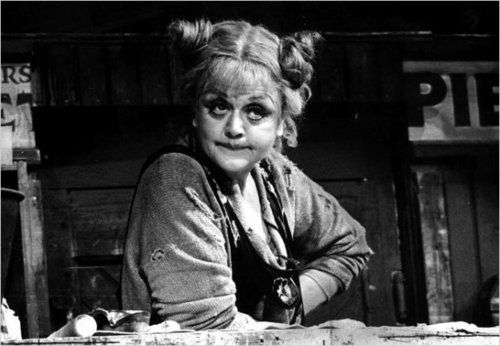
This is like asking that genre question again or asking someone to pick a favorite child. It’s just not right. I love rhubarb, coconut cream, apple, pumpkin, banana cream, mixed berry (any berry really – blackberry, boysenberry… is cherry a berry?), and don’t forget the oddly reptilian-named Turtle and Grasshopper pies. So long as it’s filled with something tasty, how can you go wrong? It’s pie. As long as it’s not from Mrs. Lovett’s Pie Shop in London, I’m game.
I would like to add one more thing. The shocking and most wonderful thing for me so far has been the reception my book has received when requesting consideration for an endorsement. You can see a bunch of their responses on the Amazon page under EDITORIAL REVIEWS, including the creators and/or show runners of such shows as Lost, The Big Bang Theory, Hawaii Five-0, The Orville, screenwriters of the Dark Knight trilogy, Star Trek reboot, Beauty and the Beast, Guardians of the Galaxy, icons like Stan Lee, and the most recent president of the WGA. After that are the endorsements from educators at AFI, USC, UCLA, NYU, and many more. You can read what they are saying and pre-order my book at: https://amzn.to/2HOMVFg.


 Maximum Z