Q & A with Cody Smart of Next Level Screenwriting

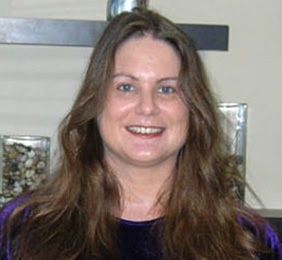
Cody Smart is an L.A.-based Latina writer, script consultant and script doctor with degrees in English Literature & Linguistics, Screenwriting, Development, and Producing, who prides herself of helping writers take their work to the next level, in both English and Spanish. She moved from Santiago, Chile to L.A. to pursue her masters, fell in love, and now enjoys family hikes chasing her toddler around in the perfect L.A. weather.

She worked as a script analyst at Sony for three years, reading hundreds of scripts, and honing her craft and learning to appreciate the development of scripts and how to best guide writers to deliver the best script possible.

She also works as a judge for seven film and screenplay competitions, where she’s learned what makes scripts engage readers and attract the attention of managers, agents and producers. As a writer herself, Cody has placed in multiple competitions, and won some awards.

Cody is also the head of coverage of Story Data, a script-hosting site, where she does a bi-monthly vlog with tips for screenwriters.

She also currently teaches two courses about Screenwriting, Script Doctoring and Get Your Script Contest Ready, as a UCLA Extension instructor in the Writers’ Program, and is developing a new TV Workshop for the fall quarter.

Cody has worked with a wide variety of clients, helping to provide in-depth script analysis, and also rewriting/doctoring hundreds of scripts in order to get them ready for production. She loves working directly with her clients, understanding their needs, and staying true to the essence of the story the client is trying to tell, in order to elevate the story and characters.

What was the last thing you read or watched you considered exceptionally well-written?

THE QUEEN’S GAMBIT. I was a little bit late watching it, as it came out in 2020, but I was so legitimately impressed at the quality of the writing. They managed to take chess, a “boring” subject that doesn’t lend itself to be that visual or entertaining, and turned it into an exemplary work of character development.

How’d you get your start in the industry?

While I was in grad school, I started interning at Sony, and that’s were I fell in love with the development side of things. Before that, I always thought my path was to be a writer only. Then I discovered how interesting developing and consulting was, helping other writers improve their work, and getting scripts ready for production.

Is recognizing good writing something you think can be taught or learned?

Yes, definitely. I believe everyone can learn if they have the will and want to do so. If you study scripts and films, and study your craft, you can learn what good writing is. That’s also what makes any writer a better writer: studying the best in the craft, lots of practice, and lots of rewriting.

What do you consider the components of a good script?

A good script is a great mix of different things: amazing characters that are three-dimensional and realistic, with real wants and needs, and great arcs. A world that aligns with the tone and genre, and that hopefully is also new in some way. A premise that either feels fresh and new or that is a new take on old ideas, making it feel fresh and new. Writing that has a voice of its own, and that makes you want to keep turning pages.

What are some of the most common screenwriting mistakes you see?

As a consultant & doctor as well as a judge for multiple festivals, I’m constantly looking at issues in scripts. Doing that, I’ve found these to be the most common:

– A premise that doesn’t work from the start. Usually this means you just have an idea, but no plot. Or you have an unoriginal concept or one we’ve seen hundreds of times before.

– Not proofreading, which leads to bad formatting, typos, grammatical errors, etc.

– Not outlining first – then you don’t know where your story is going, and it shows in your draft, as the story loses aim. Part of this could be when the story/the protagonist has no clear goal.

– Dialogue that doesn’t feel natural or no use of subtext.

– Starting scenes too early and leaving them too late.

– Not killing your darlings – some scenes may be greatly written, but if they don’t advance the plot, then you don’t need them in your script.

– Directing in your script – this tends to take the reader out of the world of your story.

– Not grabbing your reader/audience in the first 10 pages (or even the first 3!)

– Overusing transitions.

– Use of flashbacks that don’t move the story forward or don’t reveal any new information.

– Zero character introduction/description. No memorable introductions, so we forget them. Also too many characters being introduced at the same time, so we forget who’s who.

– The world of your story isn’t clear.

– Long chunks of descriptions – Readers are known to skip past these. 

– Too much exposition.

– No subplots or interesting supporting characters.

– Antagonists that are two-dimensional or formulaic.

– Writing a formulaic script just with the intention of selling it, instead of writing a unique story you’re passionate about that’ll definitely get you noticed (even if just as a writing sample).

What story tropes are you just tired of seeing?

Tropes work for a reason—audiences expect certain things in certain movies, like a falling in love montage in romcoms. But just because people expect them, that doesn’t mean they don’t want to be surprised. The tropes I’m tired of seeing are those that just follow tropes to the letter. I love when a writer turns a trope upside down and surprises the audience. When they don’t and deliver the same old things, then that’s when they’re boring and I don’t want to see them anymore.

What are some key rules/guidelines every writer should know?

– Show your voice in your script. That’s what will set you apart from the thousands of scripts being written every year.

– Write the story you want to tell as a writing sample to impress people, and open doors for you, even if it doesn’t get bought or filmed.

– Formatting exists for a reason. Follow it and don’t play games, or your script won’t get read, even if it’s amazing.

– It’s hard to come up with new ideas that haven’t been told. But new takes on old ideas that make the ideas feel fresh can be a great way of creating something that feels new.

-The best antagonists are just as interesting as the protagonist, and they’re the hero of their own story. When we understand their reasoning, that makes them much more powerful.

Have you ever read a script where you thought “This writer really gets it”? If so, what were the reasons why?

I remember when I read the script for JUNO. It had such a unique voice and point of view. It had a protagonist that felt real, with flaws and dreams. It explored what felt like real teenagers. It had amazing supporting characters, and we could understand everyone’s POV in the story, as different as they all were. And it was pretty contained. It could be shot for cheap. But most importantly, it wasn’t something completely new: we’ve seen stories about teen pregnancy before but it turned the idea upside down, making it feel so fresh that it ended up winning so many writing awards.

How do you feel about screenwriting contests? Worth it or not?

Totally worth it. I even developed a course called “Get Your Script Contest Ready” for UCLA Extension that debuts in June 2021. That said, having a contest strategy, knowing what appeals to contests, identifying the best contests to propel your career forward, and understanding that you also need to network and take an active role in getting your scripts out there are key things every screenwriter needs to know.

How can people find out more about you and the services you provide?

For information about my script consulting & doctoring services, or my writer services, they can check out my Facebook page (@NextLevelScreenwriting), my Instagram page (nextlevelscreenwriting), or send me an email (nextlevelscreenwriting@gmail.com).

I can share more about my services and background information, and we can talk more in detail about what they need help with, as I offer very personalized services.

Readers of this blog are more than familiar with my love/appreciation of pie. What’s your favorite kind?

Wow, this is such a hard question, because I have such a sweet tooth. But if I had to pick just one, I’d have to say my grandma’s pecan pie recipe. It brings back so many amazing childhood memories by the smell and taste of it, especially living far away from my family, and missing them all the time.

Just missing one component

Over the past few years, as my network of writing associates and contacts has grown, along with my interaction with a lot of these people, more than a few have commented that they consider me a professional screenwriter.

My initial reaction – that’s flattering, and very kind of them to say, but I don’t necessarily consider it true. Like a lot of you, I write scripts, but I don’t get paid to do it. The ongoing plan is to keep at it until that last part changes.

But I was intrigued. What would make somebody say such a thing?

Is it how I present myself? I try to be professional, which includes being polite, respectful, and patient, whether it’s in person or online. But that’s just common sense and good manners.

Side note – do those two things diminish the more a writer works? Most of the pros I’ve met and know have been quite decent folks, but I’ve also heard more than a few anecdotes about a pro writer being a total jerk, but they could also be the exceptions. 

Is it about the scripts? How they’re written and how they look on the page? I’ll be the first to say my writing’s not the shining example everybody else should follow, but I try to present a well-crafted story that paints a picture in your head while also being easy on the eyes while you read it.

But that’s what we’re all striving for, right?

Is it because I keep trying? I love putting my stories together, and want to do it for a living. Why wouldn’t I or anybody else constantly work on anything and everything to help improve the chances of making that happen?

There’s no definitive path. Each writer finds success their own way. For me, it involves entering contests (temporarily on hiatus), sending out queries, networking online (and returning to it in person when that comes back), and what have you. Maybe somebody else films their own script and enters it into a few festivals, or decides to turn it into a book, or a webseries, or serialized chapters on a blog, or a graphic novel. So many options!

Trust me, there are days where I’ll see something great happen for another writer (who’s probably also been working at this just as much as me), and while I’m happy for them, it still feels like fate is twisting the knife in my gut just a little bit more, as if to say “Not a chance, sucker.”

My confidence plummets below sea level and all I can think is “That it. I’m done. D-U-N-N. Done.” It’s SO tempting to give up and walk away, but any and all chances of success immediately drop to zero if I do, and then I get angry at myself for even considering such a thing, so I get back to work.

The only way to make this happen is to keep trying, so no matter what kind of day it’s been, or whatever kind of new obstacle’s been thrown into my path, that’s what I do.

I keep pushing forward.

A really interesting thing I’ve been told is that “I deserve” success. I don’t necessarily agree with that one. Would it be nice to see the results I seek for all the work I’ve done? Of course, but I prefer the idea that I’ve earned it, rather than “I put in all this work, so the universe owes me.” I’ve seen/read a few writers state words very similar to that effect. It’s not attractive – on several levels.

Kids, the universe doesn’t owe me, you, or anybody, shit. This is all on us making that one connection where the other person says “Yes,”, which gets the ball rolling.

Naturally, there’s no guarantee it’ll ever happen for me, but I remain confident and hopeful.  Every day is a new opportunity to try. According to my trusted readers, my skills and my scripts have improved over time, so hopefully something positive will happen, preferably sooner rather than later.

Many years ago, I saw Shane Black on a panel at a writing conference. He told the crowd “Don’t call yourself an aspiring screenwriter. That just means you want to be a screenwriter. You write a script, no matter how it turns out, good or bad, you are a screenwriter.”

I really took that to heart. When I tell people I’m a screenwriter, most of the time the first follow-up question is “Have I seen something you’ve written?” To which I say “Not yet, but I’m working on it.”

-Want to have your TV or feature spec script included in the Maximum Z Script Showcase on 4 June? Click here for all the details.

Q & A with Anat Wenick of The Write Script

Anat Golan-Wenick started her career in the entertainment business working as a production assistant and researcher in a team that produced series for a large educational channel, while also pursuing a bachelor’s degree in Film/Television and English Literature. After graduation, Anat moved to Los Angeles to dip her hands into the screenwriting pool. Her screenplays have won or placed in contests like Sundance Table Read My Screenplay, StoryPros, Scriptapalooza and others, with one getting optioned by the producer of THE LAST WORD with Shirley MacLaine and Amanda Seyfried.

After taking a script analysis class, Anat discovered her true passion in the entertainment business: reading and improving other writers’ scripts. She became a reader for companies like Amazon Studios, Crispy Twig Productions, The Radmin Company, the Atlanta Film Festival and others, while developing connections with creative voices she aspires to bring to the big and small screens. In her spare time, Anat volunteers as the Secretary on the Board of the San Fernando Valley Writers’ Club (a chapter of the California Writers’ Club).

What’s the last thing you read/watched you considered to be exceptionally well-written?

Not really “the last thing”, but KIDDING on Showtime is a great example of how dialogue, visuals and story come together perfectly. Also on Showtime is I’M DYING UP HERE, which very skillfully weaves many plotlines together. Netflix’s SHTISEL is an example of how a story about a seemingly insignificant part of the world’s population can be made relatable. And for those catering to the younger audience, I recommend studying BOY MEETS WORLD. In terms of reading, THE CARTOONIST’S MASK by Ranan Lurie is a book I’d love to see adapted to screen.

How’d you get your start in the industry?

I always thought I would be a screenwriter. But an internship (followed by a full time position) at a TV station, working on a youth drama, set me on another course. I was a rookie intern when I was allowed to join my first script meeting. I sat quietly, just hoping to learn as much as possible, when the director, an amazing woman by the name of Yael Graf, turned to me and asked for my opinion. Without thinking, I said the solution won’t work. A second later, I was mourning the loss of the best (and only) internship I ever had, when much to my surprise, the director actually wanted to know why I reached such a conclusion. Based on my explanation, the script was revised.

A few years later, I took a script reading class. Based on my analysis, the instructor encouraged me to pursue this career. My hope is to move from script reading to creative executive so I can work with undiscovered writers to help bring their stories to the screen.

Is recognizing good writing something you think can be taught or learned?

Akiva Goldsman once said: “Writing is both a pleasure and a struggle. There are times when it’s really aversive and unpleasant, and there are times when it’s wonderful and fun and magical, but that’s not the point. Writing is my job. I’m not a believer of waiting for the muse. You don’t put yourself in the mood to go to your nine-to-five job, you just go. I start in the morning and write all day. Successful writers don’t wait for the muse to fill themselves unless they’re geniuses. I’m not a genius. I’m smart, I have some talent, and I have a lot of stubbornness. I persevere. I was by no means the best writer in my class in college. I’m just the one still writing.”

You can absolutely become a better writer. But just like any other job – if you want to be good at it, you have to study it, stay on top of new trends, and practice, practice, practice.

What do you consider the components of a good script?

Visual over telling. Don’t say “he walks into a room,” say “he skips, dashes, stumble, falls, dances, shuffles into a room,” etc.

Know the genre you’re writing. Nothing wrong with a horror rom-com, but make sure characteristics of all genres are present in the script.

A well-executed “wait for it” moment. Scripts that constantly challenge me to wonder what will come next, even in based-on-true-event movies. Sure, we all know the Titanic is going to sink, but we wonder what will happen to the protagonists.

If you spent time developing your characters’ external and internal conflicts, make sure to address them during the climactic moment. In CASABLANCA, Rick must get Ilsa and Victor safely to the airplane (external), while saying goodbye and convincing the love of his life to exit his (internal).

Good balance between dialogue and action sequences. Allowing the two to play off of one another, rather than feeding viewer/reader with a spoon.

What are some of the most common screenwriting mistakes you see?

Excessive usage of voiceover for no reason. Personally, I’m not one of those “never voiceover” believers, but use it with caution.

Unimaginative character description (i.e. JANE DOE, 26, pretty).

Unnecessary camera and other directorial instructions as well as endless parentheticals in dialogue sequences.

Undeveloped subplots.

Usage of “Starts to,” “Begins to,” “Commences to,” etc. as well as “beat.” These phrases can kill the flow of a screenplay, especially when writing an action-adventure movie. Instead of using “beat”, state what causes it (i.e. biting lip, looking away, cracking knuckles, etc.). Instead of “starts to walk but rethinks it,” consider “marches off. Halts.

What story tropes are you just tired of seeing?

I would read anything, but if you’re going to write about vampires or zombies, make sure you put a fresh spin or angle on the genre. WARM BODIES and INTERVIEW WITH THE VAMPIRE are two good examples. If writing a romcom, love doesn’t have to be the ultimate goal. In WORKING GIRL, the protagonist wanted a career, and along the way she found love.

What are some key rules/guidelines every writer should know?

Read, watch, internalize, and execute in your own writing, repeat.

Connect with other professionals. You never know when an early connection will lead to a later opportunity.

When receiving comments, always thank the person even if you don’t agree with them.

Your work may get rejected not because it’s not great, but because it’s not what the company is looking for. Do your research before sending.

Entertainment attorneys are a lot more approachable than agents and managers, and often can get your screenplay to the right hands.

People will have a more favorable view of you if when boasting about your achievements, you take a moment to acknowledge others. So when posting “my screenplay just advanced to quarterfinals/semi-finals/finals in “this and this” contest, add “congrats to all others who advanced” or “thank you for this opportunity, etc.

Even if making the slightest change to your script, make sure to save it as a new version. You never know when you may want to refer to an older version.

Always email yourself the latest version of your script, not just in PDF format, but in the writing-program-of-your-choice format, so you can restore the file if the software fails to open.

Ever in a slump and can’t come up with an idea? Public domain is your friend. Either adapt a project, or use it as the base for your own interpretation (e.g. how EASY A was inspired by THE SCARLET LETTER).

Have you ever read a script where you thought “This writer really gets it”? If so, what were the reasons why?

The number of scripts I recommended can be counted on one hand. However, I have yet to encounter a project that was not salvageable, even those I scored extremely low. I encourage all writers to watch Toy Story 3: Mistakes Made, Lessons Learned to realize we all struggle to “really get it.”

How do you feel about screenwriting contests? Worth it or not?

Winning a contest can do wonders to boast the spirit, but winning alone will do nothing to advance a writing career, unless you build on the momentum. I recommend listening to Craig James, Founder of International Screenwriters’ Association (ISA) advice on Screenplay Contest Strategy.

How can people find out more about you and the services you provide?

I mostly read for agencies, studios and contests. Screenwriters often don’t want to hear the truth about their screenplays, they just want someone to say they’re great, as Josh Olson wrote in his article “I Will Not Read Your F*%!ing Script”. However, I have done quite a few free readings for aspiring screenwriters. They can find me through my website The Write Script, social media like LinkedIn and Twitter, or through the San Fernando Valley Writers’ Club, where I volunteer as a Board Member. Writers don’t have to pay big bucks for a quality reading. Join a writing group or a writing community like Talentville that tells it like it is, and swap screenplays.

Do your research if you plan to pay for someone to read your script, especially if they boast about recommending your material to their contacts within the industry. I once encountered a person advertising his reading services on known screenwriting platforms, stating he was a final-round reader/judge for the Austin Film Festival and an Emmy Award Winner. Since the prices he charged were low for someone with such experience, I researched his claims and found out they were far from true. This is not to say the person didn’t give good feedback, but writers can receive the same type of professionalism for much less, or even for free.

Readers of this blog are more than familiar with my love/appreciation of pie. What’s your favorite kind?

I have yet to find a pie I haven’t liked, and not for lack of trying. I volunteer as a tribute to boldly go where no pie lover has gone before to try new flavors. Has hazelnut chocolate cheesecake pie been invented? (Editor’s note: it has.)

A win is a win is a win

This is a tale of two writers.

Both have recently achieved success, but of very drastic varying degrees.

The first writer has had some tremendous accomplishments over the past few weeks. Their work has placed very highly in some prestigious contests, resulting in sales, professional writing assignments, membership in the Writer’s Guild, and representation with a management company of significant importance.

The other writer had a script do well in a small contest, and had some nice things said about their writing during an online forum chat.

At first glance, the first writer definitely had the better results. Who’d complain about all of that? This is what we’re all working towards, right? That’s like a dream checklist with every box checked off. No doubt ones such as “script produced”, “film/TV show produced and released”, and “box office/ratings hit” still remain, but this is the initial phase.

Even the writer admitted they’re a bit overwhelmed by all of it.

Meanwhile, for the other writer, the contest win is nice, and while it may not be “makes the industry take notice”-level, it still fills them with a certain sense of pride. They sent their script out, hoping for something good, and that’s what happened.

Regarding the online forum chat, the moderator has raved in the past about the professional-level quality of the first writer’s material, so for the other writer to also receive similar praise was pretty uplifting and encouraging. Truth be told, it was just about the first page of a script, but why quibble?

While the first writer’s journey to success seems to be coming to fruition right before our eyes, the other writer continues to sit at their laptop, diligently plugging away and working on scripts that will hopefully garner some attention from reps and producers.

Also important – the other writer is thrilled for everything the first writer has accomplished. They’ve earned it. There might be a smidge of jealousy, but that’s expected, and the other writer can use that as motivation to do better.

The moral of the story is twofold:

First – be proud of anything you accomplish with your writing, no matter how big or small it might seem. This isn’t an easy thing we’re doing, so try to enjoy the journey and celebrate the high points whenever possible. Don’t hesitate to toot your own horn – within acceptable limits, of course.

And second – everybody’s path to success is going to be wildly different from everybody else’s. What works for one person might not work for another. It’s up to you to find your own path and keep pushing forward on it. It might take you longer than you want to reach that finish line, but it definitely feels worth it when you get there.

Just a little introspective self-reflecting

The past few days have been all about revising the outline of my sci-fi adventure spec. My editor’s pen has been getting quite a workout as I slash scenes and sequences out of the previous draft with wild abandon.

Sometimes inspiration will strike and I’ll come up with something entirely new that not only makes the point even better, as well as open up more possibilities further along in the story. That’s always nice.

But another side effect of all this work is more occurrences of thoughts along the lines of “Is this going to be any good? Will anybody like it? Is working on this even worth it?”

There are so many labels for this sort of thing. Self-doubt. The Impostor Syndrome. Second guessing yourself.

And writers do it to themselves ALL THE TIME. Yours truly included.

Why do we do this to ourselves? Fear of rejection? We put so much work into our material and are afraid people will think it’s trash?

Been there.

Every writer deals with it in different ways. But the important thing is that you’re dealing with it.

Accepting that somebody probably won’t like it is an important first step. You can’t please everybody, nor should you try to. That faction will always be there.

On the other hand, you might be surprised how many fans you end up getting. While the negative reactions tend to stand out more, they’re usually dwarfed by the number of positive ones. And those positive ones can make quite a difference in eliminating that self-doubt.

You send out your latest draft and hope for the best. Everybody wants glowing and ecstatic reviews, but you should take a more realistic approach and prepare for a variety of reactions. Anything from ‘I loved it!” to “it’s okay” to “just didn’t do much for me”.

And all of those are okay.

There will always be different reactions to your material. It’s how you deal with them that will shape how you choose to move forward.

One option – giving up, and nobody wants that

Another option – continue writing, but not showing it to anybody. Some might take this route, but a majority won’t.

Yet another option – continue writing, and accept whatever the outcome. Probably your best bet.

I recently had an online interaction with a newer writer. They were upset that a query they’d sent got a pass. I explained that it happened all the time, and that it was all part of the process.

Their response was “I just need someone to believe in me”. I told them that the first person who had to do that was themselves, and that if they did that, others would soon follow.

You need to be your biggest fan. If you don’t believe in yourself or your writing, why would somebody else?

So circling all the way back to my current project – I’m admittedly still a bit anxious about all the usual stuff, but I will admit to having a lot of fun writing it. This is the kind of story I love to write AND see, and I need to embrace that mindset. It’s easy to spot when a writer’s love of their story and the material is one the page, which is what I’m shooting for.

Hopefully future readers will pick up on that, thereby influencing them for the better.

So to all the writers out there – may your next writing session be as fun, enjoyable, productive, and inspiring as possible.

You’re stronger and more resilient than you think, even when you don’t think you are.