A few weeks ago I completed a hearty rewrite of the animated fantasy-comedy. Notes from readers continue to trickle in.
Responses have been generous with their excitement and enthusiasm about it, along with some extremely insightful notes.
I’ll admit to hoping the script was strong enough as is, but there’s no denying the effectiveness of those notes, which means at least one more draft in my future.
Not crazy about that, but if it needs some more work, then so be it.
I’m not as prolific – and definitely not as fast – as other writers, but this approach works for me. I’d rather take the time to really fine-tune something than rush through it and have it not be as solid as can be.
The silver lining here is that each draft is better than its predecessor, as you would expect. Each round of notes helps contribute to making the script and my overall writing better.
It might seem just out of reach now, but I’m confident that both I and this script will eventually get there.
Feeling really good about how the latest rewrite of the sci-fi adventure outline is going.
A lot of the story is in place, but there are still a few blanks or gaps that need filling in – questions that need to be answered or an issue that needs to be addressed. Something relevant has to happen at those points, but I don’t know what yet, so I’ll put in a generic placeholder like “HOW??” or “WORK ON THIS!”
I’ll do this as I work my way through the rest of the story, and when I move on to the next draft, I’ll be able to focus on filling in those gaps. Sometimes that’s enough, but there have also been instance where a new detail can inspire a new direction or a spur-of-the-moment minor changes.
It’s like putting together a jigsaw puzzle, but putting in that missing piece creates a new, slightly different version of what the puzzle was originally supposed to look like, but you don’t mind because it still works – maybe even more than you thought it would.
This approach also proves helpful because more than a few times I realized something was happening with no setup whatsoever, so I’d go back and see where that could happen. I try to make it organic, rather than feel forced because the story requires it. Sometimes the answer comes quickly, or it might take a few tries. It’s also not uncommon to suddenly come up with something that’s the total opposite of what I originally intended, but it works even better, so in it goes.
I’m making a real point of taking my time with this. That seems to be helping in terms of determining where the fixes (and follow-up fixes, if necessary) need to be made, so the proper adjustments can be made as I go along. Bulldozing my way through seems more of a short-term solution, resulting in more potential rewrites down the line. Better to take it slow and deal with all the problems now than to spread it out and spend more time on them later.
I just wrapped up Act One, and am fairly hopeful Act Two won’t take too long. A lot of Act Three had already been set up in One and Two, so probably won’t need as much work.
I’m eager to get started on pages, but have no problem taking the time to fill in those gaps to make sure everything flows nice and smoothly.
-Coming to Austin? I’ll be there. Feel free to say hi.
Despite the recent frustration of figuring out how a sequence should play out, I’ve been having a good time with the rewrite of the sci-fi adventure spec outline.
I’ve been working on this off and on for a while – this is probably the sixth or seventh draft of it. While some of the details have changed, a lot of it remains the same. The core concept of it all was what appealed to me from the start.
I get a certain charge out of coming up with these crazy scenarios and high-octane action sequences, not to mention coordinating and laying out all the pieces of the puzzle that is the plot. I always tell writers to “write something you would want to watch”, and this one definitely falls into that category.
Although my stories tend to lean more towards the fantastical, I try to make sure the characters and situations feel real and relatable – or at least as much as they can within the world of the story. Despite the extraordinary goings-on, it’s still about how somebody reacts to what’s going on around them.
I’m currently at the midpoint, so there’s still a ways to go, but like I said, I’ve got a lot of previous drafts from which I can cherry-pick material. There’ll probably be a few more rounds of rewriting, revising, and reorganizing, but I’m still enjoying it.
It’s quite easy to get burned out from working on a story by working longer than you expected to, but I’m fortunate not to have hit that point yet. If anything, I’m more jazzed about it probably because it really feels like it’s finally all coming together.
Not setting up a definitive deadline for having a completed draft, but if I can maintain this pace and output, there’s a strong possibility it could be by the end of the calendar year. Hoping so.
In the meantime, still having a grand old time with it.
Hope your writing this weekend is chock-full of the same sensation.
Since friend-of-the-blog Travis Seppala’s last appearance here, he’s been a very prolific and productive screenwriter. He wrote the script for CAPTIVE, which came out earlier this year, and ELEVATOR GAME, which is out today (Sept 15).
CAPTIVE
A group of stoners break into a house for a weekend party, but realize all is not well after finding a mysterious stranger held captive in the basement.
What’s the story behind this one? Was it an original spec of yours, were you hired by the producer to put it together, were you brought in to clean up, etc.?
CAPTIVE was an original script I sold to Pollen Path Entertainment.
How many drafts did you go through?
Prior to optioning the script, I’d written either three or four drafts. Then during the pre-production and production process, I ended up writing several more (I don’t know the exact number). We were literally still writing new drafts of certain scenes while the project was being filmed! Plus there are drafts I had no hand in – the original director had done their own passes, and the final director of the film did some dialogue rewrites and ADR.
How was it working with the producers?
It worked out well. They had a pretty clear vision of things they needed to accomplish with this film and were good about clearly communicating those needs. I’d worked with these guys previously when they bought my short script BUNKER which has screened around the world!
How involved were you with the production? Did you get to be on set?
I never went to set, but I did get flown out to New Mexico on a location scout. That was fun and I felt like a “bigwig”! Ultimately, they ended up using a different location that I never got to visit, but it was still an interesting experience.
I was pretty involved throughout the production process, though. As I mentioned above, I was doing rewrites for the project even during filming.
Also, I got to be included on the table read with the actors so I could hear how dialogue sounded and could tweak accordingly. So that was a great experience as well!
Were there any significant changes to the script in the finished film, or is it pretty much “as is” regarding your draft?
Lots of changes! Some minor, some major. For instance, in the original scripts the characters were all teenagers. The producers felt it’d be easier to cast people in their 20s/30s (ie adults). Some of the kills in the script never made it to the movie due to time and budget constraints. And an entire plot thread was added to make the lead female a bigger more badass role. Luckily, I got a hand in most of these rewrites.
Any plans for more projects with the producers?
Not at this time. The producers are considering a contained thriller I recently wrote, but I obviously don’t know how that’s going to go just yet. I’ve also suggested writing something specifically catered to their needs and resources (locations they can get, ets), but no word yet there. We’ll see how it goes! I know we’ve also discussed a sequel to CAPTIVE, but obviously that depends on how well the first one does — although I’ve definitely got ideas on what I’d like to do if a sequel becomes a possibility.
Where can we watch it?
CAPTIVE is a Tubi Original! So it can be seen on Tubi (a free streaming app). I know that in some countries where Tubi doesn’t exist, the movie is streaming on Apple and/or Amazon and I’ve heard another streamer might be picking it up overseas, but I’m afraid I don’t know all the details. So the best bet is if you have Tubi, watch it there! If you’re reading this interview from a place that Tubi doesn’t exist, do a search for the movie on Apple and Amazon!
ELEVATOR GAME
(via IMDB) Supernatural horror, based on the eponymous online phenomenon, a ritual conducted in an elevator, in which players attempt to travel to another dimension using a set of rules that can be found online.
That’s pretty vague and tells nothing about the story. A better logline here would be, “A group of teenager Youtubers play The Elevator Game as part of their channel, but the group quickly becomes torn apart by secrets and the haunting Fifth Floor Woman when the game turns out to be real.”
What’s the story behind this one? Was it an original spec of yours, were you hired by the producer to put it together, were you brought in to clean up, etc.?
ELEVATOR GAME is an original script I sold to Fearworks Inc. (although it was originally titled ELEVATOR TO ANOTHER WORLD).
How many drafts did you go through?
Prior to optioning the script to Fearworks, I’d written three drafts. Once they started bringing other people into the picture (distributors, directors, etc), I wrote another three drafts and two polishes. Plus there were drafts I had no hand in such as one of the directors who was only on the project for a brief time did a draft, and of course the final draft that director Rebekah McKendry and her husband David worked on that actually got filmed.
How was it working with the producers?
There were way more people involved on this project than there was mentioned above for CAPTIVE. Producers, distributors, etc. Despite there being “more cooks in the kitchen”, I’d say that overall the process went surprisingly smoothly. There were times when people bumped heads on certain ideas, but with that many creatives all in one room (or Zoom, as it were), that’s bound to be the case.
How involved were you with the production? Did you get to be on set?
I never went to set for this one either, and didn’t have much involvement along the way. My job was to do rewrites with the director… at least at first. As anyone who follows the trades might know, originally Michael Goi was going to direct. I feel like we made a great draft together. But then he sadly left the project when Netflix made him an offer he couldn’t refuse. A couple other directors came and went – some due to personal life issues, others due to creative differences. Some of those I worked with on drafts, others not so much. Rebekah (McKendry) got brought on finally to direct and I not only had zero involvement once she was brought on but I have never even met her other than a few Facebook posts.
It’s interesting to see how much input some productions want from the original writer versus how some would rather you just stay on your side of the fence.
Were there any significant changes to the script in the finished film, or is it pretty much “as is” regarding your draft?
The final movie is significantly different from any of the drafts I wrote, while still holding on to most of the same plotlines and characters.
As I mentioned above, the director and her husband reworked the majority of the film. For instance, in my various drafts, a lot of the script took place in a high school. But they weren’t able to get a school for filming! So they had to come up with the locations they could get and rewrite the story around that… which means a lot of my sequences and an entire b-plot had to vanish.
A lot of my ideas survive in the final project, but it’s told in a very different way.
Any plans for more projects with the producers?
Maybe. The producers currently have an option on another of my horror scripts… but with the various strikes happening right now, that project’s future is unclear.
Where can we watch it?
ELEVATOR GAME debuts as a Shudder Original as of today (September 15) in North America, Australia, and a couple other places. I’m told it’ll also be on AMC+. Also, in some countries – such as the Philippines – the movie actually came out in movie theaters back in July! I know there are other countries the movie will be coming out as much of the budget was funded from pre-sales, but I’ve not been told where it’ll be streaming in countries without Shudder/AMC and where it’ll hit theaters.
With these two films under your belt, what’s next?
As mentioned, Fearworks has one of my horror scripts.
I’ve also got a military drama under option to another company as well.
However, everything is so up in the air right now with both the WGA and SAG-AFTRA on strike! I’ve had meetings get cancelled and postponed because of the strikes. I’ve had two projects die because of the strikes – one was an original thriller script I was selling, and 1 was a sci-fi script that I was being hired to write. With the strikes happening, my agent will not pitch me and/or my scripts around town — even though I’m not yet a WGA member, doing so could potentially be seen as scabbing (both for me and my agent)… so erring on the side of caution.
Here’s hoping deals get struck soon for the guilds so everyone (even those of us who aren’t in any unions yet) can get back to work and doing business!
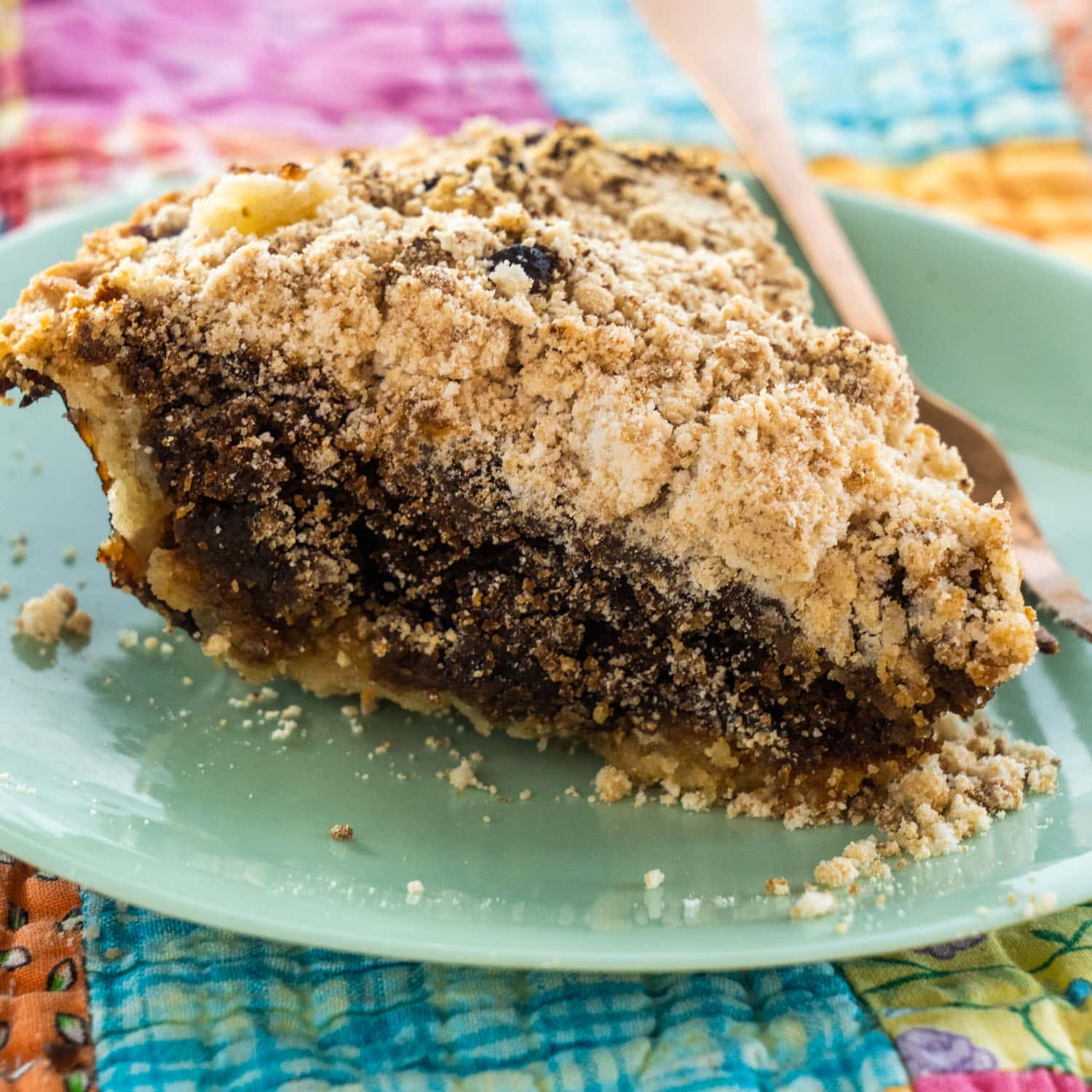
Last time you said your favorite kind of pie was shoo-fly pie, but haven’t had it in a very long time. Have you managed to find/enjoy any since then?
A couple years ago, a fellow screenwriter was kind enough to make me a shoo-fly pie! It was a little piece of heaven! Well, more like it was a pie of several pieces of heaven! I’m very sad I still can’t find a pie shop in the Los Angeles area that makes shoo-fly pie! There are so many pie shops! And so many flavors! But sadly no for molasses.
After an unexpected break, work has recommenced on fine-tuning the outline of the sci-fi adventure spec.
I don’t know how other writers organize their outlines, but mine tend to be a scene-by-scene breakdown on a Google doc. (Hats off to the users of index cards). Each scene is planned out in terms of what happens, sometimes what dialogue might be involved, and an underlying mindset of “what’s the conflict here?”
Even though I know what I need the scene to accomplish, I may not have all the information I need, so I’ll jot down a note or question in ALL CAPS as part of it (to help me not overlook it). The note or question is something that needs to be addressed, but can’t be answered just yet.
Things like:
-DOES HE KNOW ABOUT THIS? IF NOT, HOW TO DO THAT?
-WHAT CAN SHE DO HERE TO DEMONSTRATE WHAT KIND OF PERSON SHE IS?
-NEED 3 VARIATIONS ON THIS (SEE PREVIOUS DRAFT FOR LIST)
-POSSIBLE CLUE OR HINT HERE TO BUILD UP TO BIG REVEAL
You get the idea.
I find it better to write these down in the outline instead of something separate. I don’t trust myself to be that organized, and my desk/working area is quite a mess. It’s just easier to keep it all in one document.
It’s more helpful to take the extra time to deal with all of these now, rather than jump into pages and have to hit the brakes each time one of these needs to be addressed.
Dealing with these sorts of issues can also prove beneficial because while you’re handling the initial thing, it may also offer a new or at possibly an unexpected solution that can cover a few other things, or add a new detail that adds to or helps the story. It’s happened before.
For the most part, the outline is pretty solid, story-wise, so once all of these notes and questions are covered, it’ll be off to the races. I don’t think it’ll take too long, and shooting for another end-of-the-year finish in terms of completed drafts. One would be nice, two would be better.
It’ll get there, slowly but surely.
-Contest news! My animated fantasy-comedy made Second Round for comedy features with Austin. Another long-time goal achieved, so…yay.
Congrats to all the other amazing writers whose work also made it. I’ll be there to celebrate. How about you?
-As the writers strike continues, it’s taking a toll on the people involved. One of those people is friend-of-the-blog Jenny Frankfurt, who runs the Finish Line Script Competition. She could use whatever help you can provide, so please donate here if you can.