Here’s the windup…

lincecum
I admit it. Local bias.

Interesting discussion the other day with a professional hyphen (writer HYPHEN director HYPHEN script consultant) about my western.

They wanted me to pitch them the story, but without notes. Pretty much without any preparation whatsoever.

This way, they explained, it comes across as “more natural” and “less rehearsed”. I don’t necessarily agree, especially because I despise those momentary pauses which make you rely on saying “um” while your brain races to come up with the next words out of your mouth.

Despite not really having thought about the story that much over the past few months, I did my best to work my way through it and think I did okay. Maybe B-plus/A minus territory. Not fantastic, but not bad operating with pretty much no prep time whatsoever.

I made sure to include key story points and not go into too much detail, and tried to sound excited and upbeat while describing the high-octane action.

After I’d finished, there was a dread-inducing silence that grew with each passing second (maybe 3 in total, but felt more like neverending).

“Hmm,” came the reply. “Not bad.”

Not exactly a standing ovation, but I’ll take what I can get.

They listed what they liked and what could use a little work. Surprisingly, they felt the ending was a little ‘soft’ and their explanations why, to which I calmly disagreed and gave my explanation why.

Even more surprisingly, they then revealed they’d only read up to page 15 and wanted to hear my pitch to see if the rest of the story warranted continuing.

(Just to set things up, this person claims to have given 3 pages of notes just on the first page alone for other scripts. Apart from a few comments about the dialogue, they didn’t really have any for mine, and that when they usually get to around page 10, they jump ahead to the middle, then to the end. But mine they wanted to keep reading. Make of that what you will.)

After hearing my rationalization for the ending, they admitted that they should “probably read it to see if they agree.” In theory that will be happening this week, but we’ll see.

Our discussion then turned to my experience and some of my other scripts, 2 of which they requested to read. A victory, no matter how you slice it.

Looking back, I could have done a much better job at pitching my story – if I’d known I was going to have to do it. Still, if I’m going to be sending out queries about it, I should be prepared to talk about it in a moment’s notice.

So while I while away upcoming hours engaged in the rewrite of the mystery-comedy spec, I’ll try to make the most of potential down-time and re-read the western and maybe put together some kind of FAQ/cheat sheet in case this kind of situation arises again.

And it probably wouldn’t hurt to do the same for those other two – just for good measure.

Reduce heat; let simmer for 2-3 months

I look exactly like that after finishing each draft, flour and all
Exactly how I look after finishing a draft, even though the flour wreaks havoc with my keyboard

It took a little longer than expected, but the revamped outline for the pulpy adventure spec is finally done.

As is my usual practice, I won’t take another stab at it for at least a couple of months partly because I’m feeling a little burned-out on it. This has been my primary focus for the past couple of months, and I just need a short break from it.

The other reason is I’m getting ready to jump into rewriting the Christmas-themed mystery-comedy. Notes are in place, so hopefully it won’t take too long.

But getting back to the outline, my original thought upon finishing it was the standard “It’s better than it was, but still needs a lot of work,” but experience has taught me that this may not necessarily be the case anymore.

I like to think I’m a stronger writer compared to a few years ago, so while I would never consider the material as it reads now as perfect, it may surprise me when I return to it as to how much better it is than I remember.

At least that’s what I’m hoping for.

On the other hand, I could read it and think “Where did that come from?”, “Well, that’s not going to work,” or even “Hmm. How much wine did I have that day?”

Taking it another step further, taking this break will enable me to pretty much forget a lot about the story, so I’ll be able to read it with fresh eyes and potentially come up with fresh ideas about how to improve it.

All things being equal, I like the way it turned out and am looking forward to getting back to it.

But first things first. Time to shift from the fight against monsters wreaking havoc to seeking out answers behind seedy goings-on in a holiday metropolis.

As always, watch this space for updates.

They don’t call it a climax for nothing

Couldn't make this any more Freudian without going NSFW
Couldn’t make this any more Freudian without going NSFW

As the events of Act Three of the pulpy adventure spec outline slowly develop, it’s becoming more clear that retroactive edits/fixes/tweaks will be necessary for parts of Acts One and Two.

Act Three goes beyond making sure each of the main characters has something to do.  The actions they take should be tied directly into the main story, represents them overcoming their own personal obstacles and wraps up their individual storyline, all in the most satisfying way possible.

Hence the need to go back and make those changes. The more I can set up and effectively reinforce each character’s storyline, the better the payoff will be, both for them and the overall story.

I’ve always stressed the importance of setups and payoffs throughout a script. Everything we’ve seen in Acts One and Two should come to its appropriate conclusion in Act Three.

I’ve read a lot of amateur specs where something is set up early on and ends up either totally forgotten, treated as an afterthought or pays off with less of an impact than it should.

This is what you’ve been building up to for the past 90-plus pages.

Don’t let us down.

Doth it suck? Yea, verily

Because "Dude. Yorick. Bummer." just doesn't have the same panache
Because “Dude. Yorick. Bummer.” just doesn’t have the same panache

Oh, first draft. You teasing vixen.

I go over the story ideas in my head, everything coalesces and plays out like a well-oiled machine.

But try to transfer them onto the page, and it all discombobulates into a tangled mess on par with the cord on a pair of earbuds carelessly tossed into a gym bag.

Experienced writers know what I mean.

Although it took a while, I finally reached the end of Act Two in the revamping of the outline of the pulpy adventure spec. On one hand, I’m thrilled to have gotten here. On the other, I want to shrug my shoulders and mutter “eh, good enough” about the scenes and sequences that led up to this point.

They’re definitely far from perfect, and without a doubt will be totally different as future drafts come into play.

Let’s pause to consider the phrase “future drafts.” As in “there will be more”, emphasis on “will”. Not “might”. “Will”.

I recently connected with another writer on a networking site, and they ended our introductory correspondence by letting me know they had first drafts of their scripts available to read.

I sincerely hope not.

Unless you’re looking for feedback, don’t show your first draft to anyone. Ever.

The first draft is the attempt to put all your ideas into some kind of order. Know going in that it won’t be pretty, and will most likely be a big mess requiring a ton of fixes. Not a bunch of little edits, but huge, drastic steps. The end result should look totally different from what you started with.

Don’t regard rewriting as a chore or a slog. It’s something you have to do on a regular basis. It makes the script better and helps you become a better writer.

Consider the last script you wrote. How many drafts did it require to get to the point where you finally said it was done? And wasn’t each successive draft a little better, until the final draft turned out significantly improved compared to the very first one?

That’s what you should be going for. Every single time.

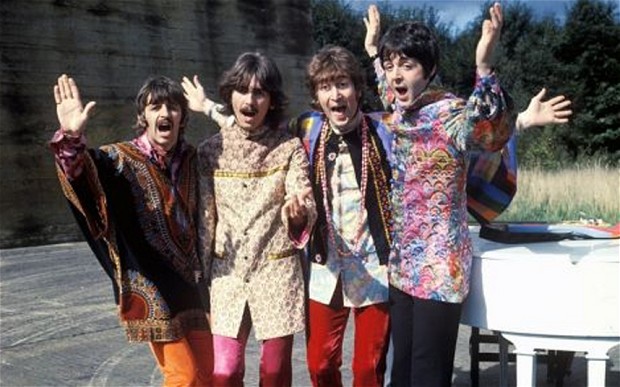
Roll up for the My Writing Process Tour!

Sorry, no walruses involved
Step right this way! Sorry, no walruses involved

I’ve been invited to take part in The My Writing Process Tour, which is kind of a blog/chain letter thing. One blogger asks another to take part and answer some insightful questions, then link to writers/bloggers we’d recommend.

I was nominated by Henry Sheppard, aka Adelaide Screenwriter, from the Australian metropolis of Adelaide. He’s always offering up some fantastic material, including articles, interviews and shorts. Definitely worth checking out.

As for me…

1. What am I working on?

Three items currently hold my attention: revamping the outline of a pulpy adventure spec, the rewrite/polish of a Christmas-themed mystery-comedy and resuming the hunt for representation.

2. How does my work differ from all others of its genre?

Even though I’ve written in several genres, the one thing I always try to convey is a sense of fun and excitement. It takes a lot more effort than people realize to really engage a reader that way.

I want you to enjoy the story beyond just “this is good writing” and more like that amusement park thrill ride you rush to get back in line for as soon you get off.

3. Why do I write what I do?

My formative years were the late 70s/early 80s, so I had the benefit of being heavily influenced by the likes of STAR WARS, RAIDERS OF THE LOST ARK and BACK TO THE FUTURE. To me, those are textbook examples of what smart storytelling should be, and it’s what I strive for in my own work.

I’ve stated before about being a fan of the genres I write, so not only am I trying to write something I’d want to see, but I try to create something I haven’t seen before.

4. How does your writing process work?

It all starts with an idea. Is there a story behind it? If so, what happens over the course of that story? How could I tell it in an original way?

Once I have a general idea about that story, including knowing how it starts and ends, I set up the plot points (statement of theme on page 3, inciting incident on page 10, etc), then fill in the gaps between them.

If it’s a genre-specific film, I try to incorporate elements that are part of that genre while trying to avoid tropes, or at least approach them from a different perspective.

I do a majority of my work in developing the outline, and it makes a huge difference. It gives me a better overview of the whole thing so it’s easier to keep track of character development, storylines, subplots, setups and payoffs. I won’t even consider starting on pages until I think the outline is solid.

Because of my schedule, I write when I can. When it comes to pages, I try to produce at least 3 a day. Sometimes it’s more. It’s gets easier the more you do it. They add up fast, and before you know it, you’ve got a completed draft to go back, edit and rewrite.

I’m also extremely fortunate to have several friends and trusted colleagues I can turn to for feedback. They pull no punches in telling me if something doesn’t work.

Lastly, I’ll rewrite and polish the script until I think it’s good to go.

Over there on your right is a list of blogs I think make for some excellent reading and advice. I’ve added three definitely worth checking out:

The Single Screenwriter by Christie LeBlanc

Writer of Fine Things by Evan Porter

The Screenwriting Process from James (don’t know his last name) in the UK

Bonus! If you’re looking for some reasonably-priced professional analysis for your script, you might want to consider:

-Doug Davidson’s Four Star Feedback. Doug is the only writer to win a Nicholl Fellowship with an animation script (2004), but he happily covers all genres.

-Andrew Hilton aka the Screenplay Mechanic. His services have garnered extremely high praise on the Done Deal Pro forums.

Thanks for reading!