-Writer/author/script consultant/friend of the blog Howard Casner has launched a crowdfunding project for his short film 14 Conversations in 10 minutes. Donate if you can! Howard is also offering a great new service for screenwriters – $20 to review the first 20 pages of your script.
-Filmmaker Scotty Cornfield‘s crowdfunding project for his short film Goodbye, NOLA is going strong! They’re getting closer to reaching their goal, but can still use a little help. Donate if you can!
Got your own project you’d like to promote? Drop me a line.
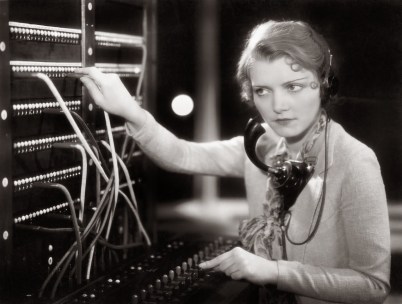
A hard-at-work pre-Internet server keeping things up and running
There’ve been several previous posts here regarding the benefits and necessity of networking. It can’t be stressed enough how incredibly helpful and effective it can be, especially if you’re not in Los Angeles or somewhere you don’t have a lot of in-person access to other writers.
But it’s not enough to just make a connection. An effort needs to be made by at least one of you (most likely you) to maintain that connection and keep it healthy. And it’s not as hard as you might think.
While it can be extremely easy and tempting to get sucked into the never-ending rabbit hole of the internet, designate a portion of your non-writing time to be just as productive and try to get some networking stuff done.
Are you connected to another writer in your area, but you’ve never actually met in person? Ask them if they’re up for a get-to-know-you coffee or lunch chat.
If you’re limited to online communication, send them an email or tweet asking how they’re doing, and how their latest projects are coming along. Be helpful, or at least offer to help. They might just take you up on it.
*Important – if it’s been a while since you’ve been in touch, don’t start things off by straight-out asking for something. Would you want someone to do that to you? Didn’t think so.
If something good (career or otherwise) has happened for them, send a note of congratulations. Likewise, if something not-so-good has happened, express your sympathies accordingly.
Cliched as it may sound, keeping the lines of communication open really can help you out. I’ve been extremely fortunate to have established strong relationships with several local writers and filmmakers, and exchanged notes with writers scattered across the globe.
I reconnected with a consultant I hadn’t been in touch with for several months, and that conversation led to them offering up coverage (which I still paid for) that proved to be quite helpful.
A writer I know who works in TV and film emailed me, wanting to discuss her latest concept because she thought I was a good match for it.
None of these would have happened if I hadn’t taken the time to keep each relationship going. Rather than taking a “how can you help me?” approach, I go in with the mindset of “maybe I can help you?”
One of the things you hear so often when it comes to establishing a screenwriting career is “It’s not what you know, it’s who you know”. I’ve found both parts to be true. You definitely have to know what you’re doing in terms of craft and writing ability, but it’s equally important to establish and maintain solid, professional relationships with as many people as you can.
Because you never know who’s going to suddenly be a person of influence willing to help you out because you did the same for them.
So here’s your voluntary assignment:
1. Contact five of your connections.
2. Ask them how things are going.
3. Take it from there.
So without further ado, time once again for the much-heralded and talked-about Project Status Update Time!
For those unfamiliar with the concept, which I would imagine is pretty clear from the name alone, this is your opportunity to give a quick mention regarding the latest on your latest project, no matter what it is.
Doesn’t have to go into too much detail. Just what you’re currently working on, and how it’s going.
Hit your page quota for today? Got to a pivotal scene or significant plot point? Finished that rewrite? Feeling stuck? Seeking the right wording for that logline?
In search of help/guidance/suggestions of any sort? All you gotta do is ask.
Did a little networking and connected with another writer? Signed a deal? Had a good meeting? Packing up the car and heading for LA?
Got something to crow about? Want to vent any pent-up frustration?
Don’t hold back. You’re among friends here.
Real quick for me. Just about done with the 2nd draft of the low-budget comedy. One sequence needs revising, followed by maybe one more quick polish, and then it’s off to some of my reliable readers.
Also have some reciprocal reading to do for some of those aforementioned readers. Quite excited about diving into these.
As part of my work on the low-budget comedy spec, I’ve made an effort to read other comedies to help get a better understanding of how it could be done and hopefully some guidance I could apply to mine.
It’s always been tough for me to read comedy because my sense of humor doesn’t always align with others. Many’s the time I’ve read a script that garners universal praise for being gut-bustingly hilarious, but doesn’t do anything for me.
There is, however, one detail I’ve noticed that keeps popping up:
Unrealistic situations.
Things that seem to happen only for the sake of a joke, and not much else. These often feel forced and inorganic to the plot. Almost as if the writer thought “Hey, wouldn’t it be crazy if ____?”
In theory, potentially a good idea, but in execution – not really.
Some might argue that since it’s comedy, things don’t have to be realistic as long as they’re funny.
I beg to differ. If I don’t think something could actually happen, I will most likely not find it funny.
**side note – this doesn’t necessarily apply to slapstick or absurdist fare, which are two entirely different discussions**
Sure, there are comedies where the entire premise isn’t all that realistic to begin with, but even the humor in those should stem from the situation, rather than being a crazy assortment of wacky gags.
Going for the easy laugh or cheap joke doesn’t take much skill and shows a lack of sincere effort. If a writer does it once, chances are they’ll do it a lot. It also doesn’t offer anything new. Who wants a joke they’ve probably seen or heard a thousand times before?
Looking at comedies that would be considered strong, there are a lot of instances where the joke is an integral part of the scene, rather than feeling like something tacked on.
You’ll hear that the best comedy is the kind that makes you think. I prefer comedy that shows the writer did a lot of the thinking.
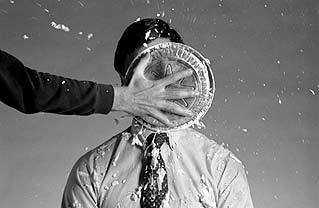
A definitive shining example (AND a prime candidate for a remake)
Since the screenwriter’s education is ongoing, there’s always something for you to work with or study to get a better grasp and understanding of what constitutes good writing, which can then be applied to your own.
Read scripts. Attend or take part in a table read. Watch movies.
While there are countless examples of exemplary writing and filmmaking to see it done properly and effectively, there are even more examples of crappy writing and lousy filmmaking to see it done poorly and ineffectively.
Nobody starts out with the intention of making a bad movie. What starts out as a great script can easily be messed up along the way to the point that there’s no salvaging it. It happens.
Is watching one waste of time? Not necessarily.
As enjoyable, informative and educational as the good stuff is, the bad stuff is actually just as good, possibly even more so. Because from these cinematic travesties you can learn what not to do with your own scripts. Lessons abound with all the glorious misfires regarding story, characters, and dialogue.
Regrettably, bad acting is a category all by itself and there’s nothing that can be done about it. Do what you can to ignore it (which can border on the impossible, depending on the quality of badness) and focus on the non-tangibles.
It’s especially helpful to work with something from the same genre as your script. See how they did it, then compare it to your own. Can you see why theirs didn’t work? Is it riddled with plotholes you could drive a truck through? Is the dialogue pure on-the-nose? Do the characters come across as unrealistic caricatures?
Look at it as a whole. Does it respect the reader/audience’s intelligence? Is the structure solid? Do you care about what happens to these characters over the course of the story?
Now bring your script into the equation – and be objective! How much of a similarity or difference is there between that story and yours? Did that other material open your eyes to some previously unforeseen flaws and potential problems within your script, so much that it made you realize “this needs work”?
Once you identify these problems, your writer’s mind goes to work, figuring out how to make sure your script doesn’t repeat the mistakes you just read or watched.
It may not be easy to endure having to watch a bad movie just for the educational experience, so just keep reminding yourself “It’s to help me become a better writer”.
Good luck!
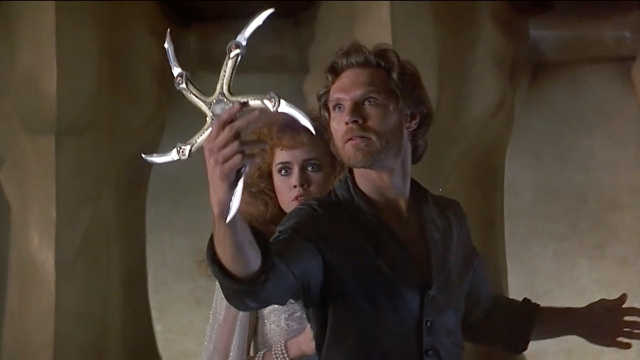
Question time! What’s your favorite bad movie? Feel free to list it in the comments.
 Maximum Z