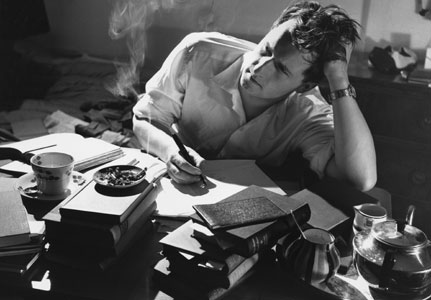
How does “gamut” make you feel?

emotions
Somewhere in here

No matter what your screenplay is about, or what genre it is, it really comes down to one thing: telling a story about the characters and what happens to them.

While some may put more emphasis on the latter part with its vast number of variables and possibilities, it’s equally important to put a lot of effort into developing the former.

You want your characters to be relatable. Let us see ourselves, or at least part of ourselves, in them. How they act and interact. What they do. Even if it’s within a completely ridiculous or unbelievable scenario.

A good example: the works of Judd Apatow. “Comedies with heart,” is often used to describe them. By injecting emotion into what might otherwise be just something silly, he adds that extra layer of humanity. Notice you never heard the phrase “wacky hijinks ensue”? Because it’s about the emotion within the comedy, not just going for the cheap laugh.

Nobody only experiences one emotion, and neither should the fictional population within your pages. If a character’s happy, sad, or angry, show us why. Don’t hold back. Put it there for us to see.

Do they act like a real person? Is this how they would act in this kind of situation? Is it a real reaction or a “movie” reaction? Getting your characters to act using their emotions makes them come across as more realistic, which makes for a better story.

“The characters are too one-dimensional,” or “He/She’s just a one-note character.”  Heard those before? If your character only acts one way, or remains static and never changes, or doesn’t even react accordingly, that’s what the response will most likely be. And you don’t want that.

A savvy writer knows how to use emotion without being blatant about it. Maybe it’s a subtle action, or a turn of phrase, or the subtext within a line of dialogue.

Find the way that works best to develop and advance the character both within their own story and the story overall.

All that on a single piece of (digital) paper?

bad 1st impression
It can only go downhill from here

You only get one chance to make a good first impression. And that also applies to a screenplay. If your first page doesn’t make us want to keep going, why should we? Chances are the rest of it is exactly the same.

The first page is your golden opportunity to start strong straight out of the gate. Show us from the absolute get-go you know what you’re doing. A lot of the time, I’ll know by the end of the first page what kind of ride I should be expecting.

Just a few items to take into consideration.

-First and foremost, how’s the writing? No doubt you think it’s fine, but face it. You’re biased. You want a total stranger to find it fault-free, so look at it like one. Is it easy to follow and understand? Does it flow smoothly? When I read it, do I get a clear mental image of what you’re describing? Does it show, not tell?

-Is there a lot of white space? Are your sentences brief and to the point, or do they drone on and on with too many words?

-Do you point the reader in the right direction and let them figure things out, or at least get the point across via subtext, or do think it’s necessary to explain everything, including what a character is thinking or feeling? Yes, that happens on the first page.

-If your protagonist is introduced here, are they described in the way you want me to visualize them for the next 90-110 pages? Does a notable physical characteristic play a part in the story? Are they behaving in such a way that it establishes the proper starting point for their arc? Are they doing something that endears them to us, making us care about them?

-If your protagonist ISN’T on the first page, does it do a good job in setting up the world in which the story takes place? Do the characters introduced here play any kind of role later on in the story?

-Are there any mistakes regarding spelling or punctuation? Are you absolutely sure about that? SPELLCHECK IS NOT YOUR FRIEND. A team does not loose a game, nor do I think they should of won either. Two glaring errors that your software will not recognize. But a reader will.

-Does it properly set up the genre? If it’s a comedy, should I be prepared to have my sides ache from laughing too hard? If it’s a horror, should I make sure the lights are on, even if it’s 12 noon? If it’s a drama, should I have a box of tissues within arm’s reach to dry the expected river of tears?

-Do your characters sound like people saying actual things, or are they spouting nothing but exposition and overused cliches?

Not sure about any of these? Read it over with as critical an eye as you can muster, or get help from somebody within your network of savvy writing colleagues. DO NOT go to somebody who doesn’t know screenwriting.

Think I’m being overly critical? Ask any professional consultant or reader, and I bet 99 out of 100 will say they know exactly what kind of read they’re in for by the end of the first page. And number 100 might also agree.

Then again, there’s also the possibility that the first page could be brilliant and it stays that way until FADE OUT.

Or the wheels could fall off anywhere between page 2 and the end.

Your mission, and you should choose to accept it, is to make that first page as irresistible as you can, grab us tight, and not let go. Make us want to keep going. Then do the same for page 2, then page 3, page 4, etc.  Make us totally forget what page we’re on.

Take a look at the first page of your latest draft. Does it do what you and the story need it to?

-Didja notice the spiffy new look? Had to make some behind-the-scenes changes, and this is the result.

I have written, therefore I will edit

vintage woman office
Hmm. What about…? Or maybe…? Possibly even…?

Well, it took a little longer than I’d wanted, but I’m happy to announce that the first draft of the pulp spec is complete; 116 pages of potential cinematic goodness.

So what now?

The usual. Take a little time off, then jump right back in with my trusty red pen, ready to have at it and let loose the dogs of editing. The script itself has already been printed out, along with a change to a line of dialogue.

Even though I kinda-sorta edit as I go along, once I initially write a scene, it’s done and I push forward. Sometimes there’s something about it that’ll nag at me afterward, so I go back and do the necessary touch-up work.

I was tempted to send the script as-is to some of my trusted readers, but at this point, I want to see what I can do to improve it before reaching out.

Also pretty important – it was fun to write. This definitely falls within the realm of “stuff I like to write”. Hopefully others will be as enthusiastic about it when they read it. In a recent email correspondence conversation with another writer, I’d expressed my anticipation about how the script would be received. Their response: “You’re a great writer. Don’t worry so much.” Their kindness was much appreciated.

So for the time being, I’ll be fighting the urge to jump into editing in order to put some space between “just finished it” and “round two underway”. I actually do have a few other projects standing by, so I might redirect my focus on one of those, and then come back to this one in a couple of days.

It was a good and productive couple of months, and I’m quite happy with how this one turned out. I stuck to around 90 percent of what was already in the outline, but as usual, would occasionally come up with a different idea for a scene or sequence. I’d say the changes were definitely for the better.

The hardest part is out of the way, so now begins the next-hardest part: making it better.

A writer does what again?

typewriter
Just another schmuck with an Underwood

In case you haven’t been following me on social media (which is easily rectified), I’ll post semi-daily updates regarding my progress in writing the latest draft of my current spec.

(Incidentally, just passed the page-75 plot point on the pulp spec)

After I post an update, my network of fellow creatives will offer up their very supportive and encouraging comments.

“Great job!”

“Keep going!”

“I don’t know how you do it!”

I do, and it’s actually a pretty simple formula: I try to write every day. Even if it ends up being just a short amount of time, or all it yields is a single page. Sure, sometimes life gets in the way and I’m not able to write, but there are definitely more days of writing than not-writing.

Writing scripts (preferably my own, but I’m not picky) is what I want to do. More than anything. So I continuously work at it, trying to improve my skills and produce quality material. It’s the only way I know how to get there.

Some might say I currently have the luxury of just writing specs. No pressure. No deadlines. No conflicting sets of notes. But I don’t really see it that way. I treat this like a job because I’m working on making it my job.

To reinforce the whole “marathon, not a sprint” concept, maintaining a daily regiment of writing helps me prepare and get in shape for when it’s time to take on the real thing.

And when that actually happens, I’ll be able to keep up.

(Speaking of which, I’ll be running my first half-marathon of the year this weekend. Once again hoping to hit the 1:55 mark, but breaking 2 hours will be just fine and dandy.)

Mini Bulletin Board time!

-Writer/friend-of-the-blog Mark Sanderson is proud to announce the release of his new book A Screenwriter’s Journey to Success. Mark is also an accomplished screenwriter and script consultant.

-Script consultant/literary manager Whitney Davis will be teaching an 8-week Introduction to Screenwriting course through the Writing Workshops Dallas program beginning on April 4th. Even though the course will be conducted in Dallas, attending via Skype is also an option. Bonus for attending in person – Whitney’s homemade cookies.

The goodness of just over 50 percent

writer
That was just the warmup

A most pleasant update to report regarding progress on the pulp spec: the point of no return has been reached (and even slightly surpassed).

Something incredibly significant has just happened to my protagonist, and everything between here and the end of the story is not only about answering the central question and everything connected to it, but also dealing with this important new development, which is also tied in to the main storyline.

From here on in, the stakes are consistently rising and my protagonist’s situation will continue to get more and more difficult.

As it should be.

Fortunately, a lot of these details were mapped out during the outlining process, which has once again proven to be extremely helpful. But even that’s not written in stone; one big sequence was deemed too similar to another, so the relevant elements of both were combined, which actually helped tighten things up on several levels.

To be perfectly honest, there’s not much I can gripe about regarding working on this script. It’s in a genre I love; this was always “something I would want to see.” I’ve made a real effort to make this an exciting read, both in terms of story and how it actually reads.

Like with some of my previous projects, I’m continuing to have a fantastic time writing it, and hopefully that excitement and enthusiasm will be evident on the page.

Sure, the ongoing plan of 2-3 pages a day has been slightly off, so it’s taking a bit longer than originally anticipated, but that’s par for the course for me. But every writing session, no matter how long or short, gets me a little more further along.

Today, the midpoint. Next up – pushing my way forward to the next plot point, which is about halfway through the second act of Act Two.