New steps on an old path

road
A return journey to a long-ignored route

Over the past couple of days, as notes for the low-budget comedy spec were being compiled, I considered jumping right in to the rewrite, but instead opted to take a break and put it on the back burner for now. It’s been the focus of my attention for a while, and I didn’t want to risk burning out on it.

No big deal. All of the material will still be there when I get back to it.

So what now? Work on another script, natch.

But which one?

I just didn’t have it in me to work on the few that were still in plot-development stage, nor did my brain feel totally ready to tackle assembling the pieces of the jigsaw puzzle that is the mystery-comedy.

Since I’ve been on a bit of a low-budget kick, I delved into my stash of long-ignored stories to see if there was a suitable candidate.

And I found one. A comedy I haven’t worked on for a good number of years that would make for another great low-budget production.

It had gone through several better-than-I-remembered drafts of the outline, each one with elements similar to the others, but also with its own uniqueness. Looking them over, there’s a lot of material to work with and develop into a new version.

Plus, it’s a fun story, which is always enjoyable.

(Moral of the story – never throw anything away.)

Working on the previous comedy spec also helped boost my confidence regarding my comedic writing skills. It’s not perfect, but better than it was. There were already some good jokes among these earlier drafts, and coming up with new material is still somewhat of a challenge, but not as daunting.

So the next couple of weeks will be all about combining, editing and fine-tuning this story, and then cranking out some actual pages.

Exciting times, chums.

Beware the monsters with green eyes!

green eyes
And done without the benefit of contact lenses

Not one, but two, count ’em – TWO, fantastic get-to-know-you chats with some fellow local writers over the past week. (Eight days if you want to get technical about it)

As part of one of these discussions, the topic of dealing with criticism came up. In particular, criticism that seems to come from a harsh, angry place. They go way beyond “This needs work”, and potentially surpass the purpose of notes to the point of simply being downright cruel.

“This is shit. Whoever told you you could write?”

“Any attempt to fix this would be a waste of time. Just give up now.”

Chances are you’ve been on the receiving end of these kinds of notes. I certainly have.

When we’re first starting out, we don’t realize how much we don’t know, and that’s reflected on the page. There’s not one experienced writer who thinks their first script or two was perfect.

So you work at it. You toil away, constantly putting in the effort to improve. And over time, you do. You know you’ve gotten better, and that also comes through on the page. Maybe you’ve even gotten compliments or (gasp!) praise about your work.

But despite your progress, you might still get a note like those above that totally trashes what you’ve written. This has also happened to me. Fairly recently, I might add.

What myself and the other writer discussed was “Where does this anger come from?” We’ve both been doing this for a while, so neither of us is a total noob. We each had more than a few scripts under our respective belts, so what could possibly be the basis for such a mean-spirited rant?

I casually threw out something I’d only read about and heard in the occasional mention: Could the person giving the notes be jealous of the material, and they were venting their anger and frustration about it via their notes?

Let me set one thing straight. I think I’m a good writer, but I will never claim to be the be-all and end-all. In fact, I’d be amazed if somebody was jealous of my work.

When I read somebody else’s script and find it totally amazing, I’ll tell them so. Do I wish I could write something that good? Sure, but it makes me want to work harder so I can. I don’t think “I’ll never be as good as them, so I’ll shit all over their material in order to make myself feel better.”

Taking this kind of negative approach can only result in a lose-lose scenario for you. You make yourself look bad and the other person will most likely not want anything to do with you anymore. And don’t think they’re going to forget you. To them, you’ll always be that angry asshole.

Something else to keep in mind – you never know who’s going to succeed, so the person whose script you just trashed could potentially be the next big thing. Wouldn’t you rather be on their good side, and not their shit list?

I work really hard to establish and maintain my network of connections, and value each one too much to do that. I want everybody to succeed and actually enjoy helping if and when I can.

But then again, I’m just a nice guy to begin with. Even if I do occasionally end sentences with a preposition.

But that’s nothing to be jealous about.

Is it that time already?

pocket watch
Land sakes. Where has the time gone?

Yes, that’s right. Because you demanded it.

Well, not really, but it has been a while.

So without further ado, time once again for the much-heralded and talked-about Project Status Update Time!

For those unfamiliar with the concept, which I would imagine is pretty clear from the name alone, this is your opportunity to give a quick mention regarding the latest on your latest project, no matter what it is.

Doesn’t have to go into too much detail. Just what you’re currently working on, and how it’s going.

Hit your page quota for today? Got to a pivotal scene or significant plot point? Finished that rewrite? Feeling stuck? Seeking the right wording for that logline?

In search of help/guidance/suggestions of any sort? All you gotta do is ask.

Did a little networking and connected with another writer? Signed a deal? Had a good meeting? Packing up the car and heading for LA?

Got something to crow about? Want to vent any pent-up frustration?

Don’t hold back. You’re among friends here.

Real quick for me. Just about done with the 2nd draft of the low-budget comedy. One sequence needs revising, followed by maybe one more quick polish, and then it’s off to some of my reliable readers.

Also have some reciprocal reading to do for some of those aforementioned readers. Quite excited about diving into these.

How about you?

A few points about plot points

delorean

Time for a quick refresher course, chums.

Today’s topic: plot points. What they are and what they represent.

I’ve always seen plot points as pivotal moments in the story; events that change the situation for your protagonist, usually in a negative manner, and ask/reiterate the central question (Will your hero achieve their goal?).

Having solid plot points also helps establish your story’s structure. Without it, all you’ve got is a big convoluted mess, and who wants to read that?

Although this uses a 110-page script as an example, plot points don’t have to happen exactly at those pages. A few more or less is totally acceptable. I’ve also opted to use fairly recognizable examples to emphasize each plot point.

Pencils ready? Let’s begin.

Page 3 – statement of theme. What’s the overall message of your story? The theme should also be incorporated in some fashion into each scene throughout the course of the story. (“No McFly in the history of Hill Valley has ever amounted to anything!” “Yeah, well, history’s gonna change.”)

Page 10 – inciting incident. The event that shakes up you protagonist’s world, and asks the central question of the story. (Will Indy get the Ark before the Nazis?)

Page 17 – a twist to further complicate things for the protagonist. (“Alderaan? I can’t go with you to Alderaan!”)

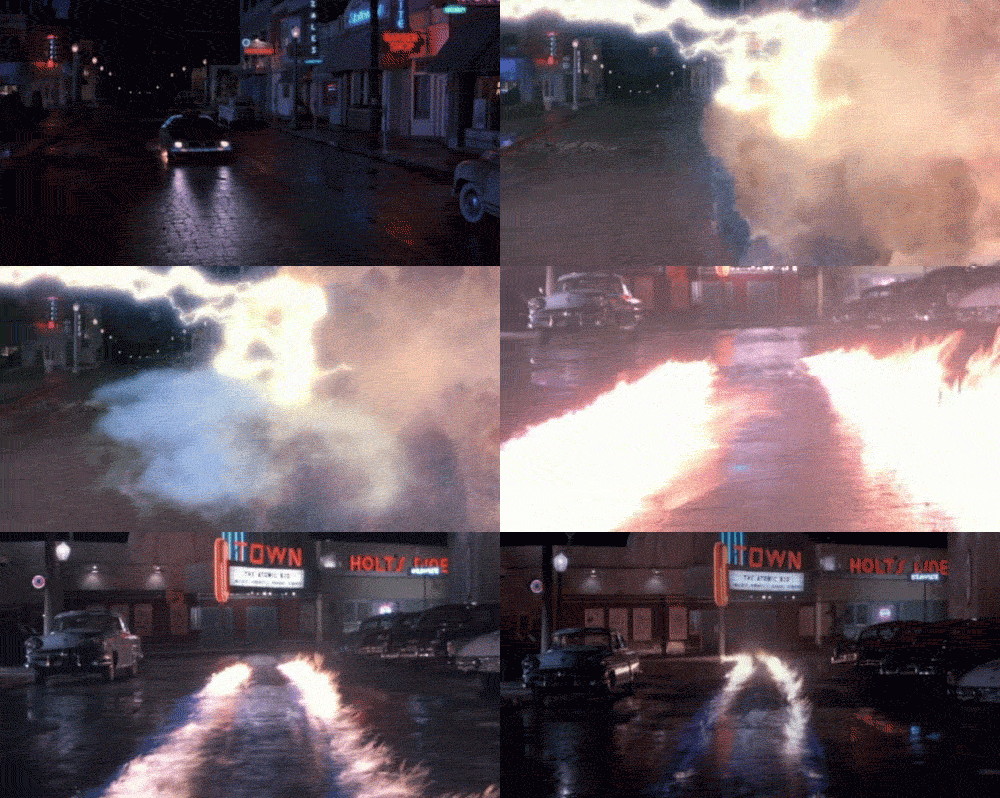
End of Act One (page 25-30) – Your protagonist leaves behind their old world and enters a new one to achieve their goal. Also repeats the central question. (Marty arrives in 1955)

Page 45 – another twist to complicate things for the protagonist (Indy saves Marion, destroys her bar. “I’m your goddamned partner!”)

Midpoint/Point of No Return (page 55-60) – your protagonist becomes fully committed to achieving their goal (Brody decides to go after the shark after his son barely survives the latest attack)

Page 75 – yet another twist to really complicate things for your protagonist (Vader kills Ben as Luke & Co escape)

End of Act Two (page 90) – All is lost. Your protagonist is totally screwed with no apparent way out. Makes it seem like the answer to your central question is “no”. (The Nazis get the Ark).

Climax (page 95-100) – final showdown between your protagonist and antagonist. (Rebels attack the Death Star. Marty must hit the wire when the lightning hits. Nazis open the Ark. The shark attacks the Orca, eats Quint.)

Resolution (page 100-105) – Aftermath of the climax. Central question gets answered. (Rebels victorious. Marty returns to 1985. Brody & Hooper survive. Indy delivers the Ark.)

Denouement (page 105-110) – How your protagonist’s world is now different from what it used to be (but not necessarily better). (Marty’s family is successful. The Ark gets crated and goes into a warehouse. Luke & Han hailed as heroes. Brody doesn’t hate the water anymore.)

So there you have it. Do the plot points of your story match up with these? Just something to think about. And feel free to watch the movies represented here (or one of your own personal favorites, or one similar to yours) to see all those plot points in action.

It just might be some of the most fun homework you’ll ever have.

Here’s to the thrill of running ourselves ragged


cheers
Clink!

It’s the home stretch of the last week of November, and hopefully you’ve made some excellent progress on your designated writing project. Let’s go with the theory that you made the sincere effort to write every single day.

Pretty nice, isn’t it?

Are you further along than you expected? About the same? Not as much as you’d hoped? Doesn’t matter. You found the time to write and maintained that pattern of producing something on a regular basis.

Even if real life got in the way and maybe you had to skip a day here and there (it happens), isn’t it great to know that you made this commitment to yourself and kept it?

Maybe you had a really lousy day, and think “I really don’t feel like writing today” (which also happens), but then reconsider and realize “No. I said I’m going to do this, and I’m going to do it.” So you sit your ass down and pound away on the keyboard. For how long is irrelevant.

Your total output might just be a couple of lines or a couple of pages, but your progress is right there for you to read. Maybe you tell yourself you’ll do more tomorrow.

Admit it. You like this. Otherwise you wouldn’t be knocking yourself out doing it.

This can be addictive. While some may follow the Dorothy Parker school of thought (hate writing, love having written), others actually enjoy the whole process and want to continue doing so, constantly striving to improve both in quality and output.

I tend to go back and forth, but mostly it’s the latter.

So even though the month is wrapping up, that doesn’t mean you have to slow down on your writing. You’ve gotten into the habit of being a productive writer. Make the effort to continue doing so in the coming months, and that will quickly extend into years.