Just getting here is a story by itself

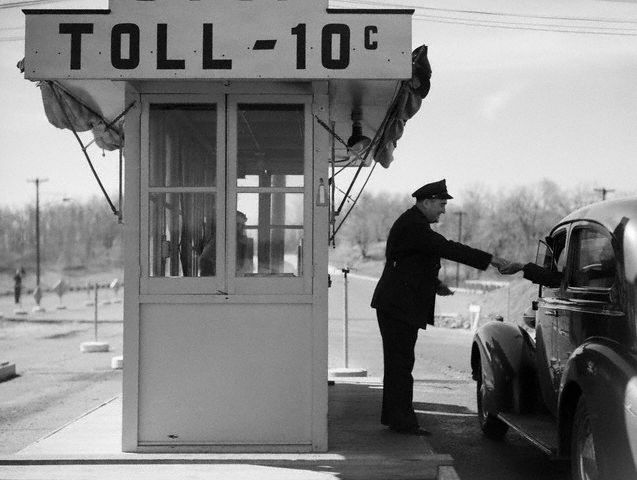
Toolbooth on Merit Parkway
Even better, the journey won’t cost you a cent

First, the good news: I wrapped up the rewrite/overhaul of the comedy spec (which seems more like a dramedy now.) Despite my dread and anxiety over whether or not it’s actually funny, it’s been sent out for notes. As I mentioned to one of my readers, as long as nobody says “What made you think you could write something funny?”, I’m good.

So, industrious scribe that I am, I find the best way to occupy my time while I wait to hear about a project is to redirect my focus and work on another one.

It was originally going to be a new take on the pulp sci-fi, but some story issues still need work, so that remains on hold.

But a few weeks ago, I was cleaning up around my office and found a hard copy of one of my earliest scripts: a horror-western. I don’t think I’d seen it or read it in about 15 years.

Wow, was it bad. Like “This first draft is going to sell for a million in no time!” bad.

But the idea behind it still worked, and was something I could definitely tweak and finesse into something a lot more coherent. I did mention how that old script was really bad, right?

So I started putting together ideas for the new draft. Let’s call this SCRIPT #1, or S1 to keep things simple.

Then another twist presented itself: a script with a low budget (the lower the better), a minimal number of characters and locations, and practically no visual effects has a much better shot of being produced than some mega-budget tentpole effects extravaganza.

With that in mind, there were aspects to this story I could use to create an entirely new and different one that met a lot of those criteria, so I jotted down some potential plot points in the same file. This is SCRIPT #2 (S2).

One file, two scripts. With me so far? It gets better.

After finishing the comedy, I decided I’d take on S1. I only had a vague recollection of all the story details, which I saw as a good thing. Although I’d still have the old draft available as a potential (albeit limited) resource, I don’t think I’ll use it all that much. This in turn, frees me up to go in whatever new direction I feel like.

As I thought up ideas for S1, some of the story elements from S2 started creeping in. Since I didn’t want the two to be too similar, more focus was put on developing S1. It’s still a work in progress, but coming along quite nicely. And so much better than that old draft.

Ah, but what of S2? Like I mentioned, there were story elements I really liked, and putting some of them into S1 forced me to come up with new ideas for it. There was one in particular that really stood out for me, and the more I thought about it, the more it felt like it would be able to be the basis for a solid story.

I combined that idea with the aforementioned low-budget approach and came up with what I really think is a great high-concept idea. Such to the point that I whipped up a logline for it, along with a title that feels very “that’s perfect!”

My belief and enthusiasm for both S1 and S2 is to the point that I’m now alternating between both; working on one, then the other. My objective now is to have at least a first draft done for both by the end of the calendar year. It’s already proven to be, and will no doubt continue to be, a most interesting process.

I’ll keep you posted.

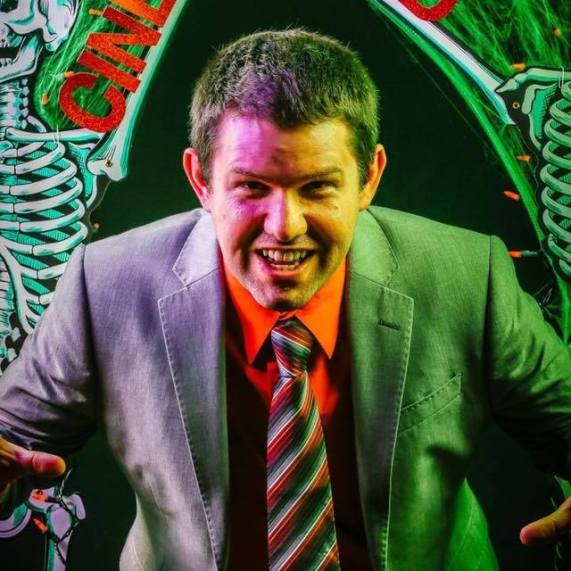
A very hands-on Q&A with Geoffrey Calhoun

7D25AB88A8B448A9ABA793263FCBF2F3

Geoffrey D. Calhoun of wefixyourscript.com is listed as a Top 100 Indie Writer in the World. He has optioned several screenplays and has worked as a writer on two features coming out in 2017: The Little Girl and Studio 5. His multi-award-winning thriller Pink Bunny is scheduled for a 2018 release. Geoffrey has won multiple screenwriting awards and has worked as a producer, an assistant director, and director on indie film productions. He has been sought out by studios as a script consultant and a re-writer for various stages of development and production.

1. What’s the last thing you read/watched that you thought was incredibly well-written?

The last thing I watched I couldn’t stop thinking about was Arrival. I loved this film. It had depth and really explored her character. I loved how they played around with the structure of the film in creative ways that really built up to a climax. It was fantastic. I could see how Eric Heisserer did over 100 drafts to make that story perfect.

2. How’d you get your start reading scripts?

I actually began writing on a bet. A friend of mine was an editor for a local kids show. He wanted to push himself to write a script so he challenged me to see who could write better. Personally, I wasn’t interested because I have dyslexia. I agreed to do it, and ended up really enjoying the process. Since then it became more than a passion, almost like a volition. I wanted to be the best screenwriter I could possible be, so I started studying and learning from the greats such as Syd Field, Robert McKee, Viki King and reading screenplays by modern legends as well like David Goyer, Jonathan Nolan, and Christopher McQuarrie.

3. Is recognizing good writing something you think can be taught or learned?

I think it can be learned. It comes with time. The average movie attendee can recognize a bad film. Now, some people prefer bad films, but that’s a whole different form of self- torture (wink). I like this question. It reminds me of the debate about raw talent vs. learned skill. Some teachers out there believe if you don’t have a modicum of innate talent with writing, then you’ll never be a good writer. I completely disagree with this. Their defense is that this is an art, and thus you must have a certain amount of “taste” in order to know the difference between what’s good and bad. I think what we do is more than an art. It’s a craft; a learned skill plain and simple. Something that can be mastered with just two things, time and practice. That’s all you need. We are craftsmen, like the blacksmiths of old. At first creating something small and simple like a horseshoe, then with time we master our skill and create compelling stories and works of art like the ornate armors of old.

4. What are the components of a good script?

It all starts with having something to say in your script. What are we trying to pass off to the audience? What do we want to tell them about life? Something that will open their eyes and help them see things from a new perspective? Or something that will reassure them and speak to the struggles they are going through? When we have a theme like this and we pair it with a sympathetic character, then we create a compelling story that’s unforgettable and emotionally moving. Take Arrival. It’s about a woman’s struggle with loss. That’s something that speaks to everyone, which is why it resonated so well with people.

5. What are some of the most common mistakes you see?

Wow, that’s a tough one. I see mistakes of all kinds from new screenwriters to professionals. One mistake I often see is having underdeveloped characters. They’re superficial and are around just to be a face. Sometimes they’re even described as pretty or handsome, which reinforces this. When I get hired for a rewrite, the first thing I do is take the characters and layer in depth to make them more human and sympathetic; give them reasons to do what they’re doing and why they make the choices they do. I create depth by adding to them traits that we all suffer from but never talk about such as secretly insecure, lonely, or lost, etc.

6. What story tropes are you just tired of seeing?

This is more a genre thing for me but I’m sick of the false ending in horror films. Here we spend at least 90 minutes emotionally involved with a character. If it’s a good one – Dawn of the Dead is a good example – then you’ll have me on my seat the entire film. Then at the end, the lucky few characters that have survived finally make it…until there’s a surprise jump scare right before the credits roll and we discover the characters we’d been rooting for this whole time never make it. I’m so frustrated by this. For me it feels like a waste of my time to discover they all die because of a dirty trope in the end.

7. What are the 3 most important rules every writer should know?

1) STEAL: Steal everything from everyone. Writers are the best thieves in the world. I’m not saying plagiarize, but when you find a technique or scene that really works for you, break it down and make it your own so you can add it to your toolbox.

2) STUDY: This goes with stealing. Learn from the masters. Writers like John August have a blog that you should be following. Don’t stop there. Learn from the masters that taught the master such as Aristotle. If you pay attention, all the great screenwriters will quote Aristotle. There’s a reason for that.

3) IGNORE THE BS: There’s a lot of flack out there towards aspiring screenwriters. I recently read an article where a Hollywood writer was bragging about telling screenwriters they’ll never make it. He tells them they should just give up because they aren’t talented. It’s BS. You can make it, but it takes time. A long time. If a dyslexic from Detroit can make it, then you can too. One of the reasons I founded wefixyourscript.com was exactly for that purpose: to give screenwriters that extra helping hand to not just  improve upon their screenplays, but to help them become better screenwriters. That’s why we include the one-on-one consultation.

8. Have you ever read a script that was an absolute, without-a-doubt “recommend”? If so, could you give the logline?

Definitely. In fact, I just did some coverage on a dramatic short that had a fantastic concept. I helped them tweak it, but only a little. I guarantee it won’t have a dry eye in the audience when it films. Unfortunately, that’s all I can say about it.

9. How do you feel about screenwriting contests? Worth it or not?

I think they’re great, and I strongly recommend contests in festivals. That’s where you can really make headway as a writer. You need to network and make connections to build up your reputation. You can meet other writers, producers, and directors that will eventually land you in a spot where you’ll be getting work. When you go to these fests you want to be the life of the party. Have fun. Get yourself out there. And make sure you’re handing out business cards. It will get you work.

10. How can people can get in touch with you to find out more about the services you provide?

They can contact us at info@wefixyourscript.com. They can also sign up for a free 15-minute consultation on our website. With our consultation, we offer ways to help your work or answer any questions about us or the industry in general. We’ve had some great feedback on this service.

11. Readers of this blog are more than familiar with my love/appreciation of pie. What’s your favorite kind?

I’ve got to go with mom’s pumpkin pie. There is one caveat though: it must be smothered with a big dollop of whipped cream.

A scary good Q&A with Jimmy George

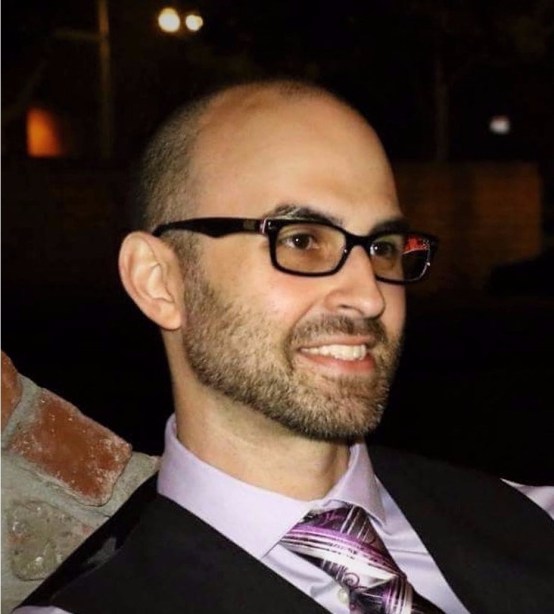
JImmy George

Jimmy George, aka Script Butcher, has been writing and producing films for over a decade. Along with optioning several screenplays, Jimmy has lent his name as co-writer/co-producer to six award winning feature-length films, garnering rave reviews, and boasting international distribution.

He has a talent for engineering fun and innovative productions on shoe-string budgets with few of the modern technological marvels used in major Hollywood blockbusters. Each of his films have been praised for circumventing their meager budgets, standing out through memorable storytelling.

Jimmy co-wrote and co-produced WNUF Halloween Special (2013), which won numerous festival awards, alongside national press from The New York Times, VICE, MTV, Birth.Movies.DeathFandango, and Red Letter Media, and is currently available on the AMC Networks’ streaming service, Shudder.

After tearing up the festival circuit, his most recent film, Call Girl of Cthulhu generated enormous buzz in the horror industry. Harry Knowles of Aintiticoolnews declared it “fun, better than it should be and quite splattacular.”.

Jimmy’s current project (and his seventh feature), What Happens Next Will Scare You, will be released next year.

In addition to writing and producing, Jimmy has a passion for helping creators succeed. As the Script Butcher, he consults with screenwriters, empowering them with the necessary tools to sharpen their scripts into dynamic stories that slice through the competition.

What’s the last thing you read/watched that you thought was incredibly well-written?

The pilot episode for GLOW. The world-building is excellent. It takes you into a sub-culture that’s mysterious and relatively unknown. The characters are memorable and entertaining. We meet the lead character at her lowest point. It leaves us with so much promise for what could take place during the series. Does everything a pilot should do and more.

How’d you get your start reading scripts?

There are many screenwriting gurus out there. I am not one of them. I’m just a guy who’s written a ton of screenplays, produced a half-dozen movies of my own, and learned a lot along the way.

Over the last ten years of making movies, I’ve become the go-to script doctor for a lot of friends and colleagues. I’ve been doing this for free for a decade and it became clear a few years ago that this was my purpose. So I decided to start this service and try to make a living doing what I love.

Telling stories is what I was put on this Earth to do. Helping others fine tune their stories is a close second. I’ve been in your shoes. I know the blood, sweat, and tears it takes to complete a screenplay. This isn’t a job for me. It’s my passion. It’s what I live for.

Where does the moniker “Script Butcher” come from?

Whenever someone would ask for notes, I always delivered their script covered with red ink. The pages looked bloody. I once joked with a friend that I was their “script butcher” and it just stuck. To this day, every time I finish a set of notes my hands are covered with red ink splatters. I have a background in horror so a lot of people assume those are the only scripts I work with, but I provide the same exhaustive notes for all genres. I’d say 75% of my clients don’t write horror.

Is recognizing good writing something you think can be taught or learned?

Writing well and recognizing good writing are skills that go hand in hand. Both can be taught and learned. For me, recognizing good writing as compared to bad has come from reading thousands of scripts at all levels of the talent spectrum. Having my own scripts brought to life on a frequent basis, sitting in theaters watching what works and doesn’t has also taught me invaluable lessons most script doctors haven’t had the opportunity to learn or pass along.

Studying the work of pros is a must too, but a lot of scripts available to the public are shooting drafts which are different from spec scripts and teach new writers bad lessons. So much can be learned from script consultants as well. I wouldn’t be where I am today without the mentoring advice and guidance I received from my own trusted script doctors.

I didn’t go to film school. The notes I received from these professionals over the course of a decade and a half, became my film school. By failing time and again, by continuing to experiment with the form and seeking constant feedback, I learned the craft. I never stopped trying to get better. Growing thick skin and learning how to use feedback to improve your stories is an important skill set for a writer.

Sending my scripts for notes became a crucial part of the writing process and continues to be.

What are the components of a good script?

A good script should have an original, marketable concept.

With flawed relatable characters who are actively seeking something they care deeply about, that we can emotionally connect with and root for, and that deals with the most important events of these character’s lives.

It should present a visual goal for the character or characters to achieve which form the central story question, and present primal, relatable stakes for what will happen if they fail to achieve those visual goals with formidable forces of antagonism that cause never-ending complications, standing in the way of the character’s achieving their goals.

It’s properly formatted on the page, relies on visuals instead of dialogue to tell the story, with plausible surprises and reversals of expectation at every turn.

And it builds to an emotionally satisfying climax that answers the central story question of whether our characters will achieve their visual goal in a positive or negative manner.

Other elements such as a quick pace, character arcs, thematic resonance, and memorable dialogue are a bonus, but not absolutely necessary for a script to do its job.

(Some of this is inspired by Terry Rossio’s 60 Question Checklist, which every screenwriter should read here.)

What are some of the most common mistakes you see?

1) FAILURE TO DELIVER ON THE PROMISE OF THE PREMISE

A story is a promise. Imagine Mrs. Doubtfire if the story followed Robin Williams working as an accountant instead of following the trials and tribulations of trying to reconnect with his wife and kids while dressed as an old woman.

The audience is waiting for you to deliver on the promise of your concept. If your script is about killer beer, you better have a beer pong massacre scene.

2) TONAL IMBALANCE

If you’re writing Schindler’s List, there’s no room for campy comedy. Vice versa.

Even if you’re mixing genres, keep your characters’ reactions to the events around them and the events themselves consistent in tone.

3) LACK OF CLARITY EMOTIONAL OR OTHERWISE

Clarity of what a character is feeling in reaction to a situation or what is being conveyed in general is a common issue I encounter with client scripts. Because the story is alive in your head, it’s difficult to tell what is and isn’t conveyed on the page. It’s all crystal clear for the writer, but often muddled on the page.

There are many more common mistakes, but these are the big ones.

What story tropes are you just tired of seeing?

UNDESERVED CELEBRITY STATUS – I see so many scripts that give their characters a level of celebrity status that’s unbelievable simply for the sake of telling the media-frenzied story they’re trying to tell. The paparazzi and press are very specific about the types of people they will follow. Make sure your characters are worthy of the celebrity status you’re giving them in your story.

USING NEWSPAPER HEADLINES AS EXPOSITION – Many of my clients rely on one newspaper headline after another to show the passage of time and relay important exposition. Media has changed. This is an antiquated story device that no longer holds weight with the audience.

What are the 3 most important rules every writer should know?

1) REVERSE EXPECTATION at every turn in a way that feels organic to the story and not calculated or contrived.

2) FIND THE CLICHE AND THROW IT AWAY. If we’ve seen it or heard it before, find another way to show it or say it that’s premise-specific. This will ensure your story always feels fresh and unique. Premise specificity is the key to storytelling freshness.

3) MAKE IT VISUAL. If dialogue comes last instead of first when you’re crafting scenes, it will ensure your story is cinematic and not better suited for the stage.

Have you ever read a script that was an absolute, without-a-doubt “recommend”? If so, could you give the logline?

I have once, it’s called BaSatai by my longtime client Suzan Battah. She’s in the process of turning it into a graphic novel. You can find out more here. https://www.patreon.com/suzanbattah

How do you feel about screenwriting contests? Worth it or not?

Not worth it. Writers put so much time, emphasis, and worst of all, money into contests. In my opinion they’d be better off spending that time improving their craft and spending their money on attending networking events and writing workshops.

While I understand the allure of getting a festival or contest win to stand out from the crowd of writers trying to break in, a contest win can be detrimental to a writer’s sense of skill level and give them a false sense of completion with their scripts.

I’ve worked with dozens of screenplays that were “award-winning” with multiple festival monikers to their name, that I don’t feel would get a RECOMMEND from a single studio reader.

Writers are paying money to contests, being assured their scripts are good enough, when they aren’t ready yet. There’s nothing more detrimental to your career than trying to shop around a script that isn’t ready.

How can people get in touch with you to find out more about the services you provide?

My website has all the details you’ll need at www.scriptbutcher.com/services

You can also find me on Twitter at www.twitter.com/scriptbutcher

Instagram at www.instagram.com/_jimmygeorge

And Facebook at www.facebook.com/scriptbutcher

Readers of this blog are more than familiar with my love/appreciation of pie. What’s your favorite kind?

Offbeat answer here. My wife and I were passing through Intercourse, Pennsylvania, otherwise known as Amish country. There was a gift shop that sold Shoofly Pie with cartoonish construction paper flies advertising how fresh it was. We bought a slice. Needless to say, it was so delicious we left with two whole pies.
All that on a single piece of (digital) paper?

bad 1st impression
It can only go downhill from here

You only get one chance to make a good first impression. And that also applies to a screenplay. If your first page doesn’t make us want to keep going, why should we? Chances are the rest of it is exactly the same.

The first page is your golden opportunity to start strong straight out of the gate. Show us from the absolute get-go you know what you’re doing. A lot of the time, I’ll know by the end of the first page what kind of ride I should be expecting.

Just a few items to take into consideration.

-First and foremost, how’s the writing? No doubt you think it’s fine, but face it. You’re biased. You want a total stranger to find it fault-free, so look at it like one. Is it easy to follow and understand? Does it flow smoothly? When I read it, do I get a clear mental image of what you’re describing? Does it show, not tell?

-Is there a lot of white space? Are your sentences brief and to the point, or do they drone on and on with too many words?

-Do you point the reader in the right direction and let them figure things out, or at least get the point across via subtext, or do think it’s necessary to explain everything, including what a character is thinking or feeling? Yes, that happens on the first page.

-If your protagonist is introduced here, are they described in the way you want me to visualize them for the next 90-110 pages? Does a notable physical characteristic play a part in the story? Are they behaving in such a way that it establishes the proper starting point for their arc? Are they doing something that endears them to us, making us care about them?

-If your protagonist ISN’T on the first page, does it do a good job in setting up the world in which the story takes place? Do the characters introduced here play any kind of role later on in the story?

-Are there any mistakes regarding spelling or punctuation? Are you absolutely sure about that? SPELLCHECK IS NOT YOUR FRIEND. A team does not loose a game, nor do I think they should of won either. Two glaring errors that your software will not recognize. But a reader will.

-Does it properly set up the genre? If it’s a comedy, should I be prepared to have my sides ache from laughing too hard? If it’s a horror, should I make sure the lights are on, even if it’s 12 noon? If it’s a drama, should I have a box of tissues within arm’s reach to dry the expected river of tears?

-Do your characters sound like people saying actual things, or are they spouting nothing but exposition and overused cliches?

Not sure about any of these? Read it over with as critical an eye as you can muster, or get help from somebody within your network of savvy writing colleagues. DO NOT go to somebody who doesn’t know screenwriting.

Think I’m being overly critical? Ask any professional consultant or reader, and I bet 99 out of 100 will say they know exactly what kind of read they’re in for by the end of the first page. And number 100 might also agree.

Then again, there’s also the possibility that the first page could be brilliant and it stays that way until FADE OUT.

Or the wheels could fall off anywhere between page 2 and the end.

Your mission, and you should choose to accept it, is to make that first page as irresistible as you can, grab us tight, and not let go. Make us want to keep going. Then do the same for page 2, then page 3, page 4, etc.  Make us totally forget what page we’re on.

Take a look at the first page of your latest draft. Does it do what you and the story need it to?

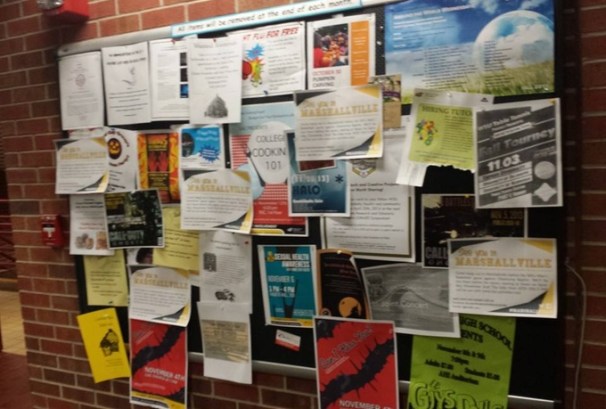
-Didja notice the spiffy new look? Had to make some behind-the-scenes changes, and this is the result.

The bulletin board returns!

bulletin board 2
No need to crowd. Plenty of pushpins to go around.

Today is once again all about promoting the projects of some very savvy creative folks, each one definitely worth checking out.

-Author/podcaster/friend of the blog Justin Sloan has released an audiobook version of his book Creative Writing Careers 2. Justin is also one of the co-hosts of the Creative Writing Careers podcast, which examines careers in writing not just screenplays, but also books, comics, and video games.

-Writer/filmmaker Luke Oberholtzer has a new proof-of-concept trailer (somewhat NSFW) for his proposed horror-comedy DRAIN BABIES. Contact Luke at Luke@LegacyEntertainmentFilms.com for more info.

-Writer/author/script consultant/friend of the blog Howard Casner has launched a crowdfunding project for his short film 14 Conversations in 10 minutes. Donate if you can! Howard is also offering a great new service for screenwriters – $20 to review the first 20 pages of your script.

-Filmmaker Scotty Cornfield‘s crowdfunding project for his short film Goodbye, NOLA is going strong! They’re getting closer to reaching their goal, but can still use a little help. Donate if you can!

Got your own project you’d like to promote? Drop me a line.