Pacing & page numbers

number-line
Looks like there’s a lot going on up ahead

When you start reading a script, you tend to recognize pretty quickly whether or not the writer knows what they’re doing. Their mastery of the craft (or lack thereof) will become soon apparent.

Bad formatting. Misspelled words. Unfilmables. On-the-nose dialogue. Cliches as far as the eye can see. Quite a checklist.

Find one or more of these early on, let alone just on the first page (which does happen), and there’s not much hope of improvement. You’re left with no choice but to force yourself to push forward. Maybe once in a while, you glance up at the upper right corner of the page/screen.

Your shoulders sag. “I’m only up to page ____? This is taking forever!” you exclaim. Making it to the end has suddenly become a question of “if”, rather than “when”.

Now let’s examine the other side, where the writer is in total control.

You encounter writing so sharp and descriptive, you can easily “see” what’s happening. Dialogue that’s not just crisp, it practically crackles. Characters who feel and talk like real people. All of it taking place in original and entertaining situations.

You become so wrapped up that you can’t wait to get to the bottom of the page so you can move on to the next one. And maybe once in a while, you sneak a glance at the upper right corner.

Your eyebrows shoot up. “I’m already at page ____? Wow, this is just zooming by!” you exclaim. You eagerly dive back in, more than ready to continue because you simply can’t wait to see what happens next.

Now here’s the big question for you, the writer:

Of the two experiences listed above, which do you want the reader to have when they read your script?

Do you want them to be bored and see reading your script as a chore that ranks up there with cleaning out the cat’s litterbox or listening to a timeshare presentation?

Or do you want them to be so involved, their attention so riveted to the tale being told in your script, that nothing short of a major crisis or natural disaster could tear them away? (Not to diminish the intensity or significance of major crises or natural disasters, but you get the idea)

It’s tough to be that objective when it comes to reading your own material. You think it’s good (“How could anyone not like it?”), but every reader has their own criteria for what works and what doesn’t. The challenge is crafting together a script so rock-solid that not liking it is not an option. Not sure if yours is? Seek outside opinions. Rewrite with the mindset of “how can I make this better?”.

As screenwriters, our primary goal is to tell an entertaining story. The last thing we want is for someone to be easily distracted by something/anything else when they’re supposed to be reading (and in theory, enjoying) our scripts.

A few words about dialogue

So when your characters speak, does what they say SOUND like something people would actually say, or does it come across as “too movie-like”?

Do they say EXACTLY what they mean?

Dialogue is a very tricky part of screenwriting that takes a lot of practice to make the words being spoken sound totally natural. When we listen to what the characters are saying, you don’t want to make us aware we’re watching a movie.

Too many times we’ll read the characters’ dialogue, and it leaves us totally flat. Maybe it’s pure exposition. Or nothing but cliches. Or exactly what you think they’ll say. There’s no subtext. No implying. Just straight-out “this is what I want to say”.

All of this makes for some boring and, in all honesty, awful reading. And if the dialogue isn’t good, it’s pretty likely the rest of the script isn’t that good either.

(And the less said about parentheticals, the better. In short – DON’T!)

A lot of writers will jot down lines of dialogue because they think that’s what the characters should be saying. But it goes a lot deeper than that. The dialogue is just one way for the character to express themselves. In fact, sometimes the most effective dialogue is where the character doesn’t say a word.

Do the lines read like the writer put a lot of thought into the content or intent of what’s being said? Audiences and readers are smarter than you give them credit for. They will get nuance and innuendo, which are both more effective than just saying the actual words.

How many writers say the lines out loud to see how it sounds? You may think that monologue is nothing short of genius, but in reality it probably makes the reader’s eyes glaze over for how much it rambles. There’s a lot to be said for organizing a table read of your script (where you will quickly learn to identify most problems, let alone having them pointed out to you by the actors).

Going back to one of the earlier questions, does what the characters are saying sound like not only something they would say, but something you would say? There’s a little bit of you/the writer in every character, so you know them better than anybody, which therefore makes you the most likely to know what they would say and how they would say it.

Like with the scene itself, you want the dialogue to deal only with the point of the scene, or at least be integrated into the context of the story. Anything extra is just going to slow things down, and the more unnecessary dialogue you have, the more it’s going to drag. Cut what you don’t need so you’re not wasting anybody’s time. Get in late, get to the point as soon as possible, get out.

There’s no secret formula for writing good dialogue. It just takes time to learn how. Read scripts and watch movies similar to yours. See how they did it, and work on applying the same principles to your material. Use what the characters are saying (and aren’t saying) to help tell the story of your script, with the challenge being keeping the words spoken and unspoken true to both characters and story.

And again – stay away from parentheticals. Please.

Avoiding the dreaded unfilmable

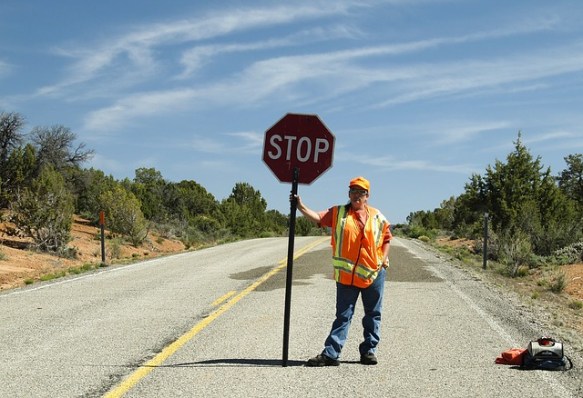
flagman
Don’t go this way!

I recently had the pleasure of giving notes on a friend’s script. It was an early draft, so it had some of the usual problems that were easily fixable.

But the one thing that really stood out to me was their use of unfilmables.

“Unfilmables?” some might ask. “What are those?”

I’m glad you asked. Here’s an example:

“EXT. PORCH – DAY

Jane sits on the stained deck chair her father bought for her birthday last year.”

If you saw that onscreen, you know what you’d see?

A woman sitting on a chair.

In other words, HOW DO WE KNOW it was a birthday present from her father? We don’t. How can you let us know? Maybe we see the father giving it to her. Or another character asks about it, and she delivers a one-line explanation.

If there’s an important detail to your story, you need to find a way to include it as part of the story, and preferably in the most organic way possible.

What’s on the page is what we see and hear.

Unless there’s a line of dialogue or some kind of action somewhere in there that reveals these kinds of things, the audience has no way of knowing them.

Here’s another:

“INT. KITCHEN – NIGHT

Kevin washes dishes. He thinks about that time he and his high school girlfriend crashed her mom’s car.”

What’s on the screen? A guy washing dishes.

HOW DO WE KNOW that’s what he’s thinking about?

Maybe we see the accident take place. Or hear Kevin talking about it. Maybe the story involves how the accident leads up to him washing dishes.

In my old writing group, one writer was insistent about leaving these sorts of things in. When pressed on why they were so adamant about not being willing to take them out, they’d launch into a long-winded explanation of why it was necessary to include them.

“So if we were watching this, you’d be there explaining things, rather than working them into the story and showing them on the screen?”

I’m not sure if they got the point.

Hopefully you do.

Just the push I needed

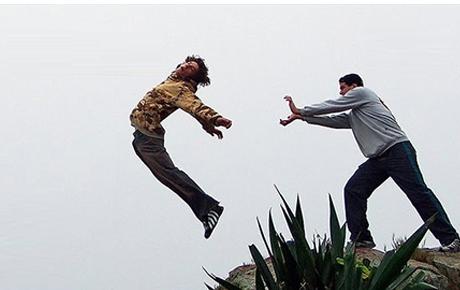
push
What are friends for?

Notes are coming in for the comedy spec, and reactions are pleasantly positive. My always-reliable readers have provided some extremely helpful notes, including an across-the-board opinion about a key plot point.

A lot of what they had to say made some good sense and are really helping solidify the script into something more-than-decent.

While they had nice things to say about the script, each reader threw in an extra little tidbit in the form of comments directed at the script’s writer.

AKA me.

“These two lines of dialogue are an anomaly compared to the rest of it. I know you can do better.”

“Great story, but I’d like to see you dig deeper.”

And these are comments from experienced writers who’ve read some of my other scripts, so they know what I’m capable of. They’re not just saying these things in a casual, generic feedback kind of way, or because they’re trying to be nice. They really mean it, and I take what they say to heart.

I thought the script was okay to begin with, but after getting comments like these, it makes me want to try even harder.

When you’re in the process of putting a script together, you really dedicate yourself to doing a good job, and then try to do better with each subsequent rewrite. It’s how we improve.

But it’s also kind of tough to be able to get yourself past a certain point. You think you’ve done everything you can, but then you get a bit of a supportive nudge and your journey resumes.

It’s quite the confidence booster to know there’s somebody out there rooting for you (especially somebody without a vested interest in you). They want to see you succeed just as much as you do. So you buckle down and throw yourself into making that next draft even better.

End result – you have a stronger script and their belief in you and your abilities is confirmed. Wins all around.

And when the time comes and they ask me for notes on their script, I have a strong suspicion I’ll be able to do the same for them.

Q & A with Ashley Scott Meyers of Selling Your Screenplay

ashley-meyers-high-res

Ashley Scott Meyers is a screenwriter and blogger/podcaster at SellingYourScreenplay.com. He has optioned and sold dozens of spec feature film screenplays, with many making it into production. All of Meyers’ screenwriting success has come through his own marketing efforts which he teaches on his blog and podcast.

What’s the last thing you read/watched that you thought was incredibly well-written?

The screenplay for SOURCE CODE is excellent; one of the best scripts I’ve ever read. I highly recommend it to anyone who is a screenwriter.

I have two young daughters, ages six and three, so I’m watching a lot of children’s movies these days. I just watched THE IRON GIANT for the first time, and thought it was very well-written.

In fact, I’d call MEGAMIND one of my favorite films. In terms of screenwriting, it’s excellent. There are very few films I watch that I think are perfect, but as a screenwriter, I’d consider it one of the few that could be called practically flawless.

My daughters and I recently watched the 80’s classic CLOAK & DAGGER, another very well-written movie. It keeps the action going and all comes together at the end. A very smart script. I saw it when I was a kid and didn’t think much of it at the time, but seeing it again, it’s a pretty solid piece of writing.

Tell us about your writing background, including your “big break”.

I’m not sure I’ve really had a “big break.” Every script I sell or option feels like a monumental effort and it hasn’t gotten any easier. In fact, I’d say it’s gotten harder as the DVD market has shrunk over the last decade or so.

But to answer your question… I really never had a background in writing. I just liked movies, and for some reason writing scripts appealed to me. So I decide to pursue screenwriting. I was a terrible student when it came to English, writing, spelling, and grammar. Pretty much every skill you need to be a writer, except one (maybe two)… persistence and determination. So I’ve just plugged away and sold a few scripts.

How did the Selling Your Screenplay blog and podcast come to be?

Believe it or not, I once saw Gary Vaynerchuck speak at a conference where he was talking about not putting your personality into your brands. At the time, I was running a whole bunch of websites, but nothing around screenwriting. So I decided then and there that I needed to do something that combined two of my skills and interests: screenwriting and web development. So I did.

As far as the podcast goes, I just started to listening to podcasts and I thought they were really powerful. So I launched my own.

You’ve had experience with short films. What do you consider the benefits of working on a short, both as a writer and filmmaker?

The biggest thing is that you get to see your work get completed, which is rare as a screenwriter. But if you write a halfway-decent short, it’s fairly easy (nothing is every easy in this business, but it is possible) to find someone who wants to shoot it. You also might get an IMDb credit, win an award at a film festival, and meet other filmmakers. Shorts are a great way to hone your craft. You’re not going to make any money doing them, but they can be a great learning experience.

Is recognizing good writing something you think can be taught or learned?

Yes. The more screenplays you read, and the more you write, the more you’ll be able to recognize good writing.

One of the things that makes movies so vibrant is the fact that you can watch a movie or read a script and notice different things every time, depending on where you are in your own life and skill level.

But yes, everyone can get better at writing and recognizing good writing.

What are the components of a good script?

That’s a pretty broad question. If I had to boil it down, I’d say good writing evokes genuine emotion in the reader or watcher. If someone reads your screenplay, and it evokes emotion in them, you’re on the right track. Everything else, like structure, characterization, dialogue, the hook, theme, etc., is really secondary to being able to evoke emotions in people with your words.

What are some of the most common mistakes you see?

The biggest mistake is underestimating the amount of work it takes to be a professional writer. I hear from so many people who’ve written one script, entered it into a handful of contests, and then wonder why they haven’t made it as a professional writer. Nobody gets to pitch for the Yankees after spending one summer practicing. Being a professional screenwriter is probably as hard as, or at least harder than, being a professional athlete. It takes an enormous amount of luck, talent, and lots and lots and lots of hard work.

What story tropes are you just tired of seeing?

It’s often inevitable that you’ll write scenes that feel familiar. I often find myself doing it, so I step back and just mix things up a bit. Try anything that’ll give the tired tropes a new interesting spin, which often boils down to adding a quirky or interesting character to the scene who can mix things up.

I recently watched a short film where a little girl dropped an ice cream cone that fell to the ground in slow motion. It was so clichéd that I really wondered why the filmmaker didn’t try to do something more original.

What are the 3 most important rules every writer should know?

There are really only two mandatory things to do to be a successful screenwriter: write a lot, and read a lot of screenplays. That’s it.

If you do those two things and really spend time analyzing your writing and the writing of others, you’ll get better and maximize whatever talent you have.

How do you feel about screenwriting contests? Worth it or not?

Contests are great. Screenwriters should be doing everything within their power to get their work out into the world, and contests can be a part of that plan. But understand that even winning the best contest still means you’re quite a ways away from being a professional screenwriter. And I certainly wouldn’t use contests as my only way to market my material.

How can people find out more about you and Selling Your Screenplay?

I blog and podcast over at SellingYourScreenplay.com. I release a new screenwriting podcast episode every week. In nearly every episode, I interview an experienced screenwriter. I also run a script consulting service.

Readers of this blog are more than familiar with my love/appreciation of pie. What’s your favorite kind?

Apple. Not very original, I know. But every once in a while someone will bring an apple pie to Thanksgiving dinner, and as I eat it I think, “Damn, that’s good pie.”