Q & A with Jeff Kitchen

072701AE-A653-4698-80FD-A2D6D67C3CE5

kitchen book 2

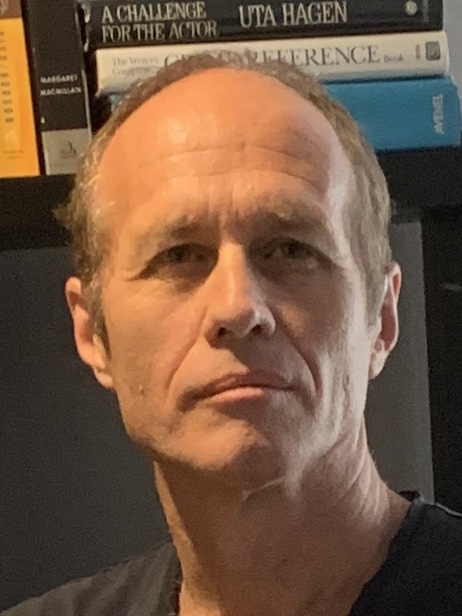
Jeff Kitchen was classically trained in playwriting technique, specializing in the work of the groundbreaking Broadway script doctor William Thompson Price.

Jeff worked as a dramaturg in the New York theater, Playwrights Preview Productions (now Urban Stages) and taught playwriting on Broadway at the Negro Ensemble Company. He then started teaching screenwriting and has taught for over twenty years in small high-intensity hands-on groups.

He teaches the craft of the dramatist, advanced structural technique, the core of dramatic action, script analysis, and plot construction. Jeff is a sought-after script doctor, plot construction specialist, and rewrite consultant.

He has taught his techniques to development execs from all the major Hollywood studios and they consistently say that he teaches the most advanced development tools in the industry.

One of his students, Ted Melfi, was recently nominated for Best Picture and Best Adapted Screenplay Academy Awards for his film about the black women mathematicians at NASA, Hidden Figures.

Jeff is the author of the book, Writing a Great Movie: Key Tools for Successful Screenwriting. Jeff is now doing high-intensity training programs for professional scriptwriters as well as script consulting.

What’s the last thing you read or watched that you thought was incredibly well-written?

Narcos: Mexico on Netflix. It was so gripping, so watchable. Hard to believe it was true. I kept telling my wife how great it is, and said to her several times I thought it was better than The Godfather. They move through so much story in just two seasons, with so much intensity and depth, great casting and acting, great writing, and so much material to weave together. The corruption makes your blood boil; the loss, the genius, the brutality, the nobility, the adventure, the chess game, the betrayal, the power and murder and love and ambition, and the pure history—there’s so much going on and it’s so compelling.

How’d you get your start in the industry?

I was mostly self-taught. A friend who was a playwright taught me the basics of Aristotle and gave me two old obscure books on playwriting to read. They were quite fascinating and very difficult, but I spent three years studying them intensely. The guy who wrote one of them, William Thompson Price, was a pioneering Broadway script doctor for top producers pre-1920 and he founded the first school of playwriting ever in the history of the world. Twenty-four of his twenty-eight students had hits on Broadway.

Price created several seriously groundbreaking tools for the dramatist and I emerged with a mastery of what he created, then improved on them and taught these tools nonstop for twenty years. People kept saying they’d never seen anything like what I taught and said they worked better than anything they’d seen. I trained development execs at all the major Hollywood studios and they consistently said I taught the most advanced development tools in the industry. So I found these old tools and ideas for tools, and studied them like crazy, then synthesized them into their current form. I taught and consulted with them for years, and got deeply experienced with them from working hands-on with them on thousands of students’ works in progress.

What do you consider the components of a good script?

The short answer to that question is my 352-page book, Writing a Great Movie. Of course I can say something in a paragraph or two, but a proper answer can go deep and wide and long. A great premise, first of all, because if your raw idea sucks, then no amount of structure or character or storytelling elbow grease will get that clunker up in the air as a commercially viable project. In the industry, it’s called Polishing a Turd. I always say well-structured crap is still crap. So start with a great idea.

Also crucial is a good strong Dilemma of Magnitude for the protagonist, but it’s not easy in such a brief format to properly communicate how to make that one dilemma occupy the full proportion of the script, build to a Crisis, force Decision and Action in the face of crisis, and then conclude with the protagonist’s active Resolution of the dilemma. The way in which the protagonist resolves the dilemma expresses the Theme, and it’s crucial to have a solid sense of theme as you build your story. You need distinct characters who are deep and complex and colorful in various ways, and who are deeply flawed, contradictory and universal.

You need attack as a storyteller, so you’re not making safe, cliché, or stock choices. Your script must be actable and it has to be stageworthy. The action of the story must move ahead aggressively, with nothing unnecessary bogging it down. It needs good cause and effect, escalating conflict, structural unity, dramatic action, and so much more. But mostly, it has to hit the audience where they live. If it doesn’t connect to the audience, then it’s not compelling.

What are some of the most common screenwriting mistakes you see?

Weak ideas, lack of imagination, lack of attack, poor execution, poor structure, lazy storytelling, stale characters, lack of depth, lack of color, overwriting, over-describing, overbearing, too much exposition, attempting to dictate an emotional response rather than earning it, lack of empathy for the main characters, underpowered ending, doesn’t pass the So What? test, crappy dialog, boring, derivative, packs no punch, uneven tone, peters out, holes in the story’s logic, lack of conflict, no clear goal for the protagonist, stupid, a simple plot vs a complex plot, episodic, formulaic, wooden characters, preachy, predictable, miserable writing skills, lack of follow-through, writing not cinematic, story not commercially viable, no sense of vision, no entertainment value, flat dramatically, lack of magnitude.

Just to name a few.

What story tropes are you just tired of seeing?

I’m not sure how many more serial killers I want to read about, or how many more procedurals, or special forces dudes, or nuclear annihilation. They can all get tiresome, but it obviously has to do with the execution, because each of them can kick serious ass when done well. But I think that things like a serial killer can be just a cardboard prop or a vastly overused excuse to write something brutal and adventurous for people who can’t or won’t do the work to go deeper and find a freakier way to mess with people’s heads.

Watch a movie like Bad Boy Bubby or Bad Lieutenant with Harvey Keitel to see something fresh and wacko. People sleepwalk through the writing process sometimes, and it’s tedious because so many people are out there writing the same warmed-over tales. There’s probably room for a story about a serial killer who kills writers who are writing about serial killers.

What are some key rules/guidelines every writer should know?

Shake things up. You’re a writer. Do something to me, mess with my head, defy my expectations, violate my sense of how a story should go. Tell a story that really tweaks me, that seriously makes me care, that grabs me by the throat and makes me notice. Make me fall in love, or go through something unimaginable, or face death, or embrace life—but do it full tilt and do it well. I don’t need the same old tired stories coming at me all day long. I’m looking for adventure, depth, love, heartbreak, power, in any genre.

Make the overall structure for your story work first. If it does not, then the details do not matter. A beautifully written scene in a script that doesn’t work is meaningless. It’s like having an ornately finished room in a house that’s falling down. Learn to work from the general to the particular. Make the overall story work, then make each act work, then each sequence, and then each scene. You gradually develop and dramatize your work as you build it.

Learn to separate the Necessary from the Unnecessary. The work of the amateur is characterized by the Unnecessary. Dialogue and description are overwritten, scenes may not be needed, whole sequences may only be dead weight, sometimes an entire act can end up being unnecessary, and in fact your entire script may be unnecessary. Which may sound funny, but it’s not. The Unnecessary kills scripts. Most scripts are unreadable—and that means 98% of them—UN-READ-ABLE. Atrocious. And in many instances, the Unnecessary plays a major part in how unreadable it is. Clean, crisp cause and effect separates the Necessary from the Unnecessary, and moves the action of the story ahead crisply and cleanly.

Master the craft of the dramatist. Dramatic writing is generally considered the most elusive of all the literary disciplines. It’s tricky, it’s slippery, it’s hard to pin down, hard to predict, and hard to diagnose or cure. But the more craft you’ve got, the more mastery you have in addressing every type of problem. People forget that scriptwriting is a performance medium—intended to be acted out in front of an audience in such a way that it’s gripping. So take the time to really learn your craft, to master it. Because almost doesn’t count, and people don’t want to read scripts that could have been good but the writer didn’t have the chops to make it work.

Take the time to build or discover deep, complex, dynamic, unpredictable, flawed, dimensional characters. Explore the Enneagram (EnneagramInstitute.com is a great resource) for each of your main characters because it’s such a remarkably powerful resource. A mixture of ancient wisdom about human nature and cutting-edge psychology, it purports that there are nine basic personality types, and each of these types has a healthy aspect, an average aspect, and unhealthy aspects. This helps you go deep and complex, to develop substantial flaws, hidden strengths, the mechanics of failure, a path to greatness, and complex, sophisticated human emotional reality.

What was the inspiration/motivation for your book Writing A Great Movie?

I wanted to get down on paper the know-how I’d accrued from teaching non-stop for eighteen years while it was still white hot. I had always taught small hands-on classes, maximum six people, and each person had to bring a script idea with them to develop so I could really get them using the tools. This helped them not only learn how to use the tools, but their scripts improved so much in the process that word of mouth on my classes was through the roof. I never taught large groups because the material was too complex. I knew that if I just talked at people about sophisticated techniques without showing them how to really use the tools that it would be mostly useless, because they couldn’t go home and use it to build their own script.

But when they started doing a big Screenwriter’s Expo in LA, they dragged me into teaching 150 people at a time. And there were riots outside my classroom of people trying to get in, so I realized that with this many people having heard about my training, it was time to write my book. So I cranked one out and self-published it by the next year’s Expo and sold a lot of them. I shopped that version and it got me a lit agent in New York who got me a publishing deal at Watson Guptill where two phenomenal editors helped bring out the best in my writing.

There are a lot of screenwriting books out there. What about this one makes it unique?

Not only are the tools unique, unusual and powerful, but I worked hard to emulate the hands-on aspect of my small classes in which I worked with each participant on their script as I explained the tools. So I explain, illustrate, and demonstrate each of seven tools in the first half of the book, and then I build a real script from scratch in the second half of the book, using all the tools. I start with a one-line idea and build the whole script, demonstrating the full use of the tools as I utilize them to create, develop, structure and write it.

Because I was rewriting the self-published edition, my editor wanted to clean up the second half of the book. I argued, saying that it had to remain unvarnished because the process of using these tools to create from scratch is necessarily messy. I needed it to remain fumbling and exploratory and rough, because cobbling a story together and dramatizing it is like feeling your way along in the dark. And I wanted to show them the raw reality, not the cleaned-up varnished version.

In the introduction to part two, I say that the first half of the book is as different from the second half as training in medical school is from working in an Emergency Room, or as studying a bear in the zoo is from wrestling one in the wilderness. I jump from tool to tool bootstrapping the story into existence, using Dilemma, the Enneagram, the 36 Dramatic Situations, Crisis, Theme, Research and Brainstorming all at the same time. And then I put the story through two structural tools, the Central Proposition and Sequence, Proposition, Plot, which help dramatize the narrative, strip out everything that’s unnecessary to the forward action of the story, and create consistent, coherent, compelling Dramatic Action.

I build the whole script with my readers looking over my shoulder, and I think it did a good job of showing the tools in action in order to give the reader genuine know-how and experience in utilizing the tools.

How do you feel about screenwriting contests? Worth it or not?

The top five or ten are definitely worth it and have launched many careers. I myself wouldn’t bother with many others, but it totally depends on what you’re up to as a writer. If you just want to put your stuff out there to see what people think of it, then you can use it as a learning opportunity. But you can also just hire somebody to give you notes on your script and that might give you more specific feedback. But there are books and websites that can help you sort the contests for value, and people who know everything about them, and they’re definitely worth taking a look at as part of a career strategy.

How can people find out more about you and the services you provide?

My website is BuildYourScript.com and I can be contacted through there or directly at jeffkitchen88@gmail.com. I offer a free class on Reverse Cause and Effect at my site. This is a powerful class that shows how to take a story you’ve roughed out and work backward from the ending, chaining backward from each effect to its cause. This enables you to stitch together the main building blocks of your story, and then to gradually flesh out the details as they become necessary. I demonstrate the process in action by working on a real script.

There’s also a paid class on a remarkably powerful plot construction tool called Sequence, Proposition, Plot which is a groundbreaking way to structure and develop your script, working from the big picture down to the details. I do consults on scripts as well as private classes on technique. One of the coolest things I do is to help people build their script from scratch, or to work with them rebuilding it once they’ve gotten a script up and running.

I’m about to roll out a high-intensity training program for scriptwriters that I’m really excited about. It’s an online immersion program in which I train apprentices for a year as we work together building multiple scripts. We’ll work two hours a day, plus one hour of homework, five days a week. In what’s called a Community of Practice, I communicate know-how through using the tools to build real scripts on the spot, and I also have students do extensive drills and rigorous exercises, handling the tools, practicing them over and over, and learning to think in that language until it all becomes second nature.

This type of learning process is called Cognitive Apprenticeship, in which writers work hand-in-glove with me to learn how to think like me. I communicate both explicit knowledge and the more ambiguous but crucial tacit knowledge, that feel for things which is indispensable for full expertise. This will be a high-intensity program, similar to a trade school, followed by a year in which I work with these highly-trained writers on building their own scripts. They will emerge as trained dramatists with key skills and experience, who can forge a career as working writers.

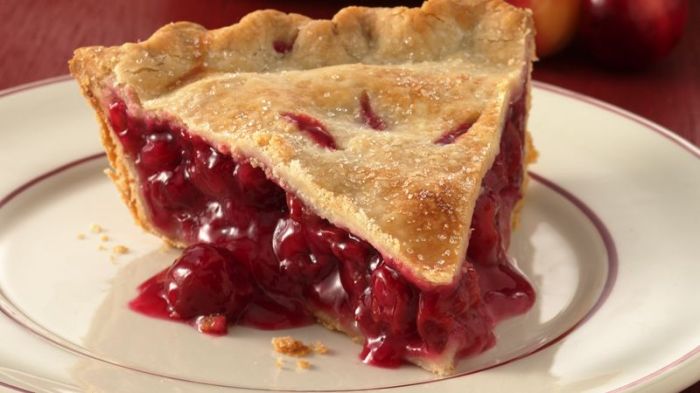
Readers of this blog are more than familiar with my love/appreciation of pie. What’s your favorite kind?

It’s hard to pick, but right now I’d have to go with cherry.

cherry pie 2

Q & A with Victoria Lucas of Lucas Script Consulting

VML headshot #1

Victoria Lucas has more than 20 years of experience as a development and production executive at both major studios and independent film companies. She began her career with Ron Howard at Imagine Entertainment, working on films including Clean and Sober, Backdraft, and Far and Away.

She later joined with Academy Award-nominated producer Rudy Cohen to develop and produce the acclaimed coming-of-age film The Island On Bird Street (winner of three Emmys and two awards at the Berlin International Film Festival). As Director of
Development, Production Executive and Associate Producer at Signature Entertainment and April Productions, Lucas helped develop projects as diverse as The Black Dahlia, The I Inside, and The Body.

Lucas currently works as an independent producer and runs a professional screenplay development service for producers, production companies and screenwriters. She is also the on-air host for Arizona Public Media’s Saturday night feature film program, Hollywood at Home, providing historical background and an insider’s look at the making of classic films.

What was the last thing you read/watched that you considered to be extremely well-written?

Parasite. I was highly impressed by that script, especially the way the writers managed to switch plot directions – and even genres – so seamlessly. In fact, I feel that films, television and streaming shows are in something of a “Golden Age of Writing” at the moment. For instance, look at two other recent films: Joker and Knives Out. I’m in awe of how Todd Phillips and Scott Silver managed to make us sympathetic to the characters in Joker (helped, of course, by Joaquin Phoenix’ amazing performance). And Rian Johnson did a masterful job of updating and reinvigorating old Agatha Christie tropes in Knives Out.

How’d you get your start in the industry?

To be honest, it all started at birth. My mother, father and two grandparents were in the industry, with both my dad and grandma being successful screenwriters. I grew up in a house where writing was an everyday job, and it was taken very, very seriously. Unfortunately, their talent didn’t rub off on me, but I discovered through reading my dad’s work – and hearing about the process it went through before reaching the screen – that my real interest lay in working with writers to develop their scripts. From there, my career began as a reader, followed a pretty straightforward trajectory: producer’s assistant, story editor, creative executive, director of development, then into production.

Is recognizing good writing something you think can be taught or learned?

I learned to recognize good writing through years of reading and discussion at home growing up. But if you’re asking whether good writing can itself be taught or learned, the answer is “Yes, I think it can.”

Screenwriting is both an art and a craft. You might be born with a talent for telling stories, but that’s only half the equation. Putting those stories onto paper in a way that will appeal to producers and audiences is the other half, and that’s the hard part. You need to hone your technique; or, put another way, to “develop your writing muscles.” Screenwriting classes, writers’ groups, how-to-books, blogs and podcasts – all can help. One of my favorite podcasts is Scriptnotes with John August and Craig Mazin.

But the bottom line is this: You have to sit in your chair and write. And write. And write some more. No matter how naturally talented you are, you must practice your craft. It’s no different than becoming a master painter, concert musician or sports star. The more you do it, the better you become.

In the end, though, every writer is different; each with their own technique. Some like to outline their story so they know exactly how it will unfold before they begin to write. Others prefer to let the characters “tell” them what’s going to happen. Some are naturals at structure; others write great dialogue. The challenge for a writer is to identify the elements of screenwriting that don’t come naturally, then work hard to improve them.

What do you consider the components of a good script?

A script is the blueprint for a movie, and the drawing begins with the concept. A great premise is like having an engine that drives the plot and the characters. If it is strong enough, it acts as the spine of the movie so that the structural elements – a compelling story, memorable characters, exciting action and all the rest – will fit together and support each other to produce a successful on-screen result. It’s not enough to create a literary masterpiece that’s envisioned entirely in the reader’s head; if the script lacks cinematic elements, it’s unlikely to get produced.

What are some of the most common screenwriting mistakes you see?

I know writers are tired of hearing about it – and many will simply ignore the  advice — but the way you present your screenplay is more important than you think. That means formatting to industry standards and doing more than a cursory spellcheck. Now, I can guarantee you that no producer ever passed on a great script because of a few spelling mistakes, but the script had to get to her in the first place. You need to realize that the first person to read your screenplay is likely to be a junior development person, an assistant or even an intern. Most of those people have a dozen or more scripts to plow through every week before the company staff meeting. If your script looks unprofessional with too many formatting errors, it’s far too easy for it to be put down.

A common mistake among emerging screenwriters is to overload a script with plot. Cramming in too many plots and subplots doesn’t allow you to develop the characters within the story. So, while a lot might happen, it’s hard to care about the people involved. Conversely, you don’t want a story where nothing seems to happen or change. Films are about conflict and drama. Always think, “What’s at stake?”

Passive lead characters are problematic. Hamlet may be indecisive but he’s not passive. In a similar vein, try not to fall onto the trap of creating supporting roles that are vivid and cinematic, while your hero is bland and uninteresting.

And please, please avoid using dialogue as exposition. I cringe every time a line starts with, “As you know…” or “Do you remember when we…?” That’s designed to give information or back story to the audience; it’s not something real characters would say to one another. Incidentally, when I was a young development exec, my friends and I used to compete for the best (read: worst) lines of expository dialogue. I won with “Tell me again why we’re going to Grandma’s.”

What story tropes are you just tired of seeing?

It’s disheartening to me to find spec scripts that are pale imitations of the hot new movie or television show that just came out. Even experienced writers often forget that by the time a film is released or debuts as a series, the studio pipeline is already filled with similar projects. Rather than chase after what seems to be commercial at the time, write a great story that you feel passionate about – one that may change the direction of what’s commercial, just as George Lucas (no relation) did with sci-fi in 1977.

What are some key rules/guidelines every writer should know?

Read scripts. As many as you can. Then read some more. You can easily find Academy Award winning screenplays online, but don’t limit yourself to the greats. Mediocre or bad scripts can teach you a great deal… even if it’s “what not to do.” One often-overlooked element in screenwriting is structure. The classic three-act structure is the norm in a majority of American films, but there’s nothing magical about it: more and more scripts are written in five acts. However, every script needs a structure just as a building needs a foundation.

There’s a truism in films: writing is rewriting. You may feel that you’ve finished your work after you write Fade Out. But really, you’re just beginning. Most of the films I was involved with averaged 9 drafts before production started – and that’s on top of however many drafts the writer did before submitting the script! Learn how to take notes. Films are collaborative and, unless you write, produce, direct, finance and star in your movie, you will be getting notes. You might not agree with or accept all of them, but do be open to outside ideas that can help your script. Writers groan (often quite rightly) about “development hell,” but the reality is that most scripts can be improved.

Have you ever read a spec script that was an absolute, without-a-doubt “recommend”? If so, what were the reasons why?

I’ve probably read over ten thousand scripts in my career, and I remember giving four straight-up recommends. That doesn’t mean I haven’t read dozens or even hundreds of superb scripts, but a development executive’s job is to find projects for her production company. If the company I work with produces mainly action films and I read an outstanding character drama… well, no matter how brilliant it is, it’s not a script I can recommend to the producers. Mind you, if the script is that good, I’ll for sure find out more about that writer and, at the very least, see if they might have something else I can take in to the producer.

How do you feel about screenwriting contests? Worth it or not?

Absolutely worth it! But be selective. There are too many contests out there that only want to take your entry fee. Do your homework and find the reputable ones. Nothing about the film business is easy, but placing well in the most prestigious contests can be a great calling card for a new writer, helping you get representation or even producers asking to read your screenplay. Some of the top contests use industry professionals as judges, especially for the finalists. This can be a big plus: If they read your script and find it’s a good fit for their company or agency, you’ll be hearing from them after the contest even if you don’t win.

How can people find out more about you and the services you provide?

My company is Lucas Script Consulting.  All the information you need is on the website, including a link to contact me.

Readers of this blog are more than familiar with my love/appreciation of pie. What’s your favorite kind?

Cherry. Ideally made with tart (sometimes called sour) cherries. Bliss!

cherry pie

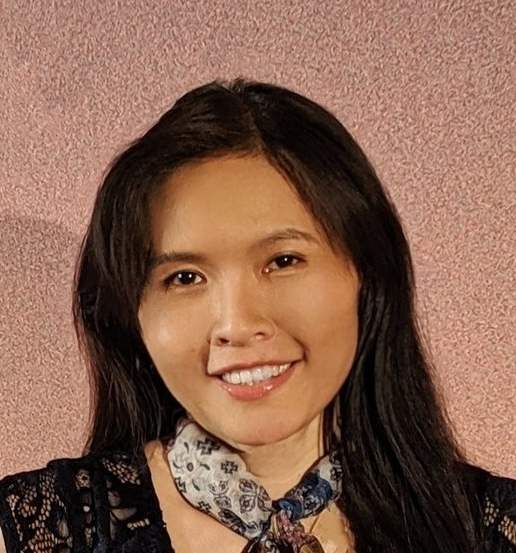
Q & A with Ellexia Nguyen of The Script Joint

Ellexia N_photo_xyz

Ellexia Nguyen is the founder of The Script Joint, an award-wining script coverage and editing company. Industry-wise, she started out as an apprentice film editor for producer Roger Corman’s company, Concord-New Horizons, and later as an assistant for Paramount Pictures’ Worldwide Feature Film Publicity.

After completing UCLA’s Professional Screenwriting Program for graduates, she launched her own business. Her company later won the 2016 award for “Script Consultants of the Year” and “Best Screenplay Editing Services”— which is showcased on the U.S. Business News website.

Ellexia works mainly as a script doctor/ghostwriter/story consultant on feature film scripts, TV pilots, TV series bibles, and novels. Some of her clients include directors, attorneys, CEOs of multimedia companies, indie producers, A-list producers, repped writers and some of Amazon’s best-selling authors.

Through her story consulting, editing and rewriting services, a handful of her clients, even new writers, successfully reached their goals by leaps and bounds, landing book deals, development deals, and multi-picture deals—some with major studios and streaming companies such as Netflix. Most notably, one of the feature film scripts that she script doctored for a client got picked up by Creative Artists Agency.

What’s the last thing you read or watched that you thought was incredibly well-written?

The Act, a gripping crime drama series on HULU. I was pulled into the story within minutes of watching the first episode at one of the TV Academy screenings. It’s an eerie dramatization of the true story about the murder of Dee Dee Blanchard, a single mom who suffered from MSP (Munchausen Syndrome by Proxy). For those unfamiliar with MSP, it’s a psychological disorder where the caretaker, usually the mom, makes up illnesses or does things to induce illnesses in the child under her care. It was a well-told story, and beautifully shot in a way to allow the audience to see and feel what the lead characters were going through.

How’d you get your start in the industry?

Some years ago, I was reading an article in a magazine about director Martin Scorsese and it talked briefly about how he had worked with producer Roger Corman.

After doing some research, I learned that Roger Corman’s company, Concorde-New
Horizons, was known for being an informal hands-on film school. After college, I reached out to the company and got an apprentice film editor position. That’s where I first came into contact with industry scripts and dailies. Over time, I became more interested in screenwriting.

Is recognizing good writing something you think can be taught or learned?

Yes, if you have a patient script consultant or mentor who is willing to point out to you what makes good writing or not. To recognize good writing, you also have to know how to recognize not-so-good writing. As a script doctor/consultant, I’ve worked with clients who had little screenwriting and novel book writing background. But over a few months, after giving them proper guidance and extensive story feedback, they were able to dramatically improve their writing and storytelling skills.

As a result, even some new screenwriters and novelists were able to get book and development deals from the drafts we worked on. So, yes, it can be taught – if the person you’re teaching has the desire, drive and determination to learn.

What do you consider the components of a good script?

A well-constructed story. Everything has to work together seamlessly such as the cast of characters, dialogue, and the story stakes. For example, a car can have the best engine, but it’s not going to take you where you want to be if you have flat tires. In screenwriting terms, that would be like having a good story premise, but characters that can’t drive the story forward due to poor dialogue.

Everything counts in a script.

It must have good dialogue because dialogue creates plot. The scenes must be succinctly narrated, moving your story along in a meaningful and visually engaging manner. You want the reader to be able to easily follow and understand your characters and their struggles. Also, the script should be well-paced and filled with a good amount of conflict and story stakes. Secondary characters should also interact with the main characters without appearing contrived. Lastly, the script should have entertainment value.

What are some of the most common screenwriting mistakes you see?

Having too many secondary characters in the story that end up robbing screen time from the protagonist and antagonist. They’re usually secondary characters that interrupt the story and do random things to each other. This often happens in underdeveloped comedies.

In a time-travel story premise, a common mistake is flooding the script with countless arbitrary “time jump” scenes—chaotically jetting back and forth between the past and present. This makes it impossible for the reader to become emotionally invested in any of the characters or their journey.

In sci-fi, it’s not sticking to the rules of the writer’s own created reality and letting characters do things that contradict the rules of the writer’s created reality.

In action, thrillers, and horrors, a common mistake is having an anti-climactic showdown between the hero and the villain. For example, the hero effortlessly defeats the villain, which takes the thrill and momentum out of the fight.

What story tropes are you just tired of seeing?

Like I mentioned earlier, sci-fi stories where the characters have to travel back in time to face something or do something to correct the past in order to save the future. Often times, there are so many time jump scenes such that they interrupt the narrative drive of the story.

What are some key rules/guidelines every writer should know?

-Write visually engaging scene descriptions, but don’t over- or under-describe.

-Give the protagonist clear goals and something to fear. What do they need to overcome to achieve those goals?

-Make sure there’s a good amount of tension and conflict in the story.

-Reward the audience for following your story by making the ending satisfying.

-Let your characters speak in subtexts, but try not to be too vague or ambiguous. Script readers aren’t mind readers.

-Have realistic expectations. Don’t expect film investors to shell out millions of dollars to turn your script into a movie if you’re unwilling to invest the time and effort to get your script polished. Show them why your script – and not your competitor’s – is seriously worth the investment.

Have you ever read a spec script that was an absolute, without-a-doubt “recommend”? If so, what were the reasons why?

Yes, the story unfolded like a movie within minutes. Strong presentation of theme. I was easily able to picture the characters, who seamlessly worked together to serve the plot. Scenes were written in a way to allow me to really see and feel what each of the characters was going through.

How do you feel about screenwriting contests? Worth it or not?

It’s one of the ways to test out your script before pitching it to producers. It’s also a way to get discovered by literary managers looking for fresh talent. But be selective and don’t blindly submit to countless contests. Not all of them offer you the same exposure or “prizes” if you win.

How can people find out more about you and the services you provide?

They can visit www.TheScriptJoint.com, follow us on Twitter at @The ScriptJoint, or connect with me on Facebook – https://www.facebook.com/thescriptjoint

Readers of this blog are more than familiar with my love/appreciation of pie. What’s your favorite kind?

Old-fashioned apple.

apple pie

Q & A with Brooks Elms

Brooks W Stripes

Brooks Elms is a WGA screenwriter of 25+ scripts with a specialty of crafting grounded personal characters and gut-punch story tension. He’s currently rewriting an Oscar-winning writer. Brooks also loves coaching fellow writers who have a burning ambition to deeply serve their audiences: www.BrooksElms.com

What’s the last thing you read or watched that you thought was incredibly well-written?

JOKER. Because it’s difficult to build empathy for protagonists with flaws that lead to violence against innocent people, especially with all the mass shootings these days. I have ethical questions about whether this was a worthy screenplay to produce because the film can’t help but celebrate what it’s also trying to condemn. And I suspect it will inspire as much (if not more) negative consequences as positive ones – but that makes the screenwriting all the more impressive and skillful. Because this was a very popular film and the bar was VERY high for that level of success.

How’d you get your start in the industry?

Making movies with my friends in high school, which led to NYU film school, then writing, directing and producing indie features. In the last decade, I’ve mostly focused on screenwriting. In between my writing assignments, I taught a screenwriting class at UCLA Extention for a while and now I coach other ambitious writers working at the intermediate to professional levels, as my own schedule allows.

Is recognizing good writing something you think can be taught or learned?

What’s the alternative theory – that people come out of the womb knowing how to write well? It’s a matter of defining what you love about other stories and getting familiar with the craft choices that lead to those results. I teach this to everybody from beginners to veteran writers so…. yup.

What do you consider the components of a good script?

It’s about the harmony between components. The craft is taking elements (premise, hero, goal, conflict, structure, relationships, setting, theme, tone, etc..) and adjusting aspects of them (size, shape, style, amount, etc..) until we find the right collective balance which allows something bigger to speak through the parts.

What are some of the most common screenwriting mistakes you see?

Losing touch with the delight of the process. And stopping because of that.

What story tropes are you just tired of seeing?

Every trope has the potential to be powerful if created with authenticity. It only feels cliche when there’s too much emotional distance from the truth of the intention.

What are some key rules/guidelines every writer should know?

I stay away from language choices like what “every writer should know X”. Those types of words can be a distraction from listening to the subtle impulses of your voice. Instead, I invite people to follow their passion. What excites us about our current story? How can we play with elements to unleash more of that excitement? When we share material for feedback, what’s blocking other people from deeper levels of excitement? “Confusion” is the most common blockage followed by “tepid goals and conflicts.”

Have you ever read a spec script that was an absolute, without-a-doubt “recommend”? If so, what were the reasons why?

The Duffer Brothers’ HIDDEN, which they wrote before STRANGER THINGS. It was a masterful display of milking tension using minimal assets in a scene. I used that script to teach myself how to make a huge impact on the way I write tension.

How do you feel about screenwriting contests? Worth it or not?

ALL the paths toward advancing your career have you pitted against the odds. So just pick the paths that speak to you and your budget. Contests can certainly be helpful so have fun playing that game, and detach from the outcomes. It’s about enjoying the journey and welcoming those that come along that happen to love your work as much as you do.

How can people find out more about you and the services you provide?

Check out www.BrooksElms.com

I run a few programs for writers looking to cross milestones as fast as humanly possible, in ways that are effortless and fun. One program is a deep dive 1:1 mentorship that’s very exclusive and competitive to get into. And I have other ways of helping writers too. So if writers enjoy the content they’ve seen from me online, I suggest they reach out because my team will be happy to help, in one way or another.

Readers of this blog are more than familiar with my love/appreciation of pie. What’s your favorite kind?

Now we’re getting to the essential question. The answer is pecan. It’s rich, heavenly and it shines beneath a scoop of vanilla ice cream. Shout out to banana cream for a close second place. It can be spectacular when it’s baked well, but breaks my heart when it’s often messed up.

Q & A with Lisa Gomez

IMG_4867

Lisa Gomez is a Los Angeles-based screenwriter, novelist, songwriter and a professional story analyst for The Black List. They write screenplays, songs and novels with their twin sister. Together, the twin siblings have placed in the Top 50 of the Academy Nicholl Fellowships in Screenwriting and are represented by Empirical Evidence.

The twins are working on 3 original pilots; a 30-minute dark comedy involving an asexual lead character, a biopic drama pilot in the vein of THE QUEEN’S GAMBIT and a female-driven SHERLOCKian-inspired pilot. Lisa is currently obsessed with Marvel, Disneyland, matcha, and reading as many books and comic books as they possibly can.

What was the last thing you read/watched you considered to be extremely well-written (any medium)?

The pilot of BARRY. It has everything that makes a story compelling and unique. Professional screenwriters have always given aspiring screenwriters these three bits of advice when setting up a character and a world: 1) Start the story with your main character doing something interesting.  2) Show the main character’s day to day, show the audience what a typical day in the life of this main character looks like. 3) Show the audience the main character’s problem. Well, in a whopping 30 minutes, this show delivers all of this and sets up the promise for more.

[Spoilers for the pilot of Barry ahead]. The very first moment of the show shows Barry walk into a hotel room, holding a gun while the camera mostly focuses on the dead body that’s lying on a bed with a bullet through his head. Immediately, this sets up the main character doing something interesting… okay, so, he’s a killer. Possibly a hitman. Whoa, that’s interesting. Then, it shows Barry’s day-to-day. We see him fly home on an airplane, get annoyed at a fellow passenger that opens a window to let the light in (a subtle but effective metaphor), then he plays video games, alone, and takes a shower, alone. Immediately, we get it. This is one lonely and depressed dude that gets no fulfillment from killing.

So, within the first five minutes (and theoretically the first five pages of a screenplay), Barry sets up the main character doing something interesting (killing someone), shows the main character’s typical day to day (he flies home after a hit, he’s alone, bored and does nothing substantial besides killing) and sets up what his problem is (that he’s depressed and gets no fulfillment from his job). It’s a pitch-perfect setup to a show. One could argue that the set-up is traditional and therefore cliché. But because this is a unique character and the premise is so bizarre, Bill Hader and Alec Berg made this setup interesting and makes the audience clamoring for more. And this is all just the first five minutes… if you haven’t seen this show, please do. It’s a masterclass in writing.

One of your job titles is story analyst. What does that job entail, and what are your responsibilities?

A story analyst is essentially someone who gives script coverage for studios, production companies and agencies. In other words, someone who receives a script and has to write notes on that script, on what’s working and what’s not working with the script, if I would pass, consider or recommend the script for the agency/studio/company. I have to read the script in its entirety, write a synopsis of the script, write a logline, describe the main characters and then write comments on why I would pass or recommend the script. Occasionally, in my notes, I offer solutions to story problems.

How’d you get your start doing that?

This is a fun story. My sister actually found an internship listing for a script coverage reader for a literary agency on entertainmentcareers.net. I applied and got the job. I did that for about a year. Then, as luck would have it, a Nicholl fellow walked into my retail job and I recognized him because he spoke at one of the classes that I took at UCLA Extension. We got to talking and he said he could refer me to a low-paying but highly regarded script coverage job. I applied, had to do test notes on a script and then got that job.

Once I started getting more and more experience, I had screenwriting friends I’d met in various networking events in LA refer me to different script coverage jobs. Every friend I met through networking was an aspiring screenwriter that eventually got a job in the entertainment industry and either reached out to me about the script coverage job or I would ask if they knew about any script coverage jobs. This is truthfully the first time I finally understood the importance of networking in this city.

When you’re reading a script, what about it indicates to you that “this writer really gets it (or doesn’t get it)”?

First and foremost, the grammar. I know, that seems like such an obvious answer but it’s true. You would not believe how many scripts I read that have beyond atrocious spelling and grammar. Sometimes the ends of sentences don’t have periods. I wish I was joking.

Secondly, clarity. What do I mean by that? Clarity is probably the easiest and the hardest aspect of writing a great screenplay. Easy because once you put on the page exactly what you want the reader to know, you’re done. Hard because putting exactly what you mean on the page is very very difficult. This is why script coverage or having someone read your script is helpful. It can point out the areas that the writer thinks makes sense but in reality, it doesn’t and it only makes sense to the writer.

Clarity, for me, means a few things. One, that the writing makes sense. For example, if you’re writing an action scene, please write description that is easy to follow and easy to read. The worst thing you can do for a script reader is make them read lines of description a few times in order to understand what’s going on. We get bored and frustrated.

Secondly, that the character’s arcs, story and plot is clear. It sounds simple, but again, most scripts don’t have this. I think it’s because the writer knows the story so well that the writer forgets to put in important and obvious things. For example, I was doing coverage on this script where the main character was queer. It was a very interesting main character, but I didn’t understand why this character’s queerness affected their journey because every character that interacted with this character loved and relished their identity. The writer then told me “Oh, because this story takes place in 2010.” BAM! I now understand the context of the story. But that date was nowhere in the script. It could be little details like that that can make a script clear or unclear.

What do you consider the components of a good script?

Clarity/conciseness. No one wants to read a script that doesn’t make sense, or rambles on too long. Make it sweet and to the point. And make it fun and interesting to read.

An interesting main character that has an interesting and relatable problem. So many scripts I read don’t have this in its entirety. Especially the relatable part. The main character might have an interesting problem, but it’s something that literally no one on this earth can relate to.

When the main character has a goal that’s actually attainable, but also difficult. This is something I don’t see all the time. What’s really important is that your main character has the skills to defeat their problem/the antagonist but it’s still difficult. A great example of this not happening is Star Wars: The Rise of Skywalker. Sure, you know that Rey is strong, but you don’t know specifically how Rey will be able to defeat Palpatine. This makes the story boring because the audience can’t participate in her journey in how she can do that. She just defeats Palpatine. It’s not set up how she can. It just happens. This is story suicide.

The script is great if it has something to say. What is your theme? What is your unique point of view on the world? Not only that, but what is your unique point of view on a specific theme? For example, everyone writes about redemption, but what are you trying to specifically say about redemption? Are you saying it’s not possible (Barry), that it is possible, but a very hard road (Bojack Horseman), or are you saying that it is possible (Star Wars: Return of the Jedi)?

Interesting situations/scenes. If you have a scene where two people argue, that can be boring. If you have a scene with two people arguing in the middle of a mall, that instantly makes it more interesting.

Great dialogue. If you have dialogue I’ve heard before, that makes me cringe. If you have dialogue specific to the character and only that character can say it, it makes me happy.

What are some of the most common screenwriting mistakes you see?

The way screenwriters describe women as beautiful, sexy, or simply defined by their looks. It’s disgusting, objectifying and just plain terrible. It’s 2020. Women have always been complex. It’s time to write us as such.

Too much description. Description writing is very hard, but please don’t have paragraphs and paragraphs of description. Try to write what only needs to be in the script but as simply and concisely as possible.

Cliché dialogue. A lot of the scripts I read have the following lines: “It’s too late!” “You really don’t get it, do you?” “Hi, my name is [blank].” “So, are you new around here?” It’s exhausting. We get it. You’ve seen a lot of movies. Please prove it by not giving us these lines that we’ve all heard a million times. Sometimes it’s inevitable. You have to. But please try to the least you possibly can.

What story tropes are you just tired of seeing?

One-dimensional women. I promise you, women are human beings that have ambitions and feelings that don’t revolve around men.

What are some key rules/guidelines every writer should know?

Write from the heart.

Write with something to say.

Get your first draft out as quickly as possible.

Even if you don’t like outlining, do it.

Read screenplays. They’ll help you write screenplays.

Live life.

Enjoy the process of writing.

Show your writing to people who will give you honest feedback.

Have a clear structure in your story.

Pitch your show/movie idea to your friends. If they don’t like it, either fix what’s wrong with the premise or think of another idea.

Screenwriting contests. Worth it or not?

Yes. Contests are great for deadlines and keeping yourself accountable. Because, if you’re paying that submission fee, you want to submit the best work that you have. However, don’t make your entire screenwriting identity about contests. I did and that got me nowhere. Use them for deadlines and don’t think about them after you submit. Just write the next script.

Follow-up: You’ve placed in the top 50 of the Nicholl. What was the script about, and what happened for you and/or the script as a result?

The Academy Nicholl Fellowships in Screenwriting are amazing. I’ve had friends become Nicholl Fellows and I’ve had friends in the top 50. We all have similar experiences.

That script was co-written with my writing partner, my twin sister. It’s a biopic about the nine weeks that Vincent van Gogh spent with fellow artist and rival Paul Gauguin. What started off as a friendly rivalry between them ended with Vincent cutting his ear off. It was my sister’s and I’s first screenplay… and it was the first draft. When we were announced in the top 50, we got about a dozen e-mails from huge agencies… I’m talking, CAA, WME, Anonymous Content, you name it… we sent them our script and then… crickets. I believe this script wasn’t ready and I also don’t think we sent them out to the agents and managers that would respond to our type of script anyway.

Here’s my biggest piece of advice if you place highly in a reputable script contest: contact the managers and agents you want to or agents that represent writers that write similar scripts to you. If my sister and I did that, I think we would have been represented by now.

How can people find out more about you and the services you provide?

Due to an ever-expanding list of projects, I’ve had to suspend my script consulting services.

Readers of this blog are more than familiar with my love/appreciation of pie. What’s your favorite kind?

Aye, there’s the rub. Unfortunately, I have a gluten and lactose intolerance, so I can’t have pie unless it’s gluten-free and dairy-free. I know, it’s a sad existence. However, if I could have any pie, I personally love apple pie. Maybe because when my stomach could handle those pesky ingredients, I would always love getting apple pies from McDonald’s during my youth and that taste just brings back good, happy childhood memories.

apple pie