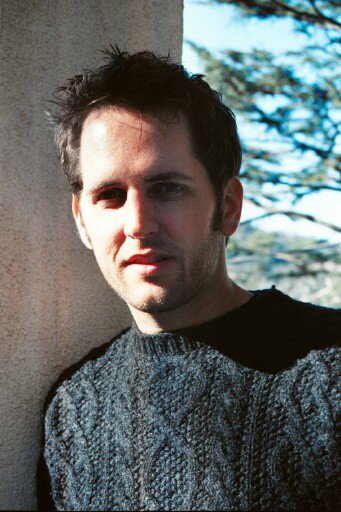
Ask a Skilled-in-the-Art-of-Deduction Script Consultant!

Staton Rabin

The latest in a series of interviews with script readers and consultants who would be worth your while to work with if you want to get your script in shape. Today’s spotlight is on Staton Rabin of Jump Cut Script Analysis.

Staton Rabin is a screenplay analyst, script marketing consultant, and “pitch coach” for screenwriters at all levels of experience (www.statonrabin.com and www.screenplaymuse.com). A Senior Writer for Scriptmag.com, she’s been a freelance reader for Warner Bros. Pictures, the William Morris Agency, and New Line Cinema, and was a frequent guest lecturer for screenwriting classes at NYU. She’s a reader for the annual Big Break Screenwriting Contest. Staton is also an award-winning, optioned screenwriter and writes YA historical novels for Simon & Schuster (BETSY AND THE EMPEROR, etc.). She evaluates screenplays and books in all genres and can be reached at staton@statonrabin.com

Staton’s screenwriter clients include at least two whose scripts were produced as films, and a number who have won or done well in screenwriting contests.

1. What’s the last thing you read/watched that you thought was incredibly well-written?

Sherlock” from BBC-TV. I confess that recently I wolfed down the entire series in about two days, catching up on all the past episodes of this great show. Clever, witty, poignant when it should be, and visually inventive. As a huge fan of the original Conan Doyle stories (and of Basil Rathbone as Holmes in the old movies and radio shows), I assumed I’d hate any “update” of them, and that no modern version could possibly compare to Rathbone’s. But “Sherlock” is hugely respectful of the original stories, yet finds incredibly smart ways to update them. My January 2015 posting for my monthly blog at scriptmag.com is about what screenwriters can learn from watching it. I am much more of a film person in general than a TV fan– and as a script analyst, my expertise is really in evaluating spec scripts, books, and movie concepts, rather than series television. But I have to admit: some of the best work today is being done for TV, and “Sherlock” is a prime example of that.

2. How’d you get your start reading scripts?

I read many screenplays before I became a script analyst for a living. After graduating from NYU film school, I hunted for a job as a freelance reader for quite a while. In those days, there were a lot of film studio offices in New York but at the time there wasn’t much in the way of “job placement” available to film school graduates (NYU has a great Career Development office now). But one day, when I was still unemployed, I bumped into an old film school classmate on the street. He was working as a freelance reader for Warner Bros. Pictures at the time. He took me upstairs to meet his boss, and in about ten minutes I had my first job. I’ve been a script analyst for over 30 years now, and have worked for many film studios, agents, and writers, so I figure maybe it wasn’t just having “connections” that’s allowed me to stay in this business so long!

3. Is recognizing good writing something you think can be taught or learned?

On some intuitive level, all film audiences have the ability to recognize good writing when they see it. There’s a lot of wisdom in what “the average person” has to say about any movie, in terms of what they generally liked or disliked about it. Audiences also intuitively understand whether a story works from a structural standpoint, especially when seeing movies. But, at the risk of sounding elitist, I don’t think everyone has the capacity to read a screenplay or book, or see a movie, and be able to identify and articulate exactly where the problems are in the material, why, and precisely how to fix them. Certainly, a professional script analyst can get better at the job simply by evaluating thousands of movies and screenplays during the course of a career and helping writers to improve their work. I know that over the years I’ve gotten much faster at “taking the watch apart” and spotting problems in a concept or story– and can do this quickly and accurately even when I’m just hearing a brief pitch instead of reading the script. I also advise them on possible solutions to those problems. So while I think that the ability to recognize good writing– or a good story– is universal, the ability to analyze what makes the watch tick (or “clunk”), and know how to take it apart and fix it, I believe is mostly inborn.

To be a script analyst, one has to have a certain kind of analytical mind– the ability to enjoy the material as entertainment, and at the same time look at it as a mechanical device that may or may not be in need of repair, and know how to find where the problem is and what the right tools are to fix it. And perhaps this analytical, detective-like, detail-oriented, problem-solving approach I take to looking at stories explains why I wanted to grow up to be Sherlock Holmes– and ended up being a script analyst!

One’s innate abilities to analyze a story can certainly be honed and improved through education and experience, but one can only build on what one was born with. You raise an interesting question, because more often I am asked whether writers are born or “made”. And to that question I’d give pretty much the same answer: Education and experience can enhance one’s talents, but talent can’t be taught.

4. What are the components of a good script?

More important than the components– which vary– is how a great script makes a professional reader feel. It’s a writer’s job to make the audience (or reader) feel what he wants them to feel. I think the first job of a script analyst is to look at a script as entertainment and be an audience. Which means that if it’s a great script, with all the right components for that particular story and genre, I will simply enjoy it just as anyone else would, and nothing important goes awry from a writing standpoint that will remind me that I’m a script analyst doing a job. The story will be clear and compelling, with high stakes for the hero. I’ll like the hero, despite his human flaws (and partly because of them). I’ll be rooting for the hero to succeed in his goal but fearful that he will fail, as the story holds me in suspense. I’ll feel strong emotions and identify with the hero. And if I feel all these things, all the way through, I’ll be excited about telling the writer about my findings. If I’m reading the script for a contest or a movie producer, I’ll be excited about handing a report to my boss giving it a “recommend”.

But if a script isn’t working, I will notice this and stop to make mental and actual notes of any problems along the way. If it’s a great script (which is very rare), I’ll note the little problems but will be inclined to “forgive” them, and start rooting for the screenplay– just as audiences root for the hero when watching a movie.

A screenplay should feel like the experience of watching a great movie. In terms of what the components of a great script are, screenplay gurus talk about all the different factors that go into it. And these days, every aspiring screenwriter is already familiar with them. Of course they involve three-act structure, and everything else you’ve read about. So instead of re-stating the obvious, I would tell screenwriters to learn what a workable movie concept is (not necessarily the same as a “logline”, though people often use them interchangeably), to practice by coming up with the concepts for classic films of the past, and to make sure you don’t even think about starting to write your script until you’re certain the concept is working as blueprint for a great movie that can sustain the story conflict for 2 hours. You should spend 80% of your time planning a script, and only about 20% writing it. If you have to rewrite the same script over and over again, something is not working, and it probably goes back to the concept. One should stop the madness and get outside professional advice.

Keeping the plot very simple can help when writing any screenplay—and generally makes for better scripts. Especially if you haven’t broken in yet, don’t try to write a really tricky, complicated plot like “Memento”. Keep your story and your main character’s goal, motive, and conflict very simple, and your characters rich and complex. Make sure your hero has a tangible, external goal (and internal and external obstacles to achieving it) right from the start. Also, read lots and lots of screenplays from financially and critically successful, produced films.

5. What are some of the most common mistakes you see?

The most common problems include a lack of clarity in what’s going on in the story, and withholding too much information from the film audience for much too long. I think many aspiring screenwriters assume that being “subtle” is desirable, and that they should hold back as much information as possible from the audience, and reveal or surprise them with it later. But actually, nothing could be further from the truth. The goal of a screenplay is to get the crucial information out as quickly, clearly, and efficiently as possible, not to be “mysterious”. Audiences should be in doubt (till near the end of the story) about the outcome for the hero, not be kept in the dark about the basic facts of what’s going on in the plot. Even in a murder mystery, there should be one big mystery at a time, not ten. Clarity is the screenwriter’s first mission. Don’t be subtle, fuzzy, or secretive when it comes to what the audience knows. “Surprise endings” are way overrated and few aspiring writers do them correctly anyway.

A lot of writers don’t understand that film is a visual medium, and how to present exposition in the language of movies. The script is often way too subtle in the way information is transmitted to the audience, and we are too often required to read the characters’ minds and “guess” what they’re thinking about. For example, the film audience is probably not going to notice signs or pictures on the wall, or how “neat” an apartment looks (many writers do this to communicate that the apartment’s owner has OCD, or the like). If a character is simply staring into space, we may not know what he’s thinking. Unless a character is actually doing something or interacting with objects in a meaningful way, the audience will not notice anything in a movie. They are not paying attention to the setting or what’s hanging on the wall (unless it’s someone’s head!), nor should the writer rely on the setting to do exposition.

In terms of visual information, only significant plot-advancing, character-illuminating action should be in a movie. Sipping coffee is not action– unless one character spits coffee in the other’s face. Eating “a hearty breakfast” is not action. And if any character in a movie MUST use a cell phone, computer, or other electronic device, the writer is going to have to find a way to make this visual and interesting (“Sherlock” does this very well).

Another problem I see in a lot in scripts lately is the misuse of dreams, flashbacks, and visions as a means of conveying exposition. Avoid them.

6. What story tropes are you just tired of seeing?

There’s no cliché so tired that it can’t be turned into something fresh and new in the right hands. Actually, screenwriters don’t rely nearly enough on tried-and-true dramatic formulas and techniques. You’re not going to come up with an original plot, so don’t even try. Following the proper dramatic twists and turns for your genre is exactly what you should be doing– with some new and original twists on what works. Writers should never make the mistake of thinking that following a formula is the same as formulaic or sloppy, ham-handed writing. Your goal should be to take a familiar and conventional story structure and give it a few new twists and surprises, and great characters of real depth and complexity.

All that said, you can’t go wrong if you avoid the following clichés:

-Blatant references to other movies or famous songs in your own screenplays.

-Flashbacks, dreams, and visions (as stated above).

-Giving characters a disability of some sort as a substitute for finding something unique and quirky about them derived from the pure skill of your writing.

-Trying to show us a character is afraid by indicating in your script that he is peeing in his pants.

-Any script about a writer. If you write about an author whose goal is to pen the Great American Novel or write an Oscar-winning screenplay and strike it rich, it is very difficult to make an audience care about goals like these and the nature of his profession provides few obvious opportunities for visual action unless he’s a reporter in a war zone. For most stories about writers, we are going to have to absolutely love your main character, and know what success means to him beyond the obvious, in order to care about his struggles. And, yes, I saw “Adaptation”, and it was okay.

7. What are the 3 most important rules every writer should know?

-Work harder than anyone else, and work smart.

-Plan your concept and your story before you write your script. Don’t go ahead till you are certain it’s going to work.

-Follow the rules, but know when to break them, keep the plot simple, and write with passion. Be yourself. Don’t try to write “that junk” or “that great movie”. Write something emotionally honest that comes from your gut (even if it’s a comedy). There is no “magic formula” for writing a great script. Each one is unique.

8. Have you ever read a script that was an absolute, without-a-doubt “recommend”? If so, could you give the logline?

I could tell you, but then I’d have to kill you (great example of a cliché never to use in any script!). Kidding aside, it is hardly ever the concept or the logline that makes a great script. A logline (or concept) should and in fact must be dramatically viable: a properly structured formulation that has all the elements of drama (a main character with an urgent and compelling external goal, the character’s action in pursuit of that goal, and the main conflict or obstacle to achieving that goal) and that can sustain the conflict over a two-hour movie. And although it’s great if you have a slam-dunk “high concept” idea, and ideally your concept should have an element of originality, the execution is far more important. You need a reasonably fresh and interesting idea that works as drama or comedy over the course of a 2-hour movie. It does not have to be “really catchy” (though of course that helps), it just has to be interesting enough and workable. Your script, however, has to be truly great, not just “good”.

9. How do you feel about screenwriting contests? Worth it or not?

It depends on the writer’s goals and which contest. These days, there are only a handful of contests for which having been a winner or finalist is really going to impress a film producer. So if that’s your goal, enter Nicholl, Big Break, Austin, Sundance, or one of the other top, prestigious screenwriting contests. If your goal is to get the attention of the industry, then seek out contests that give you “access” and very major publicity in the trades as the prize, instead of ones that only offer money. Of course, many screenwriting contests have entry fees, and this can add up for many writers who have low incomes. So choose your contests wisely.

10. How can people get in touch with you to find out more about the services you provide?

Ah, my favorite question! They can write to me at Cutebunion@aol.com. They can also find some information about my services at my website. I read and evaluate screenplays and books, but also advise writers as a consultant at any stage of their process, from concept to finished script. I can provide advice on pitching and marketing their material, what to put in a query letter, and can suggest some creative and smart ways to approach the process of trying to get a particular movie star “attached” for the lead role—without being a stalker!

I also have a monthly screenwriting column, “Breaking In“, for Script Magazine, which consists of “how to” articles about the craft of screenwriting (mostly for those who already know the basics), and the business of marketing a script.

11. Readers of this blog are more than familiar with my love/appreciation of pie. What’s your favorite kind?

Oops. Spoke too soon. This is my favorite question. Depends on the season. Pumpkin in the fall, key lime and banana cream at other times.
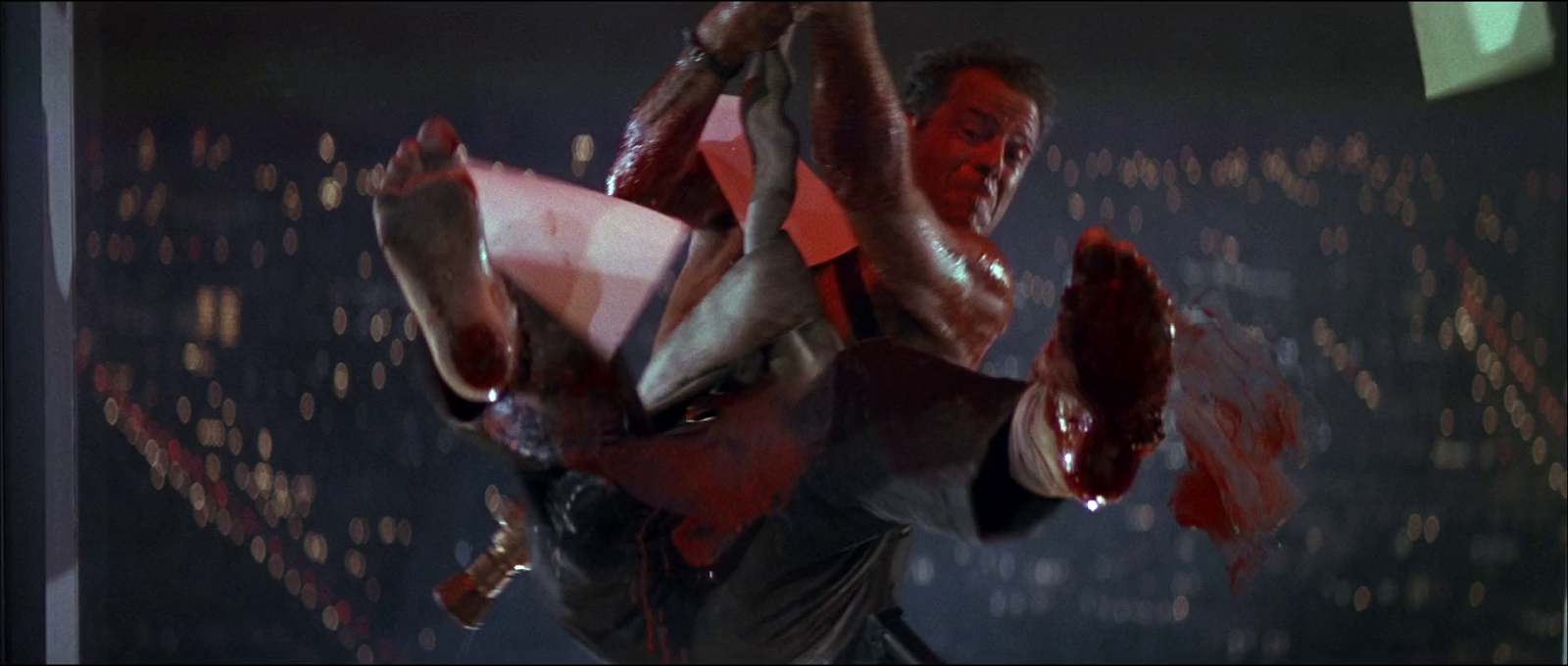
Unstoppable force, say hi to immovable object

There is something in this man's way
There is something in this man’s way

Pop quiz time!

Apart from advancing the story, theme and character development, what is the one key component every scene should contain?

Okay. Pencils down.

A big ol’ piece of pie to everybody who said “conflict”. Without it, your script’s on a one-way trip to Boringtown.

I recently became involved in a discussion with a starting-out writer who asked about the best way to describe how a sequence in his script could play out. After looking at the source material (based on true events), I said if he only writes what happens, there won’t be any drama to it. It needs conflict.

“Conflict how?” he asked.

That’s what it come down to, isn’t it? A lot of newer writers hear “conflict”, and they immediately think two characters are supposed to be arguing. Sometimes that might apply, but it’s not necessarily what it means.

Conflict is two opposing forces going up against each other, and those two forces could be anything (within the limits of your story, of course). Most of the time, one side will be your character and the other will be something or someone standing in their way of achieving their goal, be it immediate or overall.

Which would you rather watch? A story where everything goes just fine for the main character, or one where they’re always dealing with some kind of problem?

One of the great things about conflict is that it can come in any shape or form.

“What if a character opens a window?” was the follow-up question. “Where’s the conflict there?”

There isn’t any. If you’re reading a script and get to a scene that only involves a person opening a window, you’d think “What purpose does this serve?” and tell the writer to cut it.

The conflict would be if it won’t open. There’s a story there. Your curiosity is piqued. Questions are raised. Why won’t it open? Why do they want it open? What are they willing to do to get it open? What’ll happen after they get it open?

Conflict helps move the story forward. Part of our jobs as writers is to come up with new, original and imaginative ways to portray that conflict. The way I have the character open that window is probably totally different than how you would.

Even the central question of your story shows conflict: Will the main character achieve their goal?

While you work on your latest draft, take the time to examine each scene, even the ones only a line or two long. Is there conflict of some sort?

If there is, great. If not, you need to get some in there.

Ask an In-the-Director’s-Chair Script Consultant!

Jeff Richards

The latest in a series of interviews with script readers and consultants who would be worth your while to work with if you want to get your script in shape. Today’s spotlight is on writer-producer-filmmaker Jeff Richards.

Jeff Richards is a story consultant, filmmaker, and writer with over twenty projects either optioned, produced, or sold. His clients range from award-winning novelists to creative writing professors to screenwriters working for major studios. His own writing includes feature films, TV series, graphic novels, and short stories, as well as writing for children’s animation and computer games. His background includes information technology, a decade as an opera singer, and he is an honorary member of the Takaya Wolf Clan of the Tsleil-Waututh First Nation.

1. What’s the last thing you read/watched that you thought was incredibly well-written?

The Karla trilogy by John Le Carré, and if you ever need a lesson that character is king, look to those. The books are often very low on action; they largely consist of dialogue (most of which is people recounting events, as you’d expect in a book about counter-intelligence) and the characters are so magnificent you don’t care that you’ve just spent hundreds of pages essentially listening to people talk. The protagonist for two of the books, Smiley, often isn’t even doing the talking; he’s merely listening. Yet it works.

As for watching, I’ve been re-watching Doctor Who, and “Blink” is possibly the best hour of television I’ve ever seen. Stunningly imaginative and original, incredibly atmospheric, and one of the very best examples of burying exposition I have ever seen in any medium. If I write something that good, I’ll die happy.

2. How’d you get your start reading scripts?

I spent several years as an independent filmmaker and although I did write most of the projects we were developing, I’d occasionally work with an outside writer and help them. That made me realize that I could apply what I’d learned as a writer to helping others with their scripts.

3. Is recognizing good writing something you think can be taught or learned?

Absolutely. The love of words is probably pretty difficult to instill in an adult, but if someone is already interested in it, then it is definitely possible to learn to recognize good writing. The secret is to read widely and actively, both good and bad material; once you’ve read and analyzed enough writing, and worked out why it works or doesn’t, you start to see the patterns very clearly, particularly in screenplays. Objectivity about our own writing? That’s trickier…

4. What are the components of a good script?

What’s most important, and what I don’t see enough of, is a unity of character, plot, and theme. People talk about “character-driven scripts” or “plot-driven scripts” when, in reality, they should driven by the same engine.

As for the rest, it’s about what you’d expect; an active protagonist, strong pacing, dialogue with subtext, an original concept, rising stakes, good conflict, a surprising but inevitable ending… all that sort of thing. However, the only absolute must-have is that it is interesting. For every other must-have you’ll see on a checklist, you can usually think of a great script that didn’t have it. Passive protagonists are death… unless you are talking about The Graduate. Or Being There. But these are scripts by master writers; you need to be very sure why you are going against the grain, and how it makes your story better. (And, as you can tell by the age of the examples, rule breaking isn’t that popular anymore in Hollywood.)

5. What are some of the most common mistakes you see?

Going back to the previous point, a disconnect between character, plot, and theme is common. This usually causes protagonists with unclear goals and flat second acts. However, the most common thing I see is on-the-nose dialogue. Characters who say exactly what they feel and think, or who sum up the central conflict in a speech. If you ever read “You know what your problem is?”, then that’s probably a bad sign.

6. What story tropes are you just tired of seeing?

I think I’m almost unique in that my answer is “none”. Every trope is ready for a great script to make it fresh. Amnesia is the most tired device in writing, yet The Bourne Identity comes along and is fantastic. There’s always room for a great script.

The thing that tires me isn’t story tropes, but clichéd dialogue. Don’t have lines from other movies in your movie. Be original.

7. What are the 3 most important rules every writer should know?

-Read widely; lessons are everywhere, and most of them are outside your genre and format. So if you’re a sci-fi feature film writer, read historical fiction. Read detective comics, manga, sitcom scripts. Expand your brain.

-Writing is rewriting; every first draft is a huge bundle of problems waiting to be solved. So solve it. And not by editing, but by rewriting. Changing words in action or dialogue is just editing. Changing characters, plot points, deleting or adding scenes, that’s rewriting. Do multiple passes, focusing on a different thing each time. One pass (or several, more often) for plot, one for each major character’s dialogue, one for action lines… if you’re building a shelf, you don’t sand and paint at the same time.

-Don’t get hung up on systems. Read how-to books, sure, but pick and choose your advice. Being a slave to a particular checklist is usually indicative of poor writing. If I can tell that you’ve read Save the Cat by reading your draft, then there’s probably too much Snyder and not enough you in your script.

8. Have you ever read a script that was an absolute, without-a-doubt “recommend”? If so, could you give the logline?

Unfortunately, I can’t share loglines due to confidentiality. But for me, “recommend” can’t focus too much on the logline. Concept is important, sure, but the writing is what matters, what makes it a “recommend”. I’ve had writers with straightforward concepts come to me and, after we hone the execution, they get jobs at major studios or get 10 on The Black List. That doesn’t come from the logline, but the execution, how they wrote (and, as per rule 2 up there, rewrote!) Chinatown’s logline doesn’t set the world afire, yet it is generally regarded as one of the great scripts. So a logline wouldn’t really illuminate why I feel a particular script is great. Loglines only show whether something is the type of script an exec should read (e.g. it’s high concept sci-fi and that’s what they’re looking for). The logline gets you the look; the writing gets you the job.

9. How do you feel about screenwriting contests? Worth it or not?

I personally don’t do them very often. I have in the past and placed well, but I never found the contest actually led to a job; what worked for me was my personal networking. However, every path is different and obviously you hear success stories. What is important is that you put in the time, both into the writing (mostly) and into building your career, whether that’s contests, pitchfests, networking… Whatever seems to be working for you, do that. If nothing’s working (and the writing is genuinely where it needs to be!), then change things up.

10. How can people get in touch with you to find out more about the services you provide?

Jeff is no longer actively seeking clients, but is still open to receiving requests via his website at strangeborders.com. He also suggests connecting with him on Twitter.

11. Readers of this blog are more than familiar with my love/appreciation of pie. What’s your favorite kind?

Pumpkin, no question. With fresh whipped cream. A great pumpkin pie will turn me into the seven-year old kid who eats so much he feels sick. It is inevitable.

I probably need help.

Ask a Multi-Award-Winning Script Consultant!

Erik Bork

The latest in a series of interviews with script readers and consultants who would be worth your while to work with if you want to get your script in shape. Today’s spotlight is on Erik Bork, who also runs the website Flying Wrestler.

Erik Bork is best known for his work as a writer-producer on the HBO miniseries Band of Brothers and From the Earth to the Moon – for which he won two Emmy and two Golden Globe Awards. He’s also worked on the writing staff of two primetime dramas, sold multiple original series pitches, and written pilots and features for such companies as Universal, Sony, NBC, Fox, Imagine, Original Film and The Playtone Company. He teaches screenwriting for UCLA Extension and National University’s MFA Program, and has been called one of the Top 10 Most Influential Screenwriting Bloggers.

His book The Idea: The Seven Elements of a Viable Story for Screen, Stage or Fiction is now available.

1. What’s the last thing you read/watched that you thought was incredibly well-written?

I’m continually impressed with how DOWNTON ABBEY tells interesting, emotional, heartfelt stories that are grounded in the realities of its setting, for the various kinds of people who populate it. I’ve been re-watching the first three seasons lately – and think it’s great model for what makes characters and stories compelling, and easy to invest in.

2. How’d you get your start reading scripts?

I’d been a professional screenwriter for about a decade and was being asked to speak to writers groups, teach classes, and give feedback on scripts.

3. Is recognizing good writing something you think can be taught or learned?

Absolutely!

4. What are the components of a good script?

An intriguing and original concept about a compelling and high stakes problem for a character most people can relate to (either the character, and/or the problem) – which focuses on that character as they actively try to solve it, which is complicated and difficult for them, and entertaining for us to watch. I think working with the ten genres in the SAVE THE CAT books are a great tool for working on achieving this.

5. What are some of the most common mistakes you see?

Writers jump to script too quickly, without really developing a concept that has the ingredients necessary to have a chance at success. Stories often don’t have a main character that readers understand and have reason to care enough about, and sometimes it’s not told subjectively through that one person’s point-of-view. The main story problem is often not high stakes enough to the main character’s external life situation (as opposed to their internal life of thoughts, emotions and attitudes). It might not be an active enough challenge where they are pushing the story forward, or a problem that is big enough and hard enough, with enough twists and turns to it. Ultimately, it comes down to achieving the audience’s strong caring, and holding onto that – which is not easy to do.

6. What story tropes are you just tired of seeing?

I get tired of violent adventure stories with life-and-death stakes and a simplistic good vs. evil approach. It’s easiest to grab an audience with that, but it tends to leave me cold – especially when it’s just about visual spectacle, as opposed to realistic characters going through something relatable.

7. What are the three most important rules every writer should know?

-Basic story concept is the most important thing, and hardest to get right.

-The audience must emotionally become one with your main character, which isn’t easy to achieve.

-It’s hard and rare to write something that REALLY works, even for professionals – so stay open to feedback, lots of rewriting, and a long-term process that requires a lot of persistence and ongoing belief.

8. Have you ever read a script that was an absolute, without-a-doubt “recommend”? If so, could you give the logline?

I don’t really provide coverage-style “recommend”/”consider”/”pass” ratings, and don’t exactly think in those terms. I’m more about helping the writer better their craft and project(s), and never look for or expect a script that comes to me to be something they could instantly do something with in the marketplace.

9. How do you feel about screenwriting contests? Worth it or not?

They’re in no way a panacea or golden ticket, and most of them probably won’t do much to advance one’s career – unless you finish really highly in one of the top contests. But it can be a good way to see how you’re doing, and get quality feedback, if you find the price reasonable.

10. How can people can get in touch with you to find out more about the services you provide?

You’ll find my script consulting page on my “Flying Wrestler” blog. You can also e-mail me directly at erik@flyingwrestler.com.

11. Readers of this blog are more than familiar with my love/appreciation of pie. What’s your favorite kind?

Cherry, hands down.

Ask an Inspiring-the-Aspiring Script Consultant!

Amanda Pendolino copy

The latest in a series of interviews with script readers and consultants who would be worth your while to work with if you want to get your script in shape. Today’s spotlight is on Amanda Pendolino.

1. What’s the last thing you read/watched that you thought was incredibly well-written?

I really liked THE SKELETON TWINS. It blended comedy and drama in a way that I think is very hard to do. It also got its plot moving in the very first scene, and brought out the humanity in characters who make terrible mistakes.

2. How’d you get your start reading scripts?

I first learned to write coverage while interning at a production company. Then I did more coverage when I worked as an assistant at an agency. After I left the agency, a former coworker of mine had moved onto a production company and hired me as a freelance reader. All my other reading jobs also came about through friends/contacts.

3. Is recognizing good writing something you think can be taught or learned?

Hmm, that’s hard. Your own personal taste isn’t really something that can be taught, but yes, I do think you can learn what it is that producers and studios are looking for.

4. What are the components of a good script?

A compelling concept and visual world, well-developed characters, an interesting plot with conflict and movement, authentic dialogue.

5. What are some of the most common mistakes you see?

Many writers don’t take enough time to develop their concepts. Is your idea enough to sustain a MOVIE or entire SERIES? Is it fresh and original and interesting – and is your concept clearly established? Other mistakes include boring characters (you need to be writing ROLES that can attract top actors) and plots that unfold without any twists or turns. New writers also sometimes write prose that fails to create mood/atmosphere/tone. Every moment of your script is an opportunity to show off your specific voice and writing ability.

6. What story tropes are you just tired of seeing?

Women who are sex objects; women who are too perfect/idealized; one woman in a script with twenty guys.

7. What are the 3 most important rules every writer should know?

-Writing is rewriting. Don’t send a script out until it’s ready.

-Read scripts and watch TV/movies voraciously.

-One single script probably won’t launch your career. Sometimes the best thing to do is move on and write a new script.

8. Have you ever read a script that was an absolute, without-a-doubt “recommend”? If so, could you give the logline?

I recommended the script IMOGENE by Michelle Morgan, which became the movie GIRL MOST LIKELY. The logline I wrote for it was “After getting dumped and losing her job, a desperate young woman gets banished to New Jersey. After she discovers that her father is still alive, she sets out to find him, hoping that he’s the impressive parent she’s always been looking for.”

9. How do you feel about screenwriting contests? Worth it or not?

Certain ones are reputable, like the Nicholl Fellowship – but in most cases, the people who win contests don’t really get anything as a result. Many people who run screenwriting contests don’t actually put you in touch with anyone, and most producers/agents/etc aren’t going to be impressed that you won some random contest. “Anybody can win a contest,” my old agency boss used to say. Go ahead and enter a contest if you can see actual evidence of previous winners launching careers, but don’t hinge all your career success on winning a contest. It would be a mistake to think that entering a contest is the only thing you need to do to get your work out there.

10. How can people get in touch with you to find out more about the services you provide?

You can check out my website at amandapendolino.com or email me at aspiringwriterblog@gmail.com.

11. Readers of this blog are more than familiar with my love/appreciation of pie. What’s your favorite kind?

I also love and appreciate pie! I’m going to have to go with classic apple pie – with vanilla ice cream on top, of course.