Out with the old…

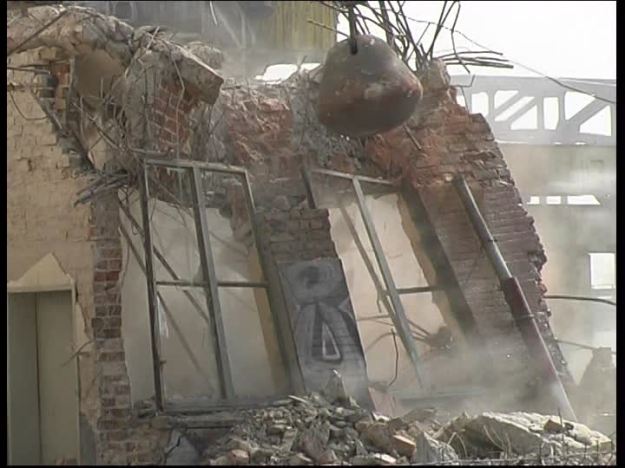
wrecking ball
Just clearing away some stuff I don’t need anymore…
Seeing as how I’ve designated this latest go-round with the comedy spec as an “overhaul”, it’s only fitting that that’s what actually happens.

I’d decided I was absolutely not going to use the previous draft as reference material. This approach was going to be more than just the slapping on a new coat of paint and rearranging the furniture.

Granted, there were some select parts that survived the trip from the previous draft to the new one, but only because they’re vital components of the story, which makes them still relevant. Everything else, however, would be fresh and new.

And as you’d expect, that’s been slightly tougher. Tough, but not impossible.

Developing changes in a rewrite can really test one’s mettle and determination. Sometimes I’ll feel stuck and think “How’d I do it before?”, but then I fight the temptation to dig up the previous outline, reminding myself I’m in overhaul mode. Looking at the previous draft would counteract what I’m working towards now – to try something new.

There’s always a different path to where you’re trying to go.

I suppose part of it is the occasional lazy writer approach of considering what’s come before as “good enough” and not really changing it that much, but if it were “good enough” to begin with, I wouldn’t be working so hard on changing it this time, right?

Some days I’ll produce a wonderfully long sequence in no time flat, while some will yield a meager handful of bullet points of important moments that need to happen within the context of that scene or sequence, and took a dreadfully slow hour just to come up with.

Despite all of this, the results so far have proven encouraging, with work about to begin on a totally-from-scratch sequence. Forward progress is slow, but steady – as it should be.

I suspect the end result will be significantly and pleasingly different from its previous incarnation. And I wouldn’t have it any other way.

-two new items posted to the Maximum Z Bulletin Board!

-Screenwriter Kay Tuxford, director Prathana Mohan, and producer Edward Timpe have launched the crowdfunding project for The MisEducation of Bindu, a new and original take on the typical high school film. The script was a Nicholl semifinalist, so you know it must be some high-quality stuff. Donate if you can!

-Starting today and running until September 30th, screenwriter Max Adams is offering up a limited time half-off special on script consultations. Go to the contact link on the website to email her for details.

Sums it up succinctly

bttf1
“Spaceman from Pluto”?*

While taking a break from working on the comedy spec this weekend, I took an unexpected dip into my file of “ideas in development” – scripts I plan on eventually writing.

One had more details to the bare-bones outline than I remember. In fact, I barely recall even writing it. Still, pretty impressive.

Another was just a logline and three potential titles. While the story really adheres to my ongoing attempt at trying to write material of a smaller nature (i.e. not as big-budget), what really stood out was those three titles and how different they were from each other.

The first stirred up a kind of noble nostalgia, and in retrospect might be better suited for another story.

The second was pretty generic; almost like something you’d see on a VHS copy of a mid-90s B-movie gathering dust on a lower shelf at your local video rental store. If you’re of a certain age, you totally get that reference.

The third was very reminscent of a certain genre and style of older films, and the final word in the title tells you what kind of story to expect. Such was the case here, but as much as I like the word, it wasn’t exactly the right fit for the story I wanted to tell.

Fortunately, the word in question has a lot of synonyms, and one in particular really jumped out at me. Some might consider it of a vulgar nature, but wow did it fit. In fact, as soon as it popped into my head, I actually laughed out loud, thinking “oh my gosh, this is PERFECT.”

Because not only is the new word an ideal fit for the story, but it really drives home the tone.

Although work on this script goes into the ever-growing pool of “future projects”, at least now the concept and story are a little more developed than they were. And any progress is good progress.

There can’t be enough emphasis on the importance of a strong title for your script. It’s the entry point for your reader. You want them to know what kind of story they’re getting, what to potentially expect, and most importantly, you want them to be excited about reading it.

Sometimes your initial title is good, but there’s nothing wrong with a little tinkering to find an even better one. Like your script, it can always do with a little rewriting.

*Universal Studios head Sid Sheinberg didn’t like the title “Back to the Future,” claiming nobody would see a movie with “future” in the title. In a memo to Zemeckis, Sheinberg suggested the title be changed to “Spaceman from Pluto,” and the title reference be worked into the film.

In response, Spielberg sent a memo back to Sheinberg, thanking him for sending his wonderful “joke memo” and that the office “got a kick out of it.” Embarrassed, Sheinberg let Zemeckis and Spielberg keep the film’s original title.

Drastic, possibly foolhardy, but definitely beneficial

Window Cleaner
Sometimes extreme measures must be taken, no matter how challenging

Work on the outline of the comedy spec continues – with a most interesting development.

But first, a little backstory…

When I first approached this rewrite, I knew it needed a lot of work. A LOT. So I decided not to call it a rewrite, because it was much more than that.

“Overhaul” seemed perfectly appropriate. So that’s what I was calling it.

Problem was, that even with some quality notes, I wasn’t sure how to go about it. When I take on a rewrite, I’ll usually refer to the previous outline and see what I can do to change things around.

But that wasn’t working this time. Quite the opposite, actually. I was feeling stuck, making zero progress, which in turn was making me feel annoyed and frustrated. I was more and more in desperate need of some kind of solution.

I had a solid concept, but it was the execution that was giving me trouble. I knew where I wanted to go, but was having trouble getting there.

When I provide notes on a script, if I read something that feels flat or unoriginal, I’ll suggest “Try a totally different approach that gets us to the same point. Do a 180, or make a hard left – anything to really shake it up!”

It’s worked for other writers, so why not apply that sage wisdom to myself?

So I did.

It’s a lot easier to suggest “Wipe the slate clean and start over!” than it is to do the wiping and starting over.

But so far it appears to be just the solution I was seeking.

Although somewhat intimidating at first, the blank page soon became filled with new ideas and variations on old ones. Certain details remain the same, plus a few odds and ends, but for the most part, it’s become a much different journey to the original destination.

It was also surprising how easily the new material popped up. By not keeping myself chained to the previous draft, I was allowing myself the freedom to just try new stuff.

There’s still a lot of work to do, but it’s a most satisfying start.

I speak from experience

SF running
Exercise, a view, and lots of time to think about your script

“Writing a screenplay is a marathon, not a sprint.”

Bet you’ve heard that one before, right?

It’s true. Learning how to write a screenplay takes time, let alone how to do it well. It might come easier for some, but no matter what your skill level is, it always remains a struggle.

And that feeling when you’re done (at least with the latest draft)? Euphoric sums it up quite nicely.

So that whole running metaphor is pretty apropros. Especially for me.

For those not in the know, I enjoy running half-marathons. Seriously.

I’ve run about a dozen or so the past few years. Like with the writing, it’s a self-imposed challenge and pushes you to keep moving forward. Believe me, there are definitely times during those races I just want to stop and catch my breath, but I don’t because I want to keep going and see what I’m capable of.

I usually finish somewhere just under 2 hours, which isn’t bad.

A few weeks ago, I ran a race in San Francisco and finished with a time of 2:02:56, which some might think is great, but I still considered a little disappointing.

This past weekend was another race – across the Bay in Oakland. The results of the previous race really shook me up. Was I once again going to fall short of my goal?

Only one way to find out.

I did my best to maintain a steady pace and continuously reminded myself that even though it was a challenge, I felt I had a pretty good handle on it. Oakland’s also a lot flatter than San Francisco, which probably helped.

The home stretch for this race is an 8-block-long straight line through downtown Oakland. At the finish line, there’s always a big digital timer. As I got closer, the numbers came into view.

1:54:30? Wow! And just a handful of blocks to go!

You know that feeling when you’re writing the last page of your script and FADE OUT is coming up fast and you get that sudden rush of adrenaline and you can’t believe the end is finally in sight?

Even though you’re exhausted and feeling totally spent, you can always find that hidden reserve of energy, which is just enough to get you to that goal.

Giving it everything I had, I poured on the speed (or at least as much as I could muster) and ran like a madman to that finish line.

End result – 1:54:59. Not only did I break the 2-hour mark,  but I just squeaked by my other personal objective of breaking 1:55.

All that self-doubt from before had been erased. I had given myself a goal and set out to accomplish it.

Notice all those comparisons to screenwriting that could be made?

Every script is your own personal challenge. Sometimes it’ll be easy, and sometimes it’ll feel like nothing is happening, but the important thing is for you to keep at it and not stop trying to reach that finish line.

Like with training for these runs, it requires a lot of work. You find the time to do it when you can, hoping each session yields a slightly better result than the previous one.

My current work on the comedy spec coincides with this latest round of training for my next race – early November, and again in San Francisco. Both script and race will be a little more on the challenging side, but by engaging in regular training, I’m fairly confident I can achieve the results I seek.

A little stretching, a few deep breaths, and off I go.

Let’s get moving, chums.

Good. Better. Getting there.

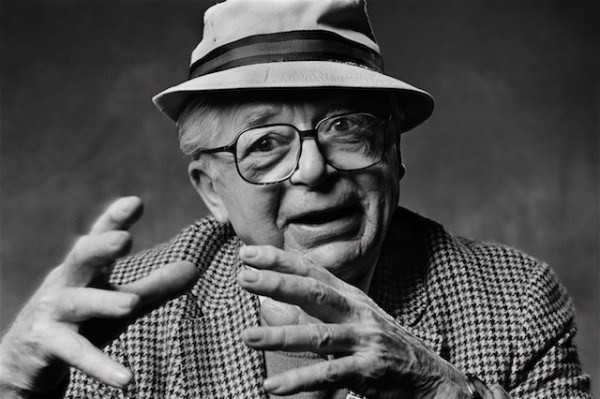
Billy Wilder
Never hurts to have a good role model*

Notes continue to come in for the pulp sci-fi spec, some contrary, many encouraging, and all chock-full of notable suggestions. With some coming from my trusted core of reliably savvy readers, there’s been one statement more than a few have included.

The gist of it is:

“This is the third script of yours I’ve read, and each one has shown a definite improvement over the previous one.”

It warms this writer’s soul to hear that sort of thing. And these are writers who pull no punches. They won’t hesitate to say something doesn’t work.

I’ve been working at this for a while, but it really feels like just the past few years have seen the most significant progress. Just goes to show what constant hard work can do, right?

Nor do I have any intention of slowing down. Doing my best to maintain a dedicated block of time and/or pages on a daily basis. The more you do it, the easier it gets (but is still tough).

The three scripts in question were all adventure-based, which enabled me to exercise a certain set of writing skills. With work now commencing on overhauling a comedy, an entirely new set will get the workout they deserve.

Crafting a sequence involving a train heist in the Old West, or a team of adventurers taking on a mad scientist? Piece of cake.

Writing a story involving everyday people in relatively normal (but funny) situations, peppered with smart (and funny) dialogue, all without the benefit of using special effects to enhance the story?

That is truly the next challenge to yours truly. It initially feels very daunting, but I’ve made it this far, and there’s no reason to think I can’t continue to push my way forward.

Should be a very interesting journey.

*Billy Wilder’s 10 Rules for Good Filmmaking (also applicable to screenwriting)
1: The audience is fickle.
2: Grab ’em by the throat and never let ’em go.
3: Develop a clean line of action for your leading character.
4: Know where you’re going.
5: The more subtle and elegant you are in hiding your plot points, the better you are as a writer.
6: If you have a problem with the third act, the real problem is in the first act.
7: A tip from Lubitsch: Let the audience add up two plus two. They’ll love you forever.
8: In doing voice-overs, be careful not to describe what the audience already sees. Add to what they’re seeing.
9: The event that occurs at the second act curtain triggers the end of the movie.
10: The third act must build, build, build in tempo and action until the last event, and then — that’s it. Don’t hang around.