Things that get in the way

david silverman

Today’s guest post comes courtesy of psychotherapist and script doctor/coach David Silverman.

As a writer-producer in film and tv, David Silverman worked on shows like Mork and Mindy, One Day at a Time, ALF, Newhart, Dilbert, Duckman and South Park. He learned firsthand that “staring into a computer screen day after day could make you feel isolated, frustrated, anxious and even depressed.” Today, he works as a script doctor/coach and as a psychotherapist where he “tries to help writers cope with creative blocks, mountains of rejection, job insecurities, stress, couples problems and the occasional knife in the back.”

A while back, I gave a talk to a group for writers trying to get back into the workforce after a hiatus. It was titled “Things That Get In The Way of Writing”. A quick bit of backstory about this organization: it’s made up of television writers; WGA members who won a class action suit against the studios based on ageism. 

They were able to show that they’d lost income and jobs because they were labeled as “old.” The studios paid out some settlements and included was membership in this group. So there were a lot of older disgruntled writers; some who’d created TV shows, some who’d won Emmys.

They were all so used to getting paid lots of money to write when they were last working, the prospect of writing on speculation didn’t motivate them much. Yet they all wanted to reinvent themselves and restart their writing careers. Some were writing screenplays, others were writing half-hour and hour TV writing samples.

Everything seemed to get in the way of writing for them. So we talked about how writers get motivated to write  – without being paid. They’d done it before, but times were different now.

Having done so much research into the subject of productivity and motivation for screenwriters and TV writers, I didn’t know where to begin. I ended up talking about the methods that make the most sense to me, that I actually use myself, or that I find most interesting.

Most ideas about how people can change themselves involve changing the way they think about things. Psychologists call this “reframing.” Look at things differently. For example, too many writers believe they’ll write one screenplay that will sell and make them rich and famous. Not likely. Sorry.

Instead, it helps to think of this whole selling scripts thing as a long-term process. Tell yourself you’re going to write dozens of spec screenplays over your career. It’s possible that none of them will sell. However, they may get you an agent or a pitch session with a producer.

The producer will hopefully say, “I love the writing in your script! Tell me about some of your other ideas.” They may also say, “Your writing is great and we think you’d be perfect to write this feature idea.” Either way you get paid to write.

So don’t get hung up about having to sell each screenplay you write. Hopefully you will sell one or two. However, writing spec screenplays can have many positive outcomes besides selling. Some writers get locked into this wrong-headed way of thinking. If that first script doesn’t sell, they give up. Or they keep trying to sell that same script for the rest of their lives.

Thinking about the long view also helps you handle rejection better. A rejection (such as when the studio says they’re not going to buy your script) isn’t a soul-crushing experience when you realize there are other positive outcomes that come from writing a spec script.

Another favorite reframe comes from the Woody Allen quote “80% of success is showing up.” It simplifies the writing process. It’s always overwhelming to think of sitting down and immediately writing this great Nicholl-winning script.

Break down the process. The simplest piece is “show up at the keyboard.” A screenplay is not going to pop out fully-formed. Everybody should think about writing as a process. You show up. You have some ideas. You figure it out.

You break the script down into an outline, a treatment, a first draft. Don’t expect perfection in a first draft. In fact, don’t think about writing a perfect script. Write a great script, or a script that will sell.

I remember trying to be a perfectionist about writing a screenplay. I got all detail-oriented, and polished each scene and every piece of dialogue. However, the more I focused on polishing up the little stuff, I seemed to lose track of the big picture. Be careful – the big picture is the one that counts. Tell a great story.

So I brought up these ways to think about writing differently in my talk. Some of the writers thought they could put these ideas to work. I noticed, however, that some of these writers were truly stuck and needed real psychotherapy.

There’s another thing that gets in the way of writing – overthinking. How can you write when your mind is telling you you’re not good enough? Because that’s what your parents told you your whole life? How can you write when you have doubts? Will this sell? Am I wasting my time with this genre?

You have to center yourself and stop dwelling on all these thought while you write. You have to be able to clear your mind. And that’s not easy, because we have all these expectations. Our brains are more than happy to supply us with reasons we’ll never succeed. Learn to let go of those thoughts.

It’s basically Darwinism at play – the survival of the species. A gazillion years ago when sabertooth tigers were lurking around every corner, our brains needed to keep us hyper-vigilant. We doubted all our moves. We lived in a state of “fight, flight or freeze.”

We got civilized, but our brains didn’t catch up. We still overthink everything and have doubts. You can’t write with all those thoughts getting in the way. You have to center. Different writers have done it in different ways. Some hole up in a beach house, or a cabin in the woods. Some go to Starbucks.

Some, like Stephen King, wrote through a haze of beer and cocaine. Phillip K Dick wrote everything – the stories that spawned Minority Report, Blade Runner, and The Man in the High Castle – on amphetamines.

The key is not to let all the noise and overthinking interfere with your writing. Some people have simple rituals that help them center. They make a cup of tea and listen to their favorite music. They go to the same hotel lobby everyday to write.     

Rituals calm us down because of their familiarity. So get that latte at Starbucks, drive to the art gallery where you like to write, open your laptop, plug in your earbuds and listen to U2. Whatever works for you. Then stick to it.

Perseverance pays off.

Remember that bunch of “old” writers? I found out they sold a pilot – no doubt from putting all of my advice to work. But in all seriousness, it was more likely they were doing what I advised them to do – not because I gave that talk, but because that’s why they were successful in the first place.

A lot of writers have learned these lessons, these ways of thinking about their craft and their careers, through experience. Some might have known about them instinctively. Hopefully some of this advice can help you skip years of learning the hard way.


How does “gamut” make you feel?

emotions
Somewhere in here

No matter what your screenplay is about, or what genre it is, it really comes down to one thing: telling a story about the characters and what happens to them.

While some may put more emphasis on the latter part with its vast number of variables and possibilities, it’s equally important to put a lot of effort into developing the former.

You want your characters to be relatable. Let us see ourselves, or at least part of ourselves, in them. How they act and interact. What they do. Even if it’s within a completely ridiculous or unbelievable scenario.

A good example: the works of Judd Apatow. “Comedies with heart,” is often used to describe them. By injecting emotion into what might otherwise be just something silly, he adds that extra layer of humanity. Notice you never heard the phrase “wacky hijinks ensue”? Because it’s about the emotion within the comedy, not just going for the cheap laugh.

Nobody only experiences one emotion, and neither should the fictional population within your pages. If a character’s happy, sad, or angry, show us why. Don’t hold back. Put it there for us to see.

Do they act like a real person? Is this how they would act in this kind of situation? Is it a real reaction or a “movie” reaction? Getting your characters to act using their emotions makes them come across as more realistic, which makes for a better story.

“The characters are too one-dimensional,” or “He/She’s just a one-note character.”  Heard those before? If your character only acts one way, or remains static and never changes, or doesn’t even react accordingly, that’s what the response will most likely be. And you don’t want that.

A savvy writer knows how to use emotion without being blatant about it. Maybe it’s a subtle action, or a turn of phrase, or the subtext within a line of dialogue.

Find the way that works best to develop and advance the character both within their own story and the story overall.

All that on a single piece of (digital) paper?

bad 1st impression
It can only go downhill from here

You only get one chance to make a good first impression. And that also applies to a screenplay. If your first page doesn’t make us want to keep going, why should we? Chances are the rest of it is exactly the same.

The first page is your golden opportunity to start strong straight out of the gate. Show us from the absolute get-go you know what you’re doing. A lot of the time, I’ll know by the end of the first page what kind of ride I should be expecting.

Just a few items to take into consideration.

-First and foremost, how’s the writing? No doubt you think it’s fine, but face it. You’re biased. You want a total stranger to find it fault-free, so look at it like one. Is it easy to follow and understand? Does it flow smoothly? When I read it, do I get a clear mental image of what you’re describing? Does it show, not tell?

-Is there a lot of white space? Are your sentences brief and to the point, or do they drone on and on with too many words?

-Do you point the reader in the right direction and let them figure things out, or at least get the point across via subtext, or do think it’s necessary to explain everything, including what a character is thinking or feeling? Yes, that happens on the first page.

-If your protagonist is introduced here, are they described in the way you want me to visualize them for the next 90-110 pages? Does a notable physical characteristic play a part in the story? Are they behaving in such a way that it establishes the proper starting point for their arc? Are they doing something that endears them to us, making us care about them?

-If your protagonist ISN’T on the first page, does it do a good job in setting up the world in which the story takes place? Do the characters introduced here play any kind of role later on in the story?

-Are there any mistakes regarding spelling or punctuation? Are you absolutely sure about that? SPELLCHECK IS NOT YOUR FRIEND. A team does not loose a game, nor do I think they should of won either. Two glaring errors that your software will not recognize. But a reader will.

-Does it properly set up the genre? If it’s a comedy, should I be prepared to have my sides ache from laughing too hard? If it’s a horror, should I make sure the lights are on, even if it’s 12 noon? If it’s a drama, should I have a box of tissues within arm’s reach to dry the expected river of tears?

-Do your characters sound like people saying actual things, or are they spouting nothing but exposition and overused cliches?

Not sure about any of these? Read it over with as critical an eye as you can muster, or get help from somebody within your network of savvy writing colleagues. DO NOT go to somebody who doesn’t know screenwriting.

Think I’m being overly critical? Ask any professional consultant or reader, and I bet 99 out of 100 will say they know exactly what kind of read they’re in for by the end of the first page. And number 100 might also agree.

Then again, there’s also the possibility that the first page could be brilliant and it stays that way until FADE OUT.

Or the wheels could fall off anywhere between page 2 and the end.

Your mission, and you should choose to accept it, is to make that first page as irresistible as you can, grab us tight, and not let go. Make us want to keep going. Then do the same for page 2, then page 3, page 4, etc.  Make us totally forget what page we’re on.

Take a look at the first page of your latest draft. Does it do what you and the story need it to?

-Didja notice the spiffy new look? Had to make some behind-the-scenes changes, and this is the result.

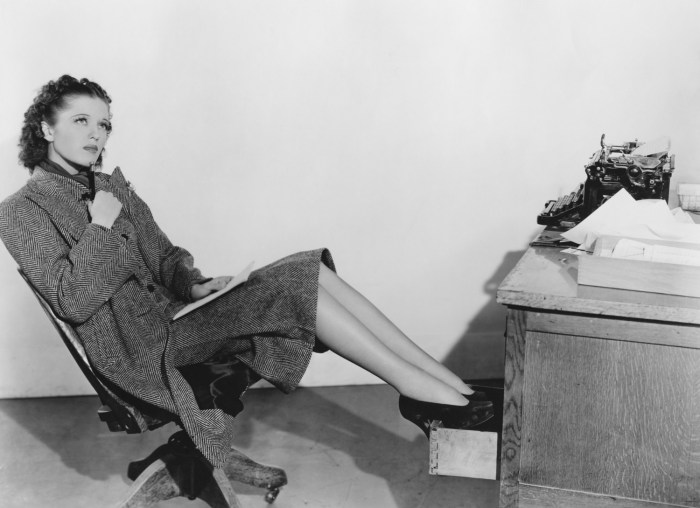
I have written, therefore I will edit

vintage woman office
Hmm. What about…? Or maybe…? Possibly even…?

Well, it took a little longer than I’d wanted, but I’m happy to announce that the first draft of the pulp spec is complete; 116 pages of potential cinematic goodness.

So what now?

The usual. Take a little time off, then jump right back in with my trusty red pen, ready to have at it and let loose the dogs of editing. The script itself has already been printed out, along with a change to a line of dialogue.

Even though I kinda-sorta edit as I go along, once I initially write a scene, it’s done and I push forward. Sometimes there’s something about it that’ll nag at me afterward, so I go back and do the necessary touch-up work.

I was tempted to send the script as-is to some of my trusted readers, but at this point, I want to see what I can do to improve it before reaching out.

Also pretty important – it was fun to write. This definitely falls within the realm of “stuff I like to write”. Hopefully others will be as enthusiastic about it when they read it. In a recent email correspondence conversation with another writer, I’d expressed my anticipation about how the script would be received. Their response: “You’re a great writer. Don’t worry so much.” Their kindness was much appreciated.

So for the time being, I’ll be fighting the urge to jump into editing in order to put some space between “just finished it” and “round two underway”. I actually do have a few other projects standing by, so I might redirect my focus on one of those, and then come back to this one in a couple of days.

It was a good and productive couple of months, and I’m quite happy with how this one turned out. I stuck to around 90 percent of what was already in the outline, but as usual, would occasionally come up with a different idea for a scene or sequence. I’d say the changes were definitely for the better.

The hardest part is out of the way, so now begins the next-hardest part: making it better.

Proofreading Q&A panel – part 2

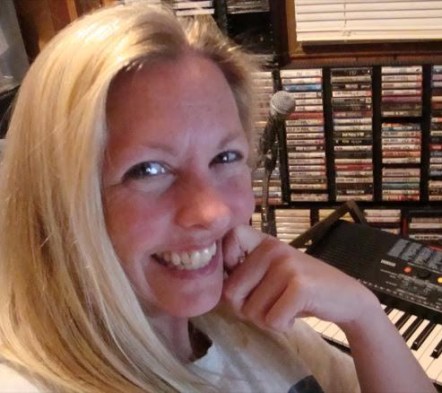
Tammy Gross
Tammy Gross
bill.and.puppy.girl.cropped (1)
Bill Donovan and friend (friend occupying Bill’s lap)

Here is the second of a two-part panel discussion with professional proofreaders Tammy Gross of proofmyspec.com and Bill Donovan of screenwritingcommunity.net about proofreading and its connection with screenwriting, along with some info about the proofreaders themselves.

Part one can be found here.

When you proofread a screenplay, do you also take on the role of story analyst?

Tammy Gross (TG): Not as a primary service, but yes. Since I’m reading it anyway, I do offer inexpensive add-ons if a writer wants some basic “coverage.” And even with proofreading, there are some story issues which may be addressed during the edit if there’s a problem with consistency and/or continuity.

Before I started my proofreading service, I took a course on story analysis and offered a coverage service. I soon learned how bad formatting and text were too distracting for my left brain. It’s agony for me to look past multiple errors/issues.

Bill Donovan (BD): To a limited degree, yes. However, I put these and other words at the top of every set of notes I give back with the proofread copy:

“These are not the words of an expert script analyst … I strongly hope not to hurt your feelings … To the extent that you find my comments on your story to be wrong-headed, pointless, or insensitive, you are hereby counseled and, with regret for any hurt feelings, encouraged to ignore them.”

What’s your writing background?

TG: The agony of trying to look past typos sent me down an editing path in my 20s. I read a book published through a major publishing house that had multiple errors in the soft-cover version. I sent my corrections to the publisher, and the author contacted me personally to thank me. Ever since, I’ve honed my editing skills.

My life plan was “sing while I’m young and write when I’m old.” I did write a couple of novels in my 20s and managed to have some sort of writing or editing responsibility in every “real” job I ever worked, whether at a church, a bank or Fortune 500 company.

In 2008, while taking a break from singing, I learned about a couple of female pirates. These historical swashbuckling stories fascinated me. I traveled the world researching pirates (including falling victim to real ones in the Bahamas) and learning about writing screenplays. I haven’t looked back.

So far, every script I’ve entered in contests has placed or won. In fact, my first script won the first contest I ever entered. Since then, I’ve realized that my ability to write in “the language of screenplay” was getting me further than better storytellers due to their weaker technical skills.

I’m currently writing an adventure story for a producer who found me because of one of my scripts (which I also turned into a YA book).

BD: -Screenplay contest judge (three contests)
-Screenplay contest executive (11 screenplay contests, 5 scene-writing contests, two logline contests)
-Two of my own screenplays won three first prizes equaling $30,104 in prize money in today’s dollars.
-Former Editor of Creative Screenwriting Magazine
-Author of three e-books for screenwriters to date; a fourth is upcoming
-USC Master of Fine Arts, Screenwriting and Filmmaking
-Copy desk chief at a daily newspaper, the Morristown, N.J., Daily Record
-Copy editor at the Associated Press
-Copy editor at another daily newspaper, The Record, Hackensack, N.J.
-Copy editor for several business-to-business trade publications
-11,200+ published pages and screenplays edited/proofread over the years
-News stories I wrote and/or edited won five national journalism awards.

How’d you get into proofreading?

TG: Totally by accident. I started a screenwriting group where we would table-read 10 pages of each writer’s script. I found myself making lots of corrections on everybody’s pages, and many of them asked me to proofread their entire scripts. It was a little overwhelming, due to also running a thriving music-arranging business at the time, so I put up a website to help me prioritize and charged a low but fair fee.

And it’s good that I did, because after the 2007 writers’ strike, followed by the recession, the spec-writing business boomed while music arranging fizzled.

BD: For an upcoming book, I surveyed and interviewed producers, agents, screenplay readers, directors, contest judges, and contest executives, asking them for their comments on the most common and the worst mistakes they see. Within the screenplay, proofreading and editing mistakes were named both the most common and most disliked by people in the industry.

How can people get in touch with you to find out more about the services you provide?

TG: The order page functions as a quote calculator, or send an email anytime: Proofreader@ProofMySpec.com

BD: Email me at Bill@screenwritingcommunity.net or use this form at my website.

Readers of this blog are more than familiar with my love/appreciation of pie. What’s your favorite kind?

TG: Humble. I should eat more of that and less Key lime.

BD: 1. Great pizza. 2. Pumpkin, my own homemade recipe. 3. Blueberry, Comstock filling, augmented.