Just the tune-up it needs

eastwood engine
Clint knows what needs to be fixed

The latest batch of notes on the pulp sci-fi spec have been analyzed, some even incorporated, resulting in the latest draft.

Thing is, something still seemed a little off about it. But after having spent a good chunk of time on it, I opted to give myself a little break and skip jumping right back in, and instead put it aside to simmer while I focused on a few other projects.

A couple of weeks have passed since then. The time felt right. I opened it up and simply started reading in the hope that maybe the solution would simply present itself along the way.

A lot of it still held up. It’s still a fun, fast-paced action-packed story.

But what really stood out this time was how there was a lot of unnecessary text on the page. It wasn’t a matter of overwriting; more of a “maybe a little more than you actually needed.”

I went back to page one and started editing, line by line. A word here, a phrase there. More and more of my darlings were being lovingly obliterated from existence, creating a somewhat tighter story that didn’t sacrifice any momentum (so far).

Some of the notes also mentioned the occasional lack of information in terms of backstory. I occasionally have the habit of thinking I’ve included an important detail or at least allude to it, when it reality – nope.

Using this fine-tooth comb approach has also enabled me to identify and plug up holes in the plot. Sometimes I might stumble onto a minor issue I didn’t even realize was or wasn’t in there, and am able to take care of it. Again – tighter and continued momentum.

This draft continues to progress nicely, and I’m hoping to wrap it up soon – but still making a point of taking my time and thinking my way to each solution.

-I’ll be running the first half of the San Francisco Marathon this weekend. While a time of 1:55 would be great, as long as I beat the 2-hour mark, I’ll be fine.

-If you’re a screenwriter in the San Francisco Bay Area or northern California region, and want to meet other screenwriters, the NorCal Screenwriters’ Networking Shindig on Sunday, July 30th, might be just what you need. 2-4pm at Kawika’s Ocean Beach Deli (734 La Playa – a block from the ocean!). Cost – FREE! Drop me a line if you’re interested.

One opinion is not general consensus

sidewalk
Everybody’s got something to say

Feedback on a script. You know you need it.

But here’s the thing: everybody will give you their thoughts on your script. They’ll tell you what works for them and what doesn’t. However, it’s more than likely their view is going to be different than yours.

That doesn’t necessarily mean they’re right and you’re wrong. It’s what they think, and you can take it or leave it.

When I was starting out, I figured the person giving me notes was more experienced than I was (why else would I ask them for notes?), so they must have known better, so I’d implement their suggestions without hesitation.

The result – my scripts were getting away from what I wanted them to be and becoming more of the other person’s.

Which is the total opposite result I wanted.

Only after constantly working and studying and rewriting did I get to the point where I’ll now get notes and have no qualms thinking “You make a good point, but I don’t agree with that.”

Sometimes a note will be the total opposite of what others say, which makes me take a closer look at it. I may still disagree with it, but it’ll make me think.

I’ve been on the giving end of that too; I give somebody notes, and am occasionally told “You’re the only one who said that.”

You can get notes until it seems like you’re heard from every single writer on your list of contacts, and no matter what any of them say you should or shouldn’t do, you’re the one driving this bus.

You are the one – the ONLY one – who knows what’s best for your script.

Writing requires reading

reading
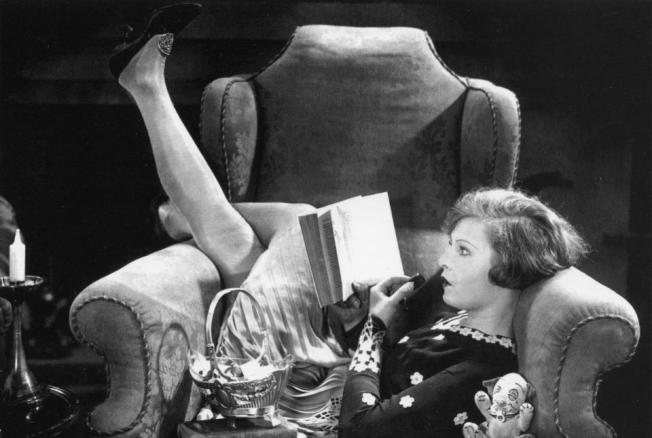
Comfy chair – mandatory. Bon bons – optional.

Bit of a shorty today as I’m steamrolling my way through several projects at the moment. This includes revising two of my own scripts.

As part of the effort to make the next drafts of both that much better, I’m trying to take the time to read scripts in the genres of both. Why not glean what I can from prime examples?

The learning truly never stops.

Added bonus – a lot of these are just fun to read.

This is one of those basic pieces of advice that every screenwriter, no matter their experience level, needs to heed on a regular basis:

Read scripts.

Study them. Use them for the learning tools they are and wring every last bit of help out of them that you can.

Everything really is right there in front of you. 90-110 pages of primo learning material. Pages and pages of “See what they did there?” Take notes. See what’s there and NOT there.

Take it a step further and read a script of a film while watching that film. How do they compare? Lots of similarities? Lots of differences? Do the actions onscreen do justice to the words on the page?

Apply what you learn to your own script. It might help more than you realize.

Side note – DO NOT copy that writer’s style. You’re working on establishing your own voice. No good can come from trying to sound like somebody else.

No small feat using another medium to be a writer-at-large

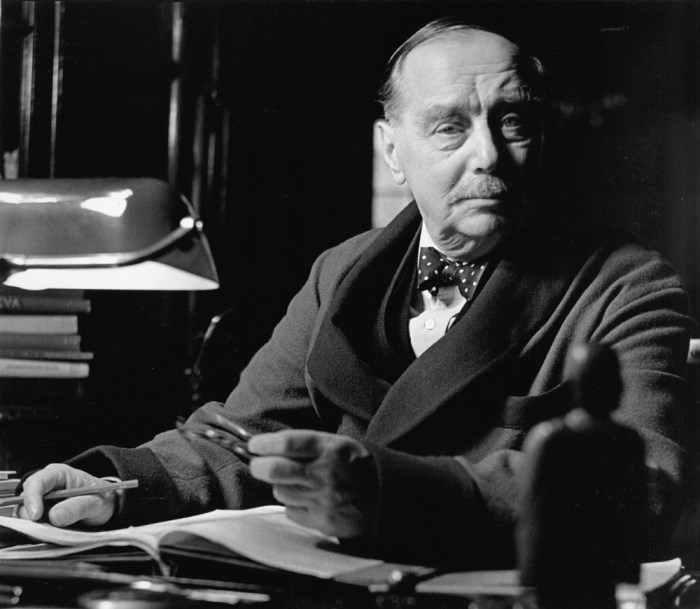
HG Wells
The man responsible for tales of time travel, alien invasions, and assorted mad scientists, just to name a few…

After a gap of several years, I recently had the opportunity to reconnect in person with a respected colleague who has had more than their fair share of experience dealing with writers of all shapes, sizes, and levels of talent.

This person used to deal a lot with screenwriters, but now deals primarily with writers of manuscripts. Over the course of our conversation, I was asked about my scripts and my writing (What do I like to write? What genres are the scripts I have now? What kind of stories am I working on?)

As has been documented here before, my genre of choice is definitely adventure, along with hyphens connecting them to other genres (i.e. western-adventure, pulp sci-fi adventure, etc).

I gave a quick thumbnail sketch/five-second elevator pitch for the two completed and the one currently in revision mode.

You’d be harder pressed to find a stronger advocate for using your already-existing material as a springboard to jump into other mediums – primarily books and/or graphic novels.

It was their opinion that all three sounded like very original and fun ideas, which would make each a prime candidate for attracting attention. And this person has also been following the blog for quite a while, so their opinion is also that my writing is pretty solid. They cited examples of writers they knew who’d foregone the traditional route of trying to get in with one of the high-profile publishing houses and done it all themselves, each achieving respectable levels of success. Nothing to break the bank, but still some impressive numbers.

“A script is more or less an outline for a novel. And even though you’re not limited by page numbers, it still takes talent to create a novel,” I was told. “Your stories are original and unique, which makes them prime candidates for this. At least think about it.”

Believe me, I am.

My success in trying to get these scripts through to reps and production companies has been practically non-existent at best, yet I persist. I’m sure I’ll continue along that avenue, but this new alternative is definitely food for thought.

I’ve been told by more than a few people that my writing is very visual (which you would think would make it ideal for film), and that it really moves. In the past, I’ve entertained and even at times partially investigated the notion of applying my scripts to a graphic novel format (a great match), but am also not averse to trying my hand at converting it to pure prose.

I’ve no intention of stopping writing scripts. I like it too much. But I also like the pure act of writing by itself, so for the time being, all this talk about working in other formats is nothing more than speculation and conjecture.

But in some ways, still worth considering.

A whopping 180 degrees

Turn-around
Which way?

The process of overhauling the low-budget comedy has proven to be quite the challenge. Notes from reliable sources had pointed out a few problems in need of fixing, and that’s what I’ve been laboring to rectify the past couple of weeks.

It hasn’t been easy.

One challenge was to let go of “what came before” in the previous draft. Sometimes it’s tough to wipe the slate clean and start anew, and this time was no exception. Once I set up how things play out, it’s not easy to push it aside and do something different.

Which isn’t to sat I haven’t been trying.

Even though you can’t force inspiration, I knew I could think my way through this. So, as has happened many times before, I stepped back and took a look at the full picture.

What was it about the previous draft that wasn’t working? Start with that and figure out ways it could be done differently. Let the imagination run wild and the creativeness flow.

First, I broke it down on a scene-by-scene basis. What’s the purpose of each one? Does it advance story, character and theme? And since it’s a comedy, is it funny? (That last one has been particularly challenging).

It’s been tough, but not insurmountable.

I’d managed to work my way into the first part of Act 2, but then hit a wall. Nothing was working.

I won’t say I was feeling desperate, but it was quite an effort to not pick up my laptop and fling it across the room.

But rather than engage in aggravated assault of electronic devices, I opted to give it one last try.

I went back to the notes. Many of the comments said more or less the same thing, especially regarding one in particular. I’d seen it before, but this time, something really resonated.

One of the most powerful tools in the writer’s bag o’ tricks is the Great What If? Use it wisely.

So I applied it to my problem. If THIS wasn’t working, WHAT IF I tried something different? And what better way to do something different than the total opposite?

And as it has many times before, there it was.

The more I applied this to the rest of the story, the more of it came together. It’ll require a little more rewriting for now, but gosh is this a lot better than it was before.

Forward momentum has resumed. Updates to be released accordingly.

-Bulletin board update! Filmmaker Diane Harder has a crowdfunding project underway for her short Penny Foster. Donate if you can!