Disappointed, yet still driven & determined

uphill
One step at a time

The results are in for my western’s involvement with the major screenwriting contests for this year:

PAGE – nope. Didn’t get notes.

Austin – nope. Notes expected later in the year. (They got over 9100 entries for shorts and features this year. That’s A LOT.)

Nicholl – top 15%, which isn’t bad. Two sets of notes; the first reader really liked it, whereas the second’s comments make me highly suspicious about their qualifications.

On a positive note, the script placed in the top 100 of the ISA’s Emerging Screenwriters contest, which is nice. Fingers crossed it advances to the finals.

But back to the big three. It’s a little frustrating that things didn’t work out, but that doesn’t mean the script’s bad. A lot of my readers, many of whom have done well in these contests, all had very positive things to say about it and thought it was a solid and entertaining piece of work.

Two things to keep in mind about these contests:

It’s all subjective.

Sometimes you just get a shitty reader.

These also happen to be things we have no control over. Yes, it’s disappointing to get that email that includes the phrase “Unfortunately…”, but just because you didn’t do well this year doesn’t mean you won’t do better next year. This is the mantra I’m going with for now.

I’m also taking a little time off from the western to focus on the comedy and at least one or two other scripts. It helps.

Something else for you to ponder: contests aren’t the only way in. More and more I’m hearing/reading from writers who do well in contests, but nothing comes of it. They might get a read, but that’s it. You gotta keep trying from every approach you can think of.

That’s my plan.

Will I enter the contests next year? Possibly. But they’re not a priority.

Making inroads into a getting a career going is.

Q & A with the Thornton Brothers

Thornton Brothers

Chris and Jason Thornton are professional storytellers who seek to entertain audiences via thematically charged films, TV shows, books and comics across various genres while specializing in darker, provocative, character-driven narratives ranging from “micro” to tentpole in budget. They are members of the WGAw and repped by UTA and Rosa Entertainment.

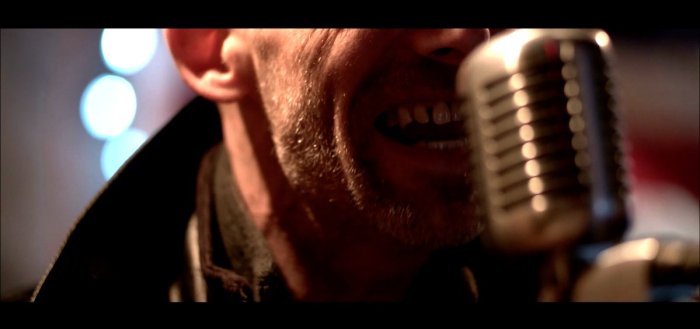
Cactus Jack is their feature directorial debut. It’s the story of a reclusive hate-monger who starts a venomous, vitriolic podcast from his mother’s basement and makes enemies far and wide—until one comes to silence him. Think a cross between Taxi Driver and Talk Radio for the podcasting generation. You can help the guys out with their crowdfund campaign (and see their totally NSFW red band proof-of-concept teaser)

What’s the last thing you read/watched you thought was incredibly well-written (Book, TV or film)

Fuck, that’s hard. Not because we look down on stuff, but because we’re so busy trying to make our own shit that we barely have time to consume like we used to. Hmmmm. Just rewatched Network lately, so that definitely should be mentioned. Paddy Chayefsky was an absolute beast. Sure. Network. Can’t go wrong with that.

What’s your writing background? What was the project that got things started?

We’ve kind of always been innate storytellers. We come from a strong line of liars and bullshitters, and as largely unsupervised kids in the projects outside DC we’d play out really elaborate, raw extended throughlines with our action figures and made our own comic books and honed our sensibilities between bouts of watching R-rated 80’s shit on free promotional HBO and Showtime and role playing. We started screenwriting together maybe fifteen years ago, but after writing three scripts that shall never see the light of day we stopped for a few years before coming back to it in ‘07. That project was a script called Heart, about a dying, psychotic Vietnam vet who gets an early release from prison and—since he can’t get on a donor’s list—tracks down the man whose life he saved forty years ago in ‘Nam: he wants the dude’s heart. It’s a very dark, fucked up, pulpy who-do-I-root-for story, which finished in the Top 30 out of like 5,000 entries for the 2009 Nicholl Fellowship (since dismantled and currently turning it into a truly dastardly novel). From there we started talking to managers but it was our next script Mechanicsville that really hooked our manager (shoutout to Sidney Sherman of Rosa Entertainment, who still reps us) and first agent (started at WME but since jumped to UTA). M-ville’s kind of a Kentucky-fried heist flick about how shit hits the fan when two gangs of bank robbers try to rob the same small town bank on the same day (Hell Or High Water stomps all over it now, unfortunately). That one started getting us legit meetings, led to our first assignment and opened the door to pitch shit, etc.

Your current big project is crowdfunding to produce your original independent film CACTUS JACK. What’s the story behind that?

Part of this is definitely about us tiring of being stuck on that movie/TV development hamster wheel, and all of these unproduced projects forcing us to look at our shoes and mumble “no” when people hear what we do and of course follow up with “Oh yeah? Anything I can see or read?” Part of it is about trying to make a feature film for relatively very little money, because screenwriters will never “move the needle” on a project like in-demand directors will… but for the most part it’s a sick little story we just have to get out there as quickly as possible. It’s very zeitgeisty, very of-the-moment as it holds up a twisted, frothing-mouthed funhouse mirror to this already “big top” election cycle. Once we started talking to our actor (Michael Gull, a very talented dude whose skills we tailored the very conception of the film to), we knew we had some dynamite shit on our hands, and as far as we were chomping to push the envelope into radioactive territory, we knew none of our contacts or fans in Hollywood would take a risk on this thing until it was made and we proved our point.

So we found a micro-investor to help us make a teaser for the film and launched a crowdfunding campaign on indiegogo. We need all the help we can get, time is running out, and though we have recent some offline help from friends and family who couldn’t back us through the campaign, it’s pretty dire! We’re going to make the movie come hell or high water, but every penny helps push production value (plus pay and feed cast and crew) and you can preorder a copy of the flick for $25. So—please, lend us a hand in making this batshit, gonzo little monster of a movie!

Your writing style is very vivid and descriptive. Did that come naturally or was it something that took time to develop?

Both. It takes a long, long time for some people to hone their voice and honestly, it should be an ongoing process and evolution for your entire writing life. But you have to have a voice to be honed in the first place. A lot of writers are sadly like those poor souls on American Idol who have no business auditioning in the first place—but hey, who are we to deny the delusional their dreams? Whatever keeps them from shooting up a shopping mall. ;)

Have you always worked together? Is one of you the specialist in a certain area, like one does more writing and the other handles directing, or do you split it evenly?

We’ve sort of always worked together, for the most part. Though we each have our own skills we complement the other with, we do tend to each spearhead a project nowadays while the other acts as more editor and muse. So yeah, we each have our own pet solo projects, but they all fall under the Thornton Brothers umbrella eventually.

Do you only work on your own scripts, or have you done some assignment work as well? Do you have a preference?

We’ve done both, for sure. Hard to sustain a career, or even kickstart one, without doing assignment work. The nice thing about it is people actually give you money to commence writing something! It’s crazy. Not at all easy to do, trying to feed yourself or help provide for others in the arts. Some might even call it foolhardy, but yeah…we’ve done both. Selling something you wrote yourself, from your own mind and heart, is infinitely more satisfying. And while we’ve had some very fun, interesting experiences collaborating in a development sense with assignment work or on successful pitches that became scripts (if not movies), no matter how smooth or inspired a collaboration with an outside party it’s never quite as liberating or just straight up fun as going out into the creative wild on our own and coming back with a kill.

You’re also filmmakers as well as writers. What do you consider the benefits of working on a film, from both the writer and filmmaker perspective?

Making or even merely being witness to the construction of an actual film is pretty invaluable for screenwriters, in our collective opinion. You really start to see how to separate the meat from the fat, and how what works on the page might not be as impactful in the moment or on the screen. Editing film/video also really helps hone your sense of timing, pacing, and flow as a storyteller… and how effective and economical you can be with visuals, allowing characters to shut the fuck up sometimes, how to convey info without big, clunky dialogue exposition bombs, etc.

Also, if you can we say go for the hyphenate… again, no screenwriter is ever going to have the kind of clout a successful director has. That said, many don’t have the temperament or skillset required (not that there’s one narrow band of disposition that allows one to direct), but writers often have murkier personalities. It’s worth making a film or two to find out if you’re a writer-director or filmmaker versus just a writer is not a bad idea. But if you know off the bat you don’t get along with others, have trouble verbally conveying what you mean to say, then save yourself the grief. Take our word for it: directing even modest, “micro” films ain’t for the faint of heart. Also, keep in mind that some stories demand to be told in this medium. Others don’t. Some work better in prose, or even in poem of song. Marrying the right medium to the story is also part of the trick.

When working on a script, do you have a reliable source for notes?

We are our own most reliable source of notes. It helps that there’s two of us but honestly we’ve both tried to become total fucking samurais when it comes to self-editing. You have to be. It’s not only a matter of putting your best foot forward when you go to show your work to reps or the public, but even if you were going to Emily Dickinson that shit away in a kitchen drawer until it’s discovered posthumously years later—your story deserves to be the closest to “perfection” it can be (which is objectively unattainable, but approximated through the filter that is you. It is YOUR story, after all). Oh, and our manager is usually good for one killer note.

What are the 3 most important rules a writer should know?

Ew! “Rules!” Haha, in all seriousness though maybe Rule #1 should be: There Are No Rules. There’s no one way to get noticed, to have a career — and anyone who tells you there is is probably trying to sell you something. But if you want some real nuts and bolts:

1. Always approach storytelling with Character at the forefront.

Even if you outline a predetermined plot to get started with a map, veer off of it when you find it incongruent with a character you’re rendering. If there is falsity or fallacy baked into the behavior of your characters, no matter how tightly constructed your narrative, it will start to crumble.

2. Be careful with twists and “reveals.”

We see it all the time, from the stuff we watch and read (and have written in the past) to many of the scripts we’ve consulted on. It’s a natural storytelling tendency, to want to surprise an audience, but only do it with REAL PURPOSE. Be careful with the big climactic “backstory reveal that made the character tick all this time.” Very rarely works.

So much more satisfying is a simple story told well. If you do work with twists, make it work like The Sixth Sense. The film works with or without it until the point it hits, and it is truly revelatory. It’s not that M. Night held something back to show how clever he was. Don’t do that shit. It’s awful. Put your cards on the table and tell your damn story.

3. Don’t be a slave to the idea that a story needs a transformational character arc.

This is something that a Blake Snydered Hollywood succumbs to far too often, in our opinions. First: in film arcs very, very often feel shoehorned or forced in. Especially if not much time passes, or it comes near the end (must overcome his fear to succeed, or must learn to be a team player—blah, these themes have become true platitudes). If you open with a loving mother and wife whose husband and kids are murdered and she becomes a vengeful, murderous black widow from there—sure. Inciting Incident forcing a catastrophic arc that sets a character on a trajectory works. That feels authentic. And in TV, longform character change feels authentic. Some of the most potent stories of all time are great specifically because a character does not arc. Think Shakespearean tragedies, Daniel Plainview in There Will Be Blood, etc. Sometimes it’s “the right man for the right job,” and the transformation is supposed to occur in the viewer. That’s where real catharsis lives: in the viewer. Give it to them.

Reader of this blog are more than familiar with my love and appreciation of pie. What’s your favorite kind?

Well, there are two of us. Chris likes pumpkin, and Jay will eat anything. Literally, anything. There’s a reason we don’t include headshots.

Q & A with Babz Bitela

Babz Bitela

Barbara “Babz” Bitela is a literary manager operating out of northern California, a “hired gun” editor for fiction writers, and hosts the Babzbuzz internet radio show “because folks were nice to me and helped me, so I’m trying to pay it forward, and believe me, I’m keeping it real.”

“We want voice on the page. We KNOW it when we ‘hear’ it.”

Her book Story of a Rock Singer is currently being adapted as a Broadway musical.

What’s the last thing you watched/read that you thought was incredibly well-written?

Justified and Bates Motel are my top two. Joss Whedon is by far one of my favorite writers. Buffy the TV series –  WOW!  You can youtube his interviews: it’s like an AA degree in writing and it’s free to anyone.

How’d you get your start doing representation?

I pitched a semi-retired agent named Ed Silver on a book I wrote. He was Lee Marvin’s manager and finance guy, also for James Coburn and many others. The guy’s ‘seen’ stuff, man – Hitchcock napping, for one. He loved my style and offered me a gig to take over and he’d mentor. We clicked big time. He’s Jewish, I’m Italian. As Sebastian Maniscalco says, “Same corporation, different division.” That’s us.

Is recognizing good writing something you believe can be taught or learned?

You for sure can learn it IF you want to. Here’s why – bad writing obviously sucks. It just does. How do you know that? By reading GREAT (not just good) scripts. I read so much so often I can now tell what’s going to go and what MAY go but here’s the rub: in the absence of money behind it, it may not matter. And I may love it and another may say “meh”. So pov does matter.  So you can learn and pitch but Lady Luck is no lady: she’s a tramp in cheap shoes and she’s fickle. We press on because we believe in the story/writer we hawk. If it goes, it goes, if it doesn’t, well, I’ve had the benefit of “seeing” incredible “movies” and the only down side is, so few others will see that. THE WRITER however, benefits. Why? Job well done. And if you don’t write for the JOY of the craft, there’s no point. Write for the sale? That’s an industry sucker punch. I’ve learned to find great scripts and I’ve learned it can be like screaming in space once you do.

What are the components of a good script?

VOICE, RISING ACTION and TWISTS.  What is voice: it’s a lot like porn – I know it when I see it but it’s hard to describe. Think of it this way: you open a novel, settle in and by page two you’re thinking “Ugh, this just sucks”, but you press on and by page ten you know it’s not the book for you so you donate it to Goodwill. It’s the same with a script. I once read a tv pilot by my client that I couldn’t read it fast enough. Why? I WAS DYING TO SEE WHERE IT WOULD LEAD. The action and characters were alive on the page. That is what makes a good script: I call it NARRATIVE TUG.

What are some of the most common mistakes you see?

Where to start? Typos, for sure. It’s a speed bump.

Wrylies. Just don’t. UGH! Makes me crazy. There’s only one time I’ve seen it used where it worked. ONCE. And that writer is a five-figure-income writer.

Novels posing as scripts. The writer MUST understand the economy of words and do VISUAL storytelling. Telling a story with pictures is a movie. Telling a story with talking is a soap opera.

Avoid using “ing” words – slows narrative, slows the readers eyes.

Avoid “very”. Just find what IT IS. Don’t say “very smart”, say “bright”  – just pick! Not kidding. You’ll thank me. Rodale’s The Synonym Finder is invaluable for writers.

And never fall in love with your stuff. It’s gonna get cut.

What story tropes are you tired of seeing?

Well, many work. Some don’t. My favorite recently was probably in draft form: “Fire all phasers!” But instead he said “Fire everything!” Love it!

But I say write bad and cliché in the draft, leave it there, then go back and rewrite it.

Lots of folks say “Not my first rodeo.” I say “Not my first rocket launch.” Anything to WAKE UP the reader.

What are the three most important rules every writer should know?

I’ve got more than three.

-Don’t enter a script contest pitching a word doc.

-Don’t send a script unless invited.

-Don’t ask me what I think if you don’t want to know.

-Don’t go past 120 pages. I mean it. Try to stay around 100 if you can.

More rules? I think it’s just wise to do 12pt Courier font as it’s tradition. The Coen Brothers don’t use Courier. But they’re already famous, so when you’re famous do what you want. In the meantime, stick to tradition.

What do you look for when it comes to potential clients, both personally and professionally?

No dope. No booze. No drama.

Feet on the ground, and committed to spending tons of time doing what you love, regardless of the outcome.

My clients pitch themselves. They must. If that’s not for you, then I’m not the agent for you, and also, you’re in the wrong business.

Yes, the agent makes inroads, but you must pitch you and build relationships. When you do; AVOID using “I” and ask the person “What do you do, and how do you do it?” Ask about them. We’re people FIRST. That’s why I do Babzbuzz. People like me. They helped me. So I take what they tell me and mush it up with what I’ve learned, and talk about it on my show to try to help.

I’m a small company: I’m WGA.

Meh. Folks hang up on me all the time.

Why?

“Babz, love the script! Who’s funding?”

Crickets.

“Babz, baby. Call us back when you have the dough and I’ll show my client. He may want to star in it.”

EEEK!

What happened to love of story?

Hell, that left the building and moved to an island the actor/director owns. He’s got to feed his family too, ya know. So bring the bricks.

EEEK!

Lightning can and does strike. That’s what I do. I’m really a stormchaser who looks for folks with money who want to buy.

Readers of this blog are more than familiar with my love and appreciation of pie. What’s your favorite kind?

Oh man, you had me at the fridge door. Dutch apple. Key lime. Rhubarb when you can find it. And pretty much any clever use of chocolate.

Q & A with Ashley Scott Meyers of Selling Your Screenplay

ashley-meyers-high-res

Ashley Scott Meyers is a screenwriter and blogger/podcaster at SellingYourScreenplay.com. He has optioned and sold dozens of spec feature film screenplays, with many making it into production. All of Meyers’ screenwriting success has come through his own marketing efforts which he teaches on his blog and podcast.

What’s the last thing you read/watched that you thought was incredibly well-written?

The screenplay for SOURCE CODE is excellent; one of the best scripts I’ve ever read. I highly recommend it to anyone who is a screenwriter.

I have two young daughters, ages six and three, so I’m watching a lot of children’s movies these days. I just watched THE IRON GIANT for the first time, and thought it was very well-written.

In fact, I’d call MEGAMIND one of my favorite films. In terms of screenwriting, it’s excellent. There are very few films I watch that I think are perfect, but as a screenwriter, I’d consider it one of the few that could be called practically flawless.

My daughters and I recently watched the 80’s classic CLOAK & DAGGER, another very well-written movie. It keeps the action going and all comes together at the end. A very smart script. I saw it when I was a kid and didn’t think much of it at the time, but seeing it again, it’s a pretty solid piece of writing.

Tell us about your writing background, including your “big break”.

I’m not sure I’ve really had a “big break.” Every script I sell or option feels like a monumental effort and it hasn’t gotten any easier. In fact, I’d say it’s gotten harder as the DVD market has shrunk over the last decade or so.

But to answer your question… I really never had a background in writing. I just liked movies, and for some reason writing scripts appealed to me. So I decide to pursue screenwriting. I was a terrible student when it came to English, writing, spelling, and grammar. Pretty much every skill you need to be a writer, except one (maybe two)… persistence and determination. So I’ve just plugged away and sold a few scripts.

How did the Selling Your Screenplay blog and podcast come to be?

Believe it or not, I once saw Gary Vaynerchuck speak at a conference where he was talking about not putting your personality into your brands. At the time, I was running a whole bunch of websites, but nothing around screenwriting. So I decided then and there that I needed to do something that combined two of my skills and interests: screenwriting and web development. So I did.

As far as the podcast goes, I just started to listening to podcasts and I thought they were really powerful. So I launched my own.

You’ve had experience with short films. What do you consider the benefits of working on a short, both as a writer and filmmaker?

The biggest thing is that you get to see your work get completed, which is rare as a screenwriter. But if you write a halfway-decent short, it’s fairly easy (nothing is every easy in this business, but it is possible) to find someone who wants to shoot it. You also might get an IMDb credit, win an award at a film festival, and meet other filmmakers. Shorts are a great way to hone your craft. You’re not going to make any money doing them, but they can be a great learning experience.

Is recognizing good writing something you think can be taught or learned?

Yes. The more screenplays you read, and the more you write, the more you’ll be able to recognize good writing.

One of the things that makes movies so vibrant is the fact that you can watch a movie or read a script and notice different things every time, depending on where you are in your own life and skill level.

But yes, everyone can get better at writing and recognizing good writing.

What are the components of a good script?

That’s a pretty broad question. If I had to boil it down, I’d say good writing evokes genuine emotion in the reader or watcher. If someone reads your screenplay, and it evokes emotion in them, you’re on the right track. Everything else, like structure, characterization, dialogue, the hook, theme, etc., is really secondary to being able to evoke emotions in people with your words.

What are some of the most common mistakes you see?

The biggest mistake is underestimating the amount of work it takes to be a professional writer. I hear from so many people who’ve written one script, entered it into a handful of contests, and then wonder why they haven’t made it as a professional writer. Nobody gets to pitch for the Yankees after spending one summer practicing. Being a professional screenwriter is probably as hard as, or at least harder than, being a professional athlete. It takes an enormous amount of luck, talent, and lots and lots and lots of hard work.

What story tropes are you just tired of seeing?

It’s often inevitable that you’ll write scenes that feel familiar. I often find myself doing it, so I step back and just mix things up a bit. Try anything that’ll give the tired tropes a new interesting spin, which often boils down to adding a quirky or interesting character to the scene who can mix things up.

I recently watched a short film where a little girl dropped an ice cream cone that fell to the ground in slow motion. It was so clichéd that I really wondered why the filmmaker didn’t try to do something more original.

What are the 3 most important rules every writer should know?

There are really only two mandatory things to do to be a successful screenwriter: write a lot, and read a lot of screenplays. That’s it.

If you do those two things and really spend time analyzing your writing and the writing of others, you’ll get better and maximize whatever talent you have.

How do you feel about screenwriting contests? Worth it or not?

Contests are great. Screenwriters should be doing everything within their power to get their work out into the world, and contests can be a part of that plan. But understand that even winning the best contest still means you’re quite a ways away from being a professional screenwriter. And I certainly wouldn’t use contests as my only way to market my material.

How can people find out more about you and Selling Your Screenplay?

I blog and podcast over at SellingYourScreenplay.com. I release a new screenwriting podcast episode every week. In nearly every episode, I interview an experienced screenwriter. I also run a script consulting service.

Readers of this blog are more than familiar with my love/appreciation of pie. What’s your favorite kind?

Apple. Not very original, I know. But every once in a while someone will bring an apple pie to Thanksgiving dinner, and as I eat it I think, “Damn, that’s good pie.”

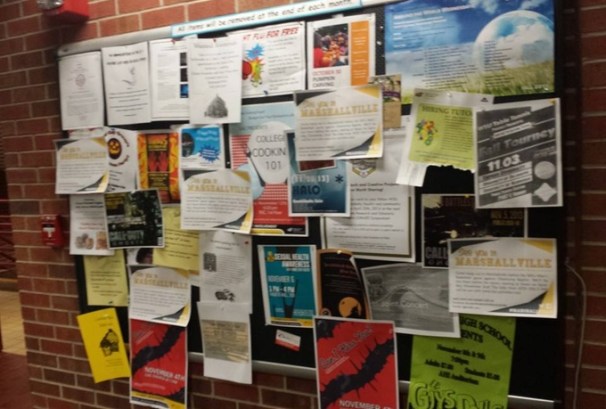
The bulletin board returns!

bulletin board 2
No need to crowd. Plenty of pushpins to go around.

Today is once again all about promoting the projects of some very savvy creative folks, each one definitely worth checking out.

-Author/podcaster/friend of the blog Justin Sloan has released an audiobook version of his book Creative Writing Careers 2. Justin is also one of the co-hosts of the Creative Writing Careers podcast, which examines careers in writing not just screenplays, but also books, comics, and video games.

-Writer/filmmaker Luke Oberholtzer has a new proof-of-concept trailer (somewhat NSFW) for his proposed horror-comedy DRAIN BABIES. Contact Luke at Luke@LegacyEntertainmentFilms.com for more info.

-Writer/author/script consultant/friend of the blog Howard Casner has launched a crowdfunding project for his short film 14 Conversations in 10 minutes. Donate if you can! Howard is also offering a great new service for screenwriters – $20 to review the first 20 pages of your script.

-Filmmaker Scotty Cornfield‘s crowdfunding project for his short film Goodbye, NOLA is going strong! They’re getting closer to reaching their goal, but can still use a little help. Donate if you can!

Got your own project you’d like to promote? Drop me a line.