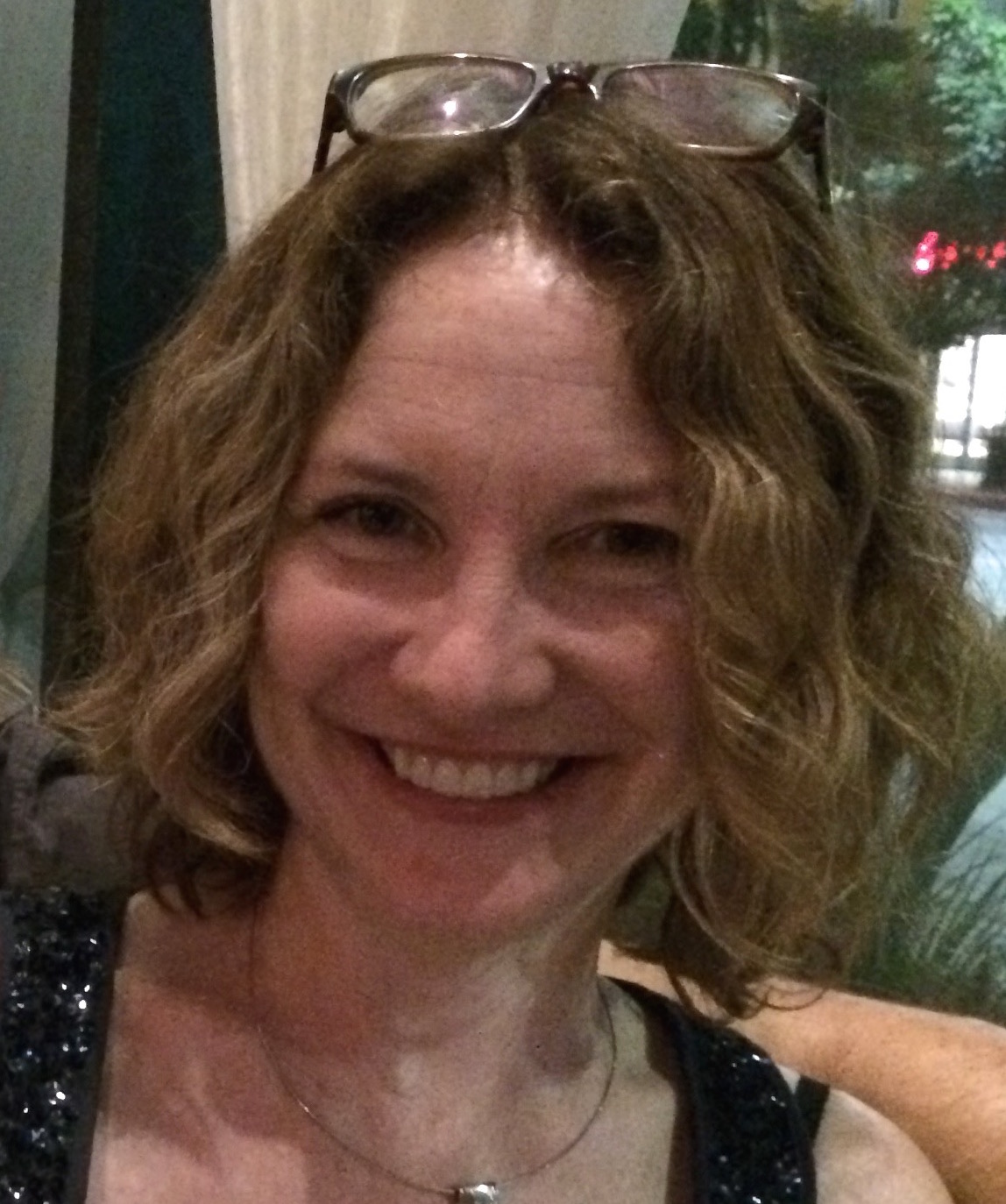
The latest in a series of interviews with script readers and consultants who would be worth your while to work with if you want to get your script in shape. Today’s spotlight is on Staton Rabin of Jump Cut Script Analysis.
Staton Rabin is a screenplay analyst, script marketing consultant, and “pitch coach” for screenwriters at all levels of experience (www.statonrabin.com and www.screenplaymuse.com). A Senior Writer for Scriptmag.com, she’s been a freelance reader for Warner Bros. Pictures, the William Morris Agency, and New Line Cinema, and was a frequent guest lecturer for screenwriting classes at NYU. She’s a reader for the annual Big Break Screenwriting Contest. Staton is also an award-winning, optioned screenwriter and writes YA historical novels for Simon & Schuster (BETSY AND THE EMPEROR, etc.). She evaluates screenplays and books in all genres and can be reached at staton@statonrabin.com
Staton’s screenwriter clients include at least two whose scripts were produced as films, and a number who have won or done well in screenwriting contests.
1. What’s the last thing you read/watched that you thought was incredibly well-written?
“Sherlock” from BBC-TV. I confess that recently I wolfed down the entire series in about two days, catching up on all the past episodes of this great show. Clever, witty, poignant when it should be, and visually inventive. As a huge fan of the original Conan Doyle stories (and of Basil Rathbone as Holmes in the old movies and radio shows), I assumed I’d hate any “update” of them, and that no modern version could possibly compare to Rathbone’s. But “Sherlock” is hugely respectful of the original stories, yet finds incredibly smart ways to update them. My January 2015 posting for my monthly blog at scriptmag.com is about what screenwriters can learn from watching it. I am much more of a film person in general than a TV fan– and as a script analyst, my expertise is really in evaluating spec scripts, books, and movie concepts, rather than series television. But I have to admit: some of the best work today is being done for TV, and “Sherlock” is a prime example of that.
2. How’d you get your start reading scripts?
I read many screenplays before I became a script analyst for a living. After graduating from NYU film school, I hunted for a job as a freelance reader for quite a while. In those days, there were a lot of film studio offices in New York but at the time there wasn’t much in the way of “job placement” available to film school graduates (NYU has a great Career Development office now). But one day, when I was still unemployed, I bumped into an old film school classmate on the street. He was working as a freelance reader for Warner Bros. Pictures at the time. He took me upstairs to meet his boss, and in about ten minutes I had my first job. I’ve been a script analyst for over 30 years now, and have worked for many film studios, agents, and writers, so I figure maybe it wasn’t just having “connections” that’s allowed me to stay in this business so long!
3. Is recognizing good writing something you think can be taught or learned?
On some intuitive level, all film audiences have the ability to recognize good writing when they see it. There’s a lot of wisdom in what “the average person” has to say about any movie, in terms of what they generally liked or disliked about it. Audiences also intuitively understand whether a story works from a structural standpoint, especially when seeing movies. But, at the risk of sounding elitist, I don’t think everyone has the capacity to read a screenplay or book, or see a movie, and be able to identify and articulate exactly where the problems are in the material, why, and precisely how to fix them. Certainly, a professional script analyst can get better at the job simply by evaluating thousands of movies and screenplays during the course of a career and helping writers to improve their work. I know that over the years I’ve gotten much faster at “taking the watch apart” and spotting problems in a concept or story– and can do this quickly and accurately even when I’m just hearing a brief pitch instead of reading the script. I also advise them on possible solutions to those problems. So while I think that the ability to recognize good writing– or a good story– is universal, the ability to analyze what makes the watch tick (or “clunk”), and know how to take it apart and fix it, I believe is mostly inborn.
To be a script analyst, one has to have a certain kind of analytical mind– the ability to enjoy the material as entertainment, and at the same time look at it as a mechanical device that may or may not be in need of repair, and know how to find where the problem is and what the right tools are to fix it. And perhaps this analytical, detective-like, detail-oriented, problem-solving approach I take to looking at stories explains why I wanted to grow up to be Sherlock Holmes– and ended up being a script analyst!
One’s innate abilities to analyze a story can certainly be honed and improved through education and experience, but one can only build on what one was born with. You raise an interesting question, because more often I am asked whether writers are born or “made”. And to that question I’d give pretty much the same answer: Education and experience can enhance one’s talents, but talent can’t be taught.
4. What are the components of a good script?
More important than the components– which vary– is how a great script makes a professional reader feel. It’s a writer’s job to make the audience (or reader) feel what he wants them to feel. I think the first job of a script analyst is to look at a script as entertainment and be an audience. Which means that if it’s a great script, with all the right components for that particular story and genre, I will simply enjoy it just as anyone else would, and nothing important goes awry from a writing standpoint that will remind me that I’m a script analyst doing a job. The story will be clear and compelling, with high stakes for the hero. I’ll like the hero, despite his human flaws (and partly because of them). I’ll be rooting for the hero to succeed in his goal but fearful that he will fail, as the story holds me in suspense. I’ll feel strong emotions and identify with the hero. And if I feel all these things, all the way through, I’ll be excited about telling the writer about my findings. If I’m reading the script for a contest or a movie producer, I’ll be excited about handing a report to my boss giving it a “recommend”.
But if a script isn’t working, I will notice this and stop to make mental and actual notes of any problems along the way. If it’s a great script (which is very rare), I’ll note the little problems but will be inclined to “forgive” them, and start rooting for the screenplay– just as audiences root for the hero when watching a movie.
A screenplay should feel like the experience of watching a great movie. In terms of what the components of a great script are, screenplay gurus talk about all the different factors that go into it. And these days, every aspiring screenwriter is already familiar with them. Of course they involve three-act structure, and everything else you’ve read about. So instead of re-stating the obvious, I would tell screenwriters to learn what a workable movie concept is (not necessarily the same as a “logline”, though people often use them interchangeably), to practice by coming up with the concepts for classic films of the past, and to make sure you don’t even think about starting to write your script until you’re certain the concept is working as blueprint for a great movie that can sustain the story conflict for 2 hours. You should spend 80% of your time planning a script, and only about 20% writing it. If you have to rewrite the same script over and over again, something is not working, and it probably goes back to the concept. One should stop the madness and get outside professional advice.
Keeping the plot very simple can help when writing any screenplay—and generally makes for better scripts. Especially if you haven’t broken in yet, don’t try to write a really tricky, complicated plot like “Memento”. Keep your story and your main character’s goal, motive, and conflict very simple, and your characters rich and complex. Make sure your hero has a tangible, external goal (and internal and external obstacles to achieving it) right from the start. Also, read lots and lots of screenplays from financially and critically successful, produced films.
5. What are some of the most common mistakes you see?
The most common problems include a lack of clarity in what’s going on in the story, and withholding too much information from the film audience for much too long. I think many aspiring screenwriters assume that being “subtle” is desirable, and that they should hold back as much information as possible from the audience, and reveal or surprise them with it later. But actually, nothing could be further from the truth. The goal of a screenplay is to get the crucial information out as quickly, clearly, and efficiently as possible, not to be “mysterious”. Audiences should be in doubt (till near the end of the story) about the outcome for the hero, not be kept in the dark about the basic facts of what’s going on in the plot. Even in a murder mystery, there should be one big mystery at a time, not ten. Clarity is the screenwriter’s first mission. Don’t be subtle, fuzzy, or secretive when it comes to what the audience knows. “Surprise endings” are way overrated and few aspiring writers do them correctly anyway.
A lot of writers don’t understand that film is a visual medium, and how to present exposition in the language of movies. The script is often way too subtle in the way information is transmitted to the audience, and we are too often required to read the characters’ minds and “guess” what they’re thinking about. For example, the film audience is probably not going to notice signs or pictures on the wall, or how “neat” an apartment looks (many writers do this to communicate that the apartment’s owner has OCD, or the like). If a character is simply staring into space, we may not know what he’s thinking. Unless a character is actually doing something or interacting with objects in a meaningful way, the audience will not notice anything in a movie. They are not paying attention to the setting or what’s hanging on the wall (unless it’s someone’s head!), nor should the writer rely on the setting to do exposition.
In terms of visual information, only significant plot-advancing, character-illuminating action should be in a movie. Sipping coffee is not action– unless one character spits coffee in the other’s face. Eating “a hearty breakfast” is not action. And if any character in a movie MUST use a cell phone, computer, or other electronic device, the writer is going to have to find a way to make this visual and interesting (“Sherlock” does this very well).
Another problem I see in a lot in scripts lately is the misuse of dreams, flashbacks, and visions as a means of conveying exposition. Avoid them.
6. What story tropes are you just tired of seeing?
There’s no cliché so tired that it can’t be turned into something fresh and new in the right hands. Actually, screenwriters don’t rely nearly enough on tried-and-true dramatic formulas and techniques. You’re not going to come up with an original plot, so don’t even try. Following the proper dramatic twists and turns for your genre is exactly what you should be doing– with some new and original twists on what works. Writers should never make the mistake of thinking that following a formula is the same as formulaic or sloppy, ham-handed writing. Your goal should be to take a familiar and conventional story structure and give it a few new twists and surprises, and great characters of real depth and complexity.
All that said, you can’t go wrong if you avoid the following clichés:
-Blatant references to other movies or famous songs in your own screenplays.
-Flashbacks, dreams, and visions (as stated above).
-Giving characters a disability of some sort as a substitute for finding something unique and quirky about them derived from the pure skill of your writing.
-Trying to show us a character is afraid by indicating in your script that he is peeing in his pants.
-Any script about a writer. If you write about an author whose goal is to pen the Great American Novel or write an Oscar-winning screenplay and strike it rich, it is very difficult to make an audience care about goals like these and the nature of his profession provides few obvious opportunities for visual action unless he’s a reporter in a war zone. For most stories about writers, we are going to have to absolutely love your main character, and know what success means to him beyond the obvious, in order to care about his struggles. And, yes, I saw “Adaptation”, and it was okay.
7. What are the 3 most important rules every writer should know?
-Work harder than anyone else, and work smart.
-Plan your concept and your story before you write your script. Don’t go ahead till you are certain it’s going to work.
-Follow the rules, but know when to break them, keep the plot simple, and write with passion. Be yourself. Don’t try to write “that junk” or “that great movie”. Write something emotionally honest that comes from your gut (even if it’s a comedy). There is no “magic formula” for writing a great script. Each one is unique.
8. Have you ever read a script that was an absolute, without-a-doubt “recommend”? If so, could you give the logline?
I could tell you, but then I’d have to kill you (great example of a cliché never to use in any script!). Kidding aside, it is hardly ever the concept or the logline that makes a great script. A logline (or concept) should and in fact must be dramatically viable: a properly structured formulation that has all the elements of drama (a main character with an urgent and compelling external goal, the character’s action in pursuit of that goal, and the main conflict or obstacle to achieving that goal) and that can sustain the conflict over a two-hour movie. And although it’s great if you have a slam-dunk “high concept” idea, and ideally your concept should have an element of originality, the execution is far more important. You need a reasonably fresh and interesting idea that works as drama or comedy over the course of a 2-hour movie. It does not have to be “really catchy” (though of course that helps), it just has to be interesting enough and workable. Your script, however, has to be truly great, not just “good”.
9. How do you feel about screenwriting contests? Worth it or not?
It depends on the writer’s goals and which contest. These days, there are only a handful of contests for which having been a winner or finalist is really going to impress a film producer. So if that’s your goal, enter Nicholl, Big Break, Austin, Sundance, or one of the other top, prestigious screenwriting contests. If your goal is to get the attention of the industry, then seek out contests that give you “access” and very major publicity in the trades as the prize, instead of ones that only offer money. Of course, many screenwriting contests have entry fees, and this can add up for many writers who have low incomes. So choose your contests wisely.
10. How can people get in touch with you to find out more about the services you provide?
Ah, my favorite question! They can write to me at Cutebunion@aol.com. They can also find some information about my services at my website. I read and evaluate screenplays and books, but also advise writers as a consultant at any stage of their process, from concept to finished script. I can provide advice on pitching and marketing their material, what to put in a query letter, and can suggest some creative and smart ways to approach the process of trying to get a particular movie star “attached” for the lead role—without being a stalker!
I also have a monthly screenwriting column, “Breaking In“, for Script Magazine, which consists of “how to” articles about the craft of screenwriting (mostly for those who already know the basics), and the business of marketing a script.
11. Readers of this blog are more than familiar with my love/appreciation of pie. What’s your favorite kind?
Oops. Spoke too soon. This is my favorite question. Depends on the season. Pumpkin in the fall, key lime and banana cream at other times.