Perplexing puzzle pieces properly placed

puzzle

Hope you enjoyed the recent interviews (this one and this one). While I truly enjoy being able to promote another writer’s work, I admit to having somewhat selfish motives – progress on this outline overhaul had slowed, and I was feeling frustrated about it. Anything to get my mind off it was welcome, and those interviews fit the bill.

Don’t get me wrong, I’m extremely happy to have done them and am glad the interviews got the responses they did, but now it was time to turn my focus back onto myself.

When I took on this project just after the beginning of the calendar year, I figured this part of the process would be smooth sailing, and there was no reason I wouldn’t have been able to crank out a new draft by about this time.

Ha, ha! Silly writer.

When one sets out to completely redo a project, there’s a teensy-weensy chance it could take SIGNIFICANTLY LONGER than expected?

Shocking, but true. Exhibit A – yours truly.

The past few weeks involved deconstructing the story and attempting to put a new one together. Some similar elements, but many new ones. Every time I’d come up with an idea, I’d go about trying to incorporate it into what I had. End result – a lot more misses than hits.

This is where things started to get interesting.

I realized I was still clinging to too many components of the previous draft; the screenwriting equivalent of a new coat of paint on a house in need of major repairs. So I brought in the wrecking ball and tore that thing right down to the foundation. I knew which details I wanted to keep, but now just about EVERYTHING needed to be drastically changed. Somehow.

To avoid falling into the trap of lingering previous draft details, I’d constantly ask myself that magical question of “How can this be totally different from what it was before?”.

I interpret the idea of “totally different” as “total opposite”. Any time things seemed too familiar, my internal editor would shout out “NO! Turn it around!”, and I’d go back and do a 180.

The story was THIS before? Well, now it’s more like THAT. That initial portrayal of the protagonist? You wouldn’t recognize them now.

The building blocks were being formed. Slowly, but steadily.

With the story gaining and building muscle, the same couldn’t be said for the characters. They didn’t feel developed enough. Why do they do the things they do, and how does it impact the story? Doesn’t matter who. From the protagonist and the antagonist to somebody who’s only in one scene, everybody’s a cog in this machine.

Just as an example, I already knew how the antagonist’s story ended, but still saw their “why they do this” and “how did they get to this point” as somewhat lacking, which created more obstacles.

Using those questions and this “total opposite” approach, I decided to do just that and work my way backwards. Start at the end and figure out what would have gotten us there, and what would have gotten to that, and so on and so on. For never having tried reverse-engineering a story before, the results were pleasantly surprising.

Then there was the protagonist. I knew what their external goal was, but the internal goal was a tougher nut to crack. I took a closer look at the emotional aspects of the story. How would this character react to what’s going on? Is it what I would do? Is it what somebody like them would do? Do their reactions and responses seem realistic (in the context of the story)?

I went through what I had of the story so far, and slowly began to see that I’d already set up important moments along their emotional journey, and what could potentially be part of it. A little fine-tuning and things really began to gel.

Tinkering. Rearranging of scenes. Gaps getting filled in. Long-discarded material finding reborn relevance. Unanswered questions (for both myself and the story) being answered. Ooh, I could spin this around, and the new version works even better than before!

A totally new draft of this script is taking shape right before my eyes, and on so many levels. I couldn’t be more psyched about it.

It’s been a while since I’ve felt that electric excitement of putting a story together. Didn’t realize how much I’d missed it.

Sure, it took me a lot longer than I wanted to get to this point (emphasis on A LOT), and I won’t even speculate as to how long until the outline’s done, but I’ve definitely made some solid progress over the past few weeks, and the momentum continues to build.

Full speed ahead, chums.
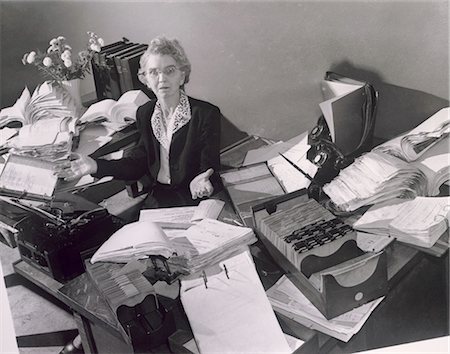
Little time. Lots of results.

838-02519997
So many options. Where to start?

Bit of a shorty today, and the subject itself is the reason why.

Let’s talk time management.

As much as I’d like to devote a big portion of my day to writing, that just isn’t the case. I’ve got other responsibilities, so I do what I can to make that limited timeframe as productive as possible.

A key part of this – planning ahead. Making a list. Designating time specifically for certain activities.

Think “achievable objectives”. Things you know you can get done.

Research.

Reading scripts (both professional and writers within your circle)

Providing notes.

Queries (including verifying recipient’s info)

Networking.

And of course, writing (includes outlining, editing and polishing).

(Imagine how much more is involved with the actual production of a film. For today, it’s all about the script and the things connected to it.)

You could do all of these each day, but that would be exhausting. I find three to be a safe and productive number. Results will vary.

The important part to remember is how a steady repetition of all these little things can eventually add up to big results.

If you can only manage one or two, that’s okay. Do what works best for you. You’re the one in control, and this is definitely not the sort of thing you want to rush through.

Another helpful tip – avoid social media/wandering around the internet. Or at least severely limit your participation. Allow yourself a few minutes, then redirect that focus back to your project.

A writer wears a lot of hats, always having to switch them out because there’s always something that has to get done. But if you stay calm and try to be organized about it, the switching out of hats will get a little easier as you go along.

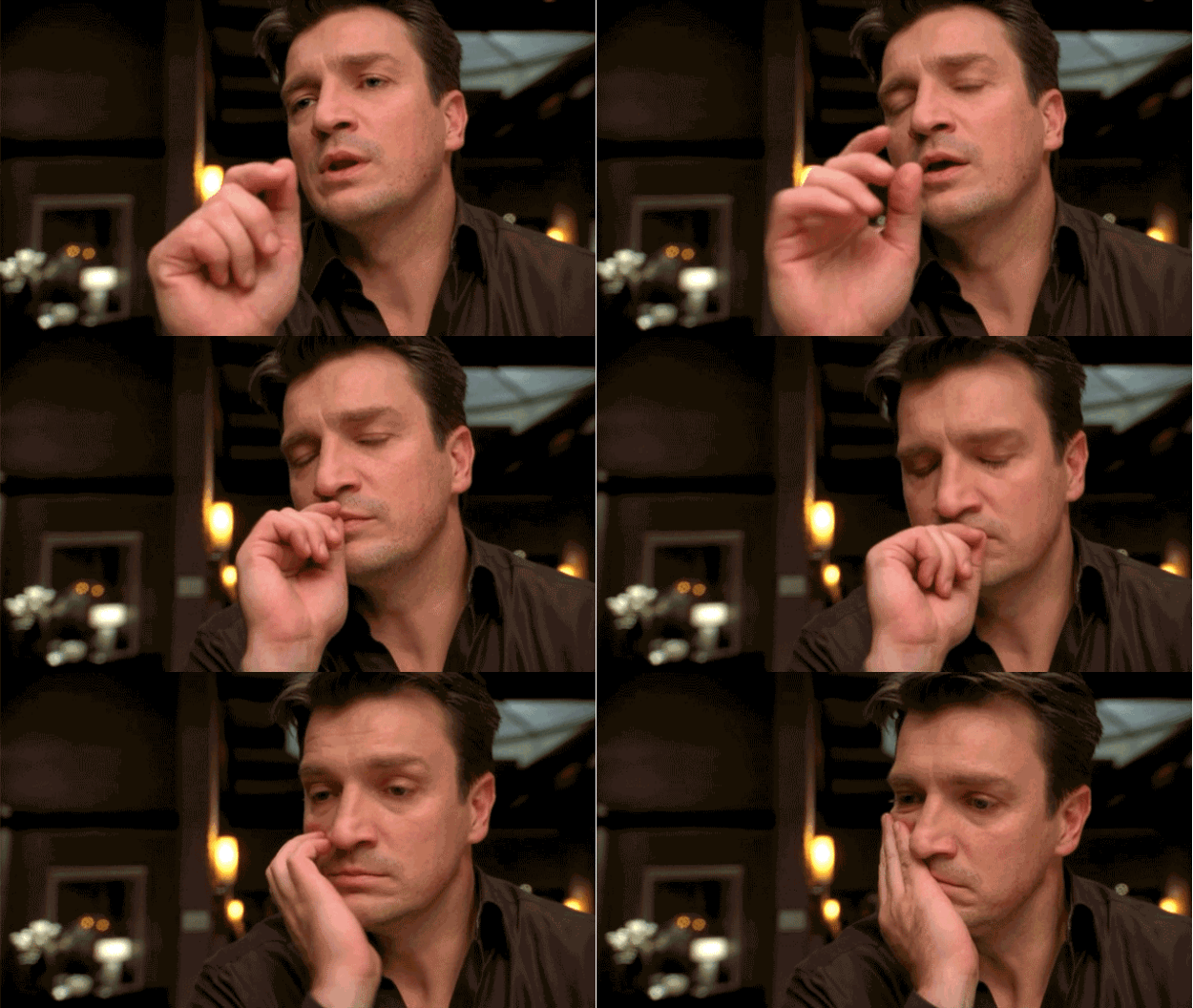
Outlines. Yes! No! Maybe?

fillion

Every writer has their own way of doing things, and each way is probably different – maybe a little or a lot – from somebody else’s. If it works for you, then by all means, have at it.

Just because your way isn’t how I’d do it doesn’t mean either of us is wrong; it just means we each have our individual approaches. I’m content with how I get a script written, and you can do yours however you want.

Some recent conversations with other writers, along with reading some interviews with professionals, really reinforced this mindset for me. Especially when it came to outlining your story.

Count me in the camp of those that prefer doing it, while others opt not to.

I’ve written before about how I put a story together, and I find it extremely helpful to make sure the outline is rock-solid (to me) before starting on pages. And as is often the case, there’s a strong possibility some elements of the story will change while those pages are being written. But for the most part, a good portion of my outline remains more or less intact.

Again, this is what works FOR ME.

Not really knowing how those who don’t like outlines operate, I admit to being curious/intrigued/impressed with how they do it.

Do they at least have some kind of basic structure in place? Do they just sit down and start writing? Do they know where things are going? Is it all about feeling spontaneous and just jumping right into it?

All I’m asking is – How do they do it?

One pro said something along the lines of “outlining removes the element of surprise”. Honestly, I’m not really sure what to make of that. I’m fairly certain they don’t mean “didn’t see that coming” – or do they?

Others have commented that “outlining a script takes away from its organic nature”. (Again – paraphrasing.) Not sure how that would work either. If the story’s put together in the most effective way the writer can make it, with a solid structure that flows along nice and smoothly, and with three-dimensional characters, wouldn’t that fall under “organic”?

Like I said at the beginning, if you don’t like to outline your story, don’t outline your story. If that’s how you do it, great. All I’m saying is it’s not something I could do, nor would I expect either of us to suddenly change our methods.

Would I ever give it a try? Probably not. I’d be more concerned the end result would be a big mess. I enjoy taking the time to put things where I think they should be, from both the storytelling and screenwriting aspects.

How about you? Pro- or anti-outline? Or somewhere in the middle?

I know the rules, and do not hesitate to break them

breaking free
Took a while to be able to do it, but well worth the effort

Used to be that when I would outline a story, I’d try to be as spot-on about hitting industry-recommended page numbers as I could.

Statement of theme on page 3, inciting incident on page 10, etc., etc. That’s how I learned it, so that’s how it must be.

These days? Not so much.

I don’t go crazy, you understand. No scenes lasting 10 pages or anything of that nature.  More like “this happens…around here-ish”.

When I first gave it a try, my immediate thought was “Is that going to be a problem?” It had become so ingrained into my process that this was how it was supposed to be, and any deviation from that was wrong.

Then my writer’s sense of craft kicked in with a hearty “Nope. Have at it, kid”.

As far as I know, the screenwriting police (is there such a thing?) aren’t going to shut me down because something doesn’t happen where THE RULES say it should. I’d rather focus on telling an engaging story with an intelligent plot and well-developed characters than worry about this kind of pettiness.

And honestly? It’s incredibly liberating.

I’m much more interested in telling the story in a way I deem appropriate, rather than drastically cutting something or even cutting it altogether just to make sure the beats happen on the designated pages.

So if my opening sequence runs a page or three longer, so be it. Does it work against me? I don’t think so. My writing usually moves at a good pace, so if something happens a little sooner or later than you expect, and if I’ve done my job in really grabbing your attention, chances are you probably won’t even notice it.

Unless you’re a real stickler for that sort of thing. Most of the writers who read my stuff aren’t; they’re more interested in reading a good script.

-Through September 30th (that’s this Sunday!), the fine folks at LiveRead/LA are offering the discount code MAXZ15 for 15 percent off their script services and the fee for their contest where your script could  be one of two read live by professional actors in Los Angeles in October. Following the read (30 pages max), feedback will be provided, including from veteran production exec & producer Debbie Liebling – Comedy Central, Fox, now working with Sam Raimi. Writers from everywhere are encouraged to submit. The event will be livestreamed, so if your script is chosen and you can’t attend, feedback will be provided live via Skype.

-Filmmaker Scott Kawczynski is running a crowdfunding project for his animated film Light Work. It’s a pre-sale, so even for $1, you can watch the film. Donate if you can!

Like origami, but with words

rhino

With the outline for the horror-comedy simmering away on the backburner, all attention is now being directed to a rewrite of the sci-fi spec. I was fortunate to get some solid notes on it, so the rebuilding process is well underway.

A big part of this involves cutting scenes and sequences, along with a whole lot of moving stuff around. Even with a hard copy of the previous draft in front of me and the current draft’s skeletal outline on my laptop screen, it requires a lot of planning things out along with a constant going back and forth between the two. To say the least.

Keep this scene? Or how about this one? Would this one work here, or here? Wait, do I even need this sequence anymore? Jeez, I totally forgot about that new scene that would set up the protagonist’s internal goal.

(Not my actual inner monologue, but you get the idea)

Simply put, there’s been A LOT of twisting, readjusting, manipulating and something comparable to “square peg + round hole + sledgehammer” to get this thing more streamlined and functional.

Going through all these motions has also revealed non-essential moments, or at least parts of them, dialogue that initially seems like it should stay in but really doesn’t need to, and a decent amount of literary fat that can easily be trimmed away. No fuss, no muss.

Despite the statements in the preceding paragraph, a majority of what’s already on the page still works. It just takes everything I’ve described, plus a little more, to get into better shape. A slow but effective process. As is usually the case for me, initially insurmountable, but gradually not too bad, and eventually being classified under “that worked out better than I’d expected.”

With any luck, the producing of actual pages will also go relatively smoothly.

One can only hope.

-Through September 30th, the fine folks at LiveRead/LA are offering the discount code MAXZ15 for 15 percent off their script services and the fee for their contest where your script could  be one of two read live by professional actors in Los Angeles in October. Following the read (30 pages max), feedback will be provided, including from an Industry Insider (last time was actor Jason Alexander. This time it’s veteran production exec & producer Debbie Liebling – Comedy Central, Fox, now working with Sam Raimi). Writers from everywhere are encouraged to submit. The event will be livestreamed, so if your script is chosen and you can’t attend, feedback will be provided live via Skype.