One chapter ends, another begins

Seeing as how 2024 just passed the halfway mark, and taking into account how many drafts I’ve done on the animated fantasy-comedy, it’s safe to say that for now, this script is as solid as it’s going to be.

Naturally, that could change, but I’m quite thrilled with how it’s turned out and don’t want to mess with it any further. It’s a strong writing sample/calling card script and I’m already prepping to enter it in a few contests next year.

So what now?

My initial intent was to go back and revise the sci-fi adventure, but earlier this year I came up with an idea I am absolutely crazy about, and since they say you should work on that which excites you, this one definitely fits that bill.

Far as I can tell, there hasn’t been a story like this before.

I’ve mapped out the plot points and started jotting down the ever-increasing number of ideas for scenes and sequences. The more I work on it, the more ramped up I get about working on it. I’m sure things will change as things develop, but as has often been the case, the core of the story should remain the same.

Ideally, I’ll have a first draft done by December 31st, but also want to take my time in plotting it out. Once that’s set, it’s diving headfirst into pages.

Excitement levels are pretty strong, and doing what I can to keep that going.

Wish me luck.

From the archives: Writing in your own voice

“Hmm. Billy’s new script. Something about men dressing up as women to hide from gangsters? Hope it’s funny.”

I’ve seen a good number of articles and online comments recently about how a script should convey the writer’s “voice”. That prompted this blast from the past from June 8, 2018.

Enjoy.

“When I’ve done script notes for writing colleagues, no matter what the genre is, I can usually tell who wrote it – because of the way it reads. Each writer has their own particular style, so each of their scripts has its own corresponding “sound”. Or I’ll get notes back on my material which often includes a comment along the lines of “this sounds like something you’d write”.

This isn’t just about dialogue. It’s about a writer’s overall style, or how they tell the story of their script. You don’t just want the reader to read your story; you want them to experience it. Which can be accomplished by adding that extra layer.

Everybody develops their own individual style, and it takes time to find it. The more you write, the more you’ll be able to hone your writing to reflect your own individuality.

Just a few things to think about:

-How does your script read? Is the writing crisp and efficient, or are you wasting valuable page real estate with too many lines of  your loquacious verbosity? Taking it one step further, do you use the same words over and over, or do you relish any opportunity to give your thesaurus a solid workout?

-How is your story set up and how does it play out? Is it simple and straightforward, or complex and full of deliciously tantalizing twists and turns? Are you working that creativeness to show us things we haven’t seen before, or is just page after page of the same ol’, same ol’?

-Is it a story somebody besides you would want to see? Just because you find the subject matter interesting doesn’t mean it has universal appeal. However, there is the counter-argument to that in which you could attempt to have your story include elements that would satisfy fans of the genre while also appealing to newcomers.

-Can’t ignore the population within the pages. Are your characters well-developed and complex, or do they come up lacking? Do we care about them, or what happens to them? Can we relate to them?

-What are your characters saying, or not saying (subtext!)? How are they saying it? Do they sound interesting or dull as dishwater? Very important – do they sound like actual people, or like “characters in a movie”?

Remember – the script is a reflection of you. A solid piece of writing shows you know what you’re doing. Offering up something sloppy is simply just sabotaging yourself.

Who hasn’t heard a variation on the line about a script being a cheap knockoff of a more established writer? While I can understand admiring a pro writer’s style, why would you attempt to copy it? It probably took them a long time to find their own voice, and by trying to write like they do, you’re denying yourself the opportunity to do the same thing for yourself.

Or to put it another way: they didn’t take any shortcuts to become the writer they are today, so why should you?”

The next mountain awaits

Wrapped up the latest draft of the animated fantasy-comedy earlier this week and sent it to a few readers.

Notes have begun trickling in.

Overall responses: very positive, but could still use some tweaking. Points were awarded for creativity, originality, dialogue, and the jokes.

I appreciate all of those very much.

But…it can still be better.

I’d estimate it’s maybe one to two drafts away from being where it needs to. Waiting for a few more notes to come in before diving into that.

What’s also helped is that a lot of the changes don’t seem to be of a major overhaul type, but I suspect it won’t be a few minor changes here and there either. Somewhere in that nebulous middle.

It’s been quite encouraging how fast and effectively things are playing out for this one. It’s taken a while to get to this point, but all the time spent writing, rewriting and constantly trying to make previous scripts better are yielding the desired results for this one in a more timely manner.

Another thing that’s different about this time around is that confidence levels were already pretty high about the script, and getting comments about what still needs work hasn’t diminished them. Many times in the past I would get notes and think what a terrible writer I must have been, which was not the case.

I’m quite psyched about this one, and can’t wait to get back to work on it.

**SHAMELESS SELF-PROMOTION!!**

I was the featured guest on some recent podcasts:

What Are You Watching? with Chris Mancini (who has a q&a on this blog)

The Successful Screenwriter with Geoffrey Calhoun (a 2-time q&a on this blog – here & here)

From the archives: Introduce your character with character

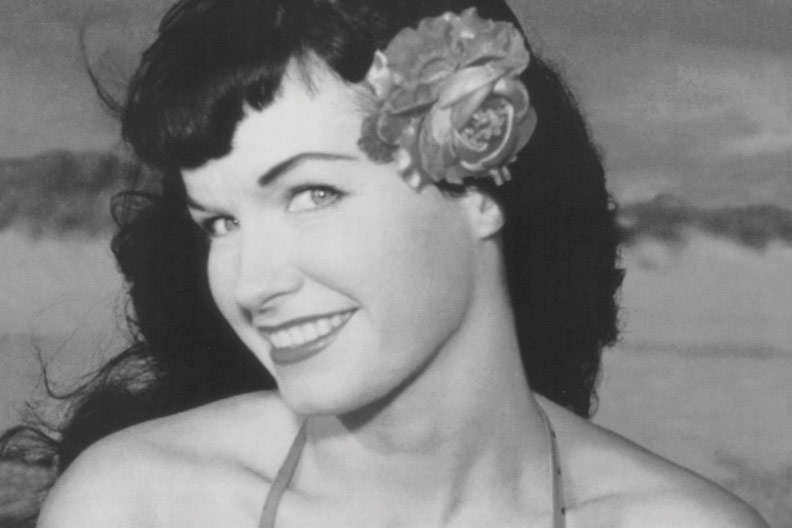
BETTIE, mid 20s. Don't let her all-American looks fool you. Trouble goes out of its way to avoid HER.
BETTIE, mid 20s. Don’t let her all-American looks fool you. Trouble goes out of its way to avoid HER.

Author’s note: had a great in-person notes session this week. Among the many topics we discussed was character intros, and what made for a good one, as well as a not-so-good (i.e. boring) one. That reminded me of this post from April 2014. Enjoy.

“When we, the reader, first meet an important character in your script, how do you describe them? What are the important details?

A lot of the time, the emphasis is on their physical traits – “tall”, “imposing”, “blonde”, “handsome”, “drop-dead gorgeous”, etc.

Or maybe it’s a simple adjective or two – “bubbly”, “funny”, “a nice guy” and so on.

These are okay, but you have to admit they’re kind of dull, which makes it more challenging for us to be interested in wanting to follow their story.

So how do you fix this? Time to ramp up that creativeness and really focus on what kind of person this character is, rather than what they look like. Unless a physical description is a key character trait, don’t worry about it.

One of the most memorable intros I ever read described the best friend of the teenaged protagonist – “James Dean cool at 15.” That’s it. Pretty effective, and in only five words.

Doesn’t this give you a better idea of what this character is like than say, “cool and aloof?”?  This is the kind of writing that catches our eye AND makes an impression.

A former co-worker of mine used to describe a very talkative friend as “If you asked him what time it was, he’d tell you how to build a watch.” See how it goes beyond the good-but-simplistic “chatty know-it-all”?

Cliched as it sounds, we really are painting pictures with words – not just for the story, but the characters in it. You’re already crafting a unique and original story, so why not develop a unique and original way to tell us about the characters in it?

This isn’t saying you should always strive to be clever and witty about it, but at least try for something different. This is just a small part of showing off your writing skills.

Take a look at how you introduce the characters in your latest draft. Does it really tell us what you want us to know about them? If not, how could you rewrite it so it does?”

A holiday Q & A with Heather Hughes & Kate Wharton

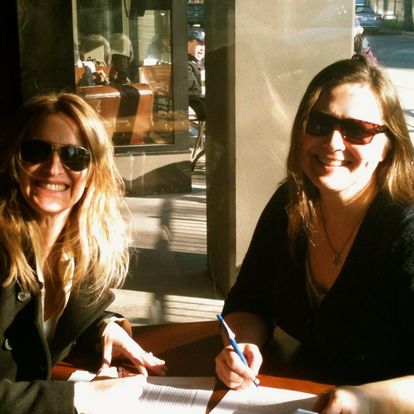
Heather Hughes and Kate Wharton have been writing together for over 12 years and worked with Disney, Hallmark, and Lifetime, as well as a plethora of indie filmmakers.

They are both graduates of the TheFilmSchool in Seattle and studied with the late, great Blake Snyder.

They are represented by The Nethercott Agency in Los Angeles.

What was the last thing you read or watched you thought was incredibly well-
written?

Heather: I thought The Queen’s Gambit was extremely well-written. The characters were very real and they avoided all tropes. I really enjoyed the mother and that character defied all my expectations. We also just rewatched Breaking Bad, which is about as far away from Hallmark movies as you can get, but genius writing.

Follow-up: a Christmas movie, TV or feature, you think is well-written.

Heather: We detail the seven sub-genres of Hallmark movies in our book and we’re huge fans of the “fake boyfriend” sub-genre, which we call “The Christmas Fake Out” or “Rent-a-Boyfriend” and thought The Mistletoe Promise (2016) was quite well done.

We also like Mary Christmas, which has one of the most satisfying and unexpected endings of any Hallmark movie ever. It’s not The Usual Suspects, but for these movies it was a shocker!

Kate: Hallmark’s The Angel Tree is very nicely done. The plot setup involves good Hallmark-appropriate conflict and there are a couple of nice plot twists. I think it’s the best of 2020’s 40 new Hallmark movies.

How did you get your starts in the industry, and how did you get into writing Christmas TV movies?  

A producer requested our screenplay, which had done well in a contest.  He routinely asks the directors of the contest to send him the winning scripts.  When we started writing together, we were advised that some screenwriting contests were a way to get noticed. That proved to be true for us. We consider Austin, the Nicholl Fellowship, PAGE, Big Break and Kairos to be some of the best contests.

You refer to these films as Cozy Christmas Romances, or CCRs. Is romance a necessary component of the story template? 

Romance is a requirement for this genre. When we first started writing these movies we assumed that any wholesome content would appeal to these networks. We spent a lot of time pitching heartwarming stories that routinely got turned down. It wasn’t until we’d been at it awhile that we realized that these scripts had to be about—to steal from the late great Blake Snyder’s Save the Cat—two people who are better together than apart AND they needed to celebrate Christmas not just take place at Christmas. Or, as one producer told us, “It needs to be about Christmas, not just set at Christmas.”

There is an abundance of CCRs on several channels and streaming services, with new ones coming out each year. To what do you attribute the popularity of the CCR? 

There are several reasons they are so popular. These movies are predictable, safe, and uncontroversial. It’s a great escape! We like to call them the mac-and-cheese of movies. They’re familiar, warm and comforting. You won’t have nightmares after watching them and you can watch them with your 92-year-old grandma and your six-year-old niece. 

When we were researching the book, we actually found that a lot of military vets enjoy watching them because they can relax knowing that they won’t encounter any disturbing content.

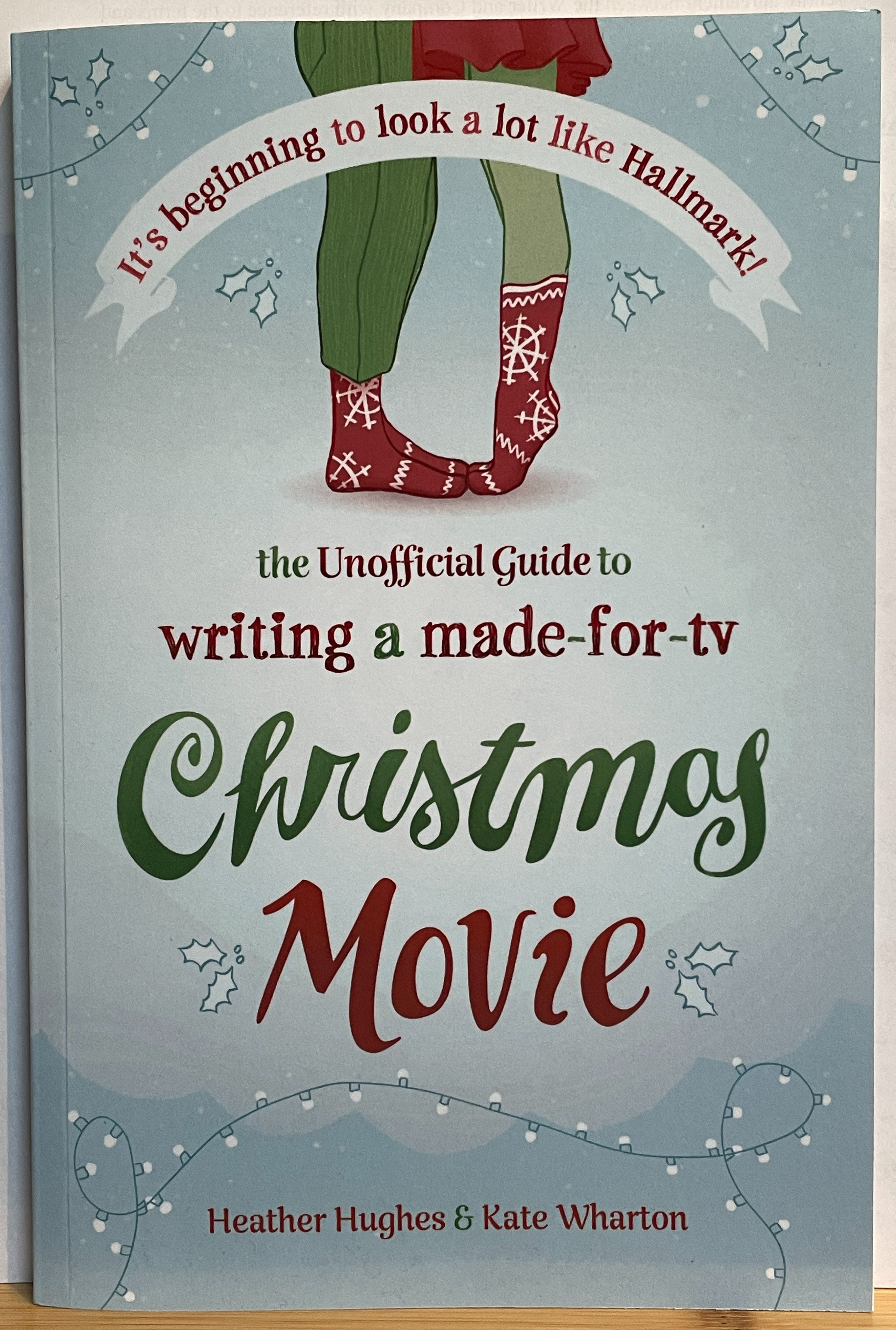
What was your inspiration behind your book IT’S BEGINNING TO LOOK A LOT LIKE HALLMARK! WRITING A MADE-FOR-TV CHRISTMAS MOVIE?

We learned these guidelines in dribs and drabs while we were working with and pitching to companies that make films for Hallmark. It would have been helpful to us if someone had written them down. For instance: we wrote a whole spec script featuring a couple in their 50s thinking it would be perfect for them. After we submitted it, we
learned the protagonist for that project needed to be 28 – yes, they actually said 28. We wish the production company had told us that at the start!

These specific guidelines change from year to year, but it’s helpful to know the basic framework for these movies.

How much research went into putting the book together? How many Christmas TV movies did you end up watching?

If you ask our husbands they would say thousands, but it was really more like hundreds. We also did extensive research with a ton of screenwriters, agents and producers. Some were eager to share, but wanted anonymity, especially when talking about money. After doing more and more interviews we began to see specific rules emerging. There are always exceptions to these rules, and we aren’t out to stifle creativity. But when we compiled our findings, we began to see them as a roadmap for writers who would like to write in this genre.

In the book, you list the 7 main types of CCRs. Obviously, that’s not all they’re limited to, but a majority tend to fall into one of those categories. If a writer comes up with something totally different from any of these but could still be considered a CCR, does that hurt their chances of getting it noticed?

We came up with the seven after watching many movies and reading all of the loglines. We’re sure there are more subgenres or ways to put these movies into buckets. We’d love to hear from your readers who identify others!

If a writer comes up with a new and original subgenre it could be great! But the companies seem to be buying similar content. If the idea strays too far from the conventions of the world (a Christmas town full of zombies, for example), it might hurt your chances of selling to Hallmark. Other networks might love it, though! 

Hallmark has honed its brand to the point where they know the 85 million viewers who tune in during November and December and what those viewers expect.

A few chapters involve the CCR beat sheet, along with filling in the blanks about the story. Some might say that there’s a certain predictability to these stories, so what advice would you give to writers striving to come up with something original?

We’ve noticed that many writers struggle with plot. They start writing with a lot of momentum, and then get stuck around page 50 because they don’t know what’s going to happen. The beat sheet is a fill-in-the-blank exercise to teach the writer a structure that is common to all these movies. If you’re great at plot without a beat sheet, then you probably won’t need this roadmap. 

These movies are intentionally predictable, but within that framework there is a lot of room for originality. If you want to write CCR movies, your original ideas will probably center on an unusual hero, and a unique romantic combination. For example: you could find a new reason the female character needs to leave the big city, an unusual job for the male character, or a unique Christmas activity to include in your montage.

You also go into “what to do after the script’s done”, i.e. queries, meetings, etc., and reference several non-professional writers who sold their scripts. While not every script is guaranteed to sell, is this something you would recommend for aspiring writers?

When you write a script, the goal is to get someone to buy it and make it into a movie—unless you want to film it yourself, which is a great option for aspiring filmmakers. After writing your script, the second hardest thing to do is to get people to read it. Our process of research and queries is a good system for getting people to read your script, regardless of your genre.

We think this is a good place for new writers who like these movies to break in simply because of the sheer number of CCRs made each year. In 2020, Hallmark made 40 new movies, Lifetime made 30 and UPtv made 5. There is never a guarantee that a script will be optioned, but there are many companies looking for content.

The two of you are about more than just writing Christmas TV movies. How can people find out more, as well as order the book?

We love teaching and writing together. Readers can contact us through our website writingtherom.com or on our Facebook page We Heart Rom Coms.  You can buy our book on Amazon, and we’d love to hear any thoughts your readers might have about it. Feel free to reach out!

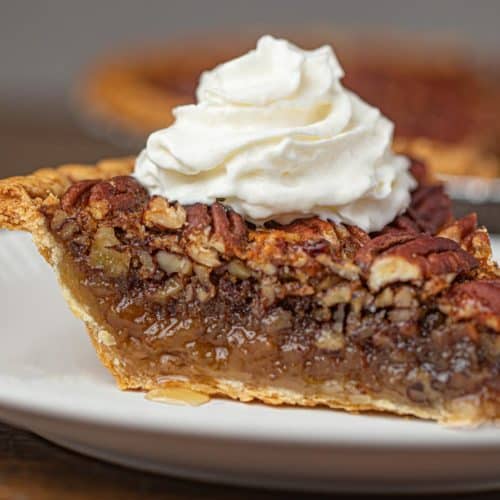
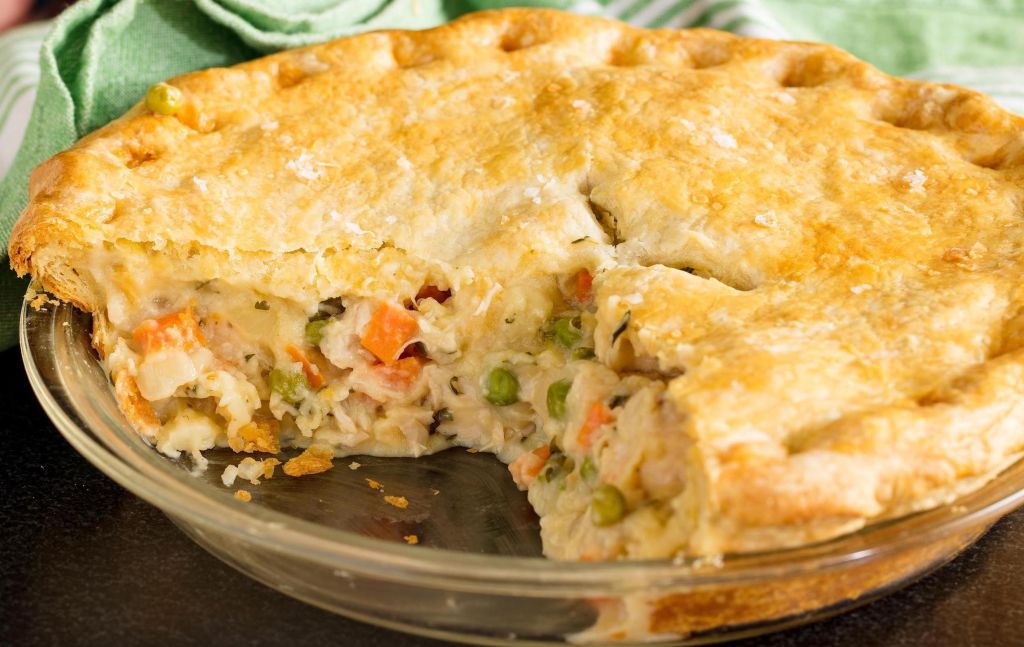
Readers of this blog are more than familiar with my love/appreciation of pie. What’s your favorite kind?

We both adore pecan pie with a ton of lightly sweetened whipped cream! No wonder we’re such great writing partners!

If your pie preferences run a bit more savory, we also recommend Costco chicken pot pies. They’re amazing—flaky crust, delicious chunks of chicken, and a light creamy sauce. Find them in the back, by the rotisserie chickens—It’s a cost effective, delicious meal.