A slight course correction

XEaj

For the most part, my involvement with this year’s big contests is more or less over. Top 15 percent for Nicholl – not too bad. Total whiff for PAGE again, which makes me 0 for 4. Not expecting much out of Austin.

Results from some of the smaller contests are about the same. Semifinalist in one, quarterfinalist in another, and a few not-at-alls.

A bit on the disappointing side, but all is not lost. On the contrary. It’s actually helped force me into making a pretty important decision.

After much self-evaluating, I’ve opted to drastically cut back on contests for next year and ongoing. Most likely, I’ll keep it limited to just the big three mentioned above. And even entering those isn’t a certainty. They’re the ones that hold the most potential for getting the ball rolling on a career – not guaranteed, of course – but the most potential.

No delusions of grandeur. I’ll continue to take my chances and see how things go. If I do well, great. If not, no big deal.

And just for the hell of it, maybe one or two smaller ones every once in a while. Might as well have a little fun.

Moving forward, the focus now shifts to improving my writing skills and making my material better. Reading a lot of professional scripts, especially those in the same genres as the ones I’m writing, shows me my level of expertise isn’t where I need it to be.

If I want to make this work, I need to get better. No other way to put it.

It’ll be tough, but I’ve come this far and the final objective continues to feel a little bit closer with each new draft.

I’m fortunate enough to know a lot of savvy writers, along with more than a few quality consultants, so getting constructive feedback and guidance can only work to my advantage.

As a colleague once told me, “It’s not about contests. It’s about Hollywood.” Sure, contests are fun and all (especially when you win, or at least place highly), but I’d rather focus on writing quality material and getting them in the hands of people who can actually make something happen with them. Representation. Assignments. Rewrites. A sale. I’m not picky.

My long-term goal has always been to become a working writer, and I think I can still do it. It may not happen as soon as I’d like, but hopefully by really buckling down and pushing myself to keep at it, I’ll have a better shot at turning that goal from a dream into a reality.

Wish me luck.

Be the word

quadruple threat
An early inspiration for my efforts (image by Hirschfeld)

Apologies for the lack of a post last week. We had to travel to a different time zone for a family function, and the jet lag really took its toll on me. It’s tough to compose something when you can barely stay awake.

But I’m back, rested, and ready to get back to work.

Among the items on the “list of stuff that needs attention”:

-continue working on the horror-comedy outline

-work with latest batch of notes on the comedy spec. Hoping to have that latest draft done sooner than expected.

-research potential representation firms to query

-look into setting up at least one networking event for SF/Bay Area writers. Previous ones were pretty successful, and are great for establishing connections.

-Among the comments that came in for the comedy spec was how it might benefit from a table read. Never did one before, so investigating setting one up. Anybody out there who’s done it?

There are a few other items going on, but those are the dominant ones for now. At first glance, it might seem like a lot, but it doesn’t feel that way to me. They’re all just parts of the machine that is me working on making a career out of this.

I think the biggest factor here is time management. I do what I can to allot a certain amount of time per task. Work on my own stuff for an hour or two. Spend some downtime at work researching reps and prodcos, then send out some queries. If an idea hits when I’m not actually writing, I jot it down immediately – mostly because I don’t trust myself to remember it a few hours later.

One caveat – If I have to do notes on a friend’s script, all attention is diverted to that. If they were reading mine, I’d want them to be just as focused on my script, so the least I can do is return the favor.

Now, I totally get that no two writers have the same schedule, so everybody will tackle things their own way and at their own pace. Maybe you can only spare an hour a day for anything writing-related, or you get up earlier than you need to because that’s your designated writing time. Any and all of it’s fine. You do what works for you.

The important thing is to be doing something. Anything that helps you along.

Also remember, and I can’t stress this enough – everybody’s path is different. What works for that other person might not work for you, and vice versa. Don’t stress out over feeling like you’re running behind. The only person you’re competing against is you.

Not sure where to start? Easy. Be a writer and write down what you’d like to accomplish. I suggest starting small – list three things you could do today to help yourself out. Write three scenes (or three pages). Send out five query emails. Contact the writer of that logline you liked in that online forum.

Get into the habit of giving yourself stuff to do, and there’s a good chance you’ll be pleasantly surprised at how much stuff is actually getting done.

By you.

A few important reminders (for me and anybody else)

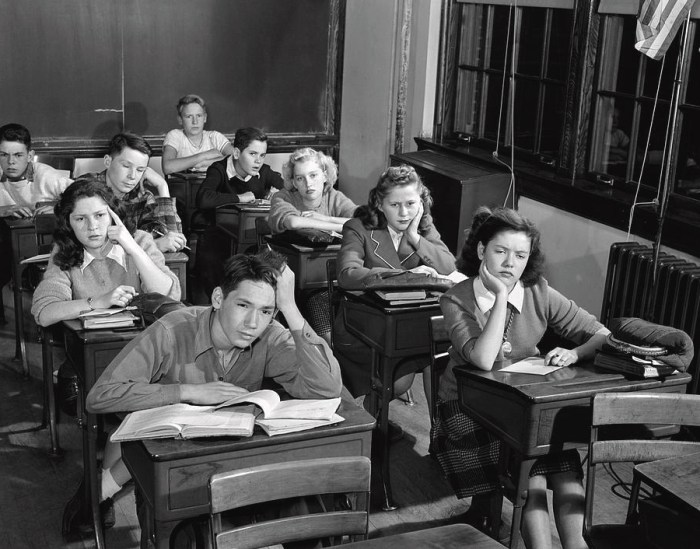
high school classroom
“I know you didn’t do as well as you’d hoped, so look at this as a learning experience.”

Yet another busy week around Maximum Z HQ, including quite a bit of doing script notes, polishing the latest draft of the comedy spec and punching forward on the horror-comedy outline.

Fun stuff all around.

It also included my western placing in the top 15 percent of this year’s Nicholl, which is the second time for this script, and third overall. Not bad, but still not enough to get to the quarterfinals. At first I was feeling kind of down about it, but realized (and was reminded by more than a few colleagues) that a much larger number of scripts didn’t even make it that far, so I should still regard this as a positive.

Suffice to say, it looks like there’s a little more tweaking in store so as to get this script and at least one other ready for next year (along with a few other top-tier contests).

Since this blog recently hit the 9-year mark, of course there are some previous posts of relevant content.

A screenwriter’s 5 stages of grief (contest edition)

A little-post comp analysis

My race, my pace

Fall back. Regroup. Hit ’em again.

In it for the long haul

To all of you who had a script advance in PAGE and/or the Nicholl, my heartiest of congratulations. Steps are already being taken to reinforce the notion of me being among that group next year.

That’s the hope, anyway.

Q & A with Brian Smith of Monument Scripts

Headshot_1_Brian

Brian Smith of Monument Scripts grew up on Cape Cod, long a favorite haunt of writers and artists, surrounded by and loving well-told stories. When he left the Cape, it was to study the techniques and principles of good story telling at the University of Southern California. There he earned an MFA from USC’s School of Cinematic Arts.

He began his career in the industry working for Disney, and then Universal, Sony, and DreamWorks Animation, and he has credits on 24 films and television series. Brian’s been a professional screenplay reader since 2006, and has written coverage for over 1,000 scripts and books for such companies as Walden Media and Scott Free Films.

Brian currently lives in Los Angeles, with his wife, three daughters and two dogs.

What’s the last thing you read/watched that your thought was incredibly well-written?

If we’re talking incredibly well-written, I would say the last thing was Coco. Full disclosure here, my background is in animation. I’ve worked in animation my whole career, but I’ve been kind of down on PIXAR for about the last 10 years or so. I felt like it had been at least that long since they put out a complete film. I thought Wall-E and Up were both half-great films in that the first half of each of them was great, but the other half was mediocre to just bad. Other films that they put out during that stretch, like any of the Cars movies, Finding Nemo/Dory, or even Toy Story 3, were really lacking in strong stories. They always had wonderful characters that the audience fell in love with. That allowed for hyper-emotional endings, which was ultimately why those films were so successful. I thought with Coco, they put everything together in a way that they hadn’t since The Incredibles and Ratatouille, and they finally made a complete film. The story was thematically very strong, the stakes were very high, and they gave us a twist at the end I did not see coming. I don’t cry during movies, but I had a lump the size of a golf ball in my throat at the end. The quality of the writing in the script had everything to do with that.

How’d you get your start reading scripts?

I fell into it, really. I was working on the Curious George feature years ago, and we were all about to get laid off as the show was wrapping. One of my co-workers suggested script coverage as a way to make some money while being unemployed, and he put me in contact with a creative executive he knew at Walden Media. I contacted him. He had me do a test, which they liked, and they started sending me work. I fell in love with evaluating stories and writing, and have been doing it ever since.

Is recognizing good writing something you think can be taught or learned?

Absolutely, and it can be both taught and learned. Writing is one of those unique disciplines that’s equal parts creativity and technique. You have to use your imagination in order to be a good writer, but you also have to use dramatic structure. Determining the merit or quality of a premise or an idea can be a subjective thing, but evaluating a writer’s technique and skill level is absolutely something that can be taught. What a lot of writers don’t understand is that good dramatic structure makes you a better writer. Just as anyone can be taught to implement that structure in their writing, others can be taught to evaluate how successful the writer was in implementing it and how that implementation strengthened or weakened the story.

What are the components of a good script?

A good script is a story well-told; that takes the reader on a journey to a world that the reader can envision and become a part of. In order to do that, a good script needs to have been spawned from a strong premise. A strong premise usually gives way to strong thematic elements, which are also necessary for a good script. A script is almost always better when it has something that it’s trying to say. A strong thematic component is also a way to make us care about the characters, which is probably the most important component. I need to care about the characters and what happens to them. I need to feel some emotional attachment. Without that, you’ve got nothing.

What are some of the most common mistakes you see?

Not adhering to proper story structure is a big one. The transition from Act II to Act III is one that tends to trip people up the most. Poorly written dialogue is another one. Writing good dialogue is hard, and most writers from whom I get scripts haven’t yet mastered the art of subtext, which is crucial to writing good dialogue. It also seems as though a lot of writers think that big words mean good dialogue, which isn’t necessarily the case. Finally, flat characters are a common problem in scripts I get. It’s especially problematic and common in protagonists. Many writers are reticent to give their hero a flaw or some other issue that gives him or her depth, and it’s so important to do so.

What story tropes are you just tired of seeing?

The post-apocalyptic sci-fi thing. I love science fiction and there have been some great post-apocalyptic stories. There’s a reason The Hunger Games was huge. It was a terrific story with real pathos and drama. Unfortunately, it made way for a lot of other stories that tried to do the same thing, but just didn’t do it as well. Even The Hunger Games went out on a whimper for me as the last movie wasn’t nearly as good or as compelling as the first. I had the same opinion of the books as well. But that’s a trope I kinda wish would just go away.

What are the 3 most important rules every writer should know?

Story structure, story structure, and story structure.

Have you ever read a script where you could immediately tell “This writer gets it.”? What was it about the writing that did that?

Yeah, and it was actually a bit annoying. I was reading for a contest, and got a script written by a woman who was a doctor and a lawyer, and the script was about a woman who was a doctor and a lawyer. I know this is super-petty of me, but I really wanted to hate it because it’s really annoying when someone is good and successful at everything they try. But I have to admit it was an exceptional script, with an interesting protagonist, a compelling storyline and meaningful thematic elements, all written in a cinematic style. It was easy to envision this as a courtroom drama worthy of the genre. The writer really understood what it took from a technical standpoint to write a story well, and her personal experiences allowed her to tap into material that was interesting and dramatic.

How do you feel about screenwriting contests? Worth it or not?

I believe it is worth it, especially nowadays. With studios less likely to option or buy spec scripts, doing well in a screenwriting contest might be the best way for some writers to break in to the business. And the beautiful thing is, you don’t even have to win. You could be just be a finalist, a semi-finalist, or even a quarter-finalist, and there’s a good chance someone from a studio is reading your script and could possibly be impressed with your work. Even people who aren’t winning these contests are getting meetings that could lead to work. You might not sell your script this way, but your talent could be recognized by someone who has the power to hire you to write something else, and that could break you in to the industry. I personally have a friend that experienced that. She got her script into a couple of contests. She didn’t win any of them, but her script caught the eyes of people that could do something with it, and she’s been taking meetings and getting offers for representation. So if you have a quality script you can’t get past the studios’ Threshold Guardians, enter it into a contest, and there’s a chance that the studios could be calling you.

How can people get in touch with you find out more about the services you provide?

People can check out my website: http://monumentscripts.com/ or follow me on Twitter @monumentscripts.

You can also email me directly at briansmi71@gmail.com

Readers of this blog are more than familiar with my love/appreciation of pie. What’s your favorite kind?

We must be kindred spirits, because I am definitely a pie guy. I’d rather have pie for my birthday than cake, and will never turn down a slice of pie for anything. That said, I prefer fruit pies to crème pies, and my favorite of all the fruit pies is blueberry. My favorite way to have it is warmed up with vanilla ice cream on top. That is, unless I’m eating it for breakfast. Then it’s just plain.

blueberry pie a la mode

Equal time for B, C, D, and the rest

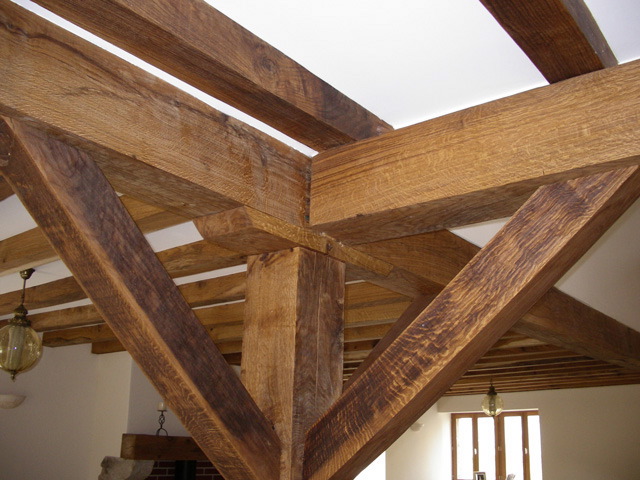
support beams
Each one doing its job as part of something solid and sturdy

Got a key set of notes back on the dramedy spec, so from this point forward, it’s all about working with those and making the appropriate fixes. (Fortunately, not as many as I expected, but still lots of tweaking in store.) A future post will cover the gist of the advice I was given.

Up until those notes came in, I’d been dividing my time developing the stories of the two new scripts. One of them was revamping an old story, whereas the other was entirely new, so it was really building from the ground up.

Quick sidenote – I hadn’t realized how long it had been since I’d plotted out a brand spankin’ new story. Quite a while. It felt thrilling and a bit intimidating to take it on, but both sensations were heartily welcomed.

While I knew what the main storyline was, the more I worked on filling in the blanks between plot points, the more it became obvious I’d need to start developing the subplots, especially the ones among the core group of characters.

This new story is unlike anything I’d written before, so as part of putting it together, I watched a couple of films of a very similar nature to get a better idea of how things could go. I soon had a stronger sense of what worked and what didn’t from an overall perspective, but also paid close attention to each character’s story – especially the main protagonist, how it connected to the supporting roles, and how all of them factored into the main storyline.

Doing this really helped in several ways:

-the films made it easier to see how each subplot was a part of the main story, as well as being its own separate (and unique) entity.

-each subplot provided lots of opportunities to show character growth and development, again contributing to the main story, as well as emphasizing the theme as it applied to each of the characters.

-because these stories are set in a specific kind of genre, there are certain elements that are more or less required (or “expected” might be a better term). As a result, the subplots provide an almost limitless number of chances to really let the imagination run wild and go for something totally unexpected, as it applies to those elements, but still have it fall within the realm of “this is the type of thing that would happen in this type of film.”

It’s a lot to take into account, but I suspect the more I plan things out, the easier it’ll be to arrange things so all the pieces fall into their proper places.

So for now it’s all about the dramedy, but I know that when I eventually return to working on these two stories (which I definitely will), I’ll have a stronger sense of not only what should happen for the main storyline, but also all the scenes, sequences, and developments of the subplots that go along with it.