The appeal of appealing to a younger demographic

kids
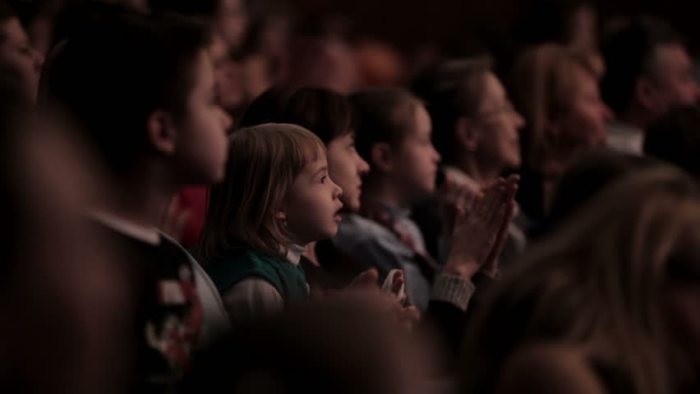
Multiple generations, engaged and enraptured. Fine by me.

During a recent phone conversation with another writer, I’d mentioned having wrapped up work on the pulp sci-fi spec.

“What’s it about?” they asked. I proceeded to give them my 10-second elevator pitch, plus the “THIS meets THAT” combo.

“Huh,” was the response. “It sounds cool, but it also sounds like it would be a kids’ movie.”

I suppose that’s one way to look at it. My preference is “a rollercoaster ride of a story, fun for anybody from 8 to 88”. That’s always been my approach when I set out to spin a ripping yarn.

Was I supposed to view their comment as some kind of insult? As if there’s something negative or shameful about writing material that appeals to kids? Because that hasn’t worked at all for Disney or Pixar.

PIxar especially has a reputation for producing films that appeal to all ages. There’s been a lot written about the immense amount of time they spend on making sure the story is rock-solid. One of the most-read articles for screenwriting is based on part of their process, and those don’t just apply to animation; they’re for ALL screenwriting.

Let me also throw a couple of “kids movies” out there. You might have heard of them.

Star Wars. Harry Potter.

One’s been around for 40 years, with no sign of letting up, while the other just celebrated 20 years of entertaining readers and moviegoers.

On the surface, both are solid, simplistic stories about the fight of good versus evil. But is that all they are? Heavens no! There’s universal appeal, engaging characters who grow and change, themes being explored, conflict like you wouldn’t believe – all told through a filter of imagination. Don’t let the presence of lightsabers, magic wands, or animated, talking animals distract you from what’s really going on.

And let’s be honest. Both of those series have done more than okay at the box office.

Not too shabby for “kids movies”.

Now, I’m not saying any of my scripts are in the same arena as those, but a good story is a good story, no matter who its target audience is. And if it appeals to a younger generation as well as my own, what’s wrong with that?

And you know what else works with kids movies? Kids grow up, and eventually have kids of their own. What do they watch? The movies the parents enjoyed as kids.

Who wouldn’t want to write something that leaves a lasting impression on a young mind, and then see them pass their love of that story to later generations?

For me, that’s what it all comes down to – writing a script that tells a fun and exciting story that anybody could enjoy. And if that includes kids, that’s fine by me.

Looking back, planning ahead

champagne-toast
Auld Lang Syne and all that

Well, 2016 is pretty much in the books. I hope it was a good year for you, writing-wise.

Mine was okay.

Among the more noteworthy events:

-I completed the first draft for 3 separate scripts. 2 comedies, 1 sci-fi.

-One of those comedies was written, edited and rewritten/revised over 10 days.

-My western made it to the top 15 percent in the Nicholl and was one of the top 100 in the Emerging Screenwriters competition, but did not advance with PAGE or Austin.

-Several read requests from managers and production companies. Unfortunately, everybody passed with the commonly-used “Just not what I’m looking for.”

-Built up my network of talented writers located all over the world, along with numerous getting-to-know-you in-person chats with those in the immediate geographic vicinity.

-Organized and hosted a very successful and enjoyable networking event for screenwriters. In a deli. A block from the Pacific Ocean.

-Took part in script swaps for somewhere in the neighborhood of 15 scripts.

Not a bad compilation.

As for 2017, the usual objectives:

-Along with the aforementioned rewrites, complete the first draft for at least 2 or 3 new scripts.

-Continue the quest for representation. Already a few potentials on the horizon.

-Based on how my western did in the Big 3 contests, I’m torn between seeking professional feedback for one more polish, or just leaving it as is and trying again next year.

-Continue providing notes and doing script swaps.

-Look into hosting another networking event, probably at a bigger venue.

-More networking and establishing connections with more talented writers.

-More getting-to-know-you in-person chats.

-Watch more movies.

-Read more scripts

-Stay confident. Be patient. Not lose hope, even on the shittiest of days.

-Keep trying to make this work. Eyes on the prize.

And a final note to all you loyal readers – thanks for coming along on this rollercoaster ride of a journey. I hope you’ve enjoyed reading about it as much as I’ve enjoyed writing about it.

All the best from me to you for a very happy and successful 2017. Fingers remain, as always, firmly crossed that this is The Year It Happens.

Wanted: little-known gems

keaton
Luckily, you won’t have to wait to see the show

I’m always keen for a good movie-watching recommendation, especially if it’s something I’ve never heard of, or at least heard of but haven’t seen. We all know a few of those.

So here’s your chance to shed a little light by a film (or films) that you’ve always enjoyed, but a lot of people may not be too familiar with.

Here are three of mine:

The Kid Brother (1927) An amazing piece of work from Harold Lloyd. Worth watching for the boat sequence alone. Plus it has a monkey in it.

ffolkes (1979) Roger Moore at his most un-James Bond-iest. A somewhat dated but still very entertaining action-thriller.

Whip It (2009) A charming and fun story that combines equal parts comedy, drama and women’s roller derby. Features a lot more name actors than you realize, and Drew Barrymore’s directing debut.

It doesn’t have to be a classic, nor does it have to be “a cinematic masterpiece”. You get a kick out of it, and think the rest of us would too. Just write down the title and what you like about it in the comments below.

Happy viewing!

Finding my forte. Mining my milieu. Spelunking my specialty.

e-ticket
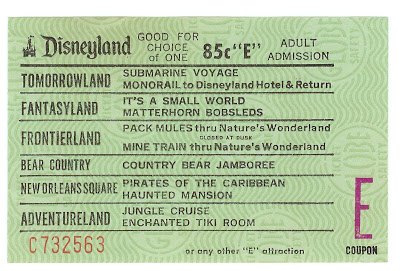
A reference only a select few will get. (85 cents?? Truly a bygone age)

While engaged in a very engaging conversation about screenwriting earlier this week, the person with whom I was conversing with asked the simplest and most straight-forward of questions:

“What do you like to write?”

Without a moment’s hesitation, I proudly stated, “Adventures.”

You can’t even say the word without implying the thrills and excitement it entails. Hands on hips, chest out, shoulders back, and a firmly-set jaw are automatically included.

I’ve enjoyed dabbling in other genres (such as drama and comedy), but nothing really grabs me like thinking up and writing out some sort of heart-pounding, edge-of-your-seat rollercoaster ride of a scene or sequence.

Those really never get old.

They say “Write what you know,” and although I’ve never actually fought monsters, manned a runaway train, or flown a space-faring vessel, years of reading and watching material of that type and nature has taught me an effective way of how to effectively inject adrenaline into what I’m writing.

More than a few readers have commented that my love and appreciation of the material and genre are boldly evident on the page, which is what I’m hoping  to accomplish every time.

My mantra has always been “Write something I would want to see”, and my list of future projects is jam-packed with numerous ideas and concepts that neatly fall into that category; each one a variation on the topic of discussion.

If these are the kinds of stories I was meant to write, you’ll get no complaints from me. I get a real kick out of cranking this stuff out. There’s no reason to think this can’t develop into what I build a career on and eventually become known for (he said, his fingers firmly crossed). My scripts. Rewriting someone else’s. Contributing to another. It’s all cool as far as I’m concerned.

Until then, all I can do is keep writing and making my readers feel their pulses quicken as they eagerly turn the page, absolutely spellbound to find out how the hero gets themselves out of this particular pickle, and, more importantly, what happens next.

Strap yourselves in, chums. This is going to be one helluva ride.

Digging towards the emotional core

big-dig
I don’t think you’ll need that much gear

Due to both of our busy schedules, my daughter and I go for some quality father-daughter time when we can. Sometimes that means we’ll watch something together.

It might be a movie or a TV show. We’re not picky. No shame in admitting she’s picked up my enjoyment of superhero- and fantasy-based (LOTR, Hobbit, etc) material.

Despite her occasionally sullen and blase teen exterior, V is, at heart, an empathetic and sensitive soul, so no matter what we’re watching, if there’s any kind of hint of emotional resonance in a particular scene, she will feel the full brunt of whatever emotion the film/program is conveying.

Almost any kind of a joke (the sillier the better), and she laughs her head off. Something scary and she hides under the blanket. Something sad and she immediately tears up. Even after years of me saying, “You do know this is just a movie/TV show, right?”, her emotional receptors remain cranked up to 11 (and the teenager reappears with the immediate response, “Will you stop saying that?”)

Looking at these from the writer’s perspective, I can’t help but examine how the writers were able to do that. How did they get to the emotional core of the scene? Jokes and scares aren’t hard to figure out, even though each is pretty subjective, but a good, solid tug at the heartstrings, when done effectively, can be some pretty intense stuff.

A key part is making it relatable. Love. Joy. Heartbreak. Loss. All are universal. Everyone’s experienced them in some form or another. As the writer, you want to convey that emotion so anybody reading or watching your story will not only immediately identify it, but also connect with it on a personal level.

Like this. One of the most effective emotional sequences ever. And not a single word spoken. If you don’t feel anything as a result of watching it, you have no soul.

Even though we may not have gone through the same things as Carl and Ellie, we can relate to a lot, if not all of it.

This isn’t saying that every scene has to be a major tearjerker, but you want to really let us know how the characters are feeling in that particular moment. They’re human, so they feel the exact same things we do. Make us feel how they’re feeling.

Each scene serves three purposes: to advance the story, the characters, and the theme. Let the emotions come through via the best way you envision them enhancing the scene (making sure not to overdo it). It might take a few tries, but the deeper you venture into the emotional level, the easier it’ll get for you to show it, and it’ll also be easier for us to identify it and relate to it.