Looking back (and a peek ahead)

sleeping
Me around 10:30 on New Year’s Eve

As the end of the year gets closer, one can’t help but be a little reflective of how the past 12 months have gone, and in this context, it’s all about the screenwriting and its related subjects.

-My western. A labor of love finally put to bed once and for all. This script has gone through A LOT of changes, and both I and it could not have gotten to this point without the sage feedback received from many of my trusted colleagues.

-Other scripts. Over the course of this year, I completed a first draft and two outlines (with a third in its final stages), all for separate scripts. I may not be as productive as I’d like, but think this is still pretty good. I’m hoping that at least two of these will be completed scripts by this time next year.

-Establishing a career. I’ve always said that each draft of every script gets me a little closer to accomplishing that dream of being a working writer. 2015 saw some strong progress on that front. My writing’s getting better, I discovered I’m pretty good at pitching, and found out the hard way what should and shouldn’t go into a query letter. It’s an ongoing learning process, but I’m getting there. Hopes are high of moving to the next level or two in 2016.

-Networking. The number of writers I’ve connected and interacted with has definitely grown by leaps and bounds. Some have been in person, while most have been via social media, but the benefits have been tremendous all around. From exchanging script notes to being a sounding board for ideas to plain old moral support, you couldn’t ask for a more helpful bunch of folks. Hopefully they got as much out of it as I did. Highly recommended.

-Running. After involuntarily taking a year off, I got back into the habit of going for runs and took part in four half-marathons this year. Didn’t set any new records, but stayed within my realm of expectatins. Really glad I did them and already looking forward to the ones next year. How does this relate to screenwriting? Well, apart from the standard quote of “It’s not a sprint, it’s a marathon (or half-marathon, in my case)”, it’s about determination, endurance, perseverance, and setting a goal and working towards achieving it. All necessary elements involved in writing a script.

-The blog. This year saw the wrap-up of my series of interviews with scripts readers and consultants. I still keep in touch with a lot of them, and happy to say that a lot of those posts continue to get hits. Thanks to all of you for that. In the meantime, no big changes planned for what you read around here, but I’ve got a few ideas.

Thanks for reading, happy new year, and may we all get some kickass writing done in 2016.


Networking: more than just a group thing

“Working on the rewrite while I wait to hear from that manager. How about you guys?”

Despite the fact that writing, for the most part, is a solitary activity, a lot of us take great pleasure in being connected with other writers.

They can be the invaluable support, guidance and motivation we sometimes need to give us that little extra boost. Having a problem and being able to tap into this kind of resource in order to find a solution is priceless.

We get access to all the goings-on, good and bad, that happen among us and our peers.

While I’ve seen my fair share of both, I’m glad to say that a majority have been of a positive nature. This person got a manager. That person finished their latest draft. That other person began working with another writer on a new project. I’m thrilled for all of these developments, and offer up congratulations and words of encouragement. Each and every one of these people has worked hard to reach this particular milestone.

I’d be lying if I said I wasn’t jealous. That sense of longing and wondering “Will I eventually/ever get to announce some good news of my own?” keeps nagging at me, so I continue to buckle down and redouble my efforts in the hopes of making it happen a little sooner. Some days it’s really tough to be patient.

On the other side of the coin are the not-so-great things. This person’s script got a pass from a high-profile agent. That person is suffering from a severe case of writer’s block (or worse – depression). That other person is going through some tough things in their personal life. These also happen to a lot of us, resulting in messages of sympathy, understanding and moral support.

I’ve experienced this too. When times are tough, you find out who’s really in your corner, and are glad to know it.

But I wouldn’t have any of this kind of support if I hadn’t sought it out. There’s a reason it’s called “social” media. I’ve been able to connect with so many awesome people because of what I’ve read or seen about them online.

Is there a writer (professional or peer) whose work you enjoy? Someone whose tweets always make you chuckle? Send ’em a note telling them that.

Even better – are they in your area? When I learn about a local writer, I’ll offer up the opportunity for a face-to-face chat over coffee or lunch. I’ve also done this with folks just visiting the Bay Area. This has resulted in some great ongoing working relationships.

Everybody’s career advances at its own pace, and all the fantastic help and support we get on days good and bad are major pluses. Many writers are introverts at heart, but you have to make the effort to put yourself out there and get to know somebody.

It gets easier the more you do it, and you’ll be glad you did.

A vital part of my creative engine

It helps me keep going forward

“The concept has potential, but a 16 year old lead without a property is really hard to cast, it would definitely need an A-list movie star. With this kind of lead, you might want to scale it back more and not make it so ambitious. Pass”

This was a management firm’s response to the one-page synopsis for my fantasy-adventure. It stung a little at first, but I’ve gotten over it. That’s when things shifted to analysis mode.

I appreciate the part about it having potential. Always nice to hear. Composing a one-pager has always been tough for me, so maybe the rollercoaster ride-ness of the story wasn’t conveyed enough. Nothing a little editing and rewriting couldn’t fix.

Regarding the actors. They’re looking at it from a business point of view, and who’d take a chance on a high-budget script written by an unknown?

Scaling it back. Um…not sure about that. I’ve created a new world within the confines of the story, so it’s kind of set in place. Nor do I feel overwhelmingly compelled to drastically change things around to suit the needs of somebody who might be potentially interested.

But “not make it so ambitious”? Afraid I’ll have to totally disagree with that one.

In the context of this kind of story, things cannot be kept simple. They need to be ambitious. In some ways, the story is an extension of my own ambition. My objective here is to tell a fun, entertaining story that takes you on an exciting ride. I strive to come up with new ideas, or at least new takes and approaches on old ones. I want my work to wow you and thrill you.

So the script wasn’t right for this particular person. Big deal. I took a chance, and it didn’t work out. The end of the world is not nigh. They’re definitely not the only ones out there, nor were they my only option. The person to say “yes” is still out there, and I’ll keep at it until we connect.

Never, ever underestimate the ambition and determination of a writer with their goals firmly set in place. It makes us quite formidable.

-Race alert! I’m running the Oakland half-marathon on Sunday. This race totally kicked my ass two years ago due to a combo of warmer-than-expected weather and a too-fast pace, so going into it with a goal of keeping it under two hours and the strategy of really trying to maintain a steady pace (especially for the first couple of miles) and doing what I can to stay cool. If that involves dumping water over my head at every water stop, so be it.

See you at the finish line.

Run at your own pace

It's the total opposite of a sprint
It’s the total opposite of a sprint

For the past couple of days here at stately Maximum Z HQ, yours truly has been doing everything possible to fight off a nasty viral infection (Note to self – invest heavily in Kleenex and Halls cough drops) because I’m doing my first half-marathon in over a year this weekend. I do expect to be well enough to run. Fingers firmly crossed hoping to at least break the 2-hour mark.

As a result of being sick, I’ve been home from work the past couple of days, which means a little more time than usual to work on the western rewrite. Latest update: page 38.

When I have a lot of time to write, I’ll give myself a short break after reaching a milestone, such as the end of a scene, or x number of pages written or after a certain amount of time (this also helps prevent premature burnout). Sometimes break-time involves perusing social media or screenwriting forums, just to see what’s going on out there.

What’s been going on this week has been a flurry of activity among my peers. One got a manager. Another finished their latest draft. Another had an agency request their script after a pitch.

And there’s me, filling a wastebasket with snotty tissues, coughing up things of a color not found in nature, and hoping to get to the bottom of the next page before the day is done. Slightly disheartening, to say the least.

But, like when I run a race, I remember that it’s different for everybody. I’ve been working on this rewrite for quite a while, and have confidence that it’ll be done sooner than I think.

I’m also overseeing all of the “Ask a…!” interviews, and have now added this into the mix.

Oh yeah, and training runs.

When you finish a race, you get a medal, and you wear it with pride. You’ve earned it. You finished an hour behind the winner? Big deal. Chances are you didn’t do it to win. You did it to test yourself, to see how you could do with this self-imposed challenge.

When you write a script, yes, you are going up against every other writer out there, but you do it the way that works best for you. You can only manage 30 minutes a day? That’s fine. You tell yourself you’re going to write at least 3 pages a day, and you actually do? Fantastic.

Will others get done before you, or accomplish things faster than you? Of course, but that’s nothing for you to worry about. Focus on you, not them.

I think it’s absolutely phenomenal that these other writers have each reached a certain point with their writing and careers. And so will I. Maybe not as fast, but it’ll happen.

Just gotta keep working at it.

See you at the finish line.

Unstoppable force, say hi to immovable object

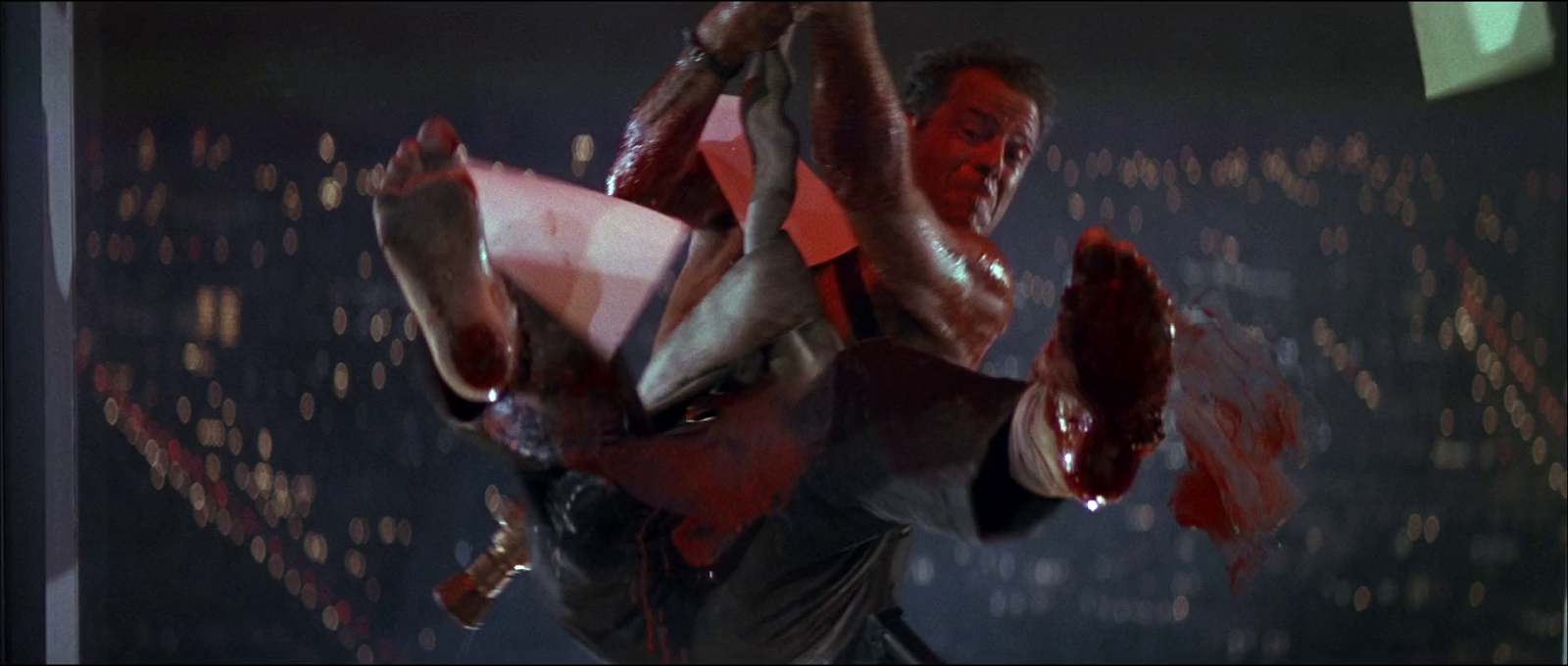
There is something in this man's way
There is something in this man’s way

Pop quiz time!

Apart from advancing the story, theme and character development, what is the one key component every scene should contain?

Okay. Pencils down.

A big ol’ piece of pie to everybody who said “conflict”. Without it, your script’s on a one-way trip to Boringtown.

I recently became involved in a discussion with a starting-out writer who asked about the best way to describe how a sequence in his script could play out. After looking at the source material (based on true events), I said if he only writes what happens, there won’t be any drama to it. It needs conflict.

“Conflict how?” he asked.

That’s what it come down to, isn’t it? A lot of newer writers hear “conflict”, and they immediately think two characters are supposed to be arguing. Sometimes that might apply, but it’s not necessarily what it means.

Conflict is two opposing forces going up against each other, and those two forces could be anything (within the limits of your story, of course). Most of the time, one side will be your character and the other will be something or someone standing in their way of achieving their goal, be it immediate or overall.

Which would you rather watch? A story where everything goes just fine for the main character, or one where they’re always dealing with some kind of problem?

One of the great things about conflict is that it can come in any shape or form.

“What if a character opens a window?” was the follow-up question. “Where’s the conflict there?”

There isn’t any. If you’re reading a script and get to a scene that only involves a person opening a window, you’d think “What purpose does this serve?” and tell the writer to cut it.

The conflict would be if it won’t open. There’s a story there. Your curiosity is piqued. Questions are raised. Why won’t it open? Why do they want it open? What are they willing to do to get it open? What’ll happen after they get it open?

Conflict helps move the story forward. Part of our jobs as writers is to come up with new, original and imaginative ways to portray that conflict. The way I have the character open that window is probably totally different than how you would.

Even the central question of your story shows conflict: Will the main character achieve their goal?

While you work on your latest draft, take the time to examine each scene, even the ones only a line or two long. Is there conflict of some sort?

If there is, great. If not, you need to get some in there.