Ask a Straight-talkin’ Script Consultant!

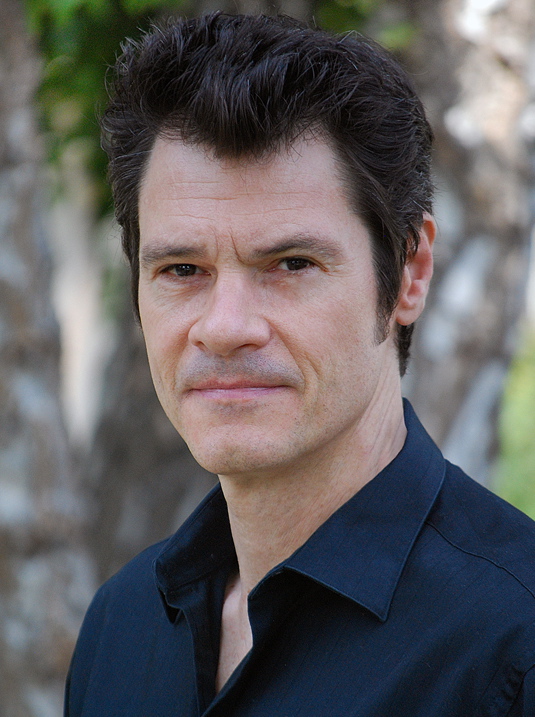
Jim Cirile - Coverage Ink

The latest in a series of interviews with script readers and consultants who would be worth your while to work with if you want to get your script in shape. Today’s spotlight is on Jim Cirile of Coverage Ink.

1. What’s the last thing you read/watched that you thought was incredibly well-written?

After binge-watching “Sons of Anarchy” season 6, you really have to marvel at the craftsmanship. The upheaval and complications are so constant as to be ludicrous, yet it’s so devilishly well-written that you just strap in and hold on tight. And blowing our own horn a bit, the last script I read which was truly special was Brandon Barker’s “Nottingham and Hood,” which we found as part of our last Get Repped Now! promotion this summer. We got him into Benderspink, where he’s now working with their head of lit Jake Wagner. So, win-win. A real talented guy with a bitingly funny comic voice.

2. How’d you get your start reading scripts?

Kind of fell into it, really. I originally founded Coverage Ink to offer my small handful of analysts, whom I’d assembled to help develop my own material, to other writers at low cost. Getting feedback from smart readers is a major part of my process and always has been. In fact, the very first person I met when I moved to Los Angeles 20 years ago was a union studio reader, and that fellow was enormously gracious in giving me feedback and teaching me how the biz really works. Over time, as a writer myself, I gave feedback to plenty of other writers and realized I had a lot to say in that regard. Our approach is based around writer empowerment – giving constructive feedback as opposed to humiliation. This is in part a reaction to some of the astonishingly humiliating and unhelpful coverage I’ve received on my own scripts and have seen others receive over the years. I figured there had to be a way to give helpful guidance without belittling the writer. So all of that combined to get the CI ball rolling in 2002.

3. Is recognizing good writing something you think can be taught or learned?

Yes, but to a point. Obviously anyone can read a bunch of books, take classes on writing and so forth, and get down your Save the Cat!, Syd Field, McKee, etc. However, some folks have a hard time putting aside their egos — the frustrated writers out there who fancy themselves story analysts. These folks project their personal tastes and frustrations onto material as opposed to appreciating it for what it is and trying to help it become the best possible version of itself. I’ve had to let go of several very smart people who fancied themselves as story consultants because they actually could not recognize good writing or material with potential.

4. What are the components of a good script?

Great, multidimensional characters. Solid structure. Avoiding clichés and surprising the reader. Snappy, tight pacing. And of course, good storytelling. That said, a lot of it is about hitting your marks and doing it in creative ways – nailing those structural beats that Hollywood uses to judge whether you’ve got game or not, such as the inciting incident by page 15, Act II beginning by page 25, etc. Even things like whether you know how to write down the page or use sluglines and white space properly all contribute to the first impression as well as perceived ease of the read. A good screenplay is simply a fascinating story well-told. If you’re facile with words, that’s a start – but that’s all it is. You still have to study the form.

5-6. What are some of the most common mistakes you see?

By far the biggest one, and I’m just as guilty of this, is sending a script out before it’s fully cooked. We finish a script and we’re so excited that we immediately contact our industry friends and before long, you’re dead in the water. It took a long time to learn to never send out first or even tenth drafts (if I can help it.) Taking the time to develop a screenplay until it’s bulletproof is crucial. My current spec is on its 11th draft and we only just got our first consider. It will probably be three more drafts until we nail it and get consistent considers, which will indicate we’re finally ready to go, and even then we’ll still have to do at least another draft or two for our manager.

The second one is: is your concept really multiplex-worthy? You have to really think about whether your idea is one that makes sense in the current filmmaking climate – be it studio film, indie or festival darling. There are certain stories that just work better as a book, stage play, web series, or whatever, than a feature. Or maybe it just isn’t an exciting idea at all, or is just too played out or derivative – how many spy or vampire movies can they make? Unless you can find a way to bring something really fresh and innovative to those genres, you’d best keep looking for the killer concept.

7. What are the 3 most important rules every writer should know?

1. Be a student of the business. There’s no point in trying to be a screenwriter if you don’t learn what that actually means and how the game is played.

2. Learn your craft. Just because you wrote a great thesis in college or even a novel doesn’t mean you have any idea how to write a screenplay. Take classes at your local community college or online, get into a writer’s group, read scripts and how-to books and study. Can you get hired as a doctor or lawyer without years of study? So why would you expect another lucrative job like screenwriting to be any easier to learn or break in to?

3. Don’t expect to find representation until you are really, really ready – and by that I mean they come to you because you’re winning contests, or producers and industry types are championing your material. We all want to get representation, but usually an agent won’t even read you unless you’ve already got some heat.

8. Have you ever read a script that was an absolute, without-a-doubt “recommend”? If so, could you give the logline?

The aforementioned “Nottingham and Hood.” The Sheriff of Nottingham captures and attempts to transport his prisoner, Robin Hood, to trial. Complications, as they say, ensue. “Midnight Run” in Sherwood Forest. Boom.

9. How do you feel about screenwriting contests? Worth it or not?

Our contest Writers on the Storm has gotten several of our winners into agencies like UTA, and last year’s “Cake” was produced and stars Jennifer Aniston. (WOTS is on hiatus this year.) So the answer is – damn right they’re worth it, but it depends on the contest. There are really a few worth the money – Tracking B, Nicholl, Scriptapalooza, Final Draft Big Break, Script Pipeline, maybe one or two others. But the rest – no juice. Save your money. Sadly, no one cares that you made the top ten of the Terre Haute Screenwriting Showdown 2003.

10. How can people get in touch with you to find out more about the services you provide?

Email me at info@coverageink.com, or check out our website – www.coverageink.com

11. Readers of this blog are more than familiar with my love/appreciation of pie. What’s your favorite kind?

Here in Culver City, there is an amazing 2-piece band, a guy and a gal, who play often at the Culver Hotel, my favorite watering hole. They’re called Pie. I’d have to go with them, since they go quite well indeed with an Absolut martini with lime. Other than that, Boston Cream, baby!

Venturing outside your comfort zone

Try it. You might like it.

Everybody likes different things. A universal truth if ever there was one.

Something I like may be the total opposite of something you like, and there’s absolutely nothing wrong with that.

But how willing are we to be open-minded and try something different than what we like?

Do you immediately get all defensive and resist? Do you cautiously dip in a toe and carefully proceed? Or do you embrace the opportunity and jump right in, feet first?

And what in the world does any of this have to do with screenwriting?

Easy. Good scripts can be found in so many different genres. As a constantly-learning writer, you should be reading all kinds of scripts, no matter what the genre.

Sure, you can only read scripts just like what you write, but that narrows your focus and can get a little dull after a while.

Changing things up and reading scripts you normally wouldn’t can only help you be a better writer.

A friend asked me to read his horror spec. Horror is definitely not my thing, but he’d read one of my scripts, and the least I could do was return the favor.

Even though it wasn’t a movie I would go to see, I made a point of reading it from a writer’s point of view. Was the structure sound? Were the characters developed enough? Did the plot make sense? Was it scary? Formatted correctly? Any spelling errors?

Despite my opinion of the horror genre, I enjoyed the read and told him so in my notes, highlighting what I thought worked and pointing out what didn’t. He appreciated my honesty, and thought I made some good points.

Victory for both sides.

Counter to that, I’ve had my share of feedback that could best be interpreted as simply disinterested.

One reader from a high-profile service seemed to skim to around page 30, then called it a day, filling out their notes with generic comments. In as vague terms as possible, they made it pretty clear this wasn’t for them.

It’s extremely difficult to win over the reader who’s ready to stop reading your script before they even begin. Unfortunately, there’s not much you can do about it. The best you can do is put it behind you and move on.

(Which I did. The same script would eventually go on to some moderate contest success and get me a manager.)

Fortunately, there are those who, even though your genre “isn’t their thing”, will read your script and hopefully give you some notes that will help make it better.

You just have to get out there and find them, making sure to offer to return the favor.

Ask an Ubiquitous* Script Consultant!

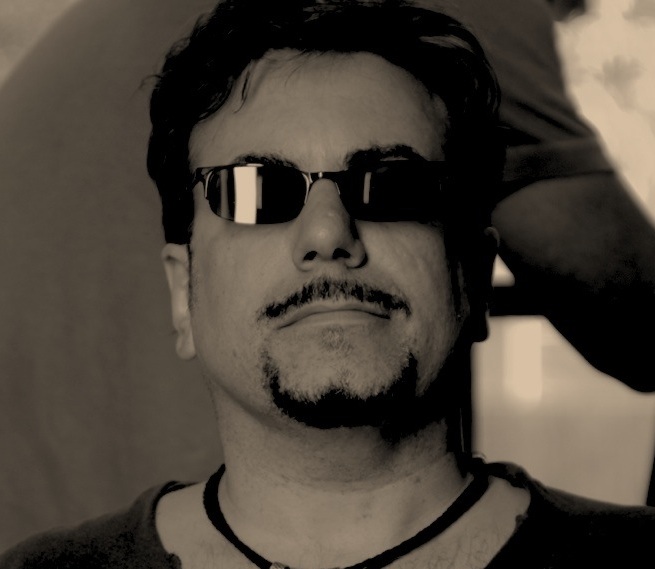
Danny Manus
*Seriously. The guy’s, like, everywhere. Podcasts, social media, online articles, you name it.

The latest in a series of interviews with script readers and consultants who would be worth your while to work with if you want to get your script in shape. Today’s spotlight is on Danny Manus of No Bullscript Consulting.

Danny Manus is the former Director of Development for Sandstorm Films (The Covenant, 8MM2) and Clifford Werber Productions (Cinderella Story, Just Add Water), where he sold “To Oz” to United Artists. He’s the author of “No B.S. for Screenwriters: Advice from the Executive Perspective” and was ranked one of the Top 15 “Cream of the Crop” script consultants in CS Magazine. He was also named one of Screencraft’s “25 People Screenwriters Should Follow on Twitter.”

1. What’s the last thing you read/watched that you thought was incredibly well-written?

The best written things I’ve watched lately have been on TV. There are movies I’ve really enjoyed – Chef, Planet of the Apes, Guardians of the Galaxy, Fault in our Stars, Bad Words, etc. – but none this year yet that I thought were OMG fantastic writing. To be fair, I haven’t seen Boyhood yet. But for me, TV is where the best material is these days. My favorite new comedy is You’re the Worst on FXX. I also really enjoyed The Last Ship on TNT and Masters of Sex on Showtime this summer. I’m sure there are wonderfully written books out there, but I don’t get to read them.

2. How’d you get your start reading scripts?

My first start was as an intern about 13 years ago at Columbia Tri-Star in TV Development and 20TH Century Fox Feature Casting. I was charged with reading everything that came in and doing coverage on them. But I used to go through their archive library and just read as many as I could, especially at Tri-Star. My coverage was liked by the VPs I worked under so much that they loaned me out to the SVP (Sarah Timberman at the time, who would not remember me if you paid her) and then the President at the time. Those gigs gave me enough coverage samples to land my first assistant job after I graduated.

3. Is recognizing good writing something you think can be taught or learned?

Recognizing bad writing is something anyone can do. Recognizing great writing is something that can be taught and learned with time and experience. As a first year assistant and intern, I could tell you what was written poorly. But it took a few years of reading hundreds and hundreds of scripts to TRULY understand good writing. And many thousands of scripts later, I’m still learning.

You can’t read a book on screenwriting and think you’re suddenly able to be a professional consultant or reader or writer. There is no checklist given to new readers, it’s learned on the job – that’s why it’s SO important for writers to READ. Though I actually did develop a checklist I used to give to my interns. It was 110 items long. But if you’re a great reader, they are all just in your head and you notice them naturally.

4. What are the components of a good script?

There are basic elements everyone agrees on – a concept and hook that sparks a reaction and has potential to lead somewhere intriguing; compelling, three-dimensional characters who make you want to follow them; dialogue that feels sharp and precise yet natural and flows; enough growing conflict and high enough stakes to keep ones interest; and a plot that progresses throughout the script in interesting ways. Every script should have strong setups, executions and payoffs. But to make it go from good to great, it’s about the X-factor. Some of that is voice, but some of it is just the right writer writing the right story in the right way at the right time. That’s when true brilliance strikes. And it doesn’t happen often.

5. What are some of the most common mistakes you see?

I see them all. I mean, the biggest mistakes are that writers are writing stories that aren’t MOVIES. They’re just not strong enough ideas or hooks to be movies in the current studio or indie marketplace. Or that the writer doesn’t know the hook of their idea. Or that the writer uses too many COINCIDENCES or serendipitous moments to create plot.

Actually, you know what the #1 mistake I see is? The use of YOU’RE and YOUR! I mean, WTF people – it’s not that hard to know the difference. Thinking that typos and grammar and format don’t matter – they do!

The biggest non-craft mistakes writers make is not doing their research and not knowing ANYTHING about the actual business. And secondly, submitting projects LONG before they’re ready to be submitted. Querying and pitching on a first draft or before a script is even written, entering contests with a first draft, posting their second drafts on websites. The biggest mistake I see is desperation and impatience outweighing common sense and good judgment.

6. What story tropes are you just tired of seeing?

I could go the rest of my life without seeing another Geek to Chic Teen story. Or the Christmas tale of someone losing their Xmas spirit until X happens. Or the story of the struggling writer trying to break into Hollywood and X happens. The Screenwriter protagonist CAN work – but 98% of the time it doesn’t and I like to play the odds. In terms of character, if I never have to read about another female rape victim or domestic abuse victim, I’d be okay with that too. Those are so common in scripts it’s lost its meaning. But in the end, what I always say is – Don’t run from the cliché, just make it seem NOT cliché. That’s a writer’s job.

7. What are the 3 most important rules every writer should know?

-It’s not called the artist colony, it’s called the Film Business. So treat it like one. And if you want this to be a career, treat it like one.

-Writing is rewriting and if you can’t take notes and really truly rewrite, you’ll never have a lasting career.

-Your first draft and first script is SUPPOSED to suck. If you think your first script is going to sell and make you rich, you’re living in a dream world. Just. Keep. Writing.

8. Have you ever read a script that was an absolute, without-a-doubt “recommend”? If so, could you give the logline?

Absolutely. But most were already projects in development written by top notch writers. I have had a number of clients whose projects were Recommends – but none were like that on the first draft. I can’t really divulge the loglines though.

9. How do you feel about screenwriting contests? Worth it or not?

There are about 15 contests out there that are completely worth it that I highly recommend, and about 250 contests out there that aren’t. If you win a major, prestigious contest it can definitely start your career and get you noticed. But if you’re continuously a quarterfinalist or not even making the quarters, then you’re not ready yet. Or your script isn’t. Contests are absolutely worthwhile IF your script and writing is at a level where you can be in the top 100 writers out of 8,000. If you can’t say that, then you’re probably wasting $40. Keep in mind – the Top 10 contests get about 45,000 submissions total. And they give out about 150 prizes to finalists and winners. So, those are your chances. Your script has to be REALLY fucking good. But as someone who has had multiple major contest winners and finalists as clients, that’s what I’m here for.

10. How can people get in touch with you to find out more about the services you provide?

You can always check out my website and services at www.nobullscript.net and follow me on Twitter @Dannymanus (I was named one of Screencraft’s 25 People Screenwriters Should Follow on Twitter).

And if interested, I’m running a 4-week online course “Creating More Compelling, Castable Characters” which starts Sept 26th and it’s going to be a great class. So, I encourage everyone to check out details at www.compellingcharacters.eventbrite.com

11. Readers of this blog are more than familiar with my love/appreciation of pie. What’s your favorite kind?

I’m an apple pie guy, though a good chocolate cream pie with the chocolate mousse and whipped cream…nom nom nom.

Ask a Script Consultant who’s also a Working Writer!

mark sanderson

The latest in a series of interviews with script readers and consultants who would be worth your while to work with if you want to get your script in shape.

Mark Sanderson (aka @scriptcat) is a Los Angeles based screenwriter, script consultant, and sometimes actor blessed to be living his childhood dream of making movies with a spec sale and a dozen screenplay assignments that have produced seven films. Mark’s long association with award winning Hollywood filmmakers dates back to his first produced screenplay and has since worked with Academy Award® winning producers, veteran directors, and Academy Award®, Emmy®, and Golden Globe® acting nominees. He offers script consultation services on his website at www.fiveoclockblue.net and also offers advice on his screenwriting blog MY BLANK PAGE. Look for his upcoming book A Screenwriter’s Journey to Success coming out later this year on Amazon.

1. What’s the last thing you read/watched that you thought was incredibly well-written?

I don’t have much time to spend watching a lot of TV or movies, but the best writing these days is on television in my opinion. I manage to catch an episode here and there of shows, but don’t really spend a lot of time watching many series. When I watch movies, I tend to be really picky and very few films out there today don’t really draw me in—so I go for the classics. On television, I really thought the limited series Sherlock was excellent writing, Mr. Selfridge too, and I got hooked into the The Following for a while and that was good serialized writing. I’m just getting into the old pulpy Doc Savage novels from the 1930s and the writing is great and so visually ahead of its time. I read that Hollywood is planning on making a Doc Savage movie and if done right, could spawn a series of new films.

2. How’d you get your start reading scripts?

Well, I’ve had a professional screenwriting career for the past fifteen years and during the last few years I decided to open my consulting business on the side.  I’m always reading scripts even if I’m not consulting on them. I have a small group of writer friends and we trade our scripts back and forth for feedback.

3. Is recognizing good writing something you think can be taught or learned?

I believe it comes from years of learning and studying the craft of screenwriting. When writers build a strong foundation of experience reading scripts, studying structure, character, writing scripts, executing notes and mastering their craft—this is when they can finally give experienced and critical feedback if a script is good writing or not. It also is vital to know the language of cinema. I’m aware that some consulting sites farm out the reads to “readers” and one never knows who is actually reading the script or their experience level when giving notes.

4. What are the components of a good script?

It starts with a compelling story and something that you can clearly see grew from the writer’s passion for the material. Too many times I read scripts that are trying to chase after Hollywood’s big budget blockbusters and they fall short because the writing is boring, clichéd and trying to emulate something that has already been created. The scripts read like a rehash and not something original. A good script showcases the writer’s unique voice and the best of their talents. It has interesting characters that we care about and written in a fluid, efficient way that includes only what is necessary to keep the story moving forward. A good script also has a rock solid structure and a series of reveals, surprises, setups and pay offs that keep us captivated to read until the end or sit through the film until the lights come up in the theater.

5. What are some of the most common mistakes you see?

I’m shocked that many screenwriters still have no respect for the professional format of a screenplay. They believe the reader will look past the format and typos issues to see their genius idea and buy it for that alone. A script lives or dies by a thousand small details and considering the volume of scripts that bounce around Hollywood every year, the industry has no patience for unprofessionalism. Other common mistakes I see happen when screenwriters do not work from a solid outline or treatment before they jump into pages. Approximately three quarters of your work usually goes into the story even before you type FADE IN. Other mistakes come from overwriting and micromanaging the scenes. Aspirants need to learn what to put in a script—and equally as important what to leave out. I tell writers: “Stay the hell out of the way of the story.” Many are so eager to put their fingerprints all over the pages and that’s just ego. The best writing is when the screenwriter is almost is invisible on the page and the script reads as if you’re watching the film. I also find too many mistakes with structure and the story happening too late or not enough story to facilitate 100 pages. The set up in the first act many times is way too long. Hopefully these writers learn from their mistakes and focus on becoming better screenwriters by creating stories they are passionate about rather than chasing fame and fortune.

6. What story tropes are you just tired of seeing?

One big one that I can’t stand is the use of “Deus ex Machinaor using a contrived way at the end where a character or action saves the day. It shows lazy writing and ends the story on a weak beat leaving the reader unfulfilled. Another one is the “fall” or “twisted ankle” of a character escaping that is usually followed by the line, “Go on without me!” Another one I’m tired of seeing is the “I hate my job, my boss and do nothing but complain” routine.

7. What are the 3 most important rules every writer should know?

1. Disrespect the craft at your own peril. You will never be bigger than your craft because screenwriting is an ongoing learning experience.

2. You must become a collaborator and ultimate team player because if you grimace at their notes, they will brand you as “difficult” and not work with you again.

3. You may have to write five, six or seven specs over a period of years to even get one optioned or maybe sold if you’re lucky. But if you’re impatient and looking for fame and fortune, you’re in the wrong business.

8. Have you ever read a script that was an absolute, without-a-doubt “recommend”? If so, could you give the logline?

Well, I don’t give “recommends” because I’m not reading for a producer, but I do tell writers if they were successful in the execution of their idea. Screenwriting is all about the execution. Good ideas are a dime a dozen in Hollywood—they’re everywhere and it’s the execution of a script that’s vital to its final success. Yes, I did read a few scripts during the last year that were superb and written by experienced filmmakers—so that helped. I can’t give out the loglines as I have a non-disclose agreement with my clients, so I’m not allowed to discuss the elements of their projects with anyone.

9. How do you feel about screenwriting contests? Worth it or not?

Yes, many of the top contests are worth entering as a chance to “make some noise” and get noticed. Back in the day, I entered a spec in the Nicholl Fellowship and it ended up in the top twenty scripts out of thousands worldwide. They picked the top eight that year for the fellowship, but since I had placed in the next dozen, agents and mangers were willing to give it a read. Eventually it found a producer who championed the script and it was produced, played in film festivals worldwide, premiered on TV and distributed globally. But, be careful and read the fine print of the contest you are entering as some stake claim to your script if you win. Do your homework on the various contests and make sure you are putting out your best material that will properly represent your talent and ability. If it’s not ready, go ahead and miss the deadline because there is always next year.

10. How can people get in touch with you to find out more about the services you provide?

Screenwriters can find more information about my consulting services on my website at: www.fiveoclockblue.net. I’m also on Twitter: @scriptcat

11. Readers of this blog are more than familiar with my love/appreciation of pie. What’s your favorite kind?

Oh that’s an easy one…definitely a tie between boysenberry and cherry. I could eat both with ice cream as a “last meal” and die a happy man. Apple pie comes in a close third, but all pie should be heated.

The me business – a 24/7 operation


The friendliest staff in town!
We’ve got the friendliest staff in town!

What may have been my biggest mistake with my old manager was not doing enough.

I’d toil away on the new script, and send him an occasional email asking if there had been any responses to the first one. They were minimal, which is putting the best positive spin on it.

Why weren’t we getting the results we’d expected? Mostly, I blame myself.

Looking back, I realize now that it was me who wasn’t being the more proactive one. He was a busy guy with other clients to handle. Instead of handing off the material with the instruction of “I’ve got a script to write. You do what you have to,” I should have been making his job easier by doing the research, finding the names and providing the contact info so all he had to was send off an email.

Lesson learned. Behavior modified. Jump to the present.

Now being representation-free, I’ve no choice but to be the proactive one. Nobody’s coming to me, so I’m exploring numerous avenues to get to them.

-query letters. A few managers have requested the script, with more being targeted.

-researching producers and production companies who’ve made films similar to my scripts

-expanding my network and connecting with writers on community sites, which includes face-to-face meetings with those in the immediate vicinity when applicable

-publicizing my scripts and their loglines on said sites and public forums, which has resulted in not only more connections, but offers to read the scripts. Feedback is always invaluable, and somebody’s status in the industry can change overnight, so any connection is a potential good one.

My former m.o. was to devote as much time as possible to writing, rewriting and polishing. But for now, that’s just not an option anymore.

Time for a little diversification.

It’s just as important now to set aside some time each day to find some potential recipients for my material. Even if it’s only 20-30 minutes of researching names on IMDBPro, that’s still a few small steps in the right direction.

Even if something may feel like the longest of shots, I remind myself I’ve got absolutely nothing to lose, and the worst that can happen is somebody says no.  If that happens, I shrug it off, move on to the next name and try again.