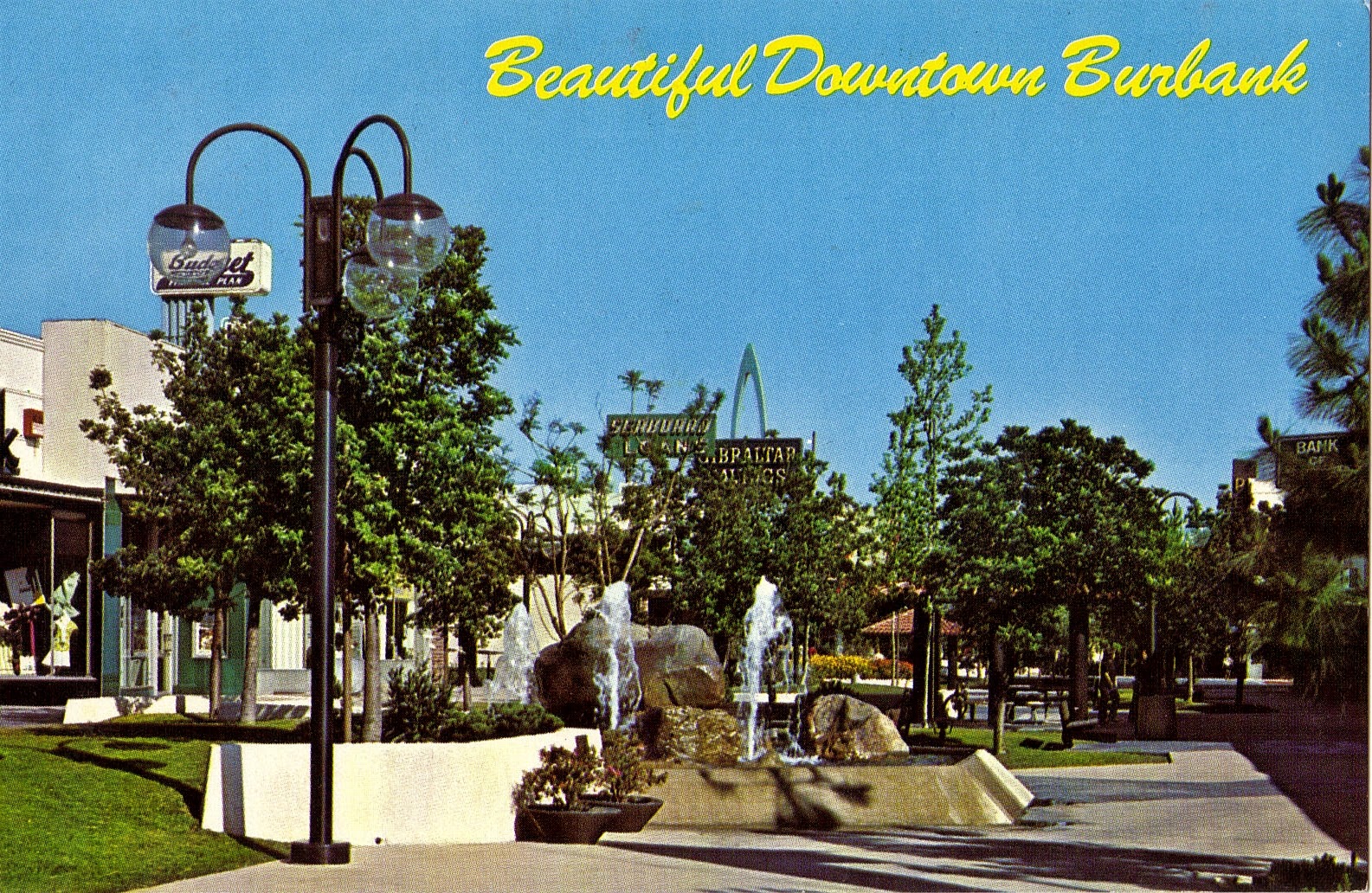
My 52 hours in the Southland

Just like being there!
This is exactly what it looks like!

As all you phenomenal readers/followers out there may be aware, I was in Burbank last weekend for the Great American Pitch Fest.

Simply put, attending was one of the best screenwriting-oriented decisions I’ve ever made. I’ll get to the vaguely specific details about that in just a moment, but first, allow me to go over some of the supporting topics, starting with…

Networking

I came armed with a new batch of business cards and the attitude of “Dammit, I’m gonna meet people!”

And I did. At the Friday night mixer. At the numerous classes/panels/workshops on Saturday. Even just stopping to introduce myself to folks sitting around a table in the hotel lobby.

Many are first-timers, nervous at attending one of these kinds of events. Certain that everybody else is a seasoned pro just brimming with confidence, whereas you’re feeling hesitant to even open your mouth and say something.

You know what? Almost everybody feels that way and is a little nervous on some level. Sure, others are a little more extroverted than some, but as I can personally attest, it’s a lot more fun when you get to know people. Besides, why pass up the opportunity to expand your personal network? That writer you just met from halfway across the country could turn out to be a vital asset somewhere down the line.

On a more personal note, I have to mention that the weekend was also a golden opportunity for me to actually meet several of my “Ask a Script Consultant!” interview subjects, including Pilar, Lee, JG, Signe, Tracee, and Steve. The interactions weren’t long, but each proved to be just as charming in person as they are in print.

Pitching

The whole point of the weekend, and why I was here. First, the prep.

As I mentioned, there were panels aplenty where a lot of advice was given out (and sometimes contradicting something else you just heard). I had the benefit of having signed up for the pitch boot camp, where you and another writer would give your pitch, then exchange suggestions on how to potentially improve it.

I polished and honed the pitch for my western over the course of about six or seven run-throughs to the point where I had it down perfectly, then used that as a template for the fantasy-adventure.

As intimidating as doing this is, it all comes down to you being comfortable while having a pleasant conversation with somebody else about your story. The objective is to get them so interested that they really want to read your script. It’s not easy. Listening to other pitches, some writers would give vague story details, while others might go into too much detail.

As was pointed out, you’re also pitching yourself. You’re showing that you’re passionate about the work, hopefully have a pleasant personality, and are someone people would enjoy working with.

Now, a rundown of the results from the actual pitches:

(side note – As I would sit down with each person/pair, I’d ask how they were doing/how their day was going/etc. I’d rather start things off pleasantly rather than just launch straight into the pitch. Everybody was in good spirits throughout the day and seemed to be enjoying themselves. Many added that the quality of the material being pitched was very impressive.)

-13 total (although it felt like more)

-Two said “Thanks, but it’s not for us”

-The rest asked for a one-pager. More than a few asked “What else have you got?” (followed by handing over the other one-pager)

-Just about everybody said, “Wow! That was a great pitch!”

-One script request

-Two asked for follow-up emails

-“This sounds perfect for us!”

-“This is exactly what MAJOR PRODCO is looking for!”

-“We have to continue this conversation offline. Here’s our card. Call us.”

To say confidence levels were running high at the end of the day would be an understatement.

Epilogue

-All of my follow-ups have been taken care of. Since each one of them is also dealing with a lot of the pitches they heard, as well as working on their current projects, I expect it’ll be a while before I hear back from anybody. As always, fingers firmly crossed, hoping for the best while I bide my time and return to working on my assorted projects.

-Turns out I’m actually really good at pitching in person, or at least in a face-to-face scenario. Too nervous to do previous pitches via Skype, I’d always submitted a written one, which yielded zero results. This new confidence and willingness to be seen makes me feel that I’d have a much better chance of success in the future.

Conclusion

I’d started the weekend feeling very nervous and anxious about whether or not I’d do a good job. As time passed, I was able to relax and enjoy myself, which probably played a big part in how it all turned out. I had a great time, and left feeling closer than ever before to getting a professional writing career going.

If you’ve never been to a pitch weekend, I highly recommend it. You’ll meet lots of great people, make fantastic connections, learn how to get the most out of your pitch, and just have an awesome time.

-My only complaint was that since time was very limited, and I didn’t have a car, the enjoyment of pie did not take place. Maybe next time.

Networking: more than just a group thing

“Working on the rewrite while I wait to hear from that manager. How about you guys?”

Despite the fact that writing, for the most part, is a solitary activity, a lot of us take great pleasure in being connected with other writers.

They can be the invaluable support, guidance and motivation we sometimes need to give us that little extra boost. Having a problem and being able to tap into this kind of resource in order to find a solution is priceless.

We get access to all the goings-on, good and bad, that happen among us and our peers.

While I’ve seen my fair share of both, I’m glad to say that a majority have been of a positive nature. This person got a manager. That person finished their latest draft. That other person began working with another writer on a new project. I’m thrilled for all of these developments, and offer up congratulations and words of encouragement. Each and every one of these people has worked hard to reach this particular milestone.

I’d be lying if I said I wasn’t jealous. That sense of longing and wondering “Will I eventually/ever get to announce some good news of my own?” keeps nagging at me, so I continue to buckle down and redouble my efforts in the hopes of making it happen a little sooner. Some days it’s really tough to be patient.

On the other side of the coin are the not-so-great things. This person’s script got a pass from a high-profile agent. That person is suffering from a severe case of writer’s block (or worse – depression). That other person is going through some tough things in their personal life. These also happen to a lot of us, resulting in messages of sympathy, understanding and moral support.

I’ve experienced this too. When times are tough, you find out who’s really in your corner, and are glad to know it.

But I wouldn’t have any of this kind of support if I hadn’t sought it out. There’s a reason it’s called “social” media. I’ve been able to connect with so many awesome people because of what I’ve read or seen about them online.

Is there a writer (professional or peer) whose work you enjoy? Someone whose tweets always make you chuckle? Send ’em a note telling them that.

Even better – are they in your area? When I learn about a local writer, I’ll offer up the opportunity for a face-to-face chat over coffee or lunch. I’ve also done this with folks just visiting the Bay Area. This has resulted in some great ongoing working relationships.

Everybody’s career advances at its own pace, and all the fantastic help and support we get on days good and bad are major pluses. Many writers are introverts at heart, but you have to make the effort to put yourself out there and get to know somebody.

It gets easier the more you do it, and you’ll be glad you did.

A vital part of my creative engine

It helps me keep going forward

“The concept has potential, but a 16 year old lead without a property is really hard to cast, it would definitely need an A-list movie star. With this kind of lead, you might want to scale it back more and not make it so ambitious. Pass”

This was a management firm’s response to the one-page synopsis for my fantasy-adventure. It stung a little at first, but I’ve gotten over it. That’s when things shifted to analysis mode.

I appreciate the part about it having potential. Always nice to hear. Composing a one-pager has always been tough for me, so maybe the rollercoaster ride-ness of the story wasn’t conveyed enough. Nothing a little editing and rewriting couldn’t fix.

Regarding the actors. They’re looking at it from a business point of view, and who’d take a chance on a high-budget script written by an unknown?

Scaling it back. Um…not sure about that. I’ve created a new world within the confines of the story, so it’s kind of set in place. Nor do I feel overwhelmingly compelled to drastically change things around to suit the needs of somebody who might be potentially interested.

But “not make it so ambitious”? Afraid I’ll have to totally disagree with that one.

In the context of this kind of story, things cannot be kept simple. They need to be ambitious. In some ways, the story is an extension of my own ambition. My objective here is to tell a fun, entertaining story that takes you on an exciting ride. I strive to come up with new ideas, or at least new takes and approaches on old ones. I want my work to wow you and thrill you.

So the script wasn’t right for this particular person. Big deal. I took a chance, and it didn’t work out. The end of the world is not nigh. They’re definitely not the only ones out there, nor were they my only option. The person to say “yes” is still out there, and I’ll keep at it until we connect.

Never, ever underestimate the ambition and determination of a writer with their goals firmly set in place. It makes us quite formidable.

-Race alert! I’m running the Oakland half-marathon on Sunday. This race totally kicked my ass two years ago due to a combo of warmer-than-expected weather and a too-fast pace, so going into it with a goal of keeping it under two hours and the strategy of really trying to maintain a steady pace (especially for the first couple of miles) and doing what I can to stay cool. If that involves dumping water over my head at every water stop, so be it.

See you at the finish line.

Run at your own pace

It's the total opposite of a sprint
It’s the total opposite of a sprint

For the past couple of days here at stately Maximum Z HQ, yours truly has been doing everything possible to fight off a nasty viral infection (Note to self – invest heavily in Kleenex and Halls cough drops) because I’m doing my first half-marathon in over a year this weekend. I do expect to be well enough to run. Fingers firmly crossed hoping to at least break the 2-hour mark.

As a result of being sick, I’ve been home from work the past couple of days, which means a little more time than usual to work on the western rewrite. Latest update: page 38.

When I have a lot of time to write, I’ll give myself a short break after reaching a milestone, such as the end of a scene, or x number of pages written or after a certain amount of time (this also helps prevent premature burnout). Sometimes break-time involves perusing social media or screenwriting forums, just to see what’s going on out there.

What’s been going on this week has been a flurry of activity among my peers. One got a manager. Another finished their latest draft. Another had an agency request their script after a pitch.

And there’s me, filling a wastebasket with snotty tissues, coughing up things of a color not found in nature, and hoping to get to the bottom of the next page before the day is done. Slightly disheartening, to say the least.

But, like when I run a race, I remember that it’s different for everybody. I’ve been working on this rewrite for quite a while, and have confidence that it’ll be done sooner than I think.

I’m also overseeing all of the “Ask a…!” interviews, and have now added this into the mix.

Oh yeah, and training runs.

When you finish a race, you get a medal, and you wear it with pride. You’ve earned it. You finished an hour behind the winner? Big deal. Chances are you didn’t do it to win. You did it to test yourself, to see how you could do with this self-imposed challenge.

When you write a script, yes, you are going up against every other writer out there, but you do it the way that works best for you. You can only manage 30 minutes a day? That’s fine. You tell yourself you’re going to write at least 3 pages a day, and you actually do? Fantastic.

Will others get done before you, or accomplish things faster than you? Of course, but that’s nothing for you to worry about. Focus on you, not them.

I think it’s absolutely phenomenal that these other writers have each reached a certain point with their writing and careers. And so will I. Maybe not as fast, but it’ll happen.

Just gotta keep working at it.

See you at the finish line.

Ask a One-person Multimedia Empire Script Consultant!

Pilar Simpsonized
This is what happens when you offer me a choice of photos

The latest in a series of interviews with script readers and consultants who would be worth your while to work with if you want to get your script in shape. Today’s spotlight is on Pilar Alessandra of On The Page.

Pilar Alessandra is the director of the instructional writing program On The Page,® host of the On the Page Podcast and a highly sought-after speaker and script consultant who’s trained writers at Disney, DreamWorks, ABC, the AFM and around the world. She is also the author of The Coffee Break Screenwriter and The Coffee Break Screenwriter Breaks the Rules Pilar’s greatest accomplishment is the success of her students. They work on TV shows such as Little Fires Everywhere, The 100, Dear White People, Grey’s Anatomy and The Chi and have sold feature films and pitches to Netflix, Sony, Warner Bros. and other major studios. For more information about Pilar, her classes, consultations, book and podcast, go to www.onthepage.tv

1. What’s the last thing you read/watched that you thought was incredibly well-written?

A script called BULLIES by Mike Grebb, one of the writers in my writing groups. It’s dark, honest and incredibly well written, and was included on the 2014 Bloodlist for top horror screenplays.  And a former student’s script called RIP CURRENT, inspired by the classic SHANE, that takes place in the world of Mexican drug cartels. I loved how it captured the tone of an old western, while also updating the story. It went on to get the writer representation from Jeff Portnoy of Bellevue Productions.

2. How’d you get your start reading scripts?

I was one of those oddballs who actually loved writing term papers in college. A friend of mine knew that and asked me to read a few scripts for an independent company she was working for. When I found out this was a real job, rather than just nerdy fun, I sent in my coverage samples to Amblin Entertainment and they hired me.

3. Is recognizing good writing something you think can be taught or learned?

Good analysts have a strong story sense to begin with, but I they also need to keep learning about how genres and writing styles change. They need to be observers of human nature to truly empathize with and understand characters.

4. What are the components of a good script?

A fresh idea. A compelling story. Descriptive but concise scene direction. Authentic dialogue.

5. What are some of the most common mistakes you see?

Writing “movie” characters. Many writers actually do this well, but they’re borrowing behavior and voices from characters they’ve seen onscreen, rather than inventing new ones from their own imagination.

6. What story tropes are you just tired of seeing?

A man’s family is kidnapped or missing and he racks up a high body count getting them back.   Though to be honest, I wouldn’t mind seeing this with a female lead. Could be a fresh take.

7. What are the 3 most important rules every writer should know?

-There are less “rules” in screenwriting than you think.

-Learn what those are anyway.

-Then break one of them purposefully and artfully.

8. Have you ever read a script that was an absolute, without-a-doubt “recommend”? If so, could you give the logline?    

“Adding insult to his already tragic life, a man is terrorized by a small bird.” The script is called “The Starling.” I know it sounds weird, but it’s beautiful. It was written by Matt Harris, a student of mine. After receiving lots of attention over the years, it was eventually bought by Netflix for 20 million dollars!

9. How do you feel about screenwriting contests? Worth it or not?

Worth it because some agents and managers use the big ones to vet material. Worth it too because they’re writing contests, not selling contests, so you have a chance with a script that isn’t conventionally commercial.

10. How can people get in touch with you to find out more about the services you provide?

Check out www.onthepage.tv to find out about classes, consultations, online offerings, book, DVD and the “On the Page Podcast.” You can also e-mail me directly at: pilar@onthepage.tv

11. Readers of this blog are more than familiar with my love/appreciation of pie. What’s your favorite kind?

Pumpkin, of course! It’s sweet and spicy. What’s not to love? (This is the best question ever.)