The drive. The motivation.

feather quill
This would probably be easier with a typewriter or a computer

I’ve been on quite a bit of a tear the past few weeks, with a lot of rewriting, revising and polishing going on for a few scripts. Definitely couldn’t have gotten to this point without some extremely helpful and insightful notes for each one.

Since a few of them involve working with other people, I like to do the polite thing and keep each person updated regarding the progress on the respective script. Where I am in the story, how it went with scenes or sequences that needed work, that sort of thing.

I tend to include my enthusiasm for latest developments and optimism for continuing success in those updates, which seems to garner responses along the lines of:

“I can see it in your energy.”

“I love your work ethic!”

Making headway on a script, no matter how big or small, is addicting. You’re able to make something better, and you want to keep doing it.

To me, it’s really just loving doing this. And the more I do it, I like to think I get a little bit better each time. Probably also safe to say that seeing as how this is what I want to do for a living, enjoying it is a bit of necessity.

It’s always great to see or hear another writer really get into talking about their script because you can see their excitement about it shine through. It’s infectious. But there are also those, myself included, who get frustrated or depressed about their lack of progress. That’s understandable. We’ve all been there. Even the most successful pros.

But at the heart of it all we keep pushing forward, doing our best to not only make the material better, but to also improve how we go about making it better. It’s a challenge, to be certain. One that requires constant effort. Even when you don’t want to, or think it’s all for nothing.

Nobody ever achieved success by giving up.

And I’ve no intention of giving up.

One goal, lots of strategies

to do list
Step 1 – plan. Step 2 – execute. Step 3 – repeat Step 1.

Last time the subject was how we did, writing-wise, during 2017. Today, it goes beyond simply what you’re hoping to accomplish to “So what are you doing about it?”

Just a few days into the new year, and how much writing have you done? Are you adhering to the guidelines you set up for yourself? Making the most out of the time you have available? Are you saying to yourself “No more Youtube! No more (insert preferred form of social media here)! I got me some writing to do!”, followed by actually turning off that unwanted source of input and applying proverbial pen to digital paper?

Jeez, I sure hope so.

Repeat the process on as close to a daily basis as you can get, and you might be pleasantly surprised at the results. You might have more time to work with during the day than you realize, so why not make the most of it?

Long-term goals are all fine and dandy, but continuously crossing the finish line for smaller (and some might say more realistic) ones can also yield some solid results. It’s one thing to say “I’m going to write four scripts this year!” and another to say “I’m going to write three pages today!”, and you’d have to admit the second one is just a little bit more achievable.

Additionally, if you stick to that schedule and maintain the same kind of daily output, you could potentially hit at least some of your long-term goals a little sooner. Write three to four pages a day every day, and within a matter of weeks (or maybe a little more than a month), you’re the proud parent of a completed draft. Sure, it might need a lot of work, but the important thing to remember here is : YOU DID IT.

As 2017 wound down, I knew what I wanted to happen for me, writing and career-wise, in 2018. Now that we’re almost a whole week in, I’ve been making an effort to try and get something done on both fronts every day.

For the writing, it’s anything and everything, running the gamut between outlining, rewriting, editing, proofreading, or even just jotting down an idea for a scene in the under-construction outline for a story I haven’t looked at since April. Working with some very quality notes for two scripts, I’m actually ahead of schedule with rewriting one, and gearing up to dive into the second when that’s done.

For the career, it’s about finding more avenues to get myself and my scripts out there. I’m not just pitching stories; I’m pitching a storyteller as a potentially invaluable resource. There will be plenty of “no”s along the way, but all it takes is that one “yes”, right?

And once again, let’s tout the benefits of networking; making and maintaining your connections. You never know which one could lead to something.

While I’m still doing some of the things I’ve always done, there was also that feeling that new and different approaches were necessary. So as I work my way through all the assorted processes involved with writing scripts, I’m also navigating the awkward transitional phase of a few readjustments.

No matter what, the end goal remains the same. As always, fingers remain firmly crossed that this is the year it happens.

Keep your ego out of it

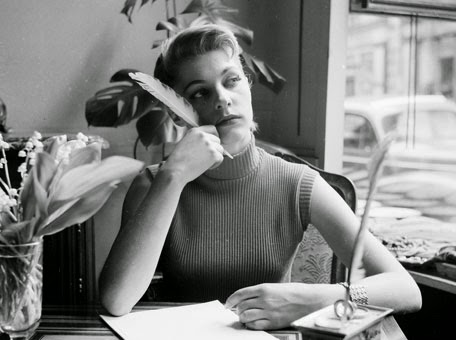
vintage lady writer
As much as she loved that scene, she eventually accepted the fact it would have to go.

I’ve received notes on three separate scripts in the past week or so, and each set is of  very high quality. Each does a very thorough and insightful job of spotlighting What Needs Work for each script.

Daunting and somewhat overwhelming at first, I’ve begun the slow and somewhat laborious process of analyzing and breaking down all the comments and suggestions. I won’t use everything, but there is definitely a lot of good material to work with.

I provided a total stranger with material, and they’re offering up their honest opinions about it. At first glance, some of the comments might be interpreted as negative, but they’re really not. This is what they saw/thought while reading my script.

No axes to grind. No vendettas. No hidden agendas. Just pure, honest opinions. I take what they said, figure out which parts I consider the most helpful, and proceed from there. Ten times out of ten, the result is a better script.

I was told once that getting critically constructive notes and being willing to accept them were signs of a quality writer. Honestly, that was a little surprising.

As much I’d like to think my stuff is great, the reality of the situation is that it’s more along the lines of “it’s okay/pretty solid, but could still use some work”, which is fine. That’s what rewrites are for. From my experience, the final draft is always different from the first. I wouldn’t have been able to produce that final draft without all those helpful notes.

Many times I’ll see a writer ask for feedback on their script, which they get, but might not be the high words of praise they were expecting. Are they ever? Then they respond with something along the lines of “You just don’t get my genius!”, and promptly reject any and all notes. The end result: a lousy script that’s not much better.

Helpful tip: don’t do that.

The whole reason you want notes is to find out how to make your script better. Hard as it is to believe, you can’t make it better if you’re not willing to accept criticism. You can be super-proud of the script you have, but don’t fool yourself into thinking it’s perfect just the way it is now.

Chances are it’s not.

What’s more important to you: having what you think is a good script, or having somebody give you tips that would actually help make it better?

Would we love to see our scripts play out onscreen, just the way we wrote them? Of course. But what you see is up there is usually a lot different from what how it originally read on the page. Happens all the time. Getting upset about it and decrying the sacrilege committed by altering even one letter or syllable from your precious text is definitely the wrong way to go.

In the next couple of days, I’ll be having separate in-depth discussions about two of my scripts with some of the people who gave me notes on them. My emotional state could probably be summed up with “excitedly nervous”. It’s a combination of looking forward to and feeling a bit anxious about hearing what they have to say.

But in the end, it’s not about the writer. It’s about the script and doing what’s necessary to make it better.

I’m here, but need to be up there

mountain climber
Onward and upward! (snappy hat optional)

I’ve been writing screenplays for quite a number of years, but only in the past, say five to six have I shown some significant improvement.

More than a few readers who’ve read my last three scripts have commented that each one displays a step up in quality a compared to its predecessor. Which is very nice to hear.

Feeling pretty confident in my skills and material, I submitted some of them to a few of the high-profile contests (or at least the ones that really matter). The results were less than encouraging. Don’t get me wrong. Top 15 percent in the Nicholl is nice, but it’s still falling short of expectations.

You can have the most incredible script you’ve ever written, enter it in a contest, and chances are it might still go nowhere. Contests are just one way in.

But I digress.

I figured there was nothing more that could be done with the scripts, so I might as well file them away and move on, using them for occasional query letters.

However.

While my scripts may not be similar to those that win contests (can you imagine me writing a coming-of-age story set in 70s Reno?), they’re still fun, entertaining reads, and my passion and enthusiasm for them continue to burn strong and bright.

Like with my writing skills, they’re good, but can still be better.

That’s why I’ve decided to do what I can to make that actually happen. I’ve already gotten several sets of notes on some of my scripts, and most mention the same issues, along with some potential fixes.

As always, I have the luxury of picking and choosing which suggestions to implement, and I sincerely hope the end result is a collection of scripts of decidedly higher quality.

It’s been quite an effort for me to get my writing to get to the level it is now, and spending a little more time on trying to make it better will be definitely worth the effort.

Pause. Refresh.

vintage date
We’ll get back to working on the script as soon as we’re done. Promise.

After having taken a longer-than-expected break from working on the comedy spec, I’m back at it now.

There were the occasional glimpses and minor touch-ups here and there, but I’d estimate it’s been at least several weeks, if not a little more than a month since I was really able to fully focus on it.

During that time (while working on another script), I kept thinking “what if I can’t think of anything new for this?” I also made a point of not looking at the previous draft of the outline; I didn’t want to unintentionally influence the new one.

But the moment of truth had arrived. The other script was done, or at least as much as it was going to be for the time being, and there was no more delaying the inevitable. I had to confront this monster head-on.

Having avoided looking at the previous draft for a while, some of the details were still there, albeit a little fuzzy. Somehow this enabled me to not automatically revert to thinking they were my only option. Instead, I took those details with the thought of “this is what could happen, but what would be a new and really different way of doing it?”

Applying that thought process, along with not feeling tied down to what it was before has really allowed me to come up with some entirely new ideas and approaches, many of which I would have never even contemplated before. Like chunks of an iceberg, elements of the previous draft are breaking off and drifting away, never to be seen again.

The core concept of the story remains intact, but more and more of how that story takes place are experiencing major changes. As of this writing, it’s somewhere past the halfway mark. As is usually the case for me, some elements that still need work, but a new and pretty solid and foundation is being laid.

Would I have been able to come up with any of this if I had dove right back in after finishing the previous draft? Highly doubtful. The material was still fresh in my mind, so it would have been significantly less likely for me to be able to not automatically go to it.

Taking this break, along with focusing on another project, especially one entirely different in genre, provided me with the opportunity to jump back into this one with a strong sense of revived creativeness. Even though it was still a bit on the daunting side, I came into it with a “You got this” attitude.

It also helped that I wasn’t being so hard on myself for not having every line be pure gold the first time out. This is still a work in progress, so everything remains in an ongoing state of flux.

For now, it’s coming along nicely, and forward progress is holding steady. As much as I would love for that to continue all the way to the end, I’m also a realist, so enjoying every productive day as they come.

I’d always heard the recommendation that after you finish a script, you should put it away, or at least not look at it for at least two weeks. That’s not a bad start, but I’d say a month might be better. That way you can give yourself the choice of going back and looking at what you’ve already done (which can be quite eye-opening in both good and not-so-good ways), or starting anew.

Now that I’ve done both, I can honestly say that both have proven equally effective in their respective ways, and I strongly suspect I’ll continue to go back and forth for future drafts of this as well as future scripts.