Looking back, glimpsing ahead, and a minor adjustment

new year's eve
Just one more glass of champagne, then it’s back to work. Promise.

As 2017 wraps up, it’s only natural to engage in a little self-evaluation.

How many of your writing goals were you able to check off this year? Most of them? Some? A small-but-decent fraction? Hopefully you don’t need to mark the box labeled “None”.

One of mine was to complete at least three scripts. I managed two drafts, a revised outline, and one and a half rewrite/polishes (one still a WIP). Pretty solid results. A very hearty thanks to everybody who devoted the time and effort to give me notes. I hope my notes for yours were just as helpful.

Using those notes and the results of a few conversations, I think I’ve been able to up the quality of my writing a few notches. It still has a few levels to go, but it definitely seems better than it was. The next round of drafts should be really interesting,  both in terms of working on them and how the end results turn out.

I wanted to read more scripts, which actually happened, but not entirely in the way I expected. I didn’t do as much reading of scripts for the purpose of entertainment or gleaning some helpful guidance because I ended up reading over 100 scripts for several contests. Don’t know if I’ll do it again, but still glad I did it.

On the gaining representation front, lots of query emails were sent. Maybe one response out of ten expressed interest in reading the script, with each ending with a “thanks but no thanks” or “just not what I’m looking for”. A bit disappointing, but not totally unexpected. Along the way, I also worked on being more strategic about the process, researching potential recipients and re-drafting the query to (in theory) really sell the concept of the script.

And what would an ambitious screenwriter’s year be without contests? My western made it to the seminfinals of a few smaller contests and the top 20 percent for the Nicholl (not too shabby), but once again whiffed it for PAGE. I’ve become somewhat disillusioned regarding contests, so will most likely really cut back on them. Maybe just stick to the big three.

There was the most pleasant experience of going to Los Angeles to attend a table read for one of my scripts. I like the idea of doing one or two of them locally, so looking into that for 2018.

I hosted two screenwriting networking events, which connected me with some very talented writers from right here in the Bay Area. Definitely plan on doing that again at least once this year. Highly recommended, especially if you’re not in Los Angeles and want to expand your own personal network.

On the half-marathon front, I ran five races this year – the most ever in one year for me. Still averaging about two hours, which isn’t bad – for me, but the quest for 1:55 continues. Already signed up for three next year, with maybe one or two more expected to be added into the mix. Like with screenwriting, improvement takes time, effort and dedication. A good pair of socks and strong knees also come in handy, and that applies to both.

Finally, this blog. As always, a great experience doing what I can to offer advice to help other writers, recounting my experiences and the lessons I got out of it, and presenting some interviews with some truly interesting and amazing creative folks. I am truly grateful to everybody who’s stopped by to take a look, like a post and make a comment.

But it’s also been exhausting. Producing posts twice a week on top of dedicating time to write and make a career out of it has simply gotten to be too much. I still enjoy doing the blog, but want to refocus my energies. So as of January 1st, I’ll be reducing my weekly output to Fridays only, and sometimes even that might be iffy. It’ll most likely be on a week-by-week basis.

I hope you had a most productive 2017 and wish you all the best for an even better 2018.

See you in seven.

Quite the quandary

coin flip
I prefer to decide using logic & common sense rather than this

I’d like to discuss something that’s been weighing heavily on my mind for the past couple of weeks, and I sincerely hope you’d be willing to chime in with your thoughts.

But first, a little backstory…

A few years ago, I did some interviews with writers who’d had their scripts featured/reviewed on the script-oriented website Scriptshadow. Those can be read here and here. Based on the correspondence I had with each writer at the time, the result of their script being on the site yielded some positive results. Representation, options, almost the whole shebang – save for an actual completed film, which is probably an important thing to keep in mind.

In the years since, I’ve connected with a few more writers who experienced similar results from having their scripts spotlighted on the site, including one that saw their script purchased. Not too shabby.

Here’s how it works. Readers are invited to submit the basic details about their script – title, genre, logline, and a brief write-up (Why You Should Read). The site’s host selects five from the myriad submitted and posts those details. The one that gets the most votes from the reading public is then reviewed by him, aka Amateur Friday.

So here’s the thing:

Is it worth it to send in a script?

There’s no guarantee my material would be picked in the first place, but I’ve tried many other avenues with little to no success. It’s almost an “I’ve got nothing to lose” approach. And this is no last resort; just something I’ve been contemplating.

While part of my interest in this is the potential for exposure to folks in the industry, there’s also the opposite side of the coin in that my script would be out there in plain sight, losing the chance for first impressions. If it got a negative review, it seems more than likely it would then be seen as damaged goods.

Some of the writers said they were really glad they did it. Others were more or less indifferent about it. Nobody said they regretted it.

To add to that, I’ve read a vareity of mixed reviews about the site and the host. In fact, way back when I would read the site on a daily basis, (which is now more like once or twice a month), I often found myself disagreeing with him regarding his thoughts of why he liked or didn’t like a script.

So the floor is open. Feel free to chime in with your thoughts. Go for it? What have you got to lose? What the hell are you thinking? Turn around and don’t look back?

And no one-word answers please. A little elaboration and the reasoning behind your opinion would be greatly appreciated.

*Chances are the link you took to get here were listed as “Quite the quandry”, which is a total spelling goof on my part, and as you can see, has since been corrected. Thanks, Phil!

No small feat using another medium to be a writer-at-large

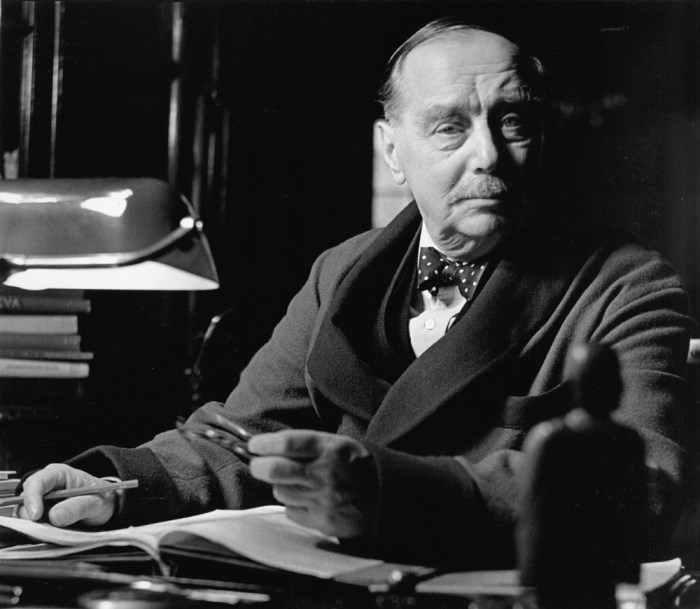
HG Wells
The man responsible for tales of time travel, alien invasions, and assorted mad scientists, just to name a few…

After a gap of several years, I recently had the opportunity to reconnect in person with a respected colleague who has had more than their fair share of experience dealing with writers of all shapes, sizes, and levels of talent.

This person used to deal a lot with screenwriters, but now deals primarily with writers of manuscripts. Over the course of our conversation, I was asked about my scripts and my writing (What do I like to write? What genres are the scripts I have now? What kind of stories am I working on?)

As has been documented here before, my genre of choice is definitely adventure, along with hyphens connecting them to other genres (i.e. western-adventure, pulp sci-fi adventure, etc).

I gave a quick thumbnail sketch/five-second elevator pitch for the two completed and the one currently in revision mode.

You’d be harder pressed to find a stronger advocate for using your already-existing material as a springboard to jump into other mediums – primarily books and/or graphic novels.

It was their opinion that all three sounded like very original and fun ideas, which would make each a prime candidate for attracting attention. And this person has also been following the blog for quite a while, so their opinion is also that my writing is pretty solid. They cited examples of writers they knew who’d foregone the traditional route of trying to get in with one of the high-profile publishing houses and done it all themselves, each achieving respectable levels of success. Nothing to break the bank, but still some impressive numbers.

“A script is more or less an outline for a novel. And even though you’re not limited by page numbers, it still takes talent to create a novel,” I was told. “Your stories are original and unique, which makes them prime candidates for this. At least think about it.”

Believe me, I am.

My success in trying to get these scripts through to reps and production companies has been practically non-existent at best, yet I persist. I’m sure I’ll continue along that avenue, but this new alternative is definitely food for thought.

I’ve been told by more than a few people that my writing is very visual (which you would think would make it ideal for film), and that it really moves. In the past, I’ve entertained and even at times partially investigated the notion of applying my scripts to a graphic novel format (a great match), but am also not averse to trying my hand at converting it to pure prose.

I’ve no intention of stopping writing scripts. I like it too much. But I also like the pure act of writing by itself, so for the time being, all this talk about working in other formats is nothing more than speculation and conjecture.

But in some ways, still worth considering.

Things that get in the way

david silverman

Today’s guest post comes courtesy of psychotherapist and script doctor/coach David Silverman.

As a writer-producer in film and tv, David Silverman worked on shows like Mork and Mindy, One Day at a Time, ALF, Newhart, Dilbert, Duckman and South Park. He learned firsthand that “staring into a computer screen day after day could make you feel isolated, frustrated, anxious and even depressed.” Today, he works as a script doctor/coach and as a psychotherapist where he “tries to help writers cope with creative blocks, mountains of rejection, job insecurities, stress, couples problems and the occasional knife in the back.”

A while back, I gave a talk to a group for writers trying to get back into the workforce after a hiatus. It was titled “Things That Get In The Way of Writing”. A quick bit of backstory about this organization: it’s made up of television writers; WGA members who won a class action suit against the studios based on ageism. 

They were able to show that they’d lost income and jobs because they were labeled as “old.” The studios paid out some settlements and included was membership in this group. So there were a lot of older disgruntled writers; some who’d created TV shows, some who’d won Emmys.

They were all so used to getting paid lots of money to write when they were last working, the prospect of writing on speculation didn’t motivate them much. Yet they all wanted to reinvent themselves and restart their writing careers. Some were writing screenplays, others were writing half-hour and hour TV writing samples.

Everything seemed to get in the way of writing for them. So we talked about how writers get motivated to write  – without being paid. They’d done it before, but times were different now.

Having done so much research into the subject of productivity and motivation for screenwriters and TV writers, I didn’t know where to begin. I ended up talking about the methods that make the most sense to me, that I actually use myself, or that I find most interesting.

Most ideas about how people can change themselves involve changing the way they think about things. Psychologists call this “reframing.” Look at things differently. For example, too many writers believe they’ll write one screenplay that will sell and make them rich and famous. Not likely. Sorry.

Instead, it helps to think of this whole selling scripts thing as a long-term process. Tell yourself you’re going to write dozens of spec screenplays over your career. It’s possible that none of them will sell. However, they may get you an agent or a pitch session with a producer.

The producer will hopefully say, “I love the writing in your script! Tell me about some of your other ideas.” They may also say, “Your writing is great and we think you’d be perfect to write this feature idea.” Either way you get paid to write.

So don’t get hung up about having to sell each screenplay you write. Hopefully you will sell one or two. However, writing spec screenplays can have many positive outcomes besides selling. Some writers get locked into this wrong-headed way of thinking. If that first script doesn’t sell, they give up. Or they keep trying to sell that same script for the rest of their lives.

Thinking about the long view also helps you handle rejection better. A rejection (such as when the studio says they’re not going to buy your script) isn’t a soul-crushing experience when you realize there are other positive outcomes that come from writing a spec script.

Another favorite reframe comes from the Woody Allen quote “80% of success is showing up.” It simplifies the writing process. It’s always overwhelming to think of sitting down and immediately writing this great Nicholl-winning script.

Break down the process. The simplest piece is “show up at the keyboard.” A screenplay is not going to pop out fully-formed. Everybody should think about writing as a process. You show up. You have some ideas. You figure it out.

You break the script down into an outline, a treatment, a first draft. Don’t expect perfection in a first draft. In fact, don’t think about writing a perfect script. Write a great script, or a script that will sell.

I remember trying to be a perfectionist about writing a screenplay. I got all detail-oriented, and polished each scene and every piece of dialogue. However, the more I focused on polishing up the little stuff, I seemed to lose track of the big picture. Be careful – the big picture is the one that counts. Tell a great story.

So I brought up these ways to think about writing differently in my talk. Some of the writers thought they could put these ideas to work. I noticed, however, that some of these writers were truly stuck and needed real psychotherapy.

There’s another thing that gets in the way of writing – overthinking. How can you write when your mind is telling you you’re not good enough? Because that’s what your parents told you your whole life? How can you write when you have doubts? Will this sell? Am I wasting my time with this genre?

You have to center yourself and stop dwelling on all these thought while you write. You have to be able to clear your mind. And that’s not easy, because we have all these expectations. Our brains are more than happy to supply us with reasons we’ll never succeed. Learn to let go of those thoughts.

It’s basically Darwinism at play – the survival of the species. A gazillion years ago when sabertooth tigers were lurking around every corner, our brains needed to keep us hyper-vigilant. We doubted all our moves. We lived in a state of “fight, flight or freeze.”

We got civilized, but our brains didn’t catch up. We still overthink everything and have doubts. You can’t write with all those thoughts getting in the way. You have to center. Different writers have done it in different ways. Some hole up in a beach house, or a cabin in the woods. Some go to Starbucks.

Some, like Stephen King, wrote through a haze of beer and cocaine. Phillip K Dick wrote everything – the stories that spawned Minority Report, Blade Runner, and The Man in the High Castle – on amphetamines.

The key is not to let all the noise and overthinking interfere with your writing. Some people have simple rituals that help them center. They make a cup of tea and listen to their favorite music. They go to the same hotel lobby everyday to write.     

Rituals calm us down because of their familiarity. So get that latte at Starbucks, drive to the art gallery where you like to write, open your laptop, plug in your earbuds and listen to U2. Whatever works for you. Then stick to it.

Perseverance pays off.

Remember that bunch of “old” writers? I found out they sold a pilot – no doubt from putting all of my advice to work. But in all seriousness, it was more likely they were doing what I advised them to do – not because I gave that talk, but because that’s why they were successful in the first place.

A lot of writers have learned these lessons, these ways of thinking about their craft and their careers, through experience. Some might have known about them instinctively. Hopefully some of this advice can help you skip years of learning the hard way.

The (much) tougher part

ali hit
99% of the time, you’re George Foreman

In this week’s previous post, I wrote about the necessity of how a writer needs to enjoy the actual writing part of being a writer.

A few colleagues piped in, saying while that part of it holds true, they also find the business aspect (i.e. the marketing of YOU) to be significantly harder and much more challenging. Taking it one step further, lack of progress on that front adds to their frustration.

I can’t argue with any of that. I’ve experienced it firsthand many times.

Friend of the blog Phil Hardy had this to say:

“…this should resonate with most of us that are doing the same thing as you are. However, one of the keys in trying to be a successful writer is spending a fair amount of time crafting query letters, answering ads or attempting to make contact with industry people anyway you can. Many writers fall flat in this area. One should definitely spend as much time as they can trying to promote and sell their work, as well as taking joy in the act of writing it.”

Simply put, marketing and promoting oneself is a necessary evil that a writer has to be willing to undergo and endure as many times as it takes if they want to succeed. Sucks, but it’s the truth.

After working on a couple of scripts and building up my arsenal of materal, I’ve decided to take the plunge again.

I’ve put together what I consider to be a pretty effective new draft of the query letter. Gone through the list of managers, agents and production companies, researching who might a good match for each script.

A few queries have been sent, so the waiting and hoping for a positive response begins yet again. All the while, working on more scripts. It’s all I can do.

My efforts to improve my networking skills have also paid off. Every once in a while, a colleague will send me a listing that seems tailor-made for one of my scripts. Even though none of them have worked out, it’s made me aware of more opportunities than I would have been able to find on my own.

We all know this is not an easy path. It’s extremely tough and really puts your endurance to the test. The question you have to continually ask yourself is “Am I willing to keep working at this until I get the results I want, no matter how long it takes, how frustrated I get, or how impossible it seems?”

I can only speak for myself.

Yep.

-You might find these older posts somewhat relevant and worth a read.

The me businsess – a 24/7 operation

A support staff of one