Setting out in a new direction

hikers
Aha! Just the path we’ve been seeking!

As part of the overhaul of the comedy spec outline, I’ve been trying to come up with ways to make this draft significantly different from previous ones.

I’d managed to work my way through one of the subplots, and was now focusing on another one. But something felt very…off about it. It felt too preditable, in a tropey, tired cliche kind of way.

So of course, it had to be changed. But to what? That required a little more thought.

I tinkered around with a few ideas. Since this IS a comedy, what would be funny? That inspired some new trains of thought, with ongoing emphasis on “different”, “unique” and “original”. Finally, totally out of left field, one popped and stuck.

Boy, did it.

The more I thought about it and considered the possibilities, along with determining if it fit into the subplot and the overall storyline, the more it seemed to work. I honestly couldn’t recall seeing this idea in a script before.

Okay. This new idea creates a new objective for the storyline, so now it’s all about the “how things develop/how we get there”, PLUS figuring out how to present it in a way that’s original, unique, and funny.

Some more tinkering occurred, and it was all slowly coming together. There’s still some more work to do on this part and the rest of the script, and that’s totally cool.

The finished product will be significantly different from what it was before, and that’s really what this overhaul is all about.

Sometimes it can be tough for me to discard ideas and elements from previous drafts, but have found that totally wiping the slate clean and starting anew, or at least really pushing myself to come up with new ideas, is paying off much, much more than anticipated.

-Can’t let today go without acknowledging the ongoing and unwavering support I’ve received from the woman I’ve been extremely fortunate to be married to for the past 23 years as of this Sunday.

Writers – never, ever underestimate the importance of a partner who’s there for you through good times and bad. They are one of, if not your most valuable resource, and make sure they know how much you appreciate them.

Happy anniversary to my wonderful K. Love ya, baby.

It requires some planning ahead

planning-ahead_4
Sometimes mapping it out by hand can prove most beneficial

Lots and lots going on within the hectic hallways of Maximum Z HQ, what with all the writing, note-giving, and career-developing taking place.

Much as I would love to offer up an original composition, my current schedule is a bit tight, so instead I humbly present a trio of posts, all plucked from the archives, and all dealing with what I consider to be a most important aspect of telling a story.

Enjoy.

Set up, pay off

Strong rope & solid knots required

Tying it all together


Now it gets really interesting

desert
First few steps are always the toughest. Good thing I came prepared.

Let’s pause now for your humble blogger-in-residence to proudly proclaim that Act One of the first draft of the pulpy adventure spec is complete.

Whoopee.

But you know what that also means.

Yep. Time to buckle down even more, strap myself in, and jump feet-first into the intimidating arena commonly known as Act Two.

I’ll also admit it’s a little thrilling, too. There was a particular charge in working out the action sequences and story set-ups in Act One, so I’ve a strong suspicion the continuing build-ups for the former and the gradual development of the latter will be equally, if not more so, fun to write.

(and believe me when I say this is the kind of story that automatically requires a sense of fun)

Maybe it’s from continuously trying to improve as I go, but working on Act Two doesn’t seem as intimidating as it used to. Not to say that it comes easily; just slightly less insurmountable. I spent a lot of time on the outline, so confidence in that is pretty solid.

I read a lot about how a spec script might have a phenomenal Act One, but then things fall apart in Act Two for a myriad of possible reasons: the characters don’t do much/nothing really happens, or the overall story’s too thin, so a lot of Act Two is empty filler, and so on.

The only writing process I know is my own, and I always strive to make sure the story feels…complete? Full? It comes down to “I know what has to happen to tell this story,”, and while the first act is all about setting it all up, the second act is about fleshing everything out.

We get a closer look at the characters and how they’re progressing through the events of the story. We can see how they’re changing from when they were first introduced. Plot threads of all sizes get further developed. The central question is continuously asked (oh-so-subtly, of course).

It also involves steadily-mounting complications for your protagonist. They’ve got a goal, and it’s our job to throw all kinds of obstacles in their way that just keep making it harder for them to reach it. Again, a lot of it happens during our second act.

Act Two really is where the meat of the story takes place, so stuff needs to happen that not only holds our interest, but makes us want/need to know what happens next, and even that better be that much more intriguing.


As you’d expect, our work is cut out for us.

So off I go. Dispatches from this formidable excursion as they develop.

See you on the other side.

My enthusiasm, your enjoyment

rollercoaster
Offering up excitement and thrills for everybody

I admit it. I was weak. I couldn’t resist. The urge was just too overwhelming.

So I accepted the reality of the situation, and just went ahead and did it.

I went back and revised the pages I’d already written for the pulpy adventure spec.

No regrets.

The character that shouldn’t have been in there was cleanly removed, but in the process of doing so, a new idea emerged with a way to further weave some of the subplots together. Always nice when that happens.

Engaging in this mini-rewrite also provided me with the opportunity to take a step back and just read. Was it still working? Were my aspirations of producing a ripping yarn being achieved?

Seems that way so far. Then again, I’m slightly biased.

Some notes I got on an earlier draft of the western were along the lines of “it’s good, but the writing’s a little dry.” With this script, there’s more of an effort to avoid repeating that by really punching things up.

I’m getting a real kick out of seeing what I can do to make this an exciting read for anybody, including myself. Many’s the time I’ve heard that you should be able to see the writer’s love for the material on the page. That’s something I’ve always tried to do, and working on this script is no exception.

So after this temporary pause, things are back on track. Momentum will be regained, and progress shall continue.

Exciting times all around, chums.

-Friend of the blog/consultant Jim Mercurio is running a crowdfunding project for his latest film project American Neorealism. It’s VERY close to being funded, and there are just a few days left, so donate if you can to help him reach (or even surpass) that goal.

One question to rule them all


frodo
An epic adventure based on the fate of a piece of jewelry

I recently had the pleasure of giving a friend some notes on his script (a drama). It was a great take on a familiar subject, but I had some trouble determining what kind of story they were trying to tell.

One of my suggestions was to streamline the story so it was more focused on the primary storyline as indicated by the central question. He asked me to elaborate.

I put it this way:

The inciting incident raises the central question of the story, and everything after that revolves around answering it – which takes place in the climax/showdown part. Anything that’s not connected to the central question doesn’t need to be there and should therefore be cut.

This isn’t to say you can’t have subplots, but even those should be in some way tied to the central question.

What would you say are the inciting incident and central question in your story? We, the reader/audience, want to know; we’re constantly asking that central question and want to see how the answer comes to be.

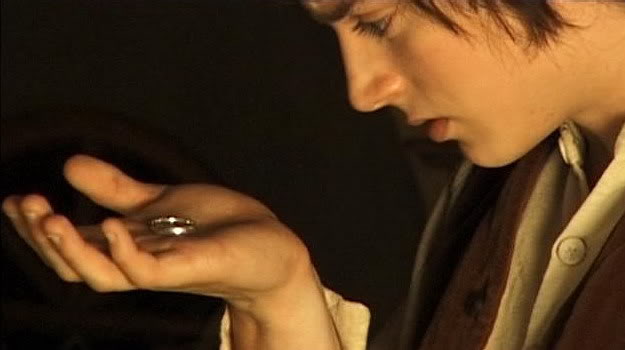
To put it in perspective, albeit from an action-adventure approach, in THE LORD OF THE RINGS films, after some necessary exposition, we learn the central question as “Will Frodo get the Ring to Mt Doom?”

Notice how everything after that revolves around that question in some way. Each scene continues to ask the question and gets us a little closer to finding out the answer, even if it might seem like the scene isn’t connected to it and about something else entirely.

On top of all of that, since you need conflict, the hero’s journey to achieve their goal is going to be rife with obstacles that would otherwise prevent them from doing that. Every time they encounter one of those obstacles and the hero reaching their goal is put in jeopardy, the central question is once again raised.

Hope this helps.