Start with similar, venture into different

path
With one you can play it safe, while the other offers up more of a challenge

In the handful of times I’ve helped out as co-writer or script polisher on somebody else’s project, there have been variations on the following conversation:

ME: And then THIS happens!

THEM: Oh, we can’t do that. ACTUAL MOVIE did the same thing.

ME: Not exactly. ACTUAL MOVIE did THIS, and what I’m suggesting is maybe at the very foundation the same concept, but if we did it THIS WAY so THIS HAPPENS, it would be entirely different.

THEM: But won’t people think we’re just ripping off ACTUAL MOVIE?

ME: First of all, ACTUAL MOVIE has been out for a while, and you’re at least a year away from having this thing done, so I highly doubt the first thing anyone’s going to think is we’re ripping off ACTUAL MOVIE. Second, this is exactly why I think THIS is how it should happen. True, both use the basic concept, but we’re putting our own spin on it so it doesn’t resemble ACTUAL MOVIE at all. They’re similar, if you could even call it that, but still different.

THEM: (thinks it over). Well, okay. We’ll give it a try.

And…scene.

I’ve read about this in articles and seen it firsthand while reading scripts, both times usually associated with newer writers. Somebody really likes how something happens in a film or a script, so then they go and have the EXACT SAME THING happen in theirs. I get that you liked that original, but why, oh why would you want to use it practically verbatim in yours?

Doing the screenwriting equivalent of a “copy, cut, and paste” will do you no good because it’ll be painfully obvious that’s what you did. You’re trying to tell an original story, and THIS is what you do?

If anything, people will definitely think you ripped off that original thing and berate you for your total lack of originality. Was that your goal? Probably not.

Time to get analytical. What was it about that particular something that really got to you? Why do you feel the need to have the same thing happen in your script? That’s the angle from which to approach it.

But this is also where the challenge begins. Once you identify that core detail, it’s up to you, the writer, to figure out a new way to use it in such a way that not only does it serve the purpose you need, but also pays homage to what inspired it in the first place.

You know where things are going, or at least where you want them to go, but now you need to tweak how they get there. Work those muscles of creativeness! Try something new! Don’t hesitate to jump off the beaten path into new territory! If anything, you might come up with an entirely new idea that accomplishes exactly what you needed, but just a totally different way.

Sure, there’s a very slight chance it could potentially remind somebody of ACTUAL MOVIE, but they’ll definitely remember that it came from yours.

Edits, inspiration, and the rinse cycle

housewife
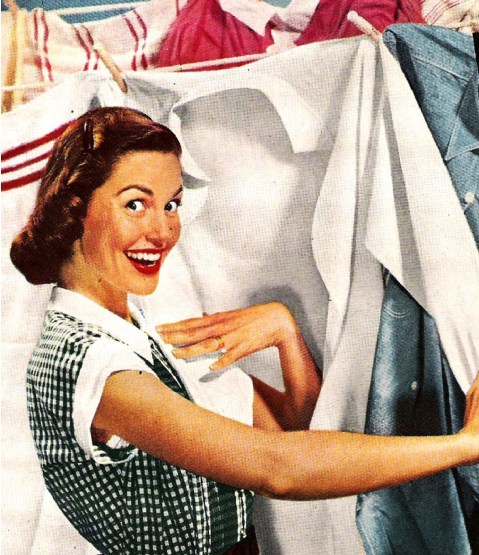
Gosh, what a day! My whites are sparkling AND I have a stronger sense of my protagonist’s internal goal!

I’ve mentioned before about my tendency to overwrite, which usually applies to both outline and actual pages. This time around with the pulpy adventure spec is no exception. There’s simply too much going on, so before the amount of material got too overwhelming, some significant editing was needed.

I don’t know how or why I do this, but sometimes there’ll be a scene or sequence that’s more or less a repeat of what’s already happened. Such was the case here. In the overall context of the story, the second one was more important, so thus began the great removal of the first one, along with reinforcing the connection between what came before it and the second one. It actually wasn’t too bad. It tightened up the story much more than anticipated and, in my opinion, kept that energetic momentum going.

My slightly unusual work schedule allows me to dedicate most of the early afternoon to writing, which is occasionally interspersed with some household chores. For this particular instance, it was laundry.

In some ways, I’ve been quite content with my progress, but there was something still nagging at me about it. Things felt…incomplete.

I was somewhere in the middle of that day’s writing session when the washing machine let me know the latest load was finished. While my body went through the motions of hanging stuff on the drying racks, my mind was barreling along a continuous stream of thought.

“What if THIS HAPPENED? Or THIS? Maybe I’m looking at this from the wrong angle. A lot of this has been about the protagonist. What about the antagonist? I don’t want them to come across as a mustache-twirling cartoon villain. Their goal seems too vague. Hey, I wrote a post about that. This is their plan, but why are they doing this? How about THIS? Hey, that’s not bad. Let’s take it one step further and make it THIS. Ooh! This would tie in perfectly to the rest of the story! Hmm. Would this make them see themselves as the hero? Whoa. It sure does. Hokey smokes, I think I’m onto something. I better write this down!”

And I did. It was like the satisfaction you’d get after finding the long-lost last piece of a jigsaw puzzle and snapping it into place. The more I thought about this, the more excited I got about implementing it. In fact, the editing/rewriting is already underway.

I cannot begin to explain what a surge of writing adrenaline (if there is such a thing) this created. There’s a line of dialogue in my western that even to this day still gives me chills. This new idea – same thing.

While all of this will no doubt push back the projected end date for having a completed first draft, this new development is totally worth it.

This is just another example of how inspiration really can strike when you least expect it. Embrace it when it does.

And if you’ve been sitting at your computer, frustrated that the words won’t come, maybe stepping away and doing something completely mundane might provide the solution you seek.

Plus, you’ll get the laundry out of the way, which is always good.

Why, and why now?

studying
A pair of questions to study thoroughly

An associate of mine is in the early stages of developing a low-budget film. Call it pre-pre-pre-production. The script is part of that (as in “about to be written”), and I was asked to take a look at the outline and offer up my two cents on it.

It wasn’t bad. The structure was a little wobbly, but not too far gone, and a few other minor issues, but overall, I’d call it a fairly solid attempt.

I totally got what kind of story they’re trying to tell, but reading this outline definitely raised some important questions.

Two, to be specific.

First: why is this happening?

I don’t mean this is in a negative way, like “why are you even bothering?” Quite the opposite.

More of a “does what happens in this scene adequately follow what’s come before it, and does it do an equally good job leading into what comes next?” sort of thing.

As it reads now, it felt more like a lot was happening because the story required it to, rather than letting it all unfold smoothly and organically. There wasn’t enough setting things up in order to pay them off later. Almost like each scene is saying “This MUST happen HERE, logic be damned!”

A should lead to B, which leads to C, and so on, but then you also find out that not only did A lead to B, but it also resulted in H.

Second: why is this happening now?

This applies more to the primary storyline. Things are taking place, but I never really got a sense of how or why it all started. A lot happens after whatever event triggered it all, but there’s no indication of exactly what that trigger was. When I asked the writer about it, even they admitted they didn’t know and were having trouble trying to come up with something.

A writer needs to know every part of their story; what things were like before it started, how it started, what happens, and how it ends. Sometimes you can even throw in what happens next. No matter what approach you take, all of these elements play a key role in the telling of that story. If one of those elements isn’t there, it just gums up the whole works and you’re left with an incomplete story.

The writer was very appreciative of my comments and was looking forward to finishing the latest draft in order to provide answers to the questions I’d raised. It’s probably safe to say we’re both quite interested to see how it all turns out (although I suspect I come in a close second).


Crafting a tale to thrill, astonish, and exhilarate

mad-scientist
Those fools at the film academy dare call me mad? I’ll show ’em! Mwahaha!

2017’s writing got off to a pleasantly rousing start with the commencement of the first draft of my latest project: the pulpy adventure spec.

Yep. After years of working on the outline, I finally decided to take the plunge and write the damned thing.

Seeing as how this is a genre near and dear to my heart, I dove into the opening sequence headfirst and just had at it, surpassing the original goal of completing at least 2 pages a day by two and a half times that amount. Add to that the 4 pages for yesterday, and that places me further ahead than anticipated. It’s not expected to maintain this kind of output on a daily basis, but no complaints so far.

That being said, upon reflection, the latest scene still leaves a little to be desired, so an impromptu rewrite is already being planned out and will be implemented straightaway.

A few alterations have also been made in regards to the overall writing process.

First, even though the outline needs to be rock-solid before starting on pages, the scene descriptions are sometimes a little vague. “Big fight happens!”, that sort of thing.

When that happens, the focus shifts to plotting out the beats of that particular scene. How do things play out so it tells the story and moves things forward? Is it accomplishing what it needs to? It’s quite helpful, and helps prevent a lot of frustration in trying to think up stuff on the spot.

Another is fully embracing the whole “just get it done” attitude. Write it down and move on. There’ll be time for all that fancy-pants editing and polishing stuff later. It’s also been noticed that sometimes the first idea is still the best.

And in what may be the most important development, seeing as how this is at its core my interpretation of the old pulp novels, I’m doing what I can do to really make it read that way. One could even argue that writing the western was just a warm-up exercise. The writing in this script might be a little more over the top than usual, but that could be exactly what it needs.

Even though it’s a screenplay, I take a certain pleasure in coloring things a slightly stronger shade of purple.

There’s no specific target deadline for completing this draft, but hopefully it won’t take too long. For now, I’m just enjoying the ride.

Advice, suggestions, and everything in between

neil-gaiman
“When someone tells you it isn’t working – they’re almost always right. When they tell you how to fix it – they’re almost always wrong.” – Neil Gaiman

Many, many years ago, when I was just starting out in radio, I’d put together a demo tape of some of my on-air material and asked some of the veteran DJs at the station if they’d give it a listen.

One guy had several positive things to say, but also pointed out ways of how I was demonstrating my still-green abilities. He made some suggestions about how to fix that, which would, in theory, help me get better. They did.

The second guy started with “It’s good, but here’s how I would do it.” I honestly don’t remember anything he said after that because I simply didn’t care how he would do it.

There’s a very similar approach to how one gives notes on a screenplay.

When I give notes, I read what’s on the page and offer up my opinions of how it could be potentially be improved (from my perspective). A lot of the time it involves questions like “Why is this happening?” or “How do we know that?”

Or if something doesn’t work, but I understand what the writer’s trying to do, I’ll ask “What if you tried THIS (different approach) that yields the same results?” They may not take that suggestion, but it might trigger something new and unexpected.

I totally get that this is their story, and my only interest is in helping them make it better. By asking questions that only the writer can answer, the responsibility of coming up with and applying any fixes falls squarely on their shoulders.

I also make a point of trying to be objective. I may not be a fan of your story’s genre, but that doesn’t mean I’ll automatically be negative in my notes. What I will do is approach it from a “does it tell a good story populated with interesting characters and situations?” perspective.

And then there are the notes that want to take your story in an entirely new direction. The ones that take it upon themselves to change your story because “that’s not how they would do it.” I’ve gotten quite a few of those.

But what if how you would do it is different than how I would?

Sometimes it’s a suggestion that runs counter to the story you’re trying to tell, or it might have absolutely nothing do with the story at all. I’ve even received the always-appealing “This was great, except for this one small thing I disagree with/don’t like, which ruined the rest of it for me.”

Everybody’s going to have their own opinion, but the one that counts the most is yours. Even if it doesn’t feel that way now, only you know what the script really needs, and you’re going to get all kinds of responses when you seek out feedback.

Some of it will be very helpful and insightful, some definitely won’t be, and in the end it’s really up to you to decide which notes you think provide the most guidance to helping make your script better, which will in turn help you become a better writer.