Just call me Dante, because this sure feels hellish

Seems pretty appropriate at times

I wanted to rework the logline for my mystery-comedy spec, so, never one to totally learn from previous experience and hoping for best possible results, I took the plunge and posted it on a few forums, seeking potentially helpful feedback.

Thus did the floodgates open.

It’s me and my story out there in the open, waiting for the world to let itself be heard.

And it did. Oh boy, did it.

One response was a literal interpretation of the words, and why it didn’t work. My assumption that certain details were implied was apparently incorrect.

Several focused on presenting the story in a way I repeatedly explained just didn’t apply. No matter how much I emphasized it was THIS kind of story, they just could not get away from thinking it was THAT kind of story.

Then there’s the omnipresent “I can’t see this being a story” and “It doesn’t sound solid enough.”

Well, I can and think it does.

My words, meet deaf ears. I got similar responses when I was starting the western, and that turned out pretty well.

It’s my sincere belief that everybody’s intentions are good, and they probably don’t mean for their comments to come across in such a “why don’t you know better?” and “THIS is the right (read: only) way to do it” manner.

Even if I totally disagree with somebody, I still appreciate the fact they made the effort to read it, analyze it and create what both of us hope is a helpful response. That doesn’t mean I have to take their word as gospel.

And unless I’ve actually met the person, I have no idea how much legitimate experience or expertise they have. For all I know, everything they say stems from reading SAVE THE CAT a couple of times.

Putting together a logline is an exhausting process. Some people are better at it than others.

As it so happens, I’m not one of them.

Here’s the windup…

lincecum
I admit it. Local bias.

Interesting discussion the other day with a professional hyphen (writer HYPHEN director HYPHEN script consultant) about my western.

They wanted me to pitch them the story, but without notes. Pretty much without any preparation whatsoever.

This way, they explained, it comes across as “more natural” and “less rehearsed”. I don’t necessarily agree, especially because I despise those momentary pauses which make you rely on saying “um” while your brain races to come up with the next words out of your mouth.

Despite not really having thought about the story that much over the past few months, I did my best to work my way through it and think I did okay. Maybe B-plus/A minus territory. Not fantastic, but not bad operating with pretty much no prep time whatsoever.

I made sure to include key story points and not go into too much detail, and tried to sound excited and upbeat while describing the high-octane action.

After I’d finished, there was a dread-inducing silence that grew with each passing second (maybe 3 in total, but felt more like neverending).

“Hmm,” came the reply. “Not bad.”

Not exactly a standing ovation, but I’ll take what I can get.

They listed what they liked and what could use a little work. Surprisingly, they felt the ending was a little ‘soft’ and their explanations why, to which I calmly disagreed and gave my explanation why.

Even more surprisingly, they then revealed they’d only read up to page 15 and wanted to hear my pitch to see if the rest of the story warranted continuing.

(Just to set things up, this person claims to have given 3 pages of notes just on the first page alone for other scripts. Apart from a few comments about the dialogue, they didn’t really have any for mine, and that when they usually get to around page 10, they jump ahead to the middle, then to the end. But mine they wanted to keep reading. Make of that what you will.)

After hearing my rationalization for the ending, they admitted that they should “probably read it to see if they agree.” In theory that will be happening this week, but we’ll see.

Our discussion then turned to my experience and some of my other scripts, 2 of which they requested to read. A victory, no matter how you slice it.

Looking back, I could have done a much better job at pitching my story – if I’d known I was going to have to do it. Still, if I’m going to be sending out queries about it, I should be prepared to talk about it in a moment’s notice.

So while I while away upcoming hours engaged in the rewrite of the mystery-comedy spec, I’ll try to make the most of potential down-time and re-read the western and maybe put together some kind of FAQ/cheat sheet in case this kind of situation arises again.

And it probably wouldn’t hurt to do the same for those other two – just for good measure.

Reduce heat; let simmer for 2-3 months

I look exactly like that after finishing each draft, flour and all
Exactly how I look after finishing a draft, even though the flour wreaks havoc with my keyboard

It took a little longer than expected, but the revamped outline for the pulpy adventure spec is finally done.

As is my usual practice, I won’t take another stab at it for at least a couple of months partly because I’m feeling a little burned-out on it. This has been my primary focus for the past couple of months, and I just need a short break from it.

The other reason is I’m getting ready to jump into rewriting the Christmas-themed mystery-comedy. Notes are in place, so hopefully it won’t take too long.

But getting back to the outline, my original thought upon finishing it was the standard “It’s better than it was, but still needs a lot of work,” but experience has taught me that this may not necessarily be the case anymore.

I like to think I’m a stronger writer compared to a few years ago, so while I would never consider the material as it reads now as perfect, it may surprise me when I return to it as to how much better it is than I remember.

At least that’s what I’m hoping for.

On the other hand, I could read it and think “Where did that come from?”, “Well, that’s not going to work,” or even “Hmm. How much wine did I have that day?”

Taking it another step further, taking this break will enable me to pretty much forget a lot about the story, so I’ll be able to read it with fresh eyes and potentially come up with fresh ideas about how to improve it.

All things being equal, I like the way it turned out and am looking forward to getting back to it.

But first things first. Time to shift from the fight against monsters wreaking havoc to seeking out answers behind seedy goings-on in a holiday metropolis.

As always, watch this space for updates.

Building up to what it all comes down to

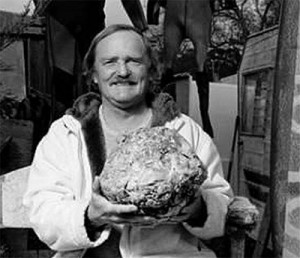
What he's holding represents what's at stake. Think about it.
What he’s holding represents what’s at stake. Hint: It’s not a rock

Time now for a very, very important question every writer needs to face:

Do you know how your story ends?

You come up with an idea, then proceeded to develop, shape, and organize all the stuff that happens in the middle, which eventually has led us to the where we find ourselves now: the big payoff. What the whole thing’s been about.

Everything your characters have been doing have been leading up to this. In theory, your first two acts have been about the protagonist’s world undergoing some drastic changes, how they dealt with it and now it looks like the bad guy’s going to win.

Which brings us to the grand finale that is Act Three, where our hero must somehow find a way to overcome these seemingly insurmountable odds, defeat the antagonist and hopefully come out of the experience a different person than the one they were way back when we first met them.

That being said, there’s still more to it.

-Your protagonist has a physical goal (what they want) and an emotional one (what they need). They can achieve both, just one or neither. Which applies to yours, and have you effectively steered the action to ensure that result? Can we see the changes they’ve undergone?

-Working with a subplot or three? If they haven’t wrapped up by now, better make sure to do it soon. Do you really want the reader to wonder “Hey! What happened to the part about ____?”

-Even a supporting character needs an arc to complete. Have you given each of them enough attention throughout the story to make this happen, and does their story wrap up in a convincingly believable way?

One of the most valuable lessons I’ve learned about putting a story together is that the central question (“Will the hero achieve their goal?”) is raised with the inciting incident around page 10, and each subsequent plot point raises it again, albeit with the stakes a little higher each time.

What happens in Act Three is where you show us how the central question is answered.

-And now, the much-heralded return of Movie of the Moment! This time, a way overdue look at GODZILLA (2014).

Wow. Everything PACIFIC RIM should have been. Instead of non-stop giant monster action, we get only glimpses as the focus is directed at the human aspect of the story. A much more effective approach.

While it’s not hard to suspend disbelief when it comes to a movie about giant monsters rampaging/duking it out in the downtown area of the city where I live, perhaps the most amazing piece of cinematic fiction (as observed by both K and myself) was in the background of one scene where a garage sign read “All-day parking $15”.

Now that’s make-believe.

Casting a wider net

Always trying to catch a little more

As you work your way through the various stages of assembling your story, how much do you take the audience’s needs and wants into account?

You’re obviously writing something you would want to see, but do you ever consider the viewing tastes of someone who’s not like you whatsoever?

While I may write high-concept tales of adventure that would definitely appeal to 12-year-old me, it’s also my objective to try to craft those stories in such a way so they could entertain anybody of any age.

(Strong examples of this kind of storytelling? Most of the Pixar catalog.)

Here are just a few things to take into consideration:

-Are you treating the reader/audience the way they should be treated? Which means with intelligence. I’ve always hated when a story feels dumbed down, and suspect most other moviegoers do as well.

-That being said, is your story simple enough to the point that anybody could understand what’s going on, or at least have a general understanding of it?

-Regardless of what genre your story falls into, how much are you taking advantage of the elements of that genre? Since you’re most likely already a fan and probably have a good idea of what’s expected, this is your golden opportunity to show the rest of us what’s so appealing about it. Play on those strengths.

-With modern audiences more knowledgeable and movie-savvy than most writers realize, it’s more important than ever to come up with material that’s really new and original. What is it about your story that really sets it apart? What can you offer that we haven’t seen before?

As we start with an idea, develop it into a story that will eventually end up as a script, a lot of us daydream about the resulting movie, and how totally awesome it would be for it to be a big hit.

We can just picture the tremendous box office, rave reviews, non-stop awards, a king’s ransom of a paycheck, being begged to pick from a smorgasbord of new projects, all stemming from this story we cranked out with our own little hands, now practically guaranteed a place in the pantheon of pop culture.

“Everybody’s going to love it!” you imagine.

The reality is – they’re not, and a lot of that stuff won’t happen. But don’t let that stop you from trying.

The best we can do is write a solid, entertaining story populated with interesting characters who find themselves in unique situations, and hope people like it.